
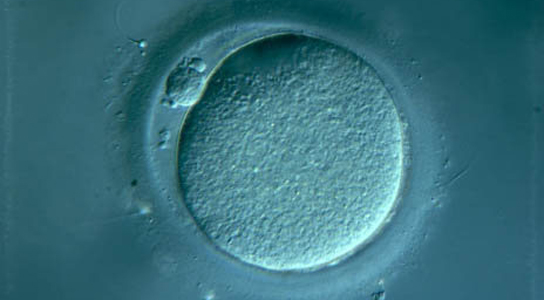
The exact causes of infertility, which can affect around 10% of couples, are often unknown. In some cases, it may be a result of the body’s inability to produce viable gametes. A new study of the development of germ cells from humans could help scientists learn how to create them in the laboratory.
The scientists published their findings in the journal Nature Cell Biology. The precursor cells that go on to produce gametes are formed early in human life, when the fertilized egg grows into a tiny ball of cells, the morula, in the mother’s womb. This ball contains pluripotent stem cells, blank slates that can be programmed into any cell in the body, and researchers are hoping to use some of these cells to treat infertility and other conditions.
Little is known about the early developmental stages of human gametes, mostly due to the sensitivity of working with human tissue. In the new study from the University of California, Los Angeles, trace the development of early germ cells in human fetuses between 6 and 20 weeks and analyzed them when the genes were turned on or off.
The DNA inside the early germ cells carries epigenetic modifications, changes that do not affect the DNA itself, but affect the way that genes are expressed. These changes may have accumulated during the lives of the parents, and need to be erased during the fetal stage. The study found two major events that reprogram epigenetic modifications. Most of this reprogramming happened before 6 weeks, but another was found that completed the reprogramming after 6 weeks.
The researchers worked with anonymized samples from aborted fetuses with proper consent. They also observed that 6-week-old germ cells created in the lab do not match a 6-week-old human germ cell, indicating that there is a blockage in the development of lab cells that scientists have yet to understand.
Next, they want to see if they can coax immature germ cells to become eggs or sperm in the lab. There is no road map to follow, so the scientists are just following their guesses.
Reference: “The ontogeny of cKIT+ human primordial germ cells proves to be a resource for human germ line reprogramming, imprint erasure and in vitro differentiation” by Sofia Gkountela, Ziwei Li, John J. Vincent, Kelvin X. Zhang, Angela Chen, Matteo Pellegrini and Amander T. Clark, 16 December 2012, Nature Cell Biology.
DOI: 10.1038/ncb2638
Never miss a breakthrough: Join the SciTechDaily newsletter.
Follow us on Google and Google News.
1 Comment
Ordinary cells in humans have a good package program. The DNA is bound on a spindle core of Histones and every packing of each gene here is expressed in a terminal knot called epigenic factored protein to keep intact without unwinding until chromatin dissolves to divide and duplicate itself in cell division. Epigenic protein factors play an important role of gums or adhesives to separate and also to activate or not activate depending on the epigenic polymerase enzyme it encounters. This is a macro-program for different tissues and their cells to confine to their work. In ‘morulla’ of embryonic primary cell bundle of undifferentiated cells the role of epigenic proteins is taken further inside the nucleosomes of CpG (meaning Cytosine and Guanine pair joined by a protein of methylation) to keep different genes for expressing different stages as totipotent or pluripotent cells so that they can develop into neurons, bones, blood etc during the growth. This research in this article states the stages through which ordinary cells convert to gametes in the birth of morulla itself. These epigenic factors are also inherited and the probe is to find the cause of infertility of gametes further. A good research for the benefit of mankind indeed. Thank You.