
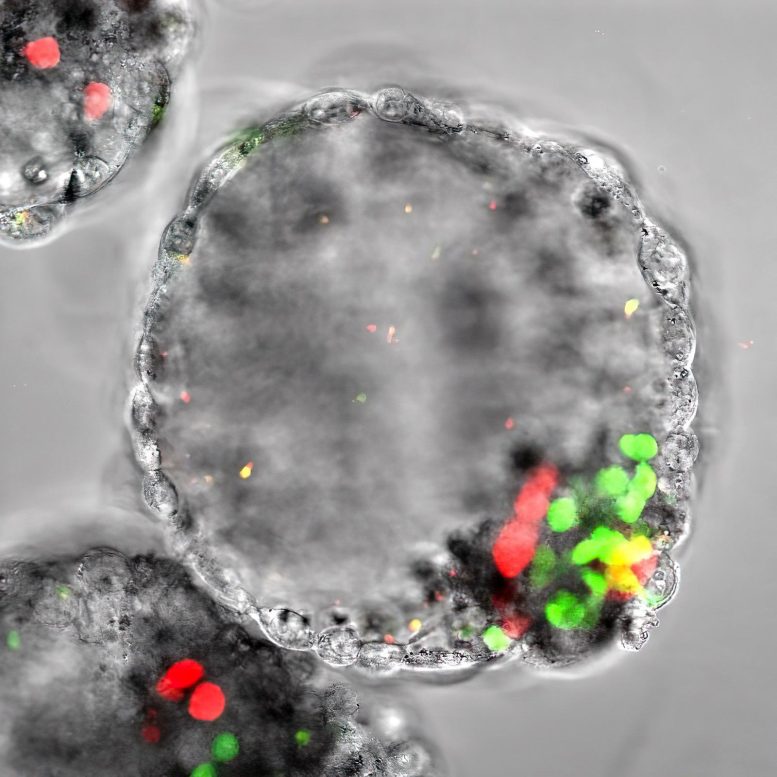
A high-throughput single-cell single-mitochondrial genome sequencing technology known as iMiGseq has provided new insights into mutations of mitochondrial DNA (mtDNA) and offers a platform for assessing mtDNA editing strategies and genetic diagnosis of embryos prior to their implantation.
The development of a new high-throughput single-cell single-mitochondrial genome sequencing technology, called iMiGseq, has enabled researchers to uncover previously hidden mutations in mitochondrial DNA (mtDNA) that cause maternally inherited diseases. By allowing for complete sequencing of individual mtDNA in single cells, the iMiGseq method has provided a platform for assessing mtDNA editing strategies, genetic diagnosis of embryos prior to implantation, and understanding the links between mtDNA mutations and complex diseases. The technology has also revealed complex patterns of pathogenic mtDNA mutations, including single nucleotide variants and large structural variants, that were undetectable with conventional next-generation sequencing. Additionally, iMiGseq has shown the potential risks of unintended off-target mutations in a mitochondrial genome editing method called mitoTALEN, highlighting the need for more sensitive methods to assess the safety of editing strategies.
An international team of researchers, led by KAUST stem cell biologist Mo Li, has now quantitatively depicted the genetic maps of mtDNA in single human oocytes (immature eggs) and blastoids (stem cell-based synthetic embryos).[1] This has revealed molecular features of rare mtDNA mutations that cause maternally inherited diseases.
Mitochondria, the “powerhouses” of cells, play a crucial role in cellular communication and metabolism. Human mtDNA is a circular genome containing 37 genes, encoding 13 proteins and a noncoding D-loop region. Heteroplasmic mutations, inherited from egg cells, can cause congenital diseases, like maternally inherited Leigh syndrome, and are associated with late-onset complex diseases.
“Next-generation sequencing has been used to sequence mtDNA and implicated heteroplasmic mutations as significant contributors to metabolic disease. Yet the understanding of mtDNA mutations remains limited due to the constraints of traditional sequencing technologies,” says lead author Chongwei Bi.
“Our new iMiGseq method is significant because it enables complete sequencing of individual mtDNA in single cells, allowing for unbiased, high-throughput base-resolution analysis of full-length mtDNA,” says Bi. iMiGseq resolves several key questions in the field.
Insights into mtDNA Mutations in Disease Models
Using third-generation nanopore sequencing technology, the researchers have characterized mtDNA heteroplasmy in single cells and described the genetic features of mtDNA in single oocytes. They have examined mtDNA in induced pluripotent stem cells derived from patients with Leigh syndrome or neuropathy, ataxia or retinitis pigmentosa (NARP). This has revealed complex patterns of pathogenic mtDNA mutations, including single nucleotide variants and large structural variants. “We were able to detect rare mutations with frequencies far below the traditional detection threshold of one percent,” says Mo Li.
In another experiment using the new technology, iMiGseq revealed the potential risks of unexpected large increases in the frequency of off-target mutations, known as heteroplasmy, in a mitochondrial genome editing method called mitoTALEN – a genome editing tool that cuts a specific sequence in mitochondrial DNA. It is used to cut a mutation that causes mitochondrial encephalomyopathy and stroke-like episodes syndrome in patient-derived induced pluripotent stem cells.
“This highlights the advantages of full-length mtDNA haplotype analysis for understanding mitochondrial DNA heteroplasmy change; other distant mtDNA genetic variants may be unintentionally affected by the editing of a genetically linked disease-relevant mutation and there is a need for ultrasensitive methods to assess the safety of editing strategies,” says Li.
Rare Mutations in Human Oocytes and Blastoids
The researchers also used iMiGseq to analyze single human oocytes from healthy donors and single human blastoids, synthetic embryos made from stem cells, to identify rare mutations undetectable with conventional next-generation sequencing. These low-level heteroplasmic mutations, potentially inherited through the female germline, are linked to mitochondrial diseases and cancer.[2]
The iMiGseq method provides a novel means to accurately depict the complete haplotypes of individual mtDNA in single cells, offering an ideal platform for explaining the cause of mitochondrial mutation-related diseases, evaluating the safety of various mtDNA editing strategies and unraveling the links between mtDNA mutations, aging and the development of complex diseases.
References:
“Quantitative haplotype-resolved analysis of mitochondrial DNA heteroplasmy in Human single oocytes, blastoids, and pluripotent stem cells” by Chongwei Bi, Lin Wang, Yong Fan, Baolei Yuan, Samhan Alsolami, Yingzi Zhang, Pu-Yao Zhang, Yanyi Huang, Yang Yu, Juan Carlos Izpisua Belmonte and Mo Li, 4 April 2023, Nucleic Acids Research.
DOI: 10.1093/nar/gkad209
“Single-cell individual full-length mtDNA sequencing by iMiGseq uncovers unexpected heteroplasmy shifts in mtDNA editing” by Chongwei Bi, Lin Wang, Yong Fan, Baolei Yuan, Gerardo Ramos-Mandujano, Yingzi Zhang, Samhan Alsolami, Xuan Zhou, Jincheng Wang, Yanjiao Shao, Pradeep Reddy, Pu-Yao Zhang, Yanyi Huang, Yang Yu, Juan Carlos Izpisua Belmonte and Mo Li, 31 March 2023, Nucleic Acids Research.
DOI: 10.1093/nar/gkad208
Never miss a breakthrough: Join the SciTechDaily newsletter.
Follow us on Google and Google News.