
Close Menu
    Facebook X (Twitter) Instagram
    SciTechDaily
    • Biology
    • Chemistry
    • Earth
    • Health
    • Physics
    • Science
    • Space
    • Technology
    Facebook X (Twitter) Pinterest YouTube RSS
    SciTechDaily
    Home»Earth»Earth From Space: Shetland Islands in the Northern Isles of Scotland [Video]
    Earth

    Earth From Space: Shetland Islands in the Northern Isles of Scotland [Video]

    By European Space Agency (ESA)November 6, 2021No Comments3 Mins Read
    Facebook Twitter Pinterest Telegram LinkedIn WhatsApp Email Reddit
    Share
    Facebook Twitter LinkedIn Pinterest Telegram Email Reddit
    Shetland Islands
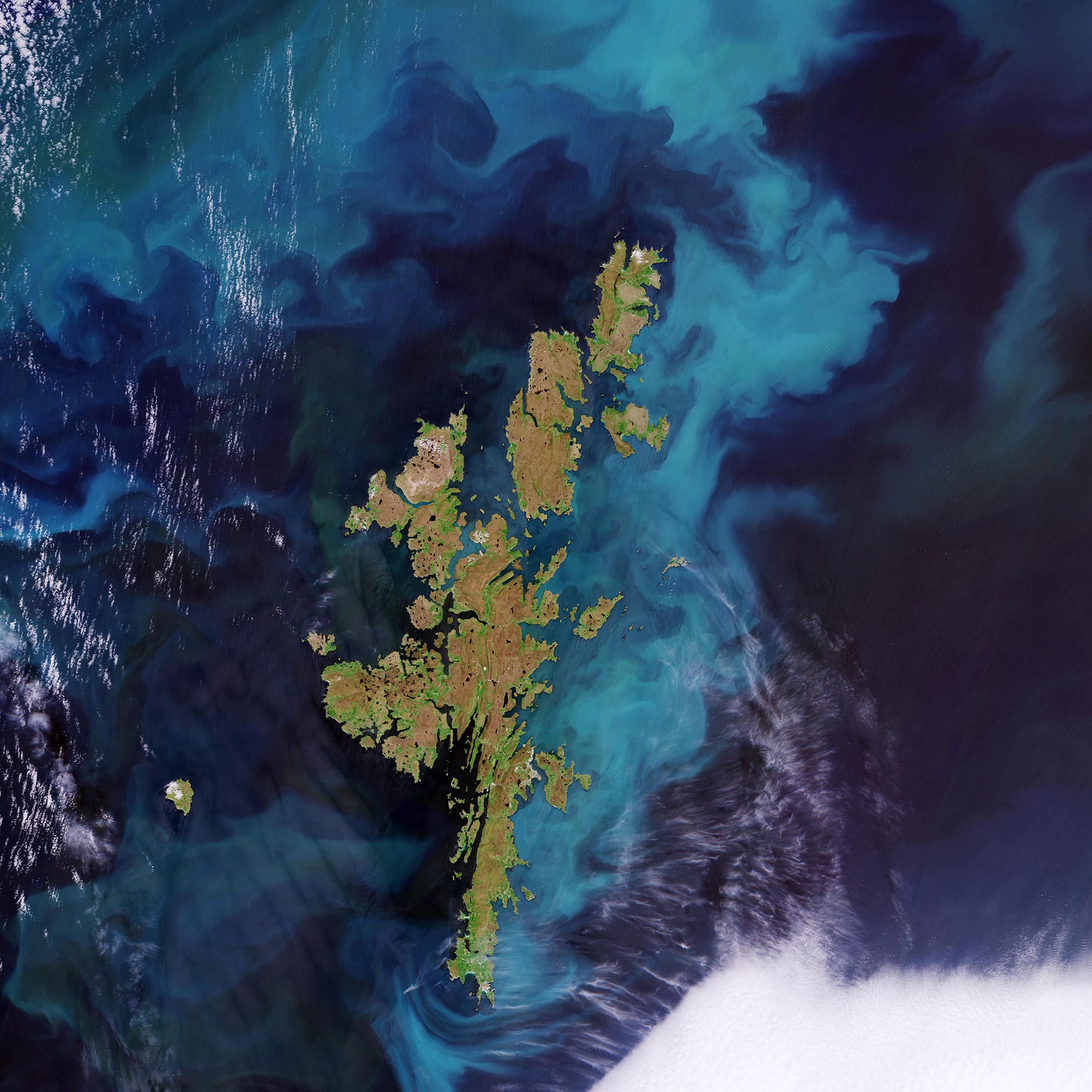
    The Shetland Islands, an archipelago in the Northern Isles of Scotland, are featured in this Copernicus Sentinel-2 image. Credit: Contains modified Copernicus Sentinel data (2021), processed by ESA, CC BY-SA 3.0 IGO

    The Shetland Islands, an archipelago in the Northern Isles of Scotland, are featured in this Copernicus Sentinel-2 image.

    Lying roughly 100 km (62 mi) north of the Scottish mainland, the Shetland Islands separate the Atlantic Ocean on the west from the North Sea to the east. The archipelago comprises around 100 islands and islets, with fewer than 20 of them inhabited. The islands cover an area of around 1,468 sq km (569 sq mi) and have a rugged coastline approximately 2,700 sq km (1,040 sq mi) long.

    The largest island, known as the Mainland, has an area of around 900 sq km (350 sq mi), making it the third-largest Scottish island. The next largest are Yell, Unst, and Fetlar, which lie in the north, as well as Bressay and Whalsay, which lie to the east. Lerwick, located on Mainland, is the capital and largest settlement of the archipelago.

    The most striking feature in this week’s image, captured on 1 July 2021, is the vivid, turquoise-colored bloom visible to the east of the islands. This type of bloom is slightly different from the harmful cyanobacteria often visible around the Baltic Sea.

    In the absence of any known samples being analyzed, it is assumed that it is a coccolithophore bloom – a type of microscopic marine algae living in the upper layer of the sea. Like all phytoplankton, coccolithophores contain chlorophyll and have the tendency to multiply rapidly near the surface.

    In large numbers, coccolithophores periodically shed their tiny scales called ‘coccoliths’ into the surrounding waters. These calcium-rich coccoliths turn the normally dark water into a bright, milky-turquoise color. Although invisible to the eye, in large quantities, they are easy to spot in satellite imagery. These types of algae play a huge role in the ocean uptake of atmospheric carbon dioxide, as their shells sink to deeper ocean depths after they die, storing carbon in the process.

    This year’s edition of the United Nations climate change conference – COP26 – is taking place in Scotland from October 31 to November 12. The summit aims to inspire faster and more ambitious action from the international community to achieve the goal of limiting global temperature rise to 1.5°C (2.7°F). As in previous years, ESA has a strong presence at COP26, showcasing how satellite data strengthens our understanding of climate from space.

    Never miss a breakthrough: Join the SciTechDaily newsletter.
    Follow us on Google and Google News.

    European Space Agency Geography
    Share. Facebook Twitter Pinterest LinkedIn Email Reddit

    Related Articles

    Breathtaking View of Andros, Bahamas From Space [Video]

    Stunning Views of Houston Texas From Copernicus Sentinel-1 Satellite

    Earth From Space: Bolivian Highland Heart [Video]

    Flevoland, Netherlands From Space: One of the Largest Land Reclamation Projects in the World

    Earth From Space: Lake George, Uganda – A Center for Biological Diversity [Video]

    Deforestation in Bolivia Spied From Space Satellite

    Earth From Space: Japanese Archipelago [Video]

    Earth From Space: Faroe Islands [Video]

    Earth From Space: Tromsø, Norway [Video]

    Leave A Reply Cancel Reply

    • Facebook
    • Twitter
    • Pinterest
    • YouTube

    Don't Miss a Discovery

    Subscribe for the Latest in Science & Tech!

    Trending News

    Don’t Miss: A Brilliant Venus and Glowing Harvest Moon Light Up the Sky

    New Twist on the Einstein Problem Reveals Unexpected Physics

    JWST Captures Stunning Evidence of How Supermassive Black Holes Feed

    Early Exercise May Permanently Change How Much Energy the Body Uses To Move

    New Molecule Wipes Out Aggressive Lymphoma Tumors in Mice in Just 11 Days

    The Human Family Tree May Need a Major Rewrite

    Scientists Find a Surprising Cancer-Fighting Effect in Dark Sweet Cherries

    New AI Detects Hidden Warning Signs of Solar Eruptions Hours Before They Emerge

    Follow SciTechDaily
    • Facebook
    • Twitter
    • YouTube
    • Pinterest
    • Newsletter
    • RSS
    SciTech News
    • Biology News
    • Chemistry News
    • Earth News
    • Health News
    • Physics News
    • Science News
    • Space News
    • Technology News
    Recent Posts
    • Africa’s Giant Herbivores Were Disappearing Millions of Years Before Humans Could Hunt Them
    • This Utah Mountain Is Hiding Enough Ice To Fill 600 Olympic Pools
    • Vagus Nerve Stimulation Could Unlock the Brain’s Hidden Learning Potential
    • Your Mother’s Age May Leave a Biological Mark That Lasts for Generations
    • Women Who Ate More Antioxidants Had Strikingly Lower Rates of Cervical Cancer
    Copyright © 1998 - 2026 SciTechDaily. All Rights Reserved.
    • Science News
    • About
    • Contact
    • Editorial Board
    • Privacy Policy
    • Terms of Use

    Type above and press Enter to search. Press Esc to cancel.