
Close Menu
    Facebook X (Twitter) Instagram
    SciTechDaily
    • Biology
    • Chemistry
    • Earth
    • Health
    • Physics
    • Science
    • Space
    • Technology
    Facebook X (Twitter) Pinterest YouTube RSS
    SciTechDaily
    Home»Earth»Earth From Space: Tromsø, Norway [Video]
    Earth

    Earth From Space: Tromsø, Norway [Video]

    By ESA (European Space Agency)December 29, 2019No Comments2 Mins Read
    Facebook Twitter Pinterest Telegram LinkedIn WhatsApp Email Reddit
    Share
    Facebook Twitter LinkedIn Pinterest Telegram Email Reddit
    Tromsø, Norway From Space
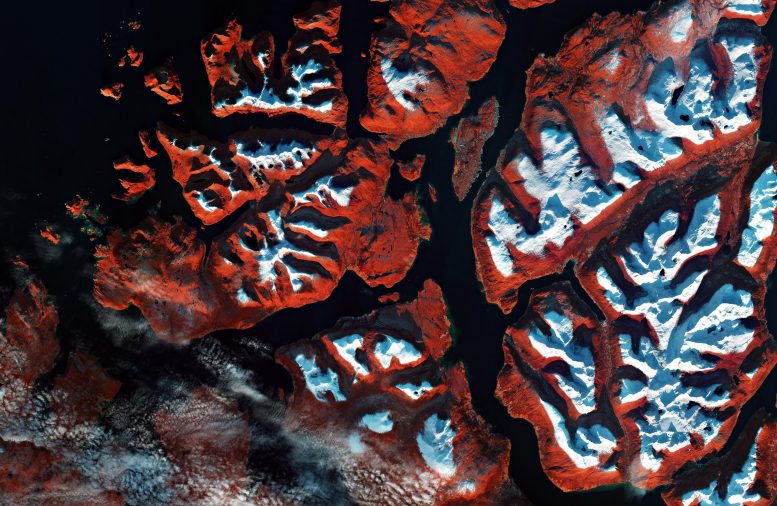
    Tromsø, Norway from space. Credit: contains modified Copernicus Sentinel data (2019), processed by ESA, CC BY-SA 3.0 IGO

    With Christmas just past, the red and white of this Copernicus Sentinel-2 image bring a festive feel to this image featuring Tromsø – the largest city in northern Norway.

    This false-color image was processed in a way that included the near-infrared channel, which makes vegetation appear bright red. The snow over the surrounding mountains is visible in white, adding to the Christmasy feel of the image.

    Most of Tromsø lies on the island of Tromsøya, visible at the top of the image. Owing to its northerly location, the city is a popular area to experience the majestic phenomenon of the aurora borealis, or northern lights.

    Tromsø is over 300 km north of the Arctic Circle. During the winter, it’s shrouded in darkness – the Sun sets in late November and doesn’t rise again until January. The image was captured on October 15, 2019, which means it is one of the last images that Sentinel-2 could acquire before darkness descended.

    During the long winter months, the Copernicus Sentinel-1 mission is used to monitor this region instead of Sentinel-2. As an advanced radar mission, Copernicus Sentinel-1 can image the surface of Earth through clouds and rain regardless of whether it is day or night.

    In September 2019, the German research icebreaker Polarstern left from Tromsø for a mammoth Arctic expedition. The Multidisciplinary drifting Observatory for the Study of Arctic Climate (MOSAiC) expedition involves the icebreaker spending a year drifting in the Arctic sea ice.

    Spearheaded by the Alfred Wegener Institute (AWI), MOSAiC is the biggest shipborne polar expedition of all time. The data gathered during the expedition will be used by scientists around the world to study the Arctic as the epicenter of global warming and gain fundamental insights that are key to better understanding global climate change.

    Never miss a breakthrough: Join the SciTechDaily newsletter.
    Follow us on Google and Google News.

    European Space Agency Geography
    Share. Facebook Twitter Pinterest LinkedIn Email Reddit

    Related Articles

    Earth From Space: Magnificent Canadian Arctic Archipelago

    Breathtaking View of Andros, Bahamas From Space [Video]

    Stunning Views of Houston Texas From Copernicus Sentinel-1 Satellite

    Earth From Space: Bolivian Highland Heart [Video]

    Flevoland, Netherlands From Space: One of the Largest Land Reclamation Projects in the World

    Earth From Space: Lake George, Uganda – A Center for Biological Diversity [Video]

    Deforestation in Bolivia Spied From Space Satellite

    Earth From Space: Japanese Archipelago [Video]

    Earth From Space: Faroe Islands [Video]

    Leave A Reply Cancel Reply

    • Facebook
    • Twitter
    • Pinterest
    • YouTube

    Don't Miss a Discovery

    Subscribe for the Latest in Science & Tech!

    Trending News

    Scientists May Have Solved a Long-Standing Melanoma Treatment Mystery

    This Flesh-Eating Fly Is Back in the U.S. – Scientists Are Tracking Where It Could Strike Next

    Scientists Have Uncovered a Troubling New Pattern Hidden in America’s Rivers

    “Entirely Surprising” – Scientists Have Found a Martian Meteorite Unlike Any Known Before

    “Find of the Year” – Archaeologists Discover the Smallest Ice Age Figurines Ever Found

    New Research Challenges Common Exercise Advice for Bone Health

    Avoiding These 3 Health Risks in Midlife Linked to 13 More Years Without Dementia

    Where Were All the Tiny Dinosaurs? Scientists May Finally Have an Answer

    Follow SciTechDaily
    • Facebook
    • Twitter
    • YouTube
    • Pinterest
    • Newsletter
    • RSS
    SciTech News
    • Biology News
    • Chemistry News
    • Earth News
    • Health News
    • Physics News
    • Science News
    • Space News
    • Technology News
    Recent Posts
    • Scientists Discover a Hidden Hormone Pathway That Protects the Liver From Damage
    • Quitting Alcohol Can Change the Brain in Surprising Ways, Mouse Study Finds
    • FDA-Approved Drug Shows Promise for Reversing Osteoarthritis Damage
    • A 2-Billion-Year-Old Clue Challenges a Popular Earth Science Theory
    • Paleontologists Reconstruct 56-Million-Year-Old Forests – and Find a Chilling Warning for Today
    Copyright © 1998 - 2026 SciTechDaily. All Rights Reserved.
    • Science News
    • About
    • Contact
    • Editorial Board
    • Privacy Policy
    • Terms of Use

    Type above and press Enter to search. Press Esc to cancel.