
Close Menu
    Facebook X (Twitter) Instagram
    SciTechDaily
    • Biology
    • Chemistry
    • Earth
    • Health
    • Physics
    • Science
    • Space
    • Technology
    Facebook X (Twitter) Pinterest YouTube RSS
    SciTechDaily
    Home»Earth»MOSAiC Arctic Expedition – World’s Largest and Longest Polar Research Expedition – Reaches North Pole
    Earth

    MOSAiC Arctic Expedition – World’s Largest and Longest Polar Research Expedition – Reaches North Pole

    By European Space AgencySeptember 10, 2020No Comments4 Mins Read
    Facebook Twitter Pinterest Telegram LinkedIn WhatsApp Email Reddit
    Share
    Facebook Twitter LinkedIn Pinterest Telegram Email Reddit
    MOSAiC Arctic Expedition
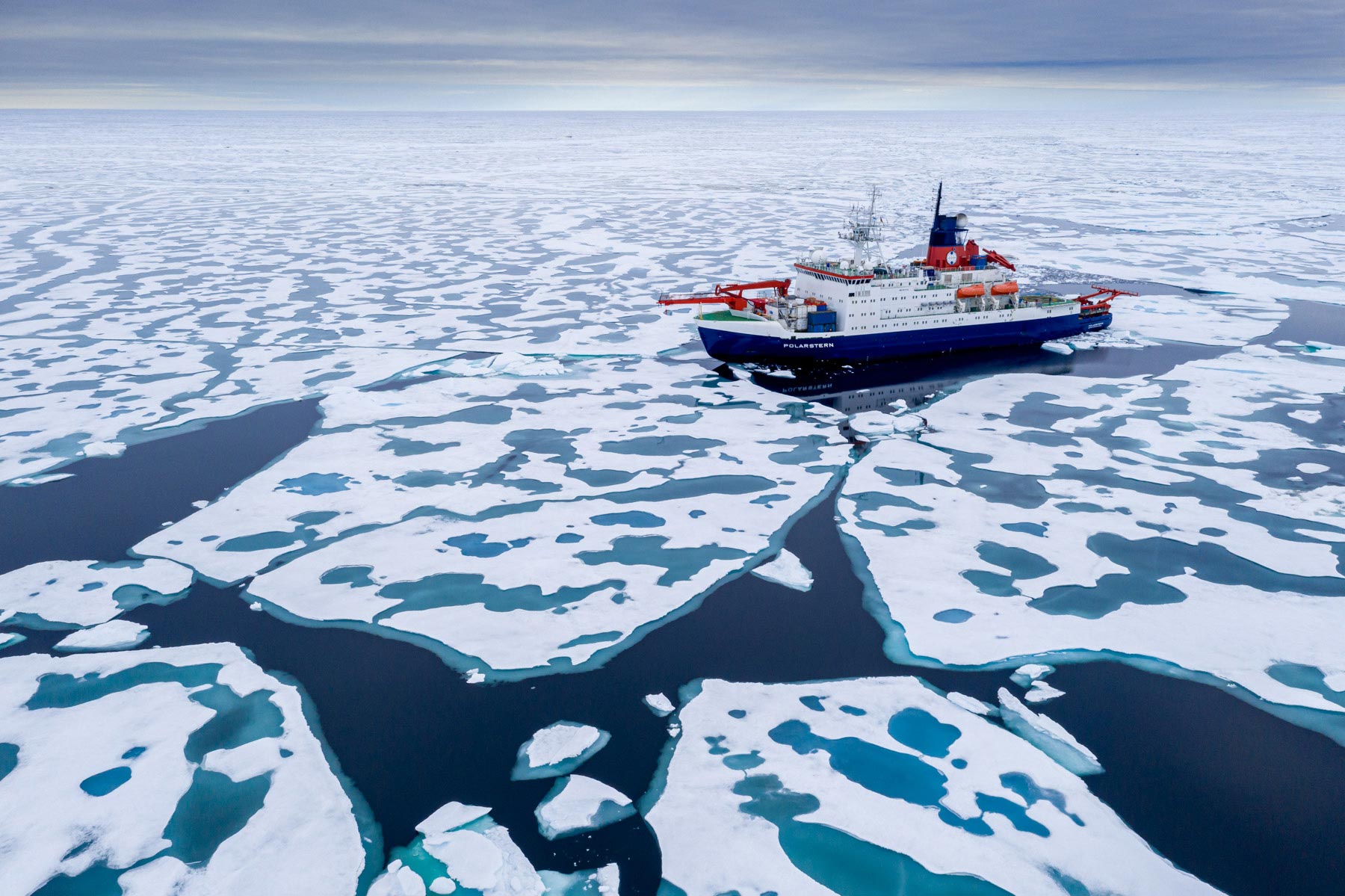
    The Multidisciplinary drifting Observatory for the Study of Arctic Climate (MOSAiC) expedition will make a major contribution to Arctic climate science. Spearheaded by the Alfred Wegener Institute, Helmholtz Centre for Polar and Marine Research (AWI), it is the biggest polar expedition of all time. It involves the Polarstern German research icebreaker spending a year trapped in the sea ice so that scientists from around the world can study the Arctic as the epicenter of global warming and gain fundamental insights that are key to better understand global climate change – and ESA is contributing with a range of experiments. Credit: MOSAiC team/Steffen Graupner

    On August 19, 2020, the world’s largest and longest polar research expedition – known as MOSAiC – reached the North Pole after making an unplanned detour owing to lighter-than-usual sea ice conditions. The expedition is now entering its final stage, during which researchers will study the last piece of the Arctic puzzle: the growth of new sea ice marking the end of the summer season.

    In September 2019, the German research icebreaker Polarstern set sail from Tromsø, Norway, to spend a year drifting through the Arctic Ocean – trapped in ice. After leaving the ice floe it had been sitting in for the previous ten months, the icebreaker traveled through the Fram Strait and along the northeast coast of Greenland – a region that is usually home to thick, multi-year ice.

    Using radar satellite imagery and sea-ice data, researchers onboard the vessel determined that the ice conditions this year were ‘lighter than usual’ and were able to complete their journey to the North Pole in just six days.

    MOSAiC Remote Sensing Site
    MOSAiC Remote Sensing Site. Credit: MOSAiC

    Onboard, during the year-long experiment, around 600 researchers from 20 countries have been carrying out various experiments on the sea ice surrounding the ship in order to gain fundamental insights that are key to better understand global climate change.

    Tânia Casal, Scientific Campaign Coordinator for the Multidisciplinary drifting Observatory for the Study of Arctic Climate (MOSAiC), explains, “The vital importance of these measurements is related to the fact that they are made continuously and simultaneously throughout the full year. The data acquired will give the scientific community an exceptional dataset that will be studied for years to come.”

    One of ESA’s experiments includes the use of a new ground-based dual frequency radar which has been used to measure sea-ice of different ages and thicknesses and is also able to distinguish between the snow and ice among the first results.
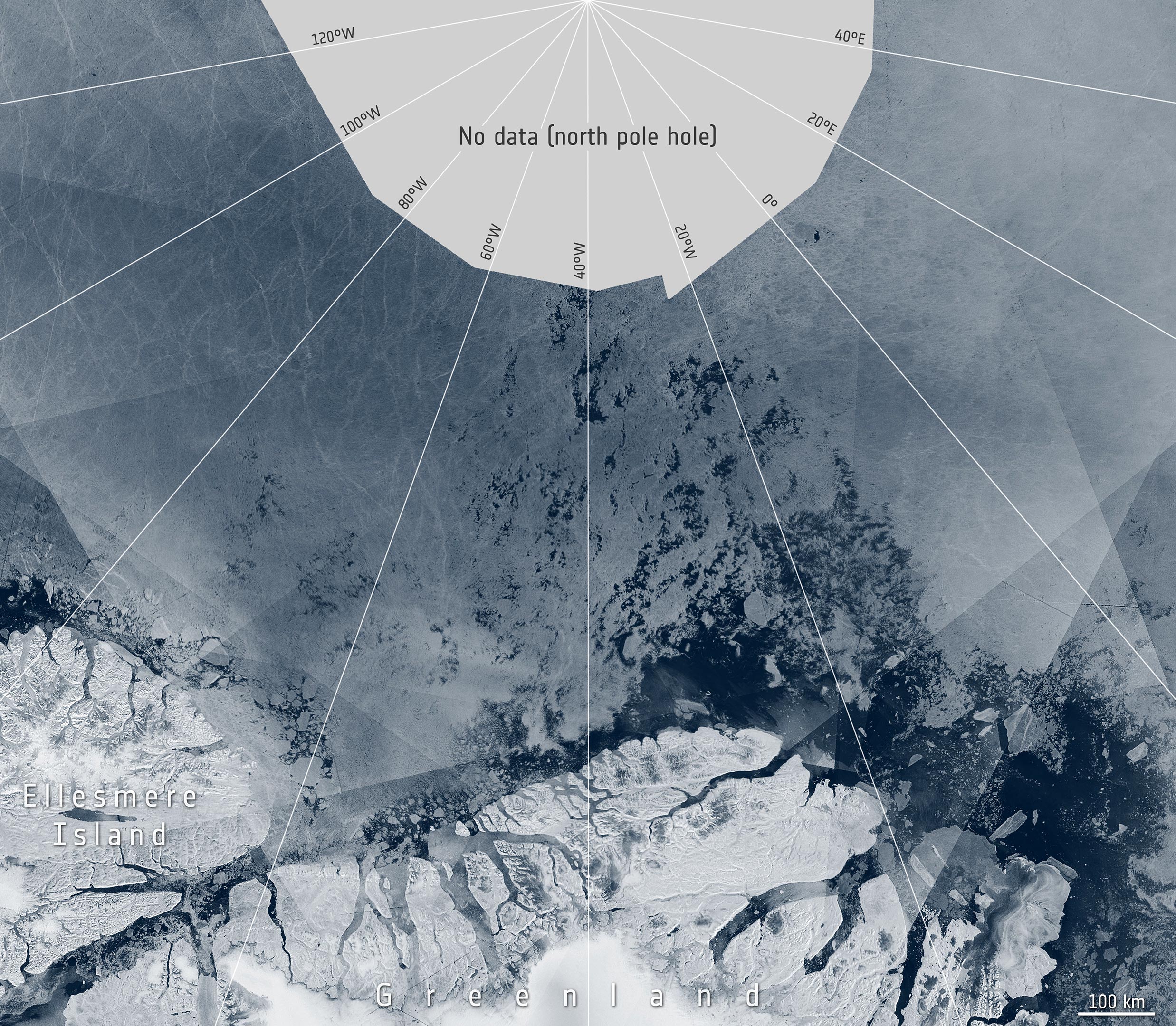
    Arctic Sea Ice August 2020
    Arctic sea ice on August 14, 2020. Credit: Contains modified Copernicus Sentinel data (2020), processed by ESA, CC BY-SA 3.0 IGO

    Tânia comments, “Even though the conditions on the ice have been quite challenging due to the unusual weather conditions faced this year, first results have already revealed that warming events and associated changes of the snow surface can lead to an underestimation of the ice concentration – a major variable when studying the Arctic conditions.”

    Understanding snow and measuring snow depth is very relevant also for ESA’s CryoSat and SMOS missions, as well as preparing for the next three Copernicus high priority candidate missions: CIMR, CRISTAL and ROSE-L.

    Now that the Polarstern has reached the North Pole, researchers have picked out a new ice floe to attach to in order to observe and study the re-freezing of melt ponds and the start of autumn freezing of sea ice.

    Normally, the North Pole is not usually covered by satellite data, and therefore leaves what is called a ‘pole hole’ visible in most Arctic maps. Ordinarily, vessels do not journey near the North Pole, so ice support services are not warranted or needed.

    This posed a challenge during the MOSAiC expedition when the Polarstern ship drifted north of the Copernicus Sentinel-1 routine coverage to continuously study the development of the sea ice. In order to get around this, the WMO Polar Space Task Group (PSTG), which comprises 13 Space Agencies, has undertaken a special tasking of satellites to obtain data of the seldom-imaged North Pole region.

    This involved obtaining observations from CSA RADARSAT-2 and RADARSAT Constellation Missions, DLR’s TerraSAR-X and ASI’s COSMO-SkyMed mission. ESA’s Mark Drinkwater says, “The Polar Space Task Group has made a very special effort in the name of MOSAiC and the Year of Polar Prediction science to collect data in a location where normally there is none.”

    Depending on ice and weather conditions, the Polarstern will follow the Transpolar Drift southwards, from its current position at 88° North. The Polarstern is expected to complete the final stage of the experiment and return to Bremerhaven, Germany, by mid-October.

    Never miss a breakthrough: Join the SciTechDaily newsletter.
    Follow us on Google and Google News.

    Arctic Climate Science European Space Agency North Pole
    Share. Facebook Twitter Pinterest LinkedIn Email Reddit

    Related Articles

    Yale Scientists Solve the Problem of Sea Ice Thickness Distribution

    Jakobshavn Glacier Sheds a Massive Chunk of Ice

    CryoSat Satellite Shows Increased Volume of Arctic Sea Ice

    2015 Arctic Sea Ice Maximum Annual Extent is the Lowest on Record

    Satellite-Based Assessment of Ocean Acidification

    NASA Satellites Show Arctic Ocean is Absorbing More of the Sun’s Energy

    New ScienceCast Video: The Cloudy Future of Arctic Sea Ice

    Cryosat Mission Took Detailed Data of Polar Ice Caps

    Asia and America Will Collide in Millions of Years to Form Supercontinent Amasia

    Leave A Reply Cancel Reply

    • Facebook
    • Twitter
    • Pinterest
    • YouTube

    Don't Miss a Discovery

    Subscribe for the Latest in Science & Tech!

    Trending News

    Largest-Ever Study Finds Medicinal Cannabis Ineffective for Anxiety, Depression, PTSD

    250-Million-Year-Old Egg Solves One of Evolution’s Biggest Mysteries

    Living With Roommates Might Be Changing Your Gut Microbiome Without You Knowing

    Century-Old Cleaning Chemical Linked to 500% Increased Risk of Parkinson’s Disease

    What if Your Memories Never Happened? Physicists Take a New Look at the Boltzmann Brain Paradox

    One of the Universe’s Largest Stars May Be Getting Ready To Explode

    Scientists Discover Enzyme That Could Supercharge Ozempic-Like Weight Loss Drugs

    Popular Sweetener Linked to DNA Damage – “It’s Something You Should Not Be Eating”

    Follow SciTechDaily
    • Facebook
    • Twitter
    • YouTube
    • Pinterest
    • Newsletter
    • RSS
    SciTech News
    • Biology News
    • Chemistry News
    • Earth News
    • Health News
    • Physics News
    • Science News
    • Space News
    • Technology News
    Recent Posts
    • Challenging the Narrative: New Study Shows U.S. Life Expectancy Is Rising Across All States
    • Mystery Illness Kills 5 in Burundi As Doctors Scramble for Answers
    • Bone-Strengthening Discovery Could Reverse Osteoporosis
    • The Most Elusive Number in Physics Just Got Even More Mysterious
    • Scientists Uncover Hidden Trigger Behind Stem Cell Aging
    Copyright © 1998 - 2026 SciTechDaily. All Rights Reserved.
    • Science News
    • About
    • Contact
    • Editorial Board
    • Privacy Policy
    • Terms of Use

    Type above and press Enter to search. Press Esc to cancel.