
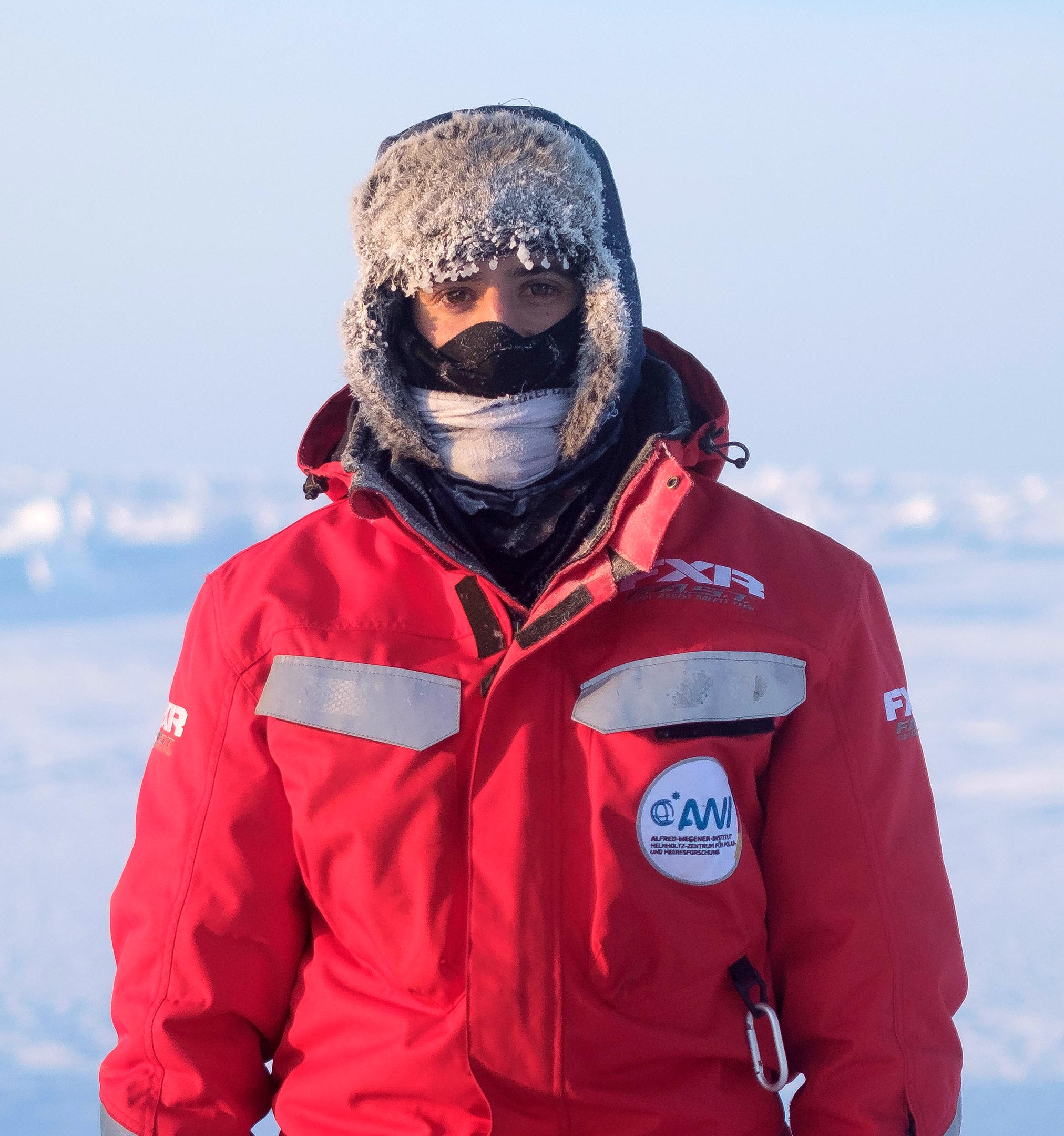
Ph.D. student Steven Fons’ Arctic research adventure, complicated by COVID-19.
For Steven Fons, returning home to D.C. in June was like coming back from another planet.
“It was totally surreal. The grass and the trees were greener than I remembered,” recalled Fons, an atmospheric and oceanic science Ph.D. student at the University of Maryland. “To see everything in full bloom, to see people outside, it was so weird. It was like coming back to planet Earth from someplace else.”
Fons spent the previous five months worlds away from anything even remotely like home. While so many around the world were struggling to adjust to stay-at-home orders and mask mandates due to the COVID-19 pandemic, Fons was living in a starkly different kind of isolation—on the dark, frigid doorstep of the North Pole. In January, he joined scientists and crew members from 20 countries on a research mission called MOSAiC, the largest and longest Arctic expedition in history.
“MOSAiC is an acronym that stands for Multidisciplinary drifting Observatory for the Study of Arctic Climate,” Fons explained. “Basically, it’s a big yearlong expedition to study every aspect of the Arctic climate, looking at the ocean, the atmosphere above the sea ice, the sea ice, some of the biogeochemistry, and the ecology—the animals above and below the ice.”
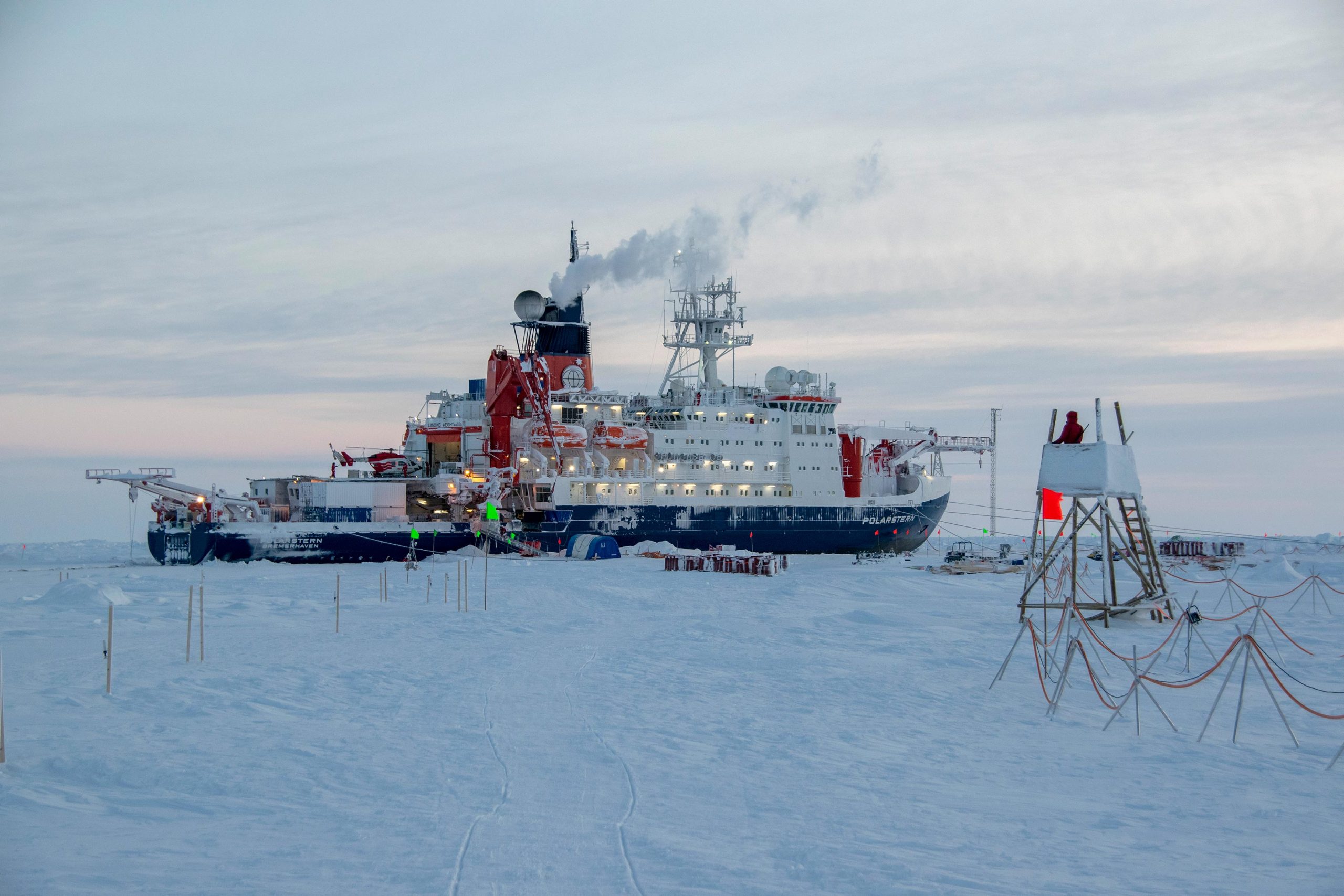
Home base for MOSAiC is the German icebreaker Polarstern, a 120-meter (400-foot) research vessel equipped with living quarters, creature comforts like a gym and swimming pool, and labs for scientific research. It’s a drifting observatory, embedded in a sheet of floating ice—called an ice floe—for the duration of the expedition.
“The point wasn’t to break through the ice and go to some specific location, but to follow this one piece of ice throughout the whole yearly cycle,” Fons said. “You never felt like you were moving, but there were times when we’d cover a little over 20 miles (32 kilometers) in a day, just drifting.”
When Fons and the rest of his group arrived on Polarstern, they were plunged in total darkness—the sun never rose above the horizon. A few days later, they were in 24-hour daylight. The temperatures—relentlessly frigid.
“The coldest temperature I think we saw was minus 42 degrees Celsius (-44 degrees Fahrenheit), then it warmed up to around minus 30 (-22 degrees Fahrenheit),” Fons explained. “You couldn’t really wear too many layers. I think I had something like seven layers on top, maybe four or five on the bottom. My winter coat that I wear here in D.C., I actually wore that, but I also wore two more winter coats on top.”
But it wasn’t just the bitter cold. Working in the Arctic meant adjusting to a very different environment, with sudden windstorms, blowing snow and ice, even polar bears.
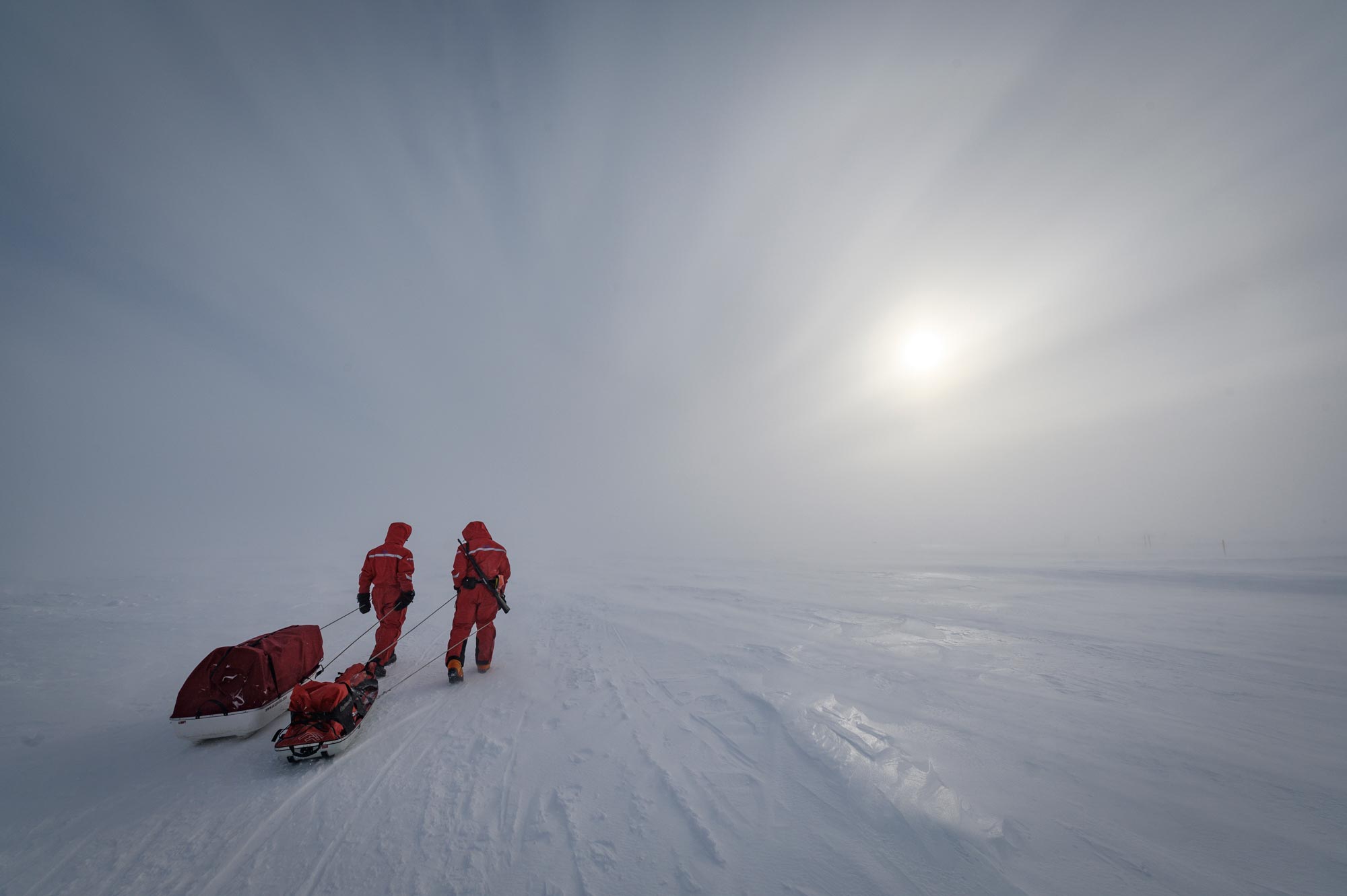
“Every time we went out on the ice, we had to have what we called a polar bear guard and that person would strictly stand with us, searching for polar bears to make sure we were safe,” Fons said. “The polar bears were much more yellow than I expected, and they would stick out from the white snow and ice. Plus, they’re big and fast, extremely fast. I would say that we got lucky in that we had very few sightings, but we did have one in our camp early one morning.”
Working every day on an ice floe presented its own set of dangers.
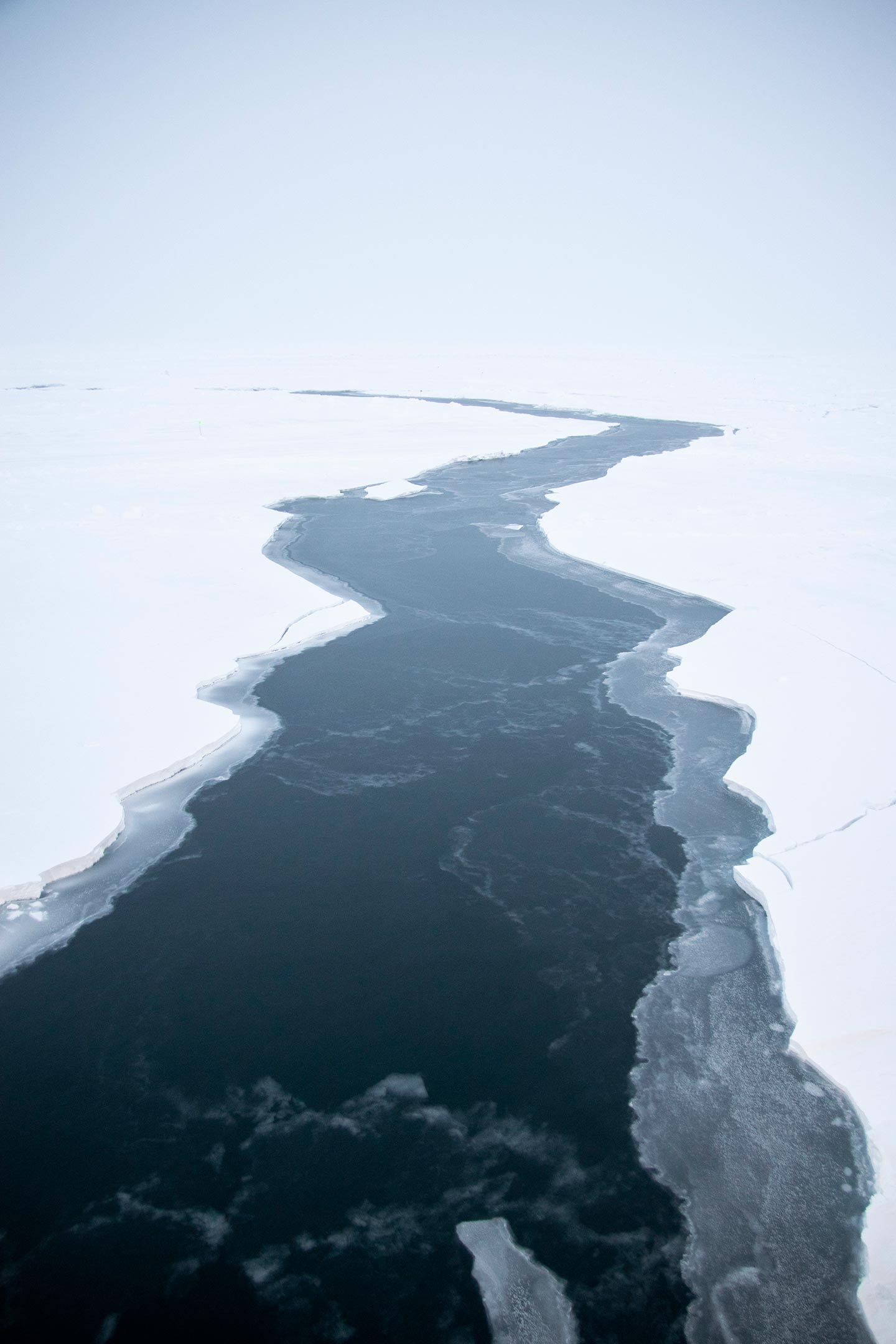
“We’re walking or driving snowmobiles around to do our work, and, at least for me, I would forget that I was on top of the floating sea ice,” Fons said. “And then a giant crack would open or I’d look in a hole and think, that’s 3 to 4 kilometers (2 to 2.5 miles) straight down and nothing below us but ocean. Definitely kind of intimidating.”
For Fons, who is advised by Atmospheric and Oceanic Science Professor James Carton and NASA Goddard Space Flight Center researcher Nathan Kurtz, ice studies and developing new techniques to estimate the thickness of sea ice from satellites are key elements of his Ph.D. research. As a leader on the MOSAiC sea ice team, Fons conducted weekly drillings of Arctic ice cores to evaluate their temperature, salinity, and density.
“For me, it’s important to know those things to understand the mass-balance of the sea ice—things like how thickness changes of the ice may be distributed differently across the Arctic,” Fons explained. “I’m interested in the retrieval of sea ice thickness data from satellites, so it’s important to know the salinity and the density of the ice to be able to calculate the thickness of the ice from that data.”
Fons has studied satellite and aircraft-based data on sea ice for the last few years. But being in the Arctic created exciting new opportunities—at one point, Polarstern’s location gave Fons a rare chance to look at measurements from NASA’s ICESat-2 satellite from a whole new perspective.
“We were able to go out with the helicopter that was mounted with a laser scanner that measures the elevation of the ice and allows you to calculate the thickness of the sea ice. What we were able to do is fly directly beneath the orbit of the NASA satellite at the exact same time that the satellite flew over it,” Fons explained. “This is really useful to help validate the satellite measurements that we’re taking and validate some of the sea ice thickness retrieval algorithms.”
The research opportunities were extraordinary, but for Fons, the experience itself and the remoteness of the location were even more amazing.
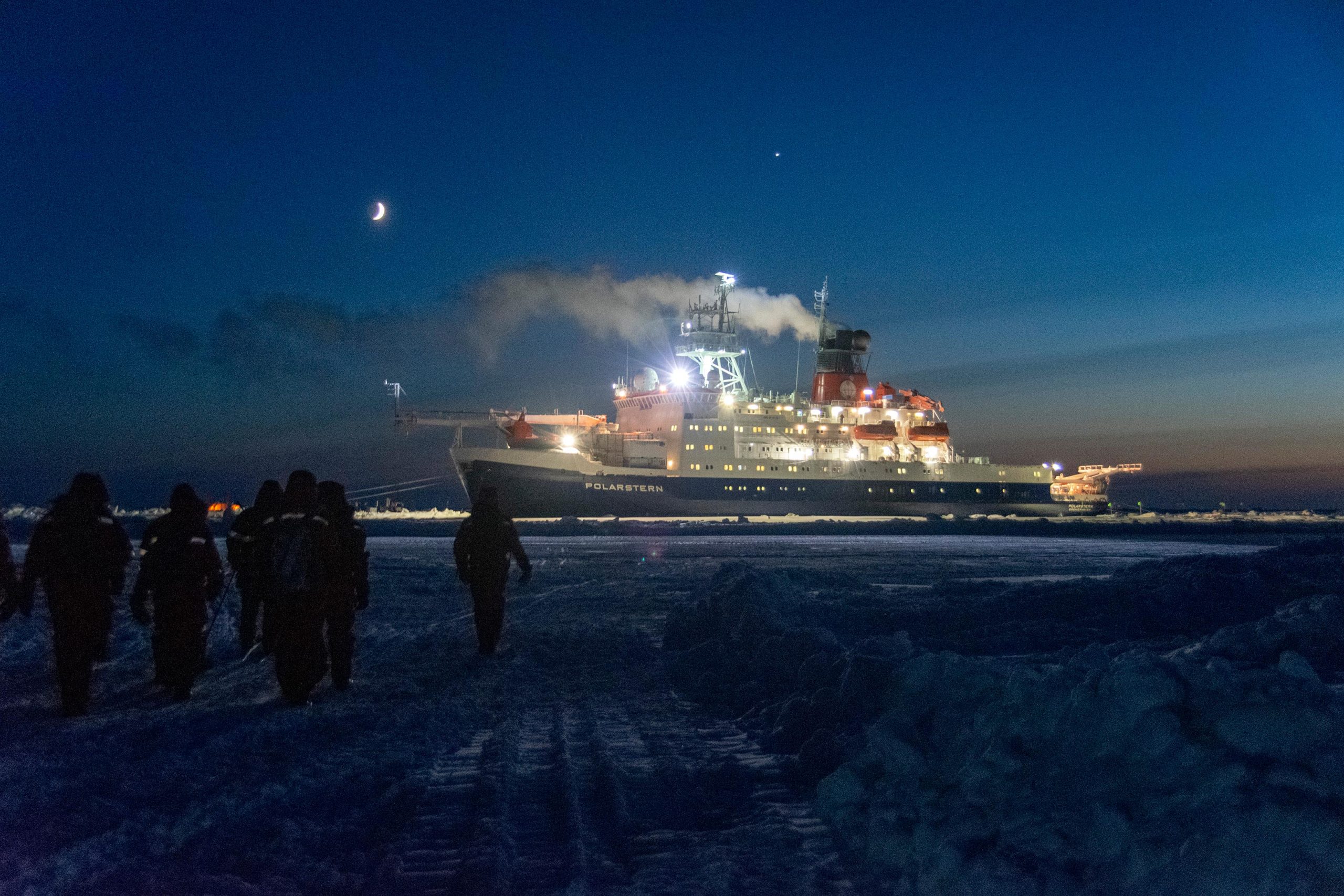
“It was just so surreal. You’re out there so isolated and so far away from everything,” Fons said. “You still feel like there’s some civilization because the ship is usually within sight when you’re working, but at the same time when you turn around and look in the other direction, and you’re just staring and there’s nothing in front of you except for ice and snow as far as you can see. It was spectacular.”
Though they were thousands of miles from civilization, news still found its way to Polarstern, including updates on the COVID-19 pandemic. For Fons and his colleagues, the stories seemed almost too unbelievable to be true.
“To a lot of us, it just seemed so far off, it was so bizarre to hear that the world that we just came from had changed so much and become so different,” Fons said. “And hearing from my family and friends that they couldn’t go to the office for work and they were basically stuck at home and couldn’t really go out, it was a shock, just bizarre to hear.”
Just before they were scheduled to complete their MOSAiC assignment and head home in early April, Fons and his colleagues were hit with one more stunning piece of news: due to COVID-19 quarantine rules and travel restrictions, they could not leave Polarstern. They were stranded in the Arctic, indefinitely.
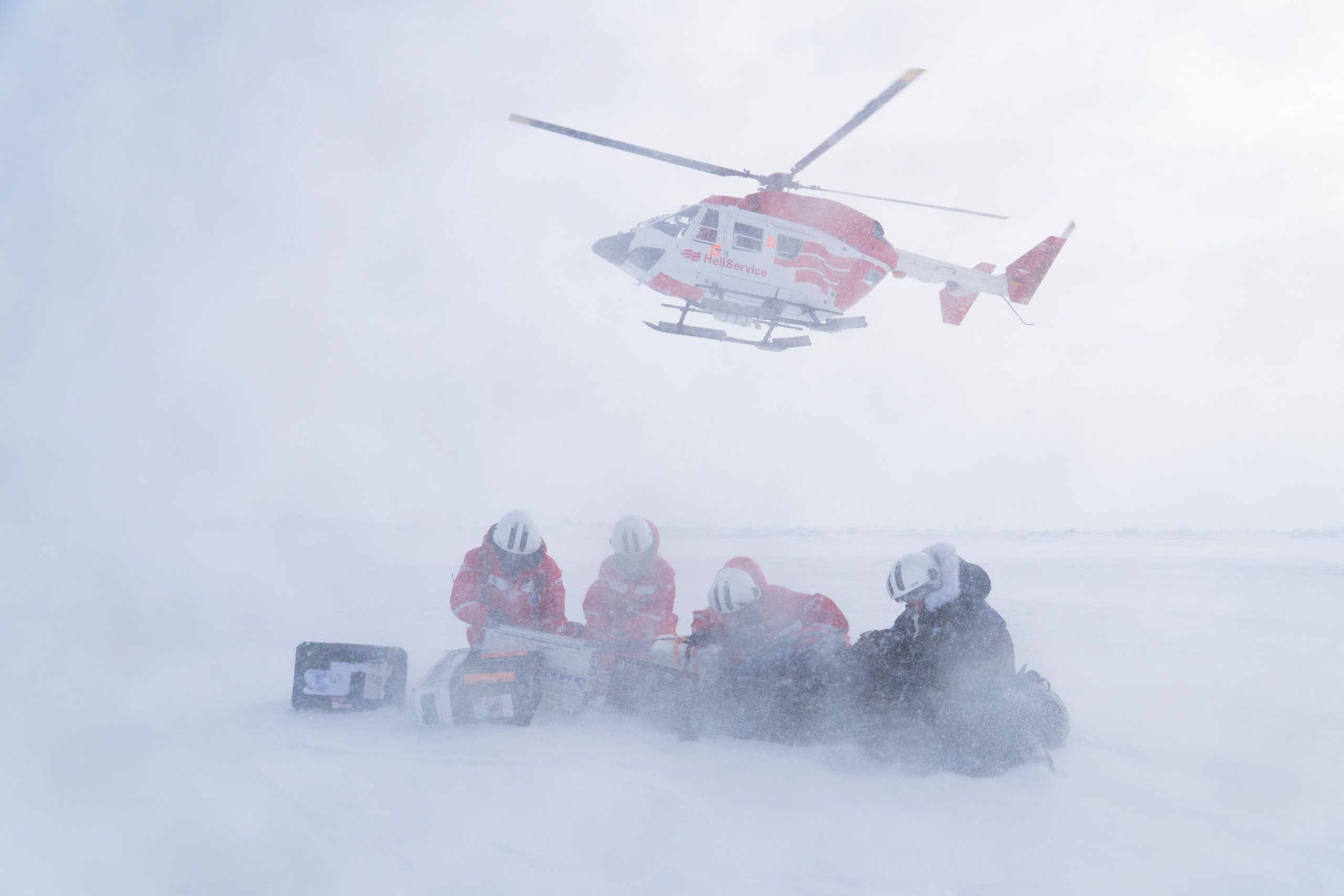
“You could say we were kind of stranded already, for the entire expedition, but in this case we were stranded in a way that if we left we really had nowhere to go because our replacement flights couldn’t get there and there was really no way to get home,” Fons explained. “We knew they were working on a way to get us out, but we really just had no idea when that was going to be or how.”
Stuck where they were, Fons and his colleagues continued their Arctic research. And waited. Then, finally, on May 16, he and the other scientists set sail to Norway and began the long trip home, trading places with a new group of MOSAiC scientists.
“It was bittersweet, definitely, because I had spent five months with the same 100 people in very tight quarters and I’d gotten to know everybody really well, so it was sad to leave at first,” Fons said.” But as we kind of got away from the ice and we were finally headed back toward home, everybody just got really excited to see their families again.”
Now, with his Arctic research trip behind him, Fons is readjusting to the new normal in D.C., grateful to finally be back home. The trip lasted a lot longer than he’d planned, but he has no regrets—he wouldn’t have missed the Arctic adventure for anything.
“I’m extremely happy I made the decision to go, and extremely fortunate to have had the opportunity,” Fons said. “It meant giving up a lot of time and missing quite a few things here, but in the grand scheme of things, I think this is really a life-changing opportunity and I’m really, really glad that I was part of it.”
Never miss a breakthrough: Join the SciTechDaily newsletter.
Follow us on Google and Google News.