
More Arctic sea ice is entering the North Atlantic Ocean than before, making it increasingly dangerous for ships to navigate those waters in late spring, according to new research.
The new research finds ocean passages typically plugged with ice in the winter and spring are opening up. Sea ice normally locked in the Arctic then can flow freely through these passages southward to routes used by shipping, fishing and ferry boats.
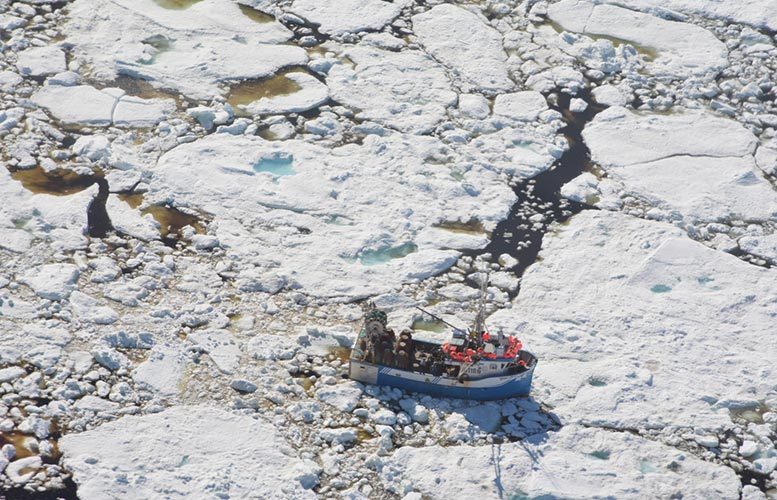
The new study finds Arctic sea ice surged through these channels in 2017 and clogged normally open areas of ocean around Newfoundland in May and June. The ice cover trapped many unsuspecting ships and sunk some boats when the ice punctured their hulls.
The study authors conclude that warming temperatures due to climate change are melting more Arctic ice, increasing ice mobility, and opening channels that are normally frozen shut. They predict last year’s events could occur more often in the future as Arctic temperatures continue to rise.
“It’s counterintuitive to most people, because it means you can have an increase in local ice hazards because of a changing climate in the high Arctic,” said David Barber, an Arctic climate researcher at the University of Manitoba in Winnipeg, Canada and lead author of the new study in Geophysical Research Letters, a journal of the American Geophysical Union. “This is something we need to better prepare for in the future, because we expect this phenomenon to go on for at least a couple more decades as we transition to an ice-free Arctic in the summer.”
An Unexpected Research Opportunity
Winter sea ice is common in the North Atlantic Ocean, but ice typically melts by May of each year. Shipping, fishing, and ferrying industries pick up around this time, and vessels normally travel through coastal waters unimpeded.
But a large amount of sea ice lingered along Canada’s east coast into May and June of 2017. The unusually thick ice cover took ships by surprise. The ice was much thicker than usual – up to 8 meters (26 feet) thick in some cases. Off the Newfoundland coast, an unprecedented number of ships, fishing vessels, and ferry boats became trapped in the ice.
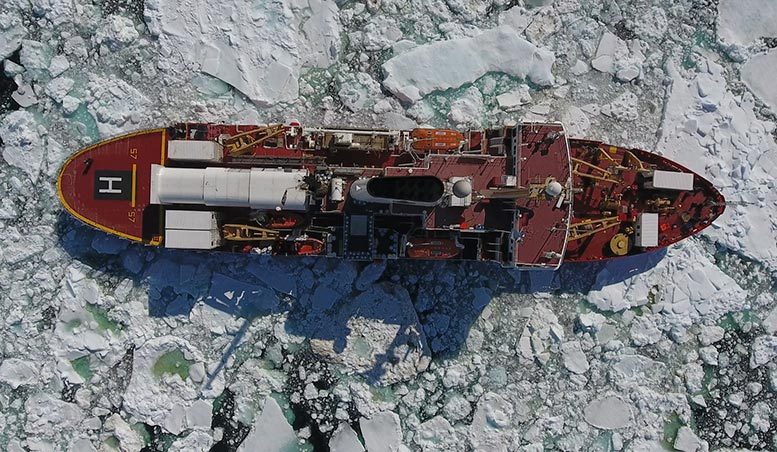
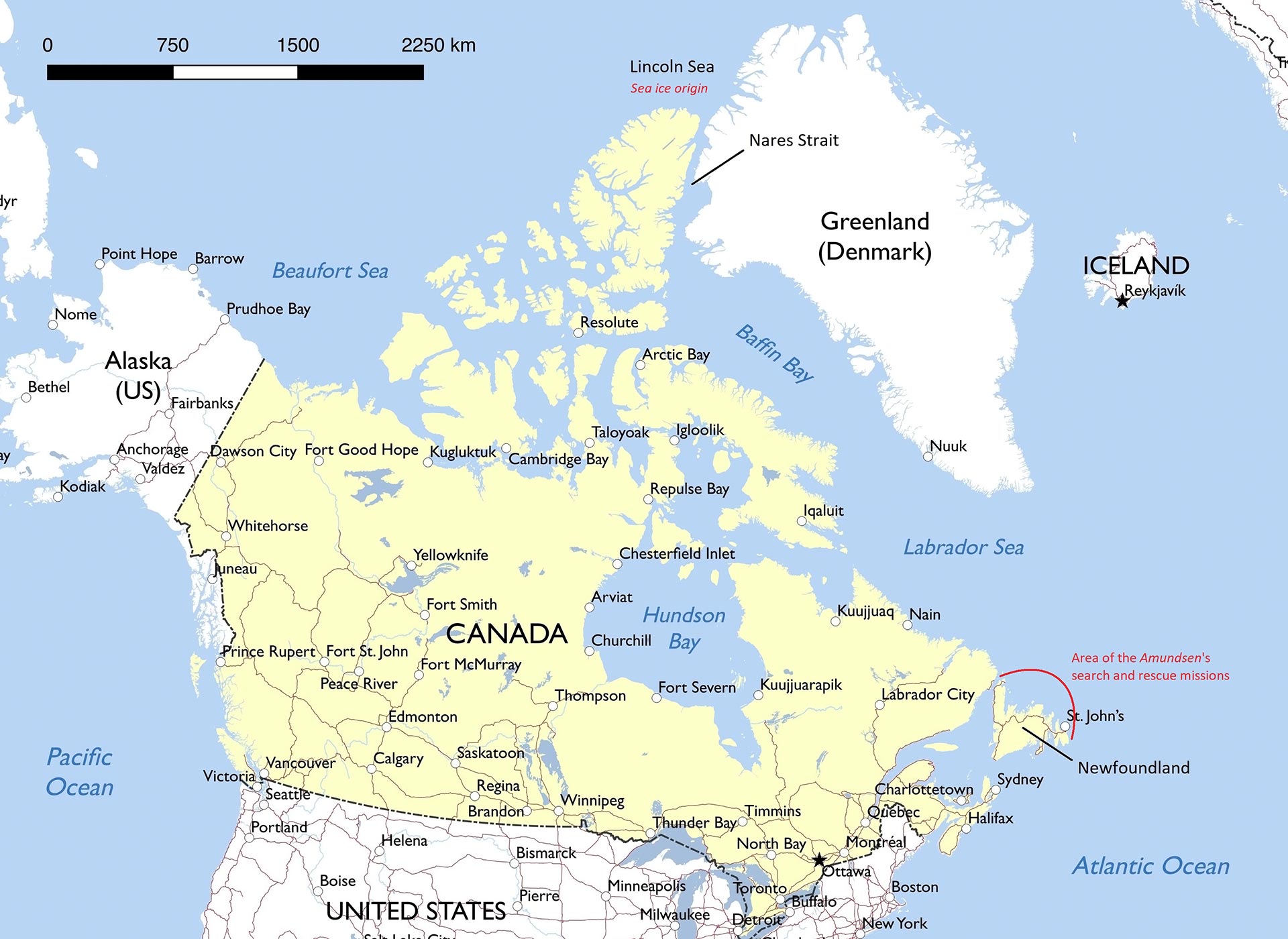
In early June, the Canadian coast guard pulled the research icebreaker Amundsen off its scientific expedition to escort ferries caught in the congested seas to open water, and conduct search and rescue operations for stranded passengers of ferry boats and ships trapped in the ice, as it was the only large icebreaker available at the time.
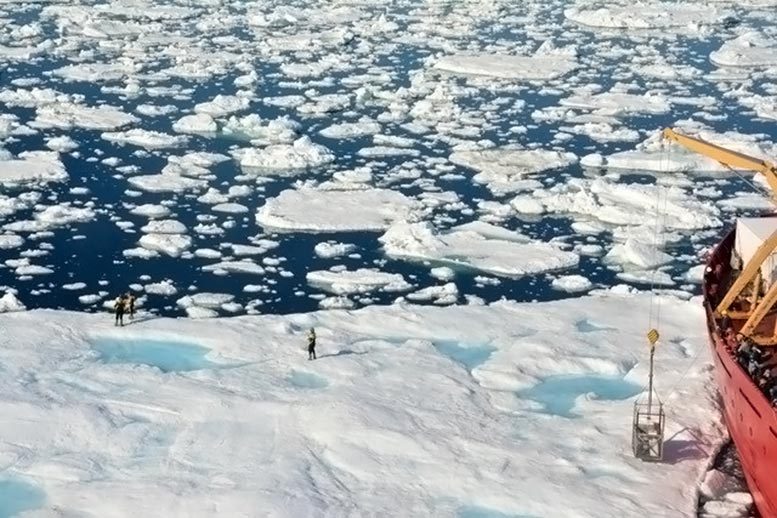
Between search and rescue missions, Barber and other scientists aboard the Amundsen used the ship’s research equipment to figure out where the sea ice had come from and why so much ice was there at all. They took samples of the ice and measured its thickness, temperature and salinity. They used drones to take aerial images of the ice cover, and satellite data from the Canadian Ice Service to track sea ice movements back in time.
Why Was There So Much Ice?
Ice arches are natural dams that form in narrow Arctic channels like Lancaster Sound and the Nares Strait in the winter. The arches keep most sea ice from moving southward. Previous research found ice arches failed to form in the Nares Strait in 2007 and a record amount of sea ice flowed south that year.
According to the new study, something similar happened in 2017: The sea ice around Newfoundland had features of ice found only in the high Arctic. The ice likely formed in the Lincoln Sea just north of Greenland, more than 3,000 kilometers (1,800 miles) north of Newfoundland, Barber said.
The sea ice the authors sampled would have had to travel freely through the Nares Strait to make it to Baffin Bay and eventually to Newfoundland, which could only have happened if ice arches had failed to form, according to the study.
The study authors conclude that warming temperatures due to climate change are making it more difficult for ice arches to form every winter, preventing them from blocking the southward flow of sea ice. Warming temperatures are also changing ocean and atmospheric circulation in the Arctic, making sea ice more mobile, Barber said.
Events like the ice conditions Barber witnessed are difficult to forecast, so scientists and decision-makers need to be prepared for them, said Ronald Kwok, a climate researcher at NASA’s Jet Propulsion Laboratory in Pasadena, California, who was not connected to the new study. Barber and other researchers have been monitoring the ice closely and don’t expect as much ice to travel south this year. But just in case, they’ve informed the Canadian coast guard so more than one icebreaker can be available for search and rescue.
Reference: “Increasing Mobility of High Arctic Sea Ice Increases Marine Hazards Off the East Coast of Newfoundland” D. G. Barber, D. G. Babb, J. K. Ehn, W. Chan, L. Matthes, L. A. Dalman, Y. Campbell, M. L. Harasyn, N. Firoozy, N. Theriault, J. V. Lukovich, T. Zagon, T. Papakyriakou, D. W. Capelle, A. Forest, A. Gariepy, 28 February 2018, Geophysical Research Letters.
DOI: 10.1002/2017GL076587
PDF Copy of the Paper: Increasing mobility of high Arctic sea ice increases marine hazards off the east coast of Newfoundland
Authors:
Barber, D.G., D.G. Babb, J.K. Ehn, W. Chan, L. Matthes, L. Dalman, Y. Campbell, M. Harasyn, N. Firoozy, N. Theriault, J. Lukovich, T. Papakyriakou, D. Capelle: Center for Earth Observation Science, University of Manitoba, Winnipeg, Manitoba, Canada;
T. Zagon: Canadian Ice Service, Ottawa, Ontario, Canada;
A. Forest: Amundsen Science, Laval University, Quebec, Quebec, Canada;
A. Gariepy: Canadian Coast Guard, Quebec, Quebec, Canada.
Never miss a breakthrough: Join the SciTechDaily newsletter.
Follow us on Google and Google News.