
Close Menu
    Facebook X (Twitter) Instagram
    SciTechDaily
    • Biology
    • Chemistry
    • Earth
    • Health
    • Physics
    • Science
    • Space
    • Technology
    Facebook X (Twitter) Pinterest YouTube RSS
    SciTechDaily
    Home»Earth»Earth From Space: Bolivian Highland Heart [Video]
    Earth

    Earth From Space: Bolivian Highland Heart [Video]

    By ESA - European Space AgencyFebruary 14, 2020No Comments3 Mins Read
    Facebook Twitter Pinterest Telegram LinkedIn WhatsApp Email Reddit
    Share
    Facebook Twitter LinkedIn Pinterest Telegram Email Reddit
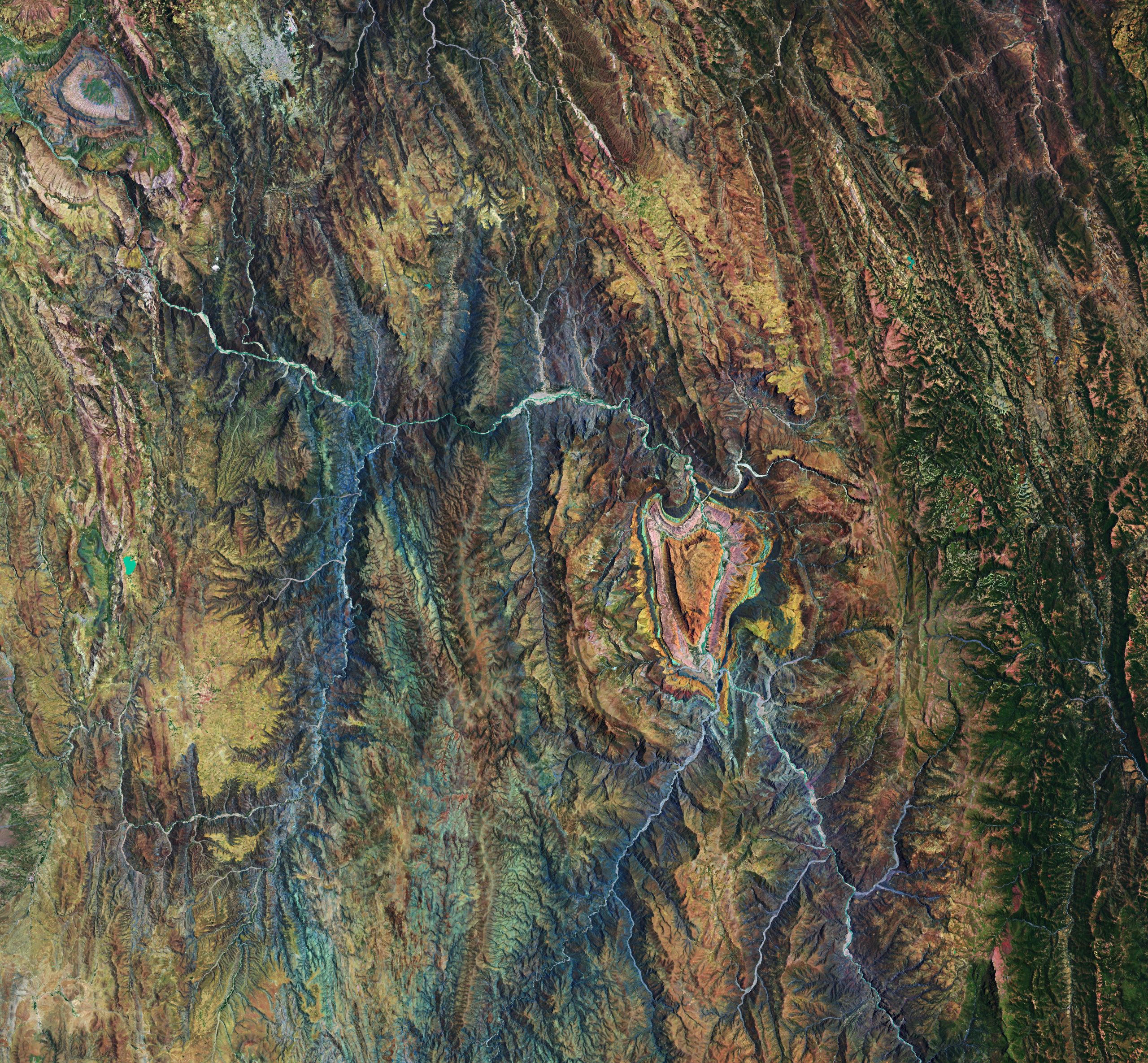
    Bolivian Highland Heart
    This false-color composite image of a beautiful heart-shaped geographical formation in the dramatic landscape of the southern highlands of Bolivia was processed by selecting spectral bands that can be used for classifying geological features – but here the image processing also highlights this lovely heart for today’s image. Credit: Contains modified Copernicus Sentinel data (2020), processed by ESA, CC BY-SA 3.0 IGO

    For Valentine’s Day, we bring you this Copernicus Sentinel-2 image capturing a beautiful heart-shaped geographical formation in the dramatic landscape of the southern highlands of Bolivia.

    The highlands are part of the Altiplano, meaning High Plateau, a region that stretches almost 1000 km from Peru to Bolivia. The landscape consists of a series of basins lying about 3,500 m (11,500 ft) above sea level and is the most extensive area of high plateau on Earth, outside Tibet.

    This particular area featured here is a transition between the desert in the west and the tropical forest in the east. The heart-shaped formation has been molded by many layers of different geological formations over time. The many streams and rivers visible in this image have also contributed to the shaping of the landscape as we see it today.

    This false-color composite image was processed by selecting spectral bands that can be used for classifying geological features – but here the image processing also highlights this lovely heart for today’s image.

    Sucre, the capital of the Chuquisaca Department, is visible at the top of the image in grey. Designated as a UNESCO World Heritage Site, the city lies at an elevation of around 2,800 meters (9,200 feet) above sea level. To the left of Sucre, the Maragua crater can be seen – a popular hiking destination.

    Satellites, such as Copernicus Sentinel-2, allow us to capture beautiful images such as these from space, but also to monitor changing places on Earth. Flying 800 km (500 mi) above, satellites take the pulse of our planet by systematically imaging and measuring changes taking place, which is particularly important in regions that are otherwise difficult to access. This allows for informed decisions to be made to help protect our world for future generations and for all citizens that inhabit our beloved Earth.

    We send all our love for Valentine’s Day from the high plateaus of Bolivia – and hope we continue our celebration of love for Earth every day of the year.

    Never miss a breakthrough: Join the SciTechDaily newsletter.
    Follow us on Google and Google News.

    European Space Agency Geography Geology
    Share. Facebook Twitter Pinterest LinkedIn Email Reddit

    Related Articles

    Salt and Spectacle: Satellite Reveals East Africa’s Pink Lakes

    Exploring Earth From Space: Maharloo Lake, Iran [Video]

    Vast Mineral Deposits in the Atacama Desert Seen From Space

    Mysterious Red Circles in Satellite Image of Southern Ukraine Explained

    Earth From Space: Magnificent Canadian Arctic Archipelago

    Earth From Space: Japanese Archipelago [Video]

    Earth From Space: Faroe Islands [Video]

    Earth From Space: Tromsø, Norway [Video]

    Search for Extra-Terrestrial Life Takes Mars Scientists on Expedition to Australia

    Leave A Reply Cancel Reply

    • Facebook
    • Twitter
    • Pinterest
    • YouTube

    Don't Miss a Discovery

    Subscribe for the Latest in Science & Tech!

    Trending News

    Just a Few Breathless Minutes a Day Could Slash Your Risk of 8 Major Diseases

    This Simple Habit Could Cut Your Risk of Dementia by 30%

    Scientists Debunk Rattlesnake Myth That Fooled Hikers and Doctors for Decades

    Scientists Discover Plants Can “Count” – and May Be Smarter Than We Thought

    New Research Reveals Ancient Mars May Have Been Warm, Wet – and Possibly Alive

    This Surprising Daily Habit Could Cut Dementia Risk by 35%

    Just 10 Minutes a Day: Scientists Say This Ancient Chinese Practice Shows Powerful Blood Pressure Benefits

    Scientists Say This Popular Food Could Help Your Body Get Rid of Microplastics

    Follow SciTechDaily
    • Facebook
    • Twitter
    • YouTube
    • Pinterest
    • Newsletter
    • RSS
    SciTech News
    • Biology News
    • Chemistry News
    • Earth News
    • Health News
    • Physics News
    • Science News
    • Space News
    • Technology News
    Recent Posts
    • What Causes Chronic Pain? Scientists Identify Key Culprit in the Brain
    • Semaglutide Shows Surprising Mental Health Benefits in Massive 100,000-Person Study
    • This Little-Known Japanese Fruit Could Help Stop Lung Cancer Before It Starts
    • Scientists Uncover Giant Lava Fields From an Active Underwater Volcano
    • Baffling Geologists for 150 Years: New Study Finally Solves Green River Mystery
    Copyright © 1998 - 2026 SciTechDaily. All Rights Reserved.
    • Science News
    • About
    • Contact
    • Editorial Board
    • Privacy Policy
    • Terms of Use

    Type above and press Enter to search. Press Esc to cancel.