
Close Menu
    Facebook X (Twitter) Instagram
    SciTechDaily
    • Biology
    • Chemistry
    • Earth
    • Health
    • Physics
    • Science
    • Space
    • Technology
    Facebook X (Twitter) Pinterest YouTube RSS
    SciTechDaily
    Home»Earth»Earth From Space: Japanese Archipelago [Video]
    Earth

    Earth From Space: Japanese Archipelago [Video]

    By ESA - European Space AgencyJanuary 20, 2020No Comments2 Mins Read
    Facebook Twitter Pinterest Telegram LinkedIn WhatsApp Email Reddit
    Share
    Facebook Twitter LinkedIn Pinterest Telegram Email Reddit
    Japanese Archipelago
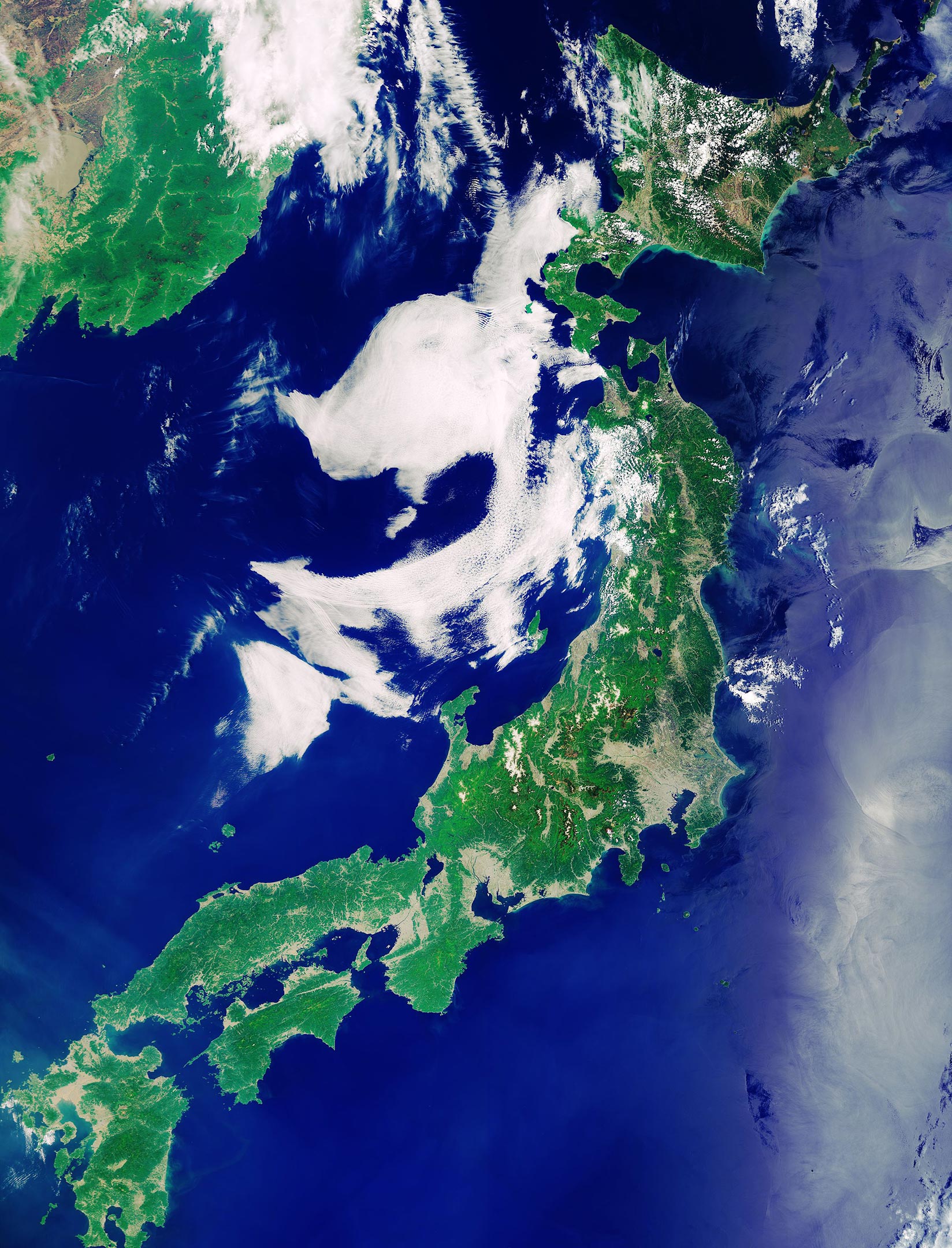
    (Click image for full view.) Picture captured on May 24, 2019, by the Copernicus Sentinel-3 mission. Credit: Contains modified Copernicus Sentinel data (2019), processed by ESA, CC BY-SA 3.0 IGO

    The Copernicus Sentinel-3 mission takes us over the Japanese archipelago – a string of islands that extends about 3000 km into the western Pacific Ocean.

    While the archipelago is made up of over 6000 islands, this image focuses on Japan’s four main islands. Running from north to south, Hokkaido is visible in the top right corner, Honshu is the long island stretching in a northeast–southwest arc, Shikoku can be seen just beneath the lower part of Honshu, and Kyushu is at the bottom.

    Honshu’s land mass comprises approximately four-fifths of Japan’s total area. Honshu’s main urban areas of Tokyo, Nagoya, and Osaka are clearly visible in the image. The large grey area in the east of the island, near the coast, is Tokyo, while the smaller areas depicted in grey are the areas around Nagoya and Osaka.

    Honshu is also home to the country’s largest mountain, Mount Fuji. A volcano that has been dormant since it erupted in 1707, Mount Fuji is around 100 km southwest of Tokyo and its snow-covered summit can be seen as a small white dot.

    The Sea of Japan, also referred to as the East Sea, (visible to the west of the archipelago) separates the country from the east coast of Asia. The turquoise waters surrounding the island of Hokkaido can be seen at the top of the image, while the waters in the right of the image have a silvery hue because of sunglint – an optical effect caused by the mirror-like reflection of sunlight from the water surface back to the satellite sensor.

    Sentinel-3 is a two-satellite mission to supply the coverage and data delivery needed for Europe’s Copernicus environmental monitoring program. Each satellite’s instrument package includes an optical sensor to monitor changes in the color of Earth’s surfaces. It can be used, for example, to monitor ocean biology and water quality.

    Never miss a breakthrough: Join the SciTechDaily newsletter.
    Follow us on Google and Google News.

    European Space Agency Geography
    Share. Facebook Twitter Pinterest LinkedIn Email Reddit

    Related Articles

    Earth From Space: Magnificent Canadian Arctic Archipelago

    Breathtaking View of Andros, Bahamas From Space [Video]

    Stunning Views of Houston Texas From Copernicus Sentinel-1 Satellite

    Earth From Space: Bolivian Highland Heart [Video]

    Flevoland, Netherlands From Space: One of the Largest Land Reclamation Projects in the World

    Earth From Space: Lake George, Uganda – A Center for Biological Diversity [Video]

    Deforestation in Bolivia Spied From Space Satellite

    Earth From Space: Faroe Islands [Video]

    Earth From Space: Tromsø, Norway [Video]

    Leave A Reply Cancel Reply

    • Facebook
    • Twitter
    • Pinterest
    • YouTube

    Don't Miss a Discovery

    Subscribe for the Latest in Science & Tech!

    Trending News

    Largest-Ever Study Finds Medicinal Cannabis Ineffective for Anxiety, Depression, PTSD

    250-Million-Year-Old Egg Solves One of Evolution’s Biggest Mysteries

    Living With Roommates Might Be Changing Your Gut Microbiome Without You Knowing

    Century-Old Cleaning Chemical Linked to 500% Increased Risk of Parkinson’s Disease

    What if Your Memories Never Happened? Physicists Take a New Look at the Boltzmann Brain Paradox

    One of the Universe’s Largest Stars May Be Getting Ready To Explode

    Scientists Discover Enzyme That Could Supercharge Ozempic-Like Weight Loss Drugs

    Popular Sweetener Linked to DNA Damage – “It’s Something You Should Not Be Eating”

    Follow SciTechDaily
    • Facebook
    • Twitter
    • YouTube
    • Pinterest
    • Newsletter
    • RSS
    SciTech News
    • Biology News
    • Chemistry News
    • Earth News
    • Health News
    • Physics News
    • Science News
    • Space News
    • Technology News
    Recent Posts
    • What Did Prehistoric Europeans Eat? Scientists Uncover Surprising Answers
    • Scientists Say This Overlooked Organ Could Hold the Key to Longer Life
    • Want Less Stress? Landmark Study Points to a Simple Habit
    • Scientists Reveal Eating Fruits and Vegetables May Increase Your Risk of Lung Cancer
    • AI Reveals Explosive Growth of Floating Algae Across the World’s Oceans
    Copyright © 1998 - 2026 SciTechDaily. All Rights Reserved.
    • Science News
    • About
    • Contact
    • Editorial Board
    • Privacy Policy
    • Terms of Use

    Type above and press Enter to search. Press Esc to cancel.