
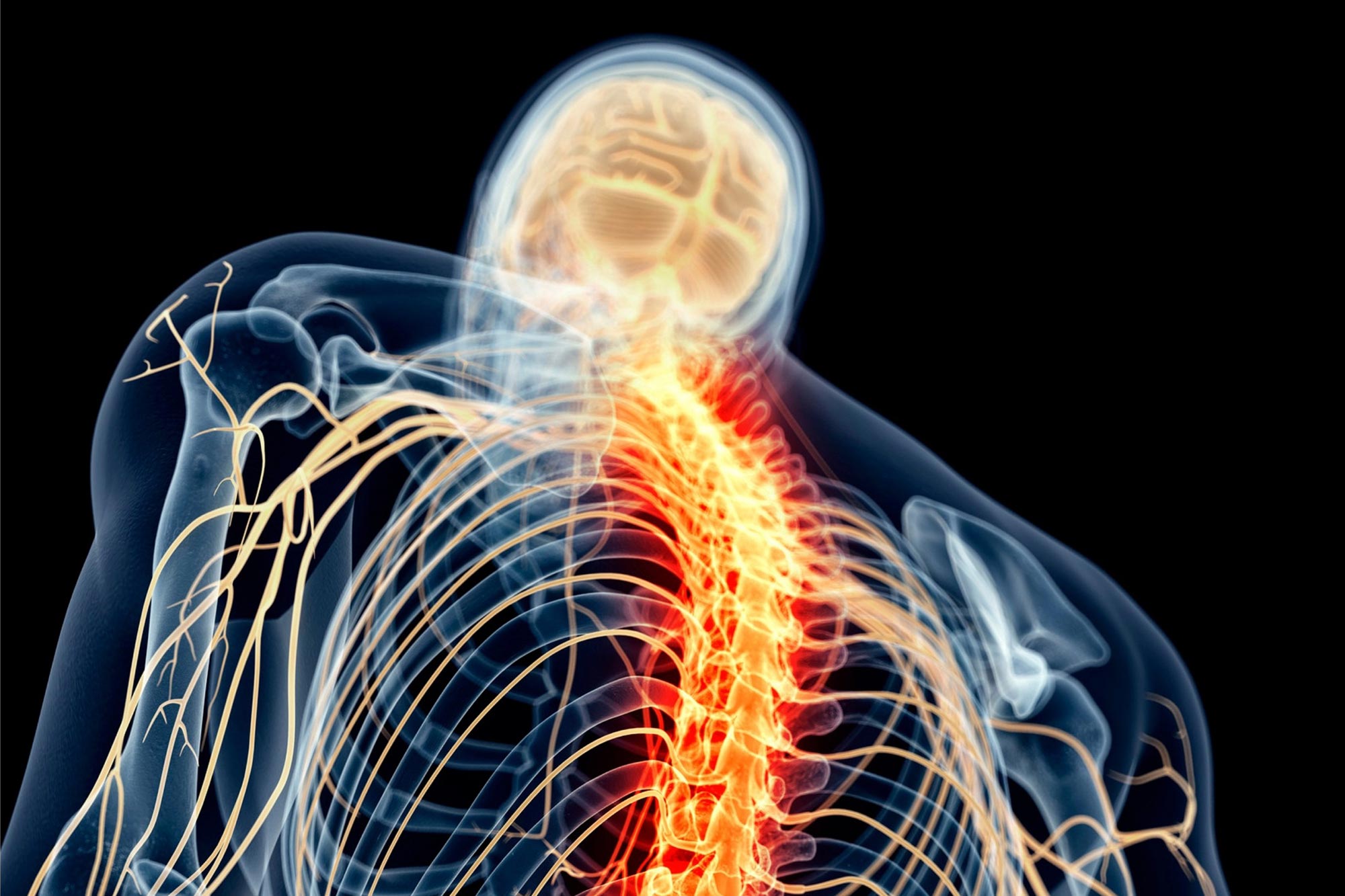
An Il-4 signal from neutrophils helps zebrafish control inflammation and regenerate damaged spinal cords.
A damaged human spinal cord rarely repairs itself. The immune response that follows an injury can become excessive, producing lasting scar tissue that prevents nerve cells and their connections from growing back. Zebrafish respond very differently, controlling inflammation well enough to regenerate the spinal cord and recover movement.
Research from the Becker group at the Center for Regenerative Therapies Dresden (CRTD) at TUD Dresden University of Technology and the University of Edinburgh has now identified an immune mechanism that helps make this repair possible.
Published in the Journal of Neuroinflammation, the study shows how a specific group of immune cells restrains the inflammatory response after injury, creating conditions that allow nerve fibers to regenerate.
Neutrophils prevent inflammation from blocking repair
Neutrophils are among the first immune cells to reach damaged tissue. They were once viewed mainly as cells that remove debris, but the researchers found that one subgroup takes on a more active role after spinal cord injury. These cells release a signaling molecule called Il-4, which tells other immune cells to reduce inflammation before it becomes destructive.
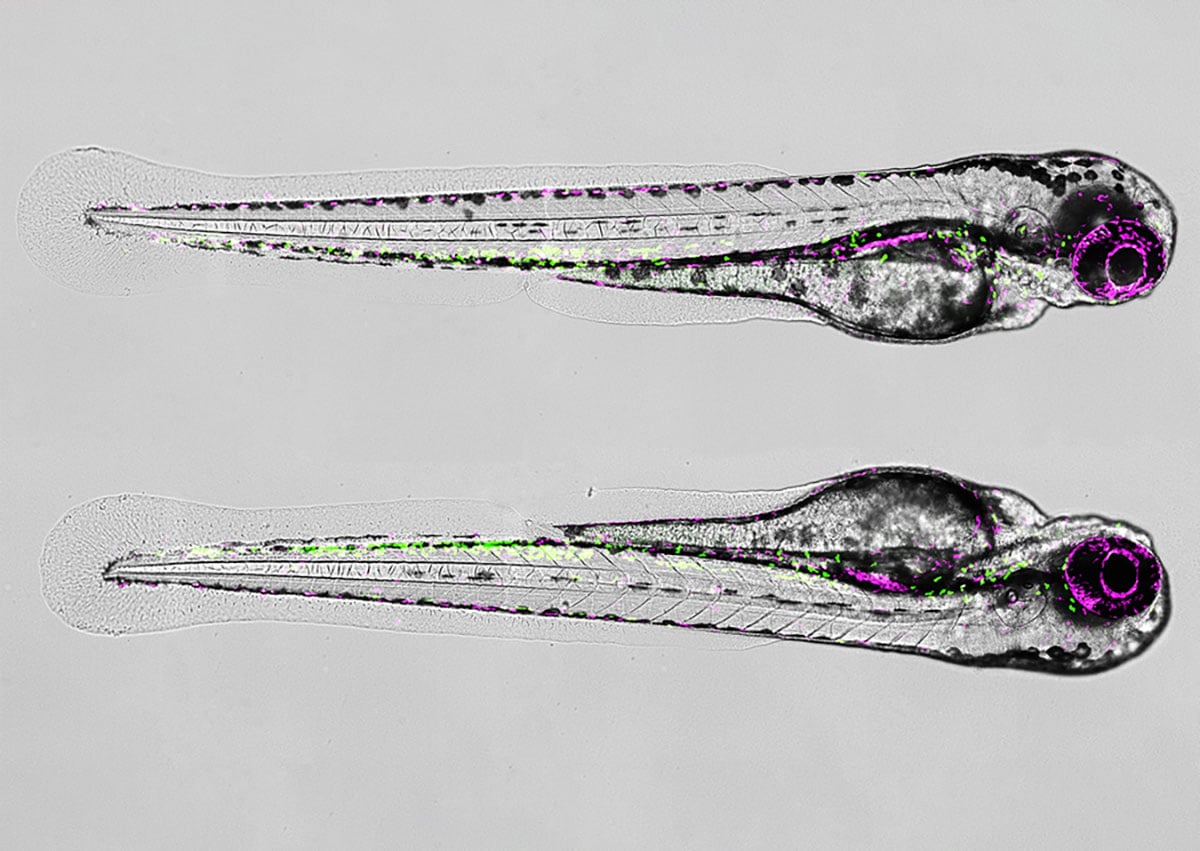
The researchers examined this process in larval zebrafish by disabling the relevant neutrophil population. Without those cells, other parts of the immune system produced excessive amounts of inflammatory proteins. Nerve fibers stopped regenerating, and the fish failed to recover normal movement.
The researchers then supplied Il-4 directly to the injury site. Even though the neutrophils were still absent, inflammation subsided, and the spinal cords regenerated completely. This showed that Il-4 could perform the essential signaling function normally provided by those immune cells.
“For the first time, we have shown that neutrophils play a massive, active role in successfully repairing a spinal cord,” says Prof. Thomas Becker, who led the study. “They aren’t just there to clear away debris; they act like conductors that tell other immune cells to return to a harmonious rhythm. Without them, the immune system locks into a destructive cycle and prevents healing. By using the Il-4 molecule, the neutrophils smooth out the inflammation, allowing the delicate nerve fibers to grow right through the injury zone.”
The results suggest that successful spinal cord regeneration depends not simply on activating or suppressing immunity, but on carefully controlling its timing and intensity. In zebrafish, neutrophils provide the signal that shifts the injury response away from prolonged inflammation and toward repair.
Whether humans share this pathway remains unknown
Why zebrafish can repair spinal cord damage while humans usually cannot remains a central question in regenerative medicine. In people, inflammation after injury often contributes to permanent damage within the central nervous system. Zebrafish show that a more precisely regulated immune response can instead support nerve growth through the injured area.
The findings identify Il-4 as a key part of that process in zebrafish, but they do not establish that the molecule has the same function in humans. Further research will need to determine whether human immune cells respond similarly and whether inflammation could be adjusted without disrupting its necessary protective roles.
“Of course, the question is to what extent our results apply to humans. It remains to be seen if Il-4 plays a similar role in humans and whether it can finely balance the inflammation, allowing for better healing at the injury site,” says Xiaobo Tian, who conducted the study. “It is definitely a very promising avenue for future studies in humans.”
Reference: “A reparative neutrophil subpopulation accelerates spinal cord regeneration in zebrafish by controlling macrophage inflammation via Il-4” by Xiaobo Tian 田晓波, Alberto Docampo-Seara, Kim Heilemann, Friederike Kessel, Daniela Zöller, Anja Bretschneider, Thomas Becker and Catherina G. Becker, 26 May 2026, Journal of Neuroinflammation.
DOI: 10.1186/s12974-026-03878-0
Funding was provided by a Chinese Scholarship Council PhD fellowship (to XT, no.202108440240), an Alexander von Humboldt Stiftung Professorship award (to CGB), and TU Dresden core funding (to CGB).
Never miss a breakthrough: Join the SciTechDaily newsletter.
Follow us on Google and Google News.