
Close Menu
    Facebook X (Twitter) Instagram
    SciTechDaily
    • Biology
    • Chemistry
    • Earth
    • Health
    • Physics
    • Science
    • Space
    • Technology
    Facebook X (Twitter) Pinterest YouTube RSS
    SciTechDaily
    Home»Science»Bacterium Cupriavidus Metallidurans Can Turn Toxins into Gold
    Science

    Bacterium Cupriavidus Metallidurans Can Turn Toxins into Gold

    By SciTechDailyOctober 8, 2012No Comments2 Mins Read
    Facebook Twitter Pinterest Telegram LinkedIn WhatsApp Email Reddit
    Share
    Facebook Twitter LinkedIn Pinterest Telegram Email Reddit
    gold-producing-bacteria
    Gold flecks produced by the art-science experiment “The Great Work of the Metal Lover,” by Adam Brown, MSU associate professor of electronic art and intermedia. Credit: Photo by G.L. Kohuth

    Researchers at Michigan State University have discovered that the bacterium Cupriavidus metallidurans has the ability to withstand incredible amounts of toxicity, which is apparently key to creating 24-karat gold.

    Kazem Kashefi and Adam Brown found that the metal-tolerant bacteria C. metallidurans can grow on massive concentrations of gold chloride, a toxic chemical compound found in nature. They exhibited their findings as part of the cyber art competition Prix Ars Electronica in Linz, Austria.
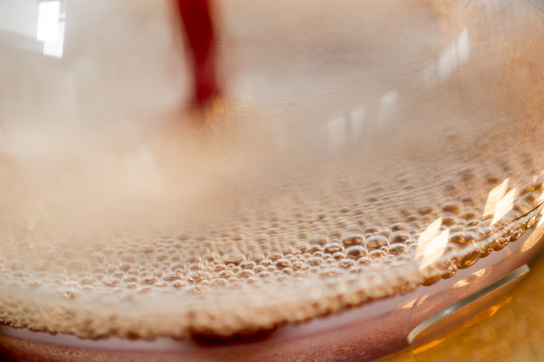
    bioreactor-produce-gold
    A bioreactor uses a gold-loving bacteria to turn liquid gold into usable, 24-karat gold. Credit: Photo by G.L. Kohuth

    The bacteria are at least 25 times stronger than previously reported. Their work is part of an art installation called The Great Work of the Metal Lover, which uses biotechnology, art, and alchemy to turn liquid gold into pure gold.

    The scientists fed the bacteria unprecedented amounts of gold chloride, mimicking a process that they believe happens in nature. In about a week, the bacteria transformed the toxins and produced a gold nugget.

    wide-view-bioreactor
    “The Great Work of the Metal Lover” by Adam Brown, MSU associate professor of electronic art and intermedia. Credit: Photo by G.L. Kohuth

    It would be cost-prohibitive to produce gold on a large scale using this technique, so finding gold in mines is still the best bet for using it as a natural resource. Their installation was on display until the 7th of October.

    Never miss a breakthrough: Join the SciTechDaily newsletter.
    Follow us on Google and Google News.

    Bacteria Gold Michigan State University
    Share. Facebook Twitter Pinterest LinkedIn Email Reddit

    Related Articles

    New Research Reveals Why You Should Always Refrigerate Lettuce

    Ancient Epidemics: Scientists Uncover Lethal Stone Age Threat

    Wax On, Bacteria Off: The Future of Fresh Fruits and Vegetables

    How Plants Obtain Nitrogen by Supplying Iron to Symbiotic Bacteria

    Engineered Bacteria Eat Waste Plastic and Make Spider Silk – “Nature’s Kevlar”

    Do Pets Make You Happier? New Study Says Not Always

    Warning – Scientists Uncover Hidden Dangers of Feeding Dogs Raw Meat

    Ancient Cycads: The Dinosaur-Era Plants That “Breathed” Nitrogen To Survive Extinction

    Bathing in Bacteria: The Unexpected Dangers in Your Daily Shower

    Leave A Reply Cancel Reply

    • Facebook
    • Twitter
    • Pinterest
    • YouTube

    Don't Miss a Discovery

    Subscribe for the Latest in Science & Tech!

    Trending News

    Aging’s “Zombie Cell” Problem May Have a Solution, Scientists Discover

    Scientists Discover a Surprising Dental Benefit of Cranberry Juice

    Scientists Discover That Eating Peanuts Every Day May Help Protect the Aging Brain

    Scientists Discover Mysterious 150,000-Year-Old Bone From an Extinct Human Relative in Chinese Cave

    Why Do We Have Necks? Scientists Uncover a 380-Million-Year-Old Evolutionary Twist

    “Strangest of Its Kind”: Scientists Uncover a Bizarre Bacterial Self-Destruct Switch

    Scientists Reverse 60 Years of Aging in Human Cells, Turning 80-Year-Old Cells Into 20-Year-Olds

    A Solar Storm Heading Toward Earth Suddenly Changed in Ways Scientists Didn’t Predict

    Follow SciTechDaily
    • Facebook
    • Twitter
    • YouTube
    • Pinterest
    • Newsletter
    • RSS
    SciTech News
    • Biology News
    • Chemistry News
    • Earth News
    • Health News
    • Physics News
    • Science News
    • Space News
    • Technology News
    Recent Posts
    • Astronauts Just Installed a Powerful New Solar Array High Above Earth
    • Did Venus Eat Its Own Moon? Scientists Uncover a Shocking Possibility
    • New Microscope Technology Captures the Hidden World Inside Living Cells Like Never Before
    • 60,000-Year-Old Discovery in South Africa Reveals a Surprising Clue About Early Humans
    • 237-Million-Year-Old Fossils Reveal an Amphibian That Shouldn’t Have Existed
    Copyright © 1998 - 2026 SciTechDaily. All Rights Reserved.
    • Science News
    • About
    • Contact
    • Editorial Board
    • Privacy Policy
    • Terms of Use

    Type above and press Enter to search. Press Esc to cancel.