
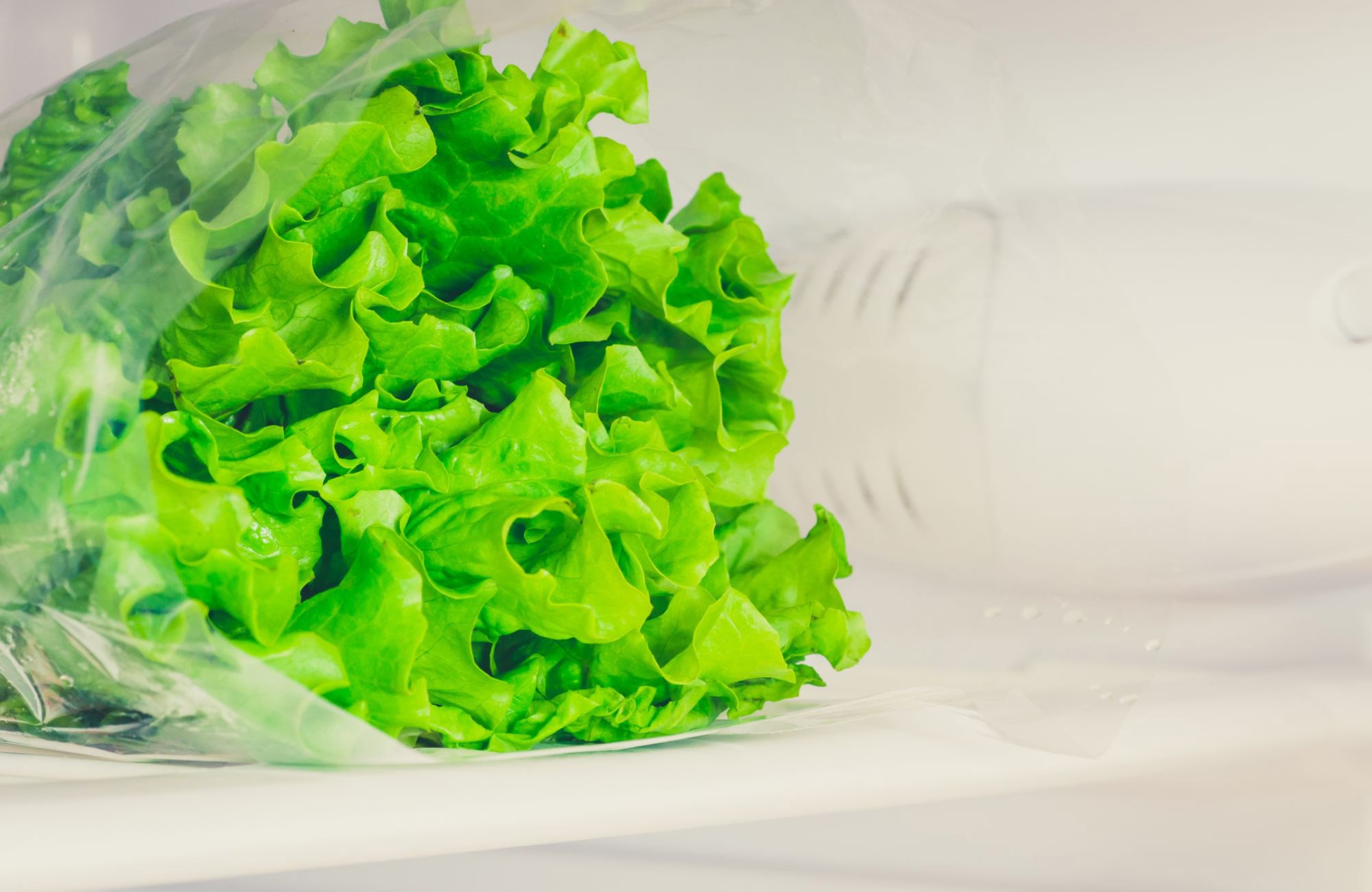
Leafy greens are valuable for their dietary fiber and nutrients, yet they may also carry dangerous pathogens. Lettuce, in particular, has frequently been linked to foodborne illness outbreaks in the U.S. A recent study from the University of Illinois Urbana-Champaign investigates the factors influencing E. coli contamination in five different types of leafy greens: romaine lettuce, green-leaf lettuce, spinach, kale, and collard greens.
“We are seeing a lot of outbreaks on lettuce, but not so much on kale and other brassica vegetables. We wanted to learn more about the susceptibility of different leafy greens,” said lead author Mengyi Dong, now a postdoctoral research associate at Duke University. Dong conducted the research as a doctoral student in the Department of Food Science and Human Nutrition (FSHN), part of the College of Agricultural, Consumer, and Environmental Sciences (ACES) at the U. of I.
Findings on Temperature and Leaf Surface Impact
The researchers infected whole leaves from each of the five vegetables with E. coli O157:H7 and observed what happened after storage at 4° C (39° F), 20° C (68° F), and 37° C (98.6° F). Overall, they found that susceptibility was determined by a combination of temperature and leaf surface properties such as roughness and the natural wax coating.
“At room temperature or higher, E. coli grows very fast on lettuce, but if lettuce is refrigerated at 4° C (39° F), we see a sharp decline in the E. coli population. However, for waxy greens like kale and collard, we get the opposite results. On these vegetables, E. coli grows slower under warmer temperatures, but if it is already present, it can survive longer under refrigeration.”
Even so, kale and collard are overall less susceptible to E. coli contamination than lettuce. Furthermore, these vegetables are usually cooked – which kills or inactivates E. coli – while lettuce is consumed raw. Rinsing lettuce does help, Dong said, but doesn’t remove all the bacteria because of their tight attachment to the leaf.
The researchers also inoculated cut leaves with E. coli O157:H7 to compare the intact surface of a whole leaf to the damaged surface of a cut leaf.
“Whole leaves and freshly cut leaves present different situations. When the leaf is cut, it releases vegetable juice, which contains nutrients that stimulate bacterial growth,” Dong explained. However, the researchers found that spinach, kale, and collard juice actually exhibited antimicrobial properties that protect against E. coli.
Potential Applications and Conclusions
To further explore these findings, they isolated juice (lysate) from kale and collards and applied the liquid to lettuce leaves, finding that it can be used as a natural antimicrobial agent. The potential applications could include antimicrobial spray or coating to control foodborne pathogen contaminations at both pre-harvest and post-harvest stages, the researchers said.
“We can’t completely avoid pathogens in food. Vegetables are grown in soil, not in a sterile environment, and they will be exposed to bacteria,” said co-author Pratik Banerjee, associate professor in FSHN and Illinois Extension specialist.
“It’s a complex problem to solve, but we can embrace best practices in the food industry and food supply chain. There’s a lot of interest from the research community and federal agencies to address these issues, and the USDA imposes high standards for food production, so overall the U.S. food supply is quite safe.”
Banerjee and Dong emphasize they do not want to discourage people from eating fresh fruit and vegetables; they are part of a healthy diet. Just follow food safety guidelines, wash your lettuce thoroughly, store it in the refrigerator, and pay attention to any food safety recalls in your area, they conclude.
Reference: “Fates of attached E. coli o157:h7 on intact leaf surfaces revealed leafy green susceptibility” by Mengyi Dong, Maxwell J. Holle, Michael J. Miller, Pratik Banerjee and Hao Feng, 28 November 2023, Food Microbiology.
DOI: 10.1016/j.fm.2023.104432
This project was supported by the USDA Specialty Crop Block Grant Program (SCBGP) through the Illinois Department of Agriculture [grant numbers IDOA SC-22-20].
Never miss a breakthrough: Join the SciTechDaily newsletter.
Follow us on Google and Google News.
2 Comments
WTF has this not been known for many decades now?
Another worthless study.
What in particular? That some of these particular veggies actually have juice that inhibits bad E Coli or that kale is actually more susceptible to bacterial growth at lower temperature, or all of what they say.