
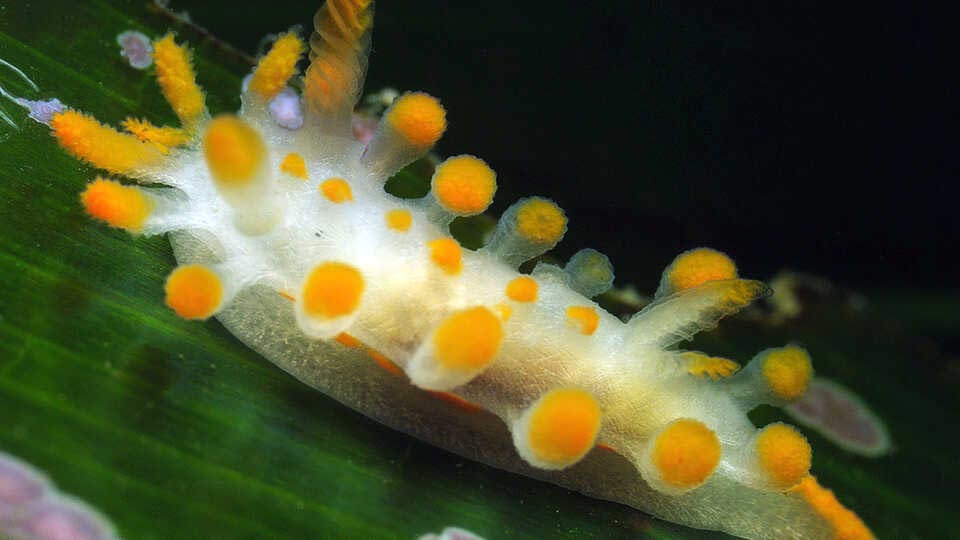
Researchers from the California Academy of Sciences documented 70 new species in 2021, expanding the tree of life and enhancing conservation strategies.
In 2021, researchers at the California Academy of Sciences added 70 new plant and animal species to the tree of life, enriching our understanding of Earth’s biodiversity and strengthening our ability to make informed conservation decisions. The new species include 14 beetles, 12 sea slugs, nine ants, seven fish, six scorpions, five sea stars, five flowering plants, four sharks, three spiders, two sea pens, one moss, one pygmy pipehorse, and one caecilian. More than a dozen Academy scientists—along with several dozen international collaborators—described the new species discoveries.
Proving that our vast and dynamic planet still contains unexplored places with never-before-recorded plants and animals, the scientists made their finds over five continents and three oceans, sifting through forest floors, venturing into vast deserts, and diving to extreme ocean depths. Their results help advance the Academy’s mission to regenerate the natural world through science, learning, and collaboration.
“Biodiversity is critical for the health of our planet, and is being lost at a rate where sustainability practices are no longer enough,” says Academy virologist and Chief of Science Shannon Bennett, PhD. “As stewards of our natural world, we need to play an active role in regenerating ecosystems. Our relationship to nature improves with each new species, deepening our understanding of how our planet works and can best respond to an uncertain future. As we continue to battle a changing climate and a global pandemic, there has never been a more crucial time to protect the variety of life on Earth.”
Below are highlights from the 70 new species described by the Academy this past year. On January 6, 2022, there will be a virtual NightSchool event celebrating the new species, featuring several of the researchers who described them.
Weevils a Win for Indigenous Communities
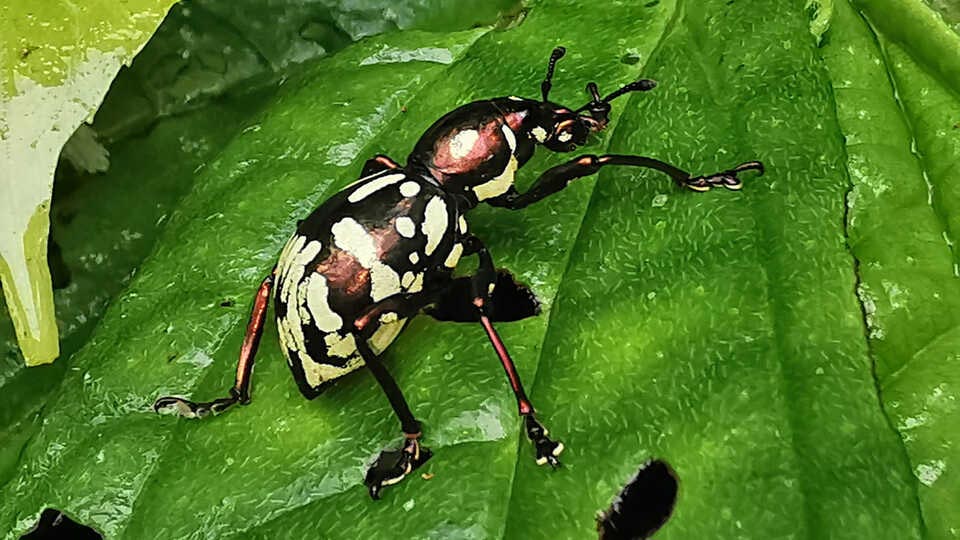
Entomology Postdoctoral Fellow Matthew Van Dam, PhD, describes Pachyrhynchus obumanuvu, a brightly colored Easter egg weevil from the forested mountaintops of the Philippines. At 3,000 feet (914 meters) above sea level, these weevils live in the canopy of the moist, moss-covered cloud forest. Unlike most weevils, which tend to be a single color, P. obumanuvu boasts complex patterns of iridescent yellows and greens. Its coloration mimics the traditional garments of its namesake, the Indigenous Obu Manuvu tribe.
But collaborating researcher Analyn Cabras, PhD, had additional motivations in naming this species. “We are in a race against time under the constant threat of forest degradation,” Cabras says. “Many insects may go extinct before they are even discovered.” P. obumanuvu was found in a small patch of primary forest—one of few remaining in the region due to centuries of farming and overlogging. Cabras notes the power of a name to instill a sense of pride and stewardship for a species within a community. She highlights the importance of continued species identification, particularly in regions faced with rapid exploitation of natural resources. “How can we teach conservation and wildlife regeneration,” Cabras questions, “if we can’t put a name to a face?”
A New Genus of Pygmy Pipehorse in the Pacific
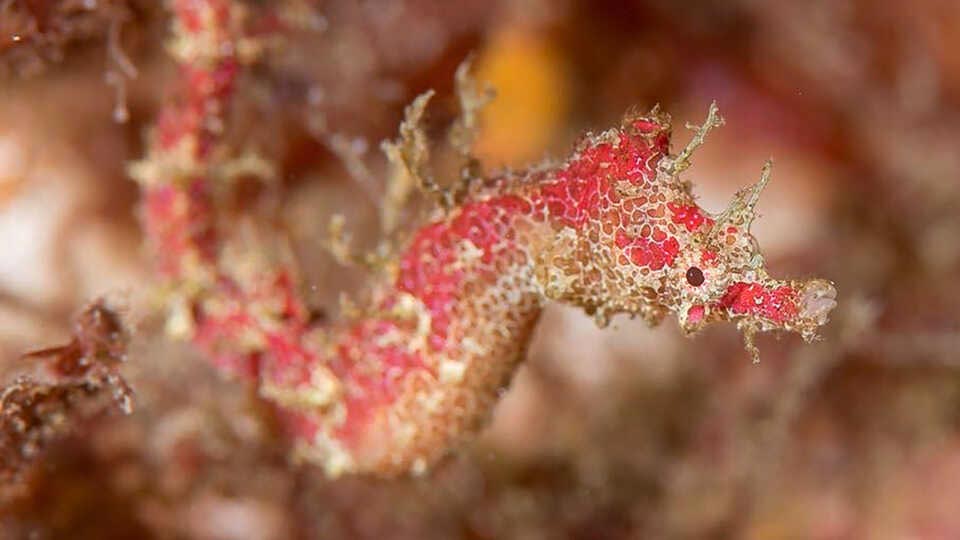
If you look closely at the sheer underwater cliffs off the coast of Northland, New Zealand, you’ll probably only see a wall of red coralline algae. But to the trained eye of Academy Research Associate Graham Short, PhD, Cylix tupareomanaia, a new species of pygmy pipehorse and close cousin to seahorses, can be found expertly camouflaged by its surroundings. The discovery of this elusive species brings to light a new genus of pipehorse—the first to be reported in New Zealand since 1921. “This discovery underscores how little we know about the reefs of New Zealand we’ve been exploring for centuries,” Short says. “If you dive a little deeper, I expect we’ll identify several more new species of fish.” Short’s findings have uncovered other undescribed species within the Cylix genus from South Africa to the Seychelles.
The new genus was determined by comparing CT scans between C. tupareomanaia and other similar species in the region. Short and his colleagues named Cylix (Latin for ‘chalice’) for the cup-like bone structure on its crest, whereas other pipehorse genera have a dome-shaped crest. The species name, tupareomanaia, is Māori for “garland of the seahorse,” and represents the first time a Māori tribe has been involved in naming an endemic species from the Northland region.
Scorpions Reach New Heights
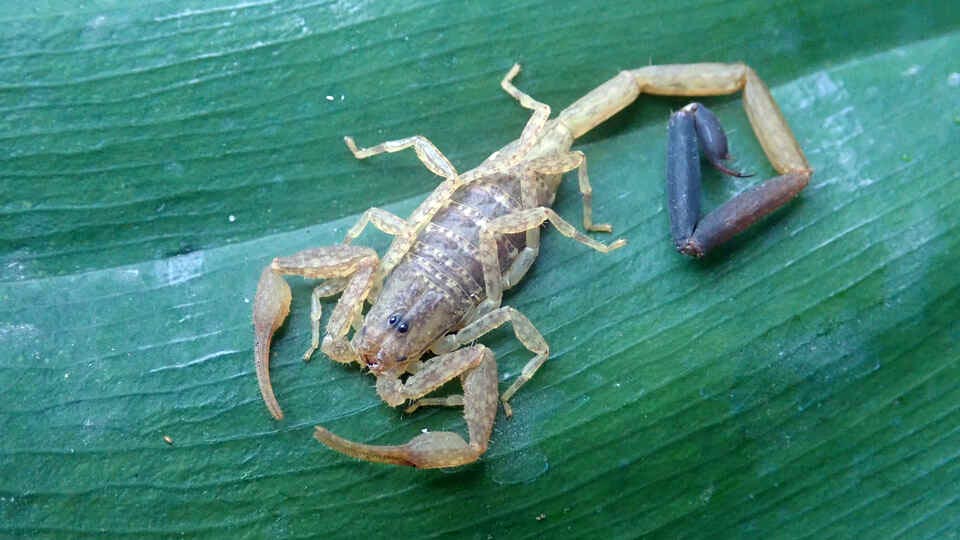
In the canopies of Mexico’s tropical lowland forests, you’ll find unexpected residents: scorpions. This year, Islands 2030 initiative co-leader and Curator of Arachnology Lauren Esposito, PhD, and graduate student Aaron Goodman describe six new species of bark scorpions from Guatemala and Mexico. While people might generally associate scorpions with arid desert climates, these bark scorpions find respite from predators, namely larger scorpions, high in the treetops of undisturbed primary forests. One of the new-to-science scorpions, Centruroides catemacoensis, has developed an extraordinary tactic to escape predators. With the ability to discern rustling winds from an approaching predator, C. catemacoensis let’s go of its perch at the first sign of a nearby threat, falling to the safety of the forest floor. “Once they hit the leaf litter, you won’t find them,” Goodman says. Goodman used this to his advantage while on night surveys, tapping branches with PVC pipes to mimic predators and trigger the scorpions to fall into the nets waiting below.
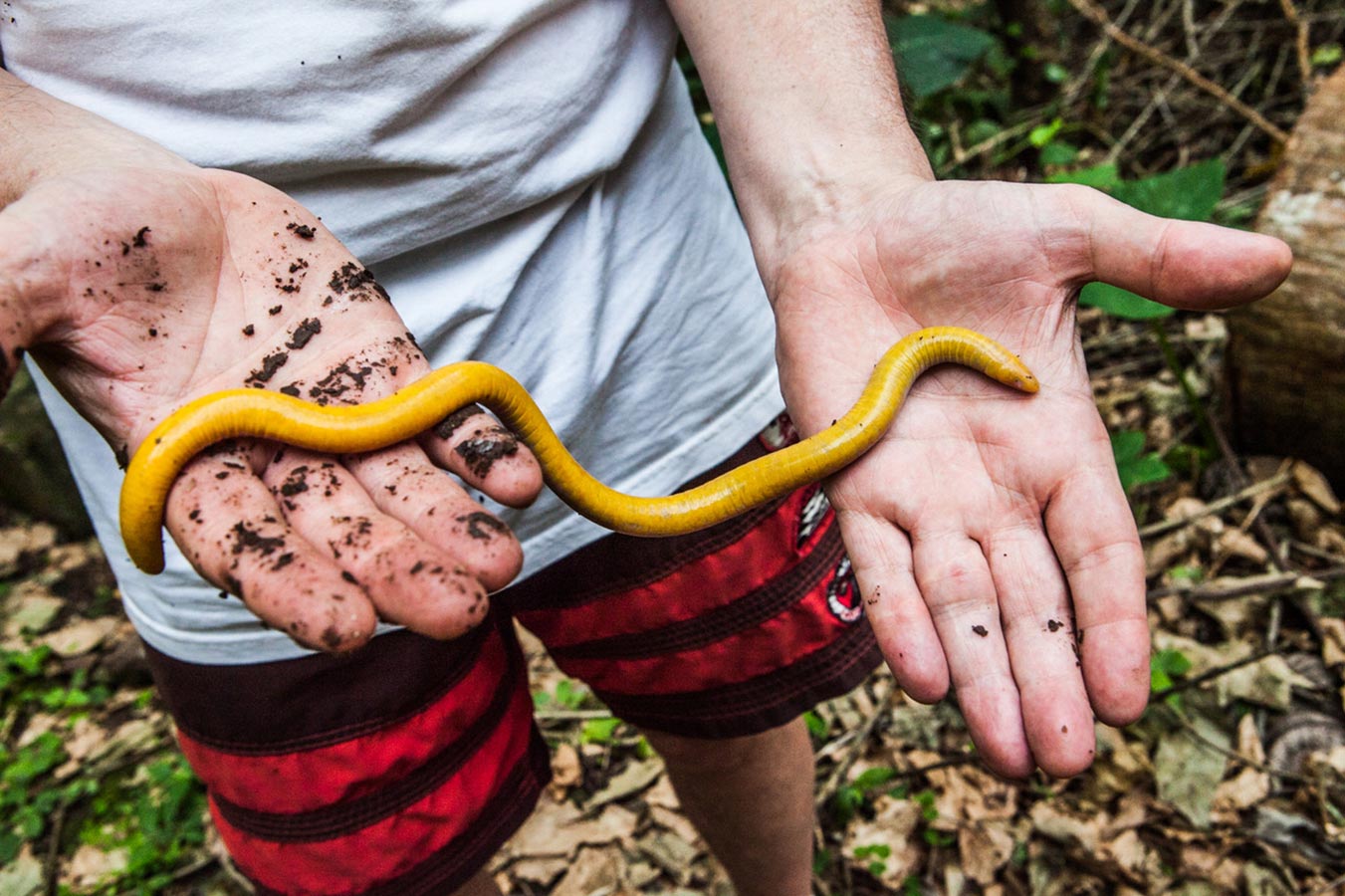
Caecilian Sleuthing in São Tomé
Since colonial times, biologists have debated whether or not the São Tomé caecilian—a limbless, burrowing amphibian—is one or two distinct species. After carefully studying the genetic markers of 85 individuals across São Tomé island in the Gulf of Guinea, Islands 2030 initiative co-leader and Academy Curator of Herpetology Rayna Bell, PhD, provides the strongest evidence to date that the island boasts two unique species of caecilians.
Around 300,000 years ago, a burst of volcanic activity streaked São Tomé with lava flows, dividing the island—and the caecilians—into unique, isolated habitats. This separation likely caused the species to diverge as they acclimated to the environmental pressures of their newfound territories. As the lava flows eroded, the once-impenetrable barriers disappeared, allowing the two resulting species to become neighbors once more. Millennia of interbreeding and hybridization has since shrouded the presence of two species by blurring the genetic lines between them. While the long debate over this species is familiar, Bell’s finding is a major step towards understanding and protecting both of São Tomé’s caecilians.
Guitarfish Strum a New Tune for Fisheries
Ichthyology Research Associate David Ebert, PhD, describes two blue-spotted guitarfish from Madagascar (Acroteriobatus andysabini) and Socotra (Acroteriobatus stehmanni). These are coastal rays with elongated bodies and flattened heads that resemble—you guessed it—guitars. Because of their close proximity to humans and ability to be easily fished, these shark-like rays are among the most endangered of all cartilaginous fish.
A. andysabini, the larger of the two newly-described species, was previously grouped together with another species of guitarfish. This lack of taxonomic knowledge has been detrimental to Malagasy guitarfish, as local small-scale fisheries continue to overfish without regulation. Ebert’s conclusion that there are in fact two distinct species has brought conservation to the forefront, helping to facilitate Madagascar’s first national plan of action to protect sharks and rays.
Collaborating with local fisheries to incorporate species identification in their practice, Ebert is hopeful for harmony between guitarfish and the neighboring coastal communities they sustain. “How can we manage species protection in a region where food security is a prevalent issue?” Ebert questions. “It’s not simply a matter of protecting these animals; it’s about coming up with long-term solutions for both rays and human populations.”

Sea Stars Shine On Coral Reefs
Over the past year, Invertebrate Zoology Research Associate Christopher Mah, PhD, described five new-to-science echinoderms—a group of marine animals that includes sea stars, sea urchins, sea cucumbers, and more—from Rapa Nui (Easter Island) and New Caledonia. After careful examination of images from a remotely-operated vehicle and sea star specimens provided by Academy biologists and Hope for Reefs initiative co-leaders Luiz Rocha, PhD, and Bart Shepherd, Mah described the Indo-Pacific sea star Uokeaster ahi.
Setting the reef ablaze with its bright orange color, U. ahi is aptly named for its fiery hue—ahi, meaning ‘fire’ in the Rapa Nui language. ‘Uokeaster’ is derived from the mythological sea deity Uoke, who, according to legend, submerged the once-continental Rapa Nui beneath the sea, leaving only its tallest mountain peaks exposed. U. ahi resides in this “original” Rapa Nui—the reefs just beneath the surface.
Sea stars are important contributors to healthy coral reefs. Remove them, and the ecosystem falls out of balance. Therefore, the more we know about them, the better we can protect these increasingly fragile ecosystems. “You never know what benefit will come of studying the unknown,” Mah says, “whether that’s a tangible benefit like an anticancer drug or an ecological benefit in protecting coral reefs.”
Reference: “Clusia falcata (Clusiaceae), an endangered species with exceptionally narrow leaves endemic to Chiapas, Mexico” by Manuel Luján, N. Ivalú Cacho, Miguel Ángel Pérez-Farrera and Barry Hammel, 11 December 2021, Kew Bulletin.
DOI: 10.1007/s12225-021-09988-7
Never miss a breakthrough: Join the SciTechDaily newsletter.
Follow us on Google and Google News.
1 Comment
It is obvious that in predator-prey relationships, and down the food chain, there is an interdependence between species. However, there are also species directly competing for the same resources. Saying that “Biodiversity is CRITICAL for the health of our planet, …,” may be an unwarranted generalization. That is because the loss of one species probably will open opportunities for another competing species. Without the demise of the dinosaurs, mammals may not have risen to ascendancy.
To put things in perspective, some people find studying exotic life forms very interesting. Great! However, to suggest that animals that are so rare as to take until now to even find them, stretches the imagination to believe that they are pivotal to the entire global ecosystem.
Saying that, “Our relationship to nature improves with each new species, deepening our understanding of how our planet works and can best respond to an uncertain future.”, sounds more like a philosophical axiom than a provable fact.
Similarly, saying that “As we continue to battle a changing climate and a global pandemic, there has NEVER been a more crucial time to protect the variety of life on Earth.”, seems more than a bit self-centered. The pandemic is primarily a threat to humans. As to a changing climate, there have been several times that the climate changed sufficiently to re-direct the course of evolution. We don’t appear to be faced with anything as severe as the End Permian or the End Cretaceous extinctions.
The ecosystem didn’t collapse when humans killed off the passenger pigeon, which once numbered in the billions, or the dodo bird. Nor did the demise of the North American chestnut spell the end of the many animals that once utilized the nuts for food. There may well be critical lynch pins in the food chain, such as phytoplankton, or grasses, but tree scorpions would appear to be more of a novelty that tickles the curiosity of an arachnologist, than a crucial element of the global ecosystem that will ‘save’ us from a changing climate.
Interesting discoveries! However, it almost sounds as if some of these biologists are dealing with insecurities about their importance to society.