
Research adds evidence to century-long scientific debate and reveals how volcanic activity may have driven divergence of the limbless amphibians.
The Gulf of Guinea islands harbor an abundance of species found nowhere else on Earth. But for over 100 years, scientists have wondered whether or not a population of limbless, burrowing amphibians — known as caecilians — found on one of the islands is a single or multiple species. Now, a team of researchers from the California Academy of Sciences and the Smithsonian National Museum of Natural History has contributed the strongest evidence to date that there is not one, but two different species of caecilians on São Tomé island. Their findings, published today (May 10, 2021) in Molecular Ecology, also suggest that volcanic activity may have led to the divergence of the species.
“To judge whether one species is in fact composed of multiple lineages, scientists have to build a case,” says senior author and Academy Curator of Herpetology Rayna Bell. “By conducting a population level genomic study of these amphibians across the entire island, we are adding a crucial line of evidence that the São Tomé caecilian is actually two unique species.”
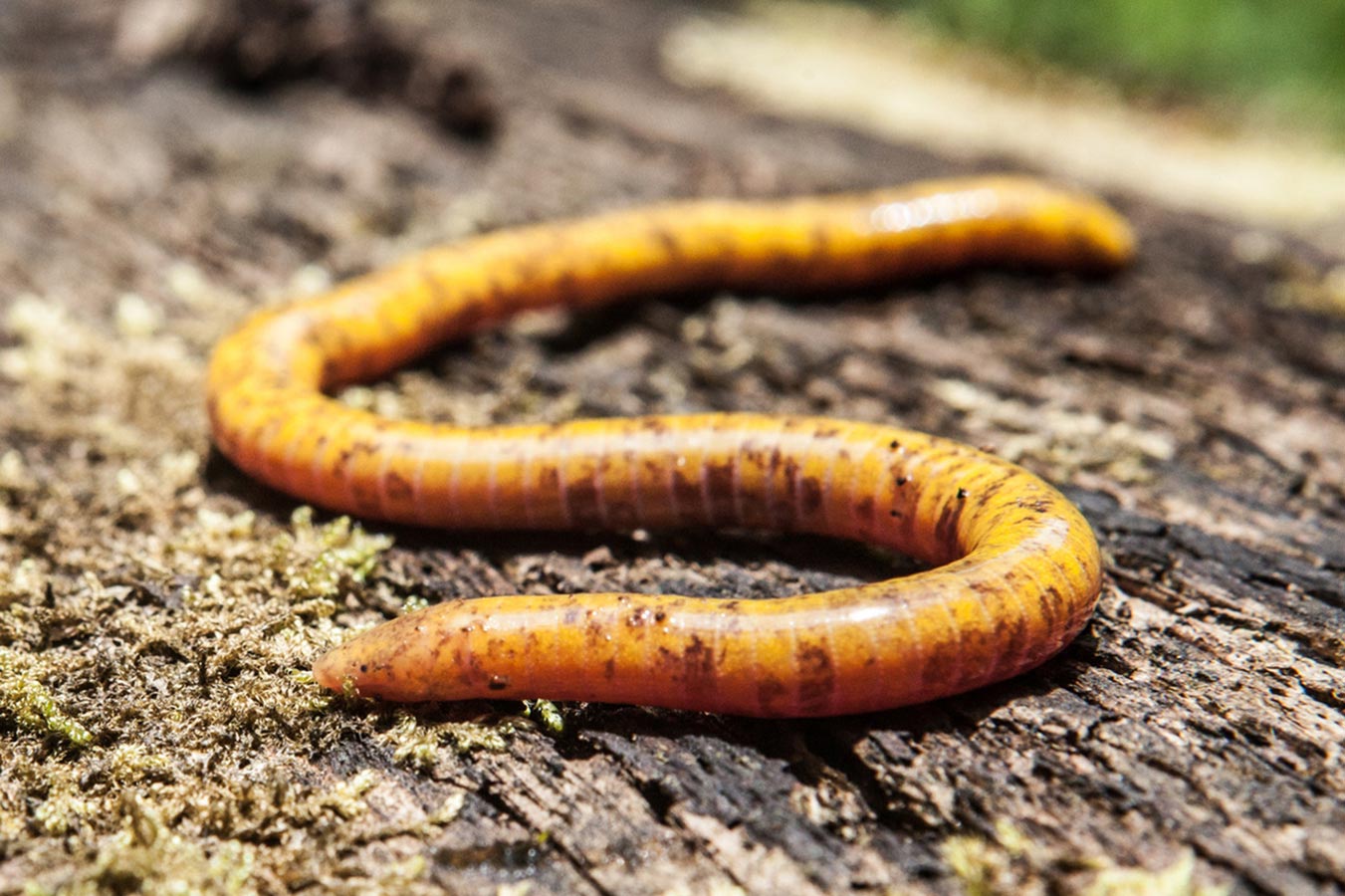
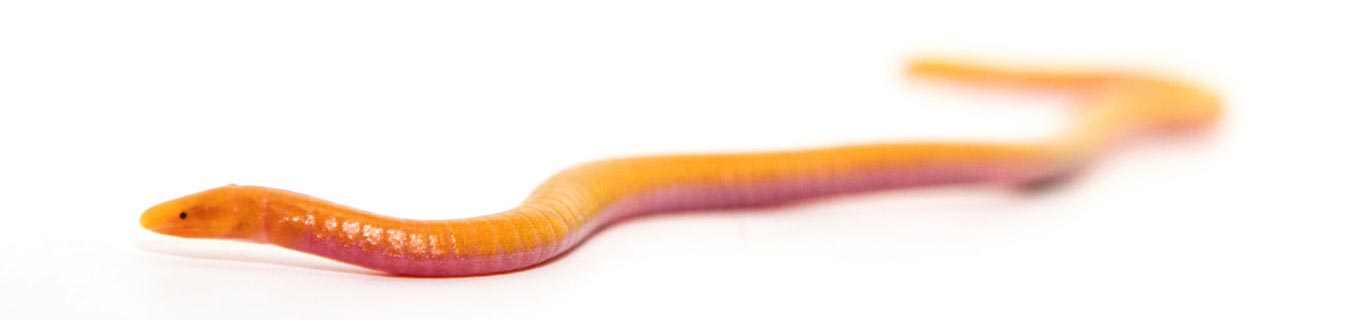
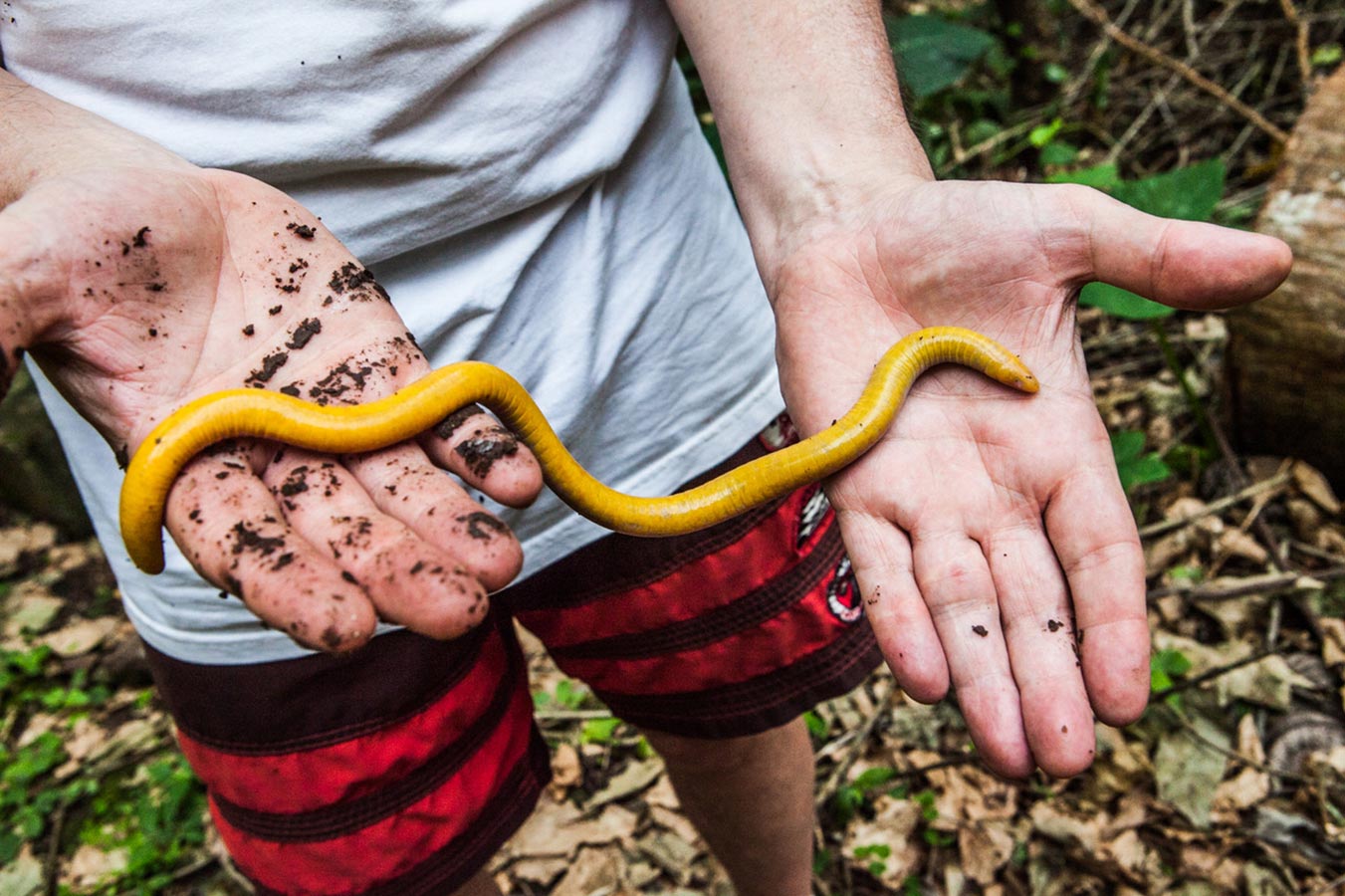
Initially described by Portuguese scientists during colonial times, the São Tomé caecilians were later split into two distinct species based on their variation in color and location on the island — solid lemon yellow in the north and yellow with brown splotches to the south. Since then, subsequent research has bounced back and forth, grouping the species together then separating them out again, based on the best available evidence.
Building on a Mitochondrial DNA Clue
Then, in 2014, a study by former Academy Curator of Herpetology Robert Drewes and graduate student Ricka Stoelting using mitochondrial DNA indicated that not only were there likely two unique species, but they might be interbreeding. Bell and her colleagues build upon those previous findings by sampling 85 caecilians from 21 locations across the island for genome-wide genetic markers that more accurately confirm the presence — and interbreeding — of the two species.
“That earlier study was the first clue towards unraveling the mystery of the São Tomé caecilians,” Bell says. “Our study provides further proof of the presence of two separate, interbreeding species and quantifies how much overlap — or hybridization — is occurring between them.”
Once the research team confirmed the existence of two different but interbreeding species, they started to work backward through time to try to determine how the species diverged.
“It’s pretty remarkable that there are two unique species on such a small island,” says Academy collections manager and study co-author Lauren Scheinberg. “It really makes you wonder how natural selection is acting to drive speciation.”
Lava, Isolation, and Evolutionary Divergence
Through their analysis, the researchers found that the two species diverged around 300,000 years ago, a time period that coincides with a burst of volcanic activity on the island. The researchers suggest that lava flows during this period may have led to the speciation of the caecilians by dividing the island into a patchwork of smaller habitats with unique environmental pressures. As the lava flows eroded, resulting in suitable habitat for caecilians, the two species came back into contact and started to hybridize, obscuring the evidence of their separation.
“These findings are an important reminder that islands are not static,” Bell says. “Even though they can be small and isolated, they are dynamic systems that are actively accumulating new species. It’s also an important consideration for the conservation of São Tomé caecilians to know that we have two, genetically and morphologically unique species.”
Though the picture of their past is becoming clearer, there is still much to learn about these enigmatic amphibians. For example, while most caecilians spend a majority of their time underground, the São Tomé caecilians can be readily found on the forest floor, raising questions about how the bright yellow amphibians avoid predation.
While one century-long mystery is nearing a resolution, it seems more are taking its place. But Bell is looking forward to the challenge. “These are perhaps the most well-studied caecilians on Earth because of their accessibility and how long ago they were described to science. Yet there is still so much to learn about them, from their mating behavior to how they deter predators,” Bell says. “For a biologist, what could be more exciting than that?”
Reference: “Speciation and secondary contact in a fossorial island endemic, the São Tomé caecilian” by Kyle A. O’Connell, Ivan Prates, Lauren A. Scheinberg, Kevin P. Mulder and Rayna C. Bell, 10 May 2021, Molecular Ecology.
DOI: 10.1111/mec.15928
Never miss a breakthrough: Join the SciTechDaily newsletter.
Follow us on Google and Google News.