
Close Menu
    Facebook X (Twitter) Instagram
    SciTechDaily
    • Biology
    • Chemistry
    • Earth
    • Health
    • Physics
    • Science
    • Space
    • Technology
    Facebook X (Twitter) Pinterest YouTube RSS
    SciTechDaily
    Home»Science»Visual Repellants May Help Prevent Shark Attacks
    Science

    Visual Repellants May Help Prevent Shark Attacks

    By SciTechDailyOctober 31, 2012No Comments2 Mins Read
    Facebook Twitter Pinterest Telegram LinkedIn WhatsApp Email Reddit
    Share
    Facebook Twitter LinkedIn Pinterest Telegram Email Reddit
    great-white-shark
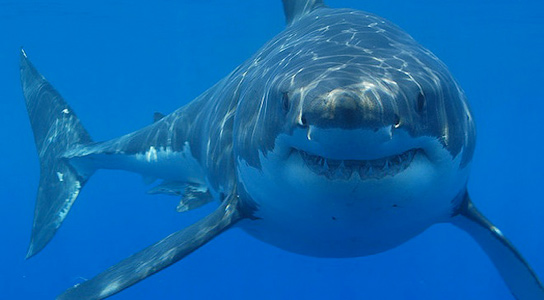
    The large portions of the brain in great white sharks associated with visual input suggest they may be highly responsive to repellents targeting visual cues. Credit: Hermanus Backpackers/Flickr

    Structures in the brains of great sharks are similar to the ones found in humans, and these could be the key to prevent further shark attacks. Animal biologists at the University of Western Australia have discovered that the brains of Carcharodon carcharias have similarities in terms of the regions that are dedicated to visual input to those found in human brains.

    The scientists published their findings in the journal Brain, Behavior and Evolution. Larger optic tecta in the brains of sharks are similar to the superior colliculus structure in human brains. These regions deal with behavior in relation to visible objects, and are associated with an increased reliance on vision in C. carcharias. Great white sharks have large parts of their brains associated with visual input, meaning that they could be much more receptive to repellents targeting visual markers, states Kara Yopak, a research associate and co-author.

    shark-attack

    Current shark-repellent technology relies on non-visual deterrents, such as electrical pulses and chemicals. Understanding how C. carcharias‘ brains work, particularly how they utilize visual stimuli, could lead to more efficient and more targeted repellent products.

    For example, a shark may recognize a poisonous sea snake’s markings, and swim away. This information could be used to repel sharks.

    Reference: “Allometric Scaling of the Optic Tectum in Cartilaginous Fishes” by K. E. Yopak and T. J. Lisney, September 2012, Brain, Behavior and Evolution.
    DOI: 10.1159/000339875

    Never miss a breakthrough: Join the SciTechDaily newsletter.
    Follow us on Google and Google News.

    Neurology Neuroscience Senses Sharks Vision Zoology
    Share. Facebook Twitter Pinterest LinkedIn Email Reddit

    Related Articles

    Understanding Dyscalculia and How the Brain Processes Numbers

    Area of Monkey Brain Keeps Tally of Altruistic Acts

    Curing Boredom

    Why People Like Watching the Same Thing Over and Over Again

    Special Fishing Weights Could Help Save Hammerhead Sharks

    Photos of Einstein’s Brain Show Unique Features

    Aversion to Clashing Harmonies Is Due to Mathematical Relationships of Overtones

    Brain Scans Help Scientists Read Dreams

    The Scientific Cause of Near-Death Experiences

    Leave A Reply Cancel Reply

    • Facebook
    • Twitter
    • Pinterest
    • YouTube

    Don't Miss a Discovery

    Subscribe for the Latest in Science & Tech!

    Trending News

    1.4-Million-Year-Old Footprints Reveal a Giant Human Relative

    Astronomers May Have Found the First Moon Beyond Our Solar System

    Underwater Cameras Expose the Secret Lives of Whale Sharks

    Why Dreaming Leaves the Brain Running Low on Energy

    CERN Experiments Detect Signs of the Universe’s Primordial Matter

    Study Finds a Surprising Link Between Gut Microbes and Aging

    Frequent Cannabis Users Wake Up With More “Stress Hormone”

    Scientists Reveal Hidden DNA Traces in the Shroud of Turin

    Follow SciTechDaily
    • Facebook
    • Twitter
    • YouTube
    • Pinterest
    • Newsletter
    • RSS
    SciTech News
    • Biology News
    • Chemistry News
    • Earth News
    • Health News
    • Physics News
    • Science News
    • Space News
    • Technology News
    Recent Posts
    • Humans and Mice May Process Smells in Very Similar Ways
    • These Beautiful Flowers Can Paralyze You, but Their Chemistry Could Save Lives
    • New Stroke Treatment Turns Brain Cavities Into Repair Hubs
    • World’s First Photonic Time Crystal Can Reshape Light in Trillionths of a Second
    • Meteorite That Smashed Through a New Jersey Roof Hid an Ancient Chemical Secret
    Copyright © 1998 - 2026 SciTechDaily. All Rights Reserved.
    • Science News
    • About
    • Contact
    • Editorial Board
    • Privacy Policy
    • Terms of Use

    Type above and press Enter to search. Press Esc to cancel.