
Close Menu
    Facebook X (Twitter) Instagram
    SciTechDaily
    • Biology
    • Chemistry
    • Earth
    • Health
    • Physics
    • Science
    • Space
    • Technology
    Facebook X (Twitter) Pinterest YouTube RSS
    SciTechDaily
    Home»Health»New Treatment Cuts “Bad” Cholesterol in Half for a Full Year
    Health

    New Treatment Cuts “Bad” Cholesterol in Half for a Full Year

    By Cleveland ClinicSeptember 20, 20265 Comments3 Mins Read
    Facebook Twitter Pinterest Telegram LinkedIn WhatsApp Email Reddit
    Share
    Facebook Twitter LinkedIn Pinterest Telegram Email Reddit
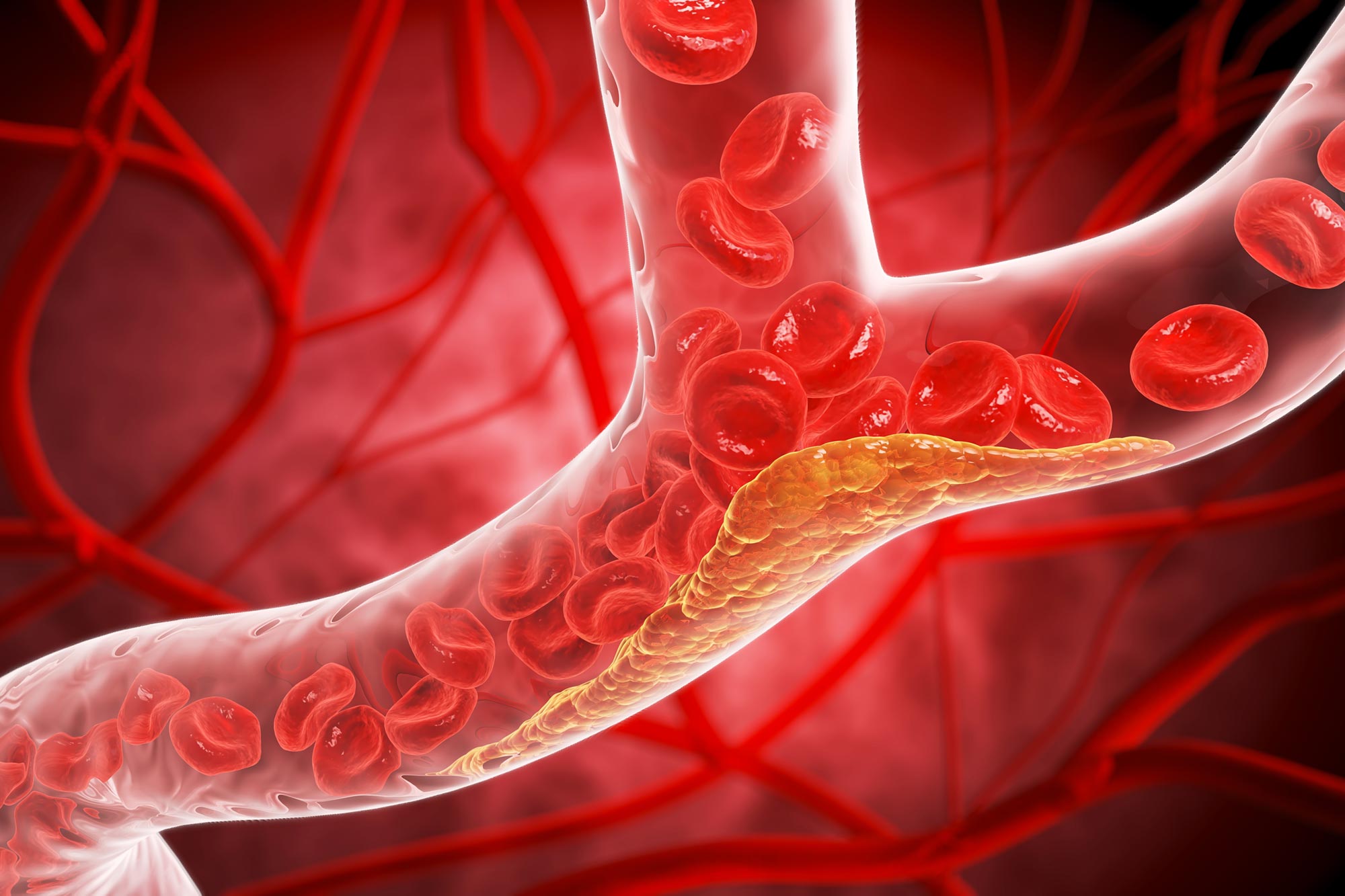
    Narrowed Blood Vessel Cholesterol Plaque Buildup
    An experimental CRISPR therapy produced substantial, year-long reductions in harmful blood fats after a single infusion in an early human trial. Credit: Shutterstock

    A single infusion of an experimental CRISPR-Cas9 therapy was reported to safely lower LDL cholesterol by 52.5% and triglycerides by 47.8%, as measured 12 months after treatment.

    What if one infusion could keep cholesterol down for a year? An experimental gene-editing treatment called CTX310 has shown early promise in people whose cholesterol and other blood fats remain high despite medication.

    In a small Cleveland Clinic trial, patients who received the highest dose still had roughly half their original level of LDL, or “bad,” cholesterol a year later. The treatment works by switching off a gene in the liver.

    That gene, called ANGPTL3, helps regulate blood fats. Switching it off can lower both LDL cholesterol and triglycerides, which are linked to heart disease. CTX310 delivers CRISPR-Cas9 editing machinery to the liver to make that change. CRISPR-Cas9 is a technology that allows researchers to modify specific regions of DNA.

    Cholesterol reductions last a full year

    The Phase 1 study was the first to test CTX310 in humans and included 15 patients with medication-resistant lipid disorders. Participants received a single infusion at doses ranging from 0.1 to 0.8 milligrams per kilogram of body weight, following pretreatment with corticosteroids and antihistamines. Researchers monitored safety and measured ANGPTL3, LDL cholesterol, and triglyceride levels.
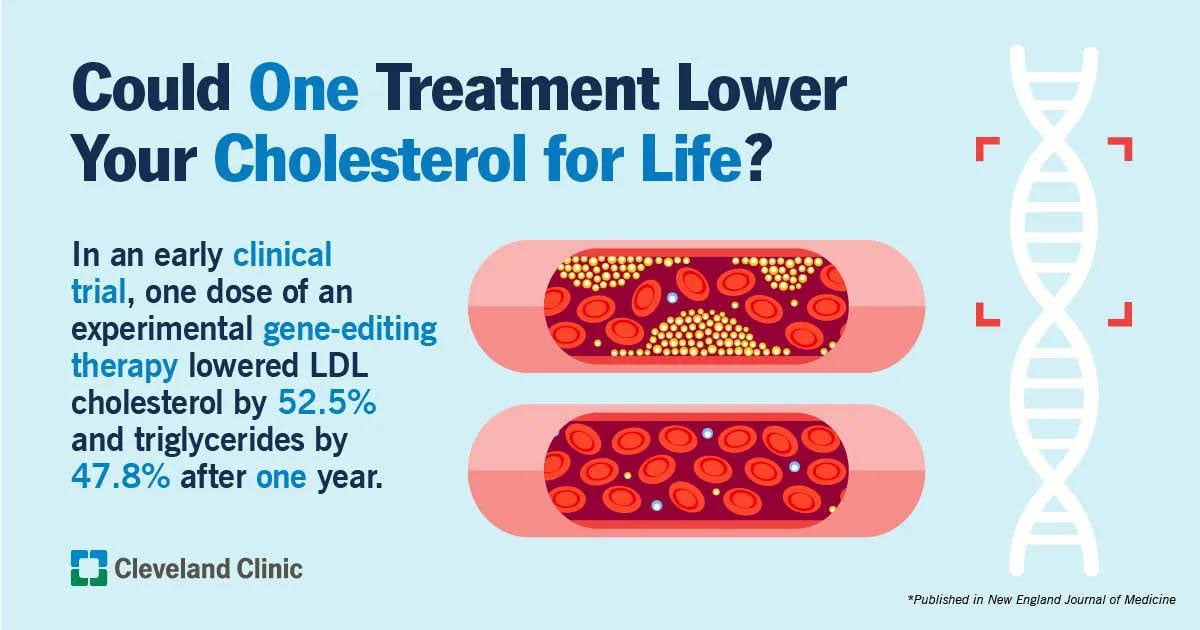
    Gene Editing Cholesterol Treatment Graphic
    Credit: Cleveland Clinic

    Earlier findings had shown reductions in LDL cholesterol and triglycerides after two months. The new results examined whether those effects would last for 12 months. Reductions persisted across all doses through the year of follow-up. At the highest dose, LDL cholesterol was 52.5% below its pretreatment level, and triglycerides were 47.8% lower.

    “Building upon the initial data presented in November 2025, the durability of the lipid-lowering effect was impressive,” said Dr. Luke Laffin, a Cleveland Clinic cardiologist and the study’s first author.

    Tracking safety over the long term

    No serious adverse events related to the therapy occurred during the one-year follow-up. The findings provide an early assessment of the treatment in a small group, with larger studies needed to investigate it further.

    “It is encouraging that there were no serious safety events related to CTX310 in the trial and in the year following treatment. We look forward to continuing to investigate this therapy in a larger number of patients,” Laffin said.

    Participants will undergo additional long-term safety follow-up planned for the next 15 years, as the FDA recommends for all gene-editing therapies.

    Reference: “Durability of CRISPR-Cas9 Gene Editing Targeting ANGPTL3 with CTX310” by Luke J. Laffin, Stephen J. Nicholls, Russell S. Scott, Peter M. Clifton, Renate Koops, Ashish Sarraju, Shweta Singh, Qiuqing Wang, Kathy Wolski, Huansheng Xu, Jen Nielsen, Naimish Patel, Jason M. Duran and Steven E. Nissen, 27 August 2026, New England Journal of Medicine.
    DOI: 10.1056/NEJMc2609825

    Meeting: 2026 European Society of Cardiology

    The study was funded by CRISPR Therapeutics AG; Zug, Switzerland. Dr. Laffin’s institution has received research funding from Crispr Therapeutics.

    Never miss a breakthrough: Join the SciTechDaily newsletter.
    Follow us on Google and Google News.

    Biotechnology Cardiology Cholesterol Cleveland Clinic CRISPR Popular
    Share. Facebook Twitter Pinterest LinkedIn Email Reddit

    Related Articles

    Heart Disease: “Good” Cholesterol May Not Be Good for Everyone

    Popular “Heart-Health” Supplements Found Ineffective at Lowering Cholesterol

    A Potential Cure for AIDS: Defeating HIV With a Single Injection

    Coffee’s Link to Raised Cholesterol Depends on Drinker’s Sex Plus Brewing Method

    Benefits of Taking Statins Called Into Question: Link Between High Cholesterol and Heart Disease “Inconsistent”

    First-Ever Transient Pacemaker Harmlessly Dissolves in Body – Disappears After It’s No Longer Needed

    Statins Used to Lower Cholesterol Linked to Doubled Risk of Developing Dementia

    Does Statin Use for Cholesterol Control Cause Cognitive Decline, Dementia?

    Researchers Warn: Not All “Good” Cholesterol Is Healthy

    5 Comments

    1. David on September 20, 2026 5:15 pm

      New Treatment Cuts “Bad” Cholesterol in Half for a Full Year. Why imply that this treatment is currently available when it isn’t? Regards

      Reply
    2. Cheryl V Johnson on September 20, 2026 8:13 pm

      There will very likely be another study that interested individuals might want to try to figure out how to get into. Otherwise, it will most likely be another ten years before anyone can get a prescription, and that will cost too much anyway.

      Reply
    3. Rick on September 21, 2026 11:00 am

      CRISPR is much more efficient than the way they did it in “Brave New World.” Hope it doesn’t end the same way.

      Reply
    4. Josi on September 21, 2026 4:37 pm

      If one needs to part of the clinical trials, especially for the gene editing part and based in South Africa. How do I go about

      Reply
    Leave A Reply Cancel Reply

    • Facebook
    • Twitter
    • Pinterest
    • YouTube

    Don't Miss a Discovery

    Subscribe for the Latest in Science & Tech!

    Trending News

    Once-in-a-Century Impact: NASA Just Found a Massive New Crater on the Moon

    Anak Krakatau Just Blasted Ash 50,000 Feet Into the Sky

    NASA’s Chandra Reveals Galaxies Being Torn Apart, Blasted by Black Holes, and Reborn in Stars

    Ozempic’s Active Ingredient Shows Surprising Anti-Aging Effects

    Scientists Discover Canada’s First Dinosaur Tracks From a Rarely Documented Cretaceous Age

    Astronomers Just Caught a Giant Planet in the Act of Forming

    Two Dead Stars Are Racing Around Each Other Every 6.2 Minutes

    Natural Compound May Help Protect the Brain and Heart From Excess Salt

    Follow SciTechDaily
    • Facebook
    • Twitter
    • YouTube
    • Pinterest
    • Newsletter
    • RSS
    SciTech News
    • Biology News
    • Chemistry News
    • Earth News
    • Health News
    • Physics News
    • Science News
    • Space News
    • Technology News
    Recent Posts
    • Scientists Discover a “Fire Amoeba” That Defies Life’s Heat Limit
    • Fossilized Vomit Reveals a Surprising Secret About Plesiosaur Behavior
    • Autism Study Reveals Two Opposing Molecular Patterns in the Brain
    • Scientists Reveal What Workout Recovery Techniques Actually Work
    • Scientists Put Anti-Aging Treatments to the Test – These Ones Actually Changed Biological Age
    Copyright © 1998 - 2026 SciTechDaily. All Rights Reserved.
    • Science News
    • About
    • Contact
    • Editorial Board
    • Privacy Policy
    • Terms of Use

    Type above and press Enter to search. Press Esc to cancel.