
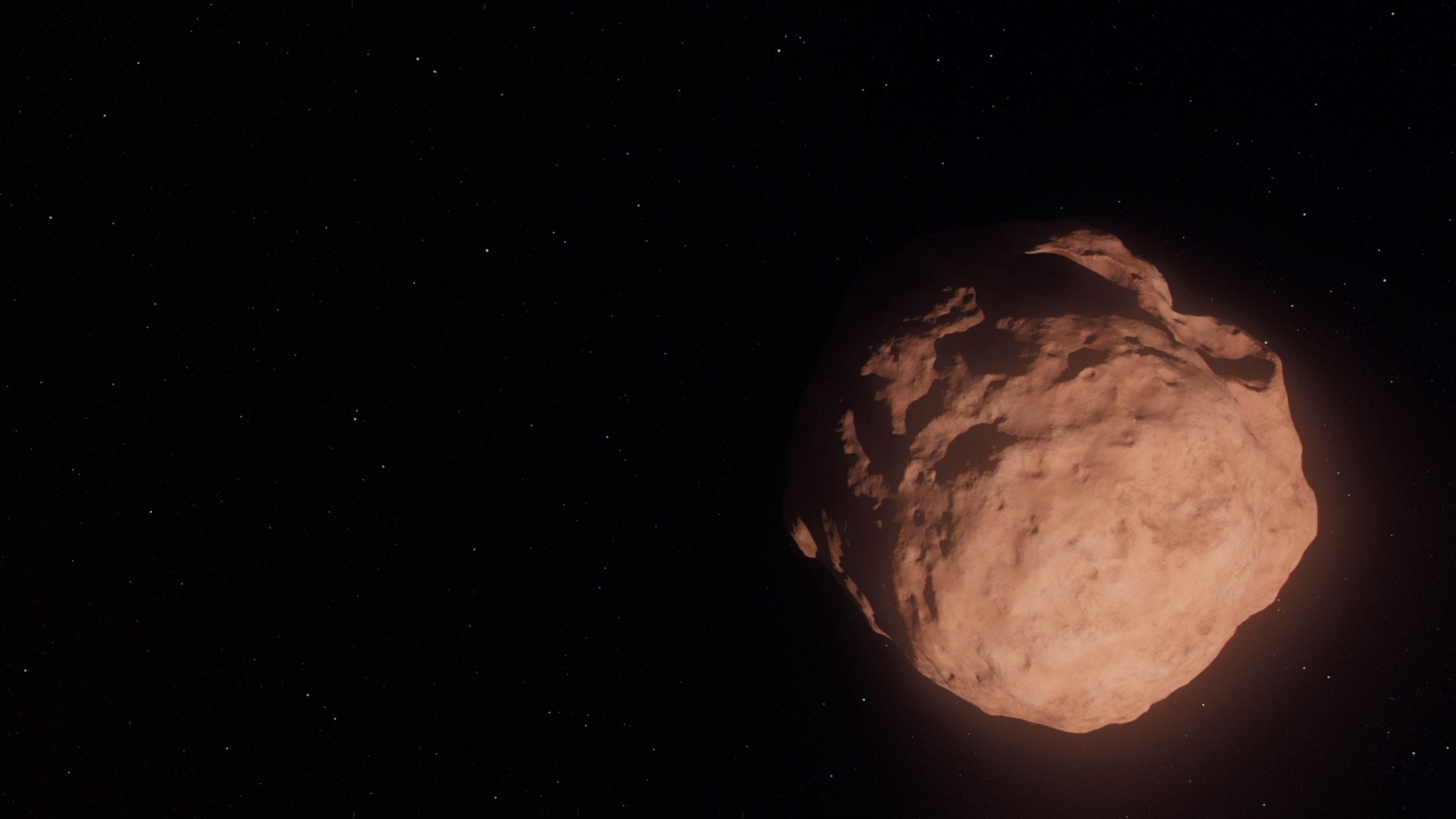
Tiny icy bodies beyond Neptune are scarcer than some models predicted, and their colors suggest they may preserve traces of their formation.
Far beyond Neptune, astronomers expected to find more small, icy bodies than their deepest survey revealed. These trans-Neptunian objects, or TNOs, are remnants of the material that built the planets. Studying the smallest ones can help researchers understand how that construction began and what happened to the pieces left behind.
For the first time, researchers combined NASA’s Hubble and James Webb Space Telescopes to investigate these distant bodies. Webb discovered 27 tiny, dim TNOs, including some of the smallest and faintest ever directly observed. Their numbers fell short of predictions from some planet formation models, while their surface colors suggested they may have preserved traces of their origins despite billions of years of possible collisions.
Spotting a three-mile object beyond Neptune
Most TNOs are more than 100 million times dimmer than objects visible to the unaided eye. One of the newly discovered objects was so faint that seeing it was comparable to standing on Earth and detecting a small swarm of fireflies on the Moon. The smallest measured about 3 miles (5 kilometers) across, roughly five times smaller than the size detectable with the most sensitive ground-based telescopes.
The two space telescopes observed the same patch of sky simultaneously. Hubble measured visible light, while Webb observed infrared light. Together, those observations allowed the researchers to determine the objects’ orbits, estimate their sizes, and measure colors that offer clues to the composition of their surfaces.
Hubble and Webb have revealed hidden objects in one of the solar system’s most distant regions. Credit: NASA’s Goddard Space Flight Center, Paul Morris: Lead Producer
The work appears in two complementary papers published in The Astronomical Journal. The teams were led by doctoral candidates at the University of Victoria in Canada, under the guidance of the National Research Council of Canada, and Northern Arizona University in Flagstaff.
Different birthplaces, similar size distributions
TNOs preserve evidence from a stage of planet formation that is difficult to study elsewhere in the solar system. Early on, dust and pebbles orbiting the Sun gathered into solid bodies called planetesimals, some about the size of cities. These building blocks could then merge into planets. Beyond Neptune, that later stage remained incomplete, leaving a population of icy planetesimals.
The survey included two groups with different histories. Dynamically “cold” TNOs still follow their original, relatively circular orbits close to the plane in which the planets orbit. Dynamically “hot” TNOs formed between the present locations of Uranus and Neptune, then were pushed outward as the giant planets migrated early in the solar system’s history. They now travel on elongated orbits that carry them above and below that plane. Here, “hot” and “cold” describe orbital behavior rather than the objects’ temperatures.
Webb’s measurements showed that the two groups had similar distributions of sizes, meaning that the relative numbers of smaller and larger objects followed much the same pattern. That similarity offers a way to test how planetesimals formed in different parts of the young solar system.
“It’s very interesting that the process of planetesimal formation ends up producing the same distribution of sizes for both cold and hot populations, despite forming in different regions of the early solar system. The process seems to be insensitive to disk conditions, producing similar planetesimal sizes whether the disk is hot or cold, and dense or fluffy,” said University of Victoria PhD candidate Marielle Eduardo, who led the study on size distribution.
Tiny TNOs resemble their larger relatives
The color measurements addressed what happened to these bodies after they formed. Astronomers had expected small TNOs in both groups to have experienced repeated collisions that altered their surfaces. If so, their colors might differ from those of larger objects.
Instead, the small TNOs followed the same color relationships as their larger counterparts.
“You could imagine a scenario where getting knocked around and fragmented would change the surface composition, and then you would see a different surface color for tiny TNOs compared to their larger siblings. So it’s really fascinating to see that the smallest objects are somehow ‘remembering’ and preserving the history of how they were made,” said Northern Arizona University PhD candidate Anastasia Morgan, who led the study of color and composition.
That apparent preservation extends to objects whose orbits have changed substantially.
“These dynamically ‘hot’ TNOs retain a signature of where they were born, even though they’ve been orbitally scrambled since then,” said co-author David Trilling of Northern Arizona University.
Both populations appear to have retained colors associated with their formation, suggesting that collisions have not substantially changed their surface compositions. The researchers are still investigating whether these bodies experienced fewer collisions than expected or somehow retained their original compositions even after being struck and broken apart.
References: “The Luminosity Function of Ultrafaint Trans-Neptunian Objects Detected by JWST” by Marielle R. Eduardo, Anastasia N. Morgan, Wesley C. Fraser, David E. Trilling, Gary M. Bernstein, John A. Stansberry, Bryan Hilbert, Matthew J. Holman, William M. Grundy, Thomas L. Storer and Kevin J. Napier, 8 September 2026, The Astronomical Journal.
DOI: 10.3847/1538-3881/ae907f
“Combined JWST and HST Deep Imaging to Characterize the Smallest Known Trans-Neptunian Objects” by Anastasia N. Morgan, Marielle R. Eduardo, David E. Trilling, Wesley C. Fraser, John A. Stansberry, Gary M. Bernstein, Bryan Hilbert, Matthew J. Holman, William M. Grundy, Kevin J. Napier, Stephen C. Tegler and Cesar Fuentes, 8 September 2026, The Astronomical Journal.
DOI: 10.3847/1538-3881/ae9084
Never miss a breakthrough: Join the SciTechDaily newsletter.
Follow us on Google and Google News.