
Close Menu
    Facebook X (Twitter) Instagram
    SciTechDaily
    • Biology
    • Chemistry
    • Earth
    • Health
    • Physics
    • Science
    • Space
    • Technology
    Facebook X (Twitter) Pinterest YouTube RSS
    SciTechDaily
    Home»Science»Triassic Archosaur Fossils Excavated in the 1960s Add Missing Link to Crocodile Evolution
    Science

    Triassic Archosaur Fossils Excavated in the 1960s Add Missing Link to Crocodile Evolution

    By University of BirminghamFebruary 14, 2022No Comments3 Mins Read
    Facebook Twitter Pinterest Telegram LinkedIn WhatsApp Email Reddit
    Share
    Facebook Twitter LinkedIn Pinterest Telegram Email Reddit
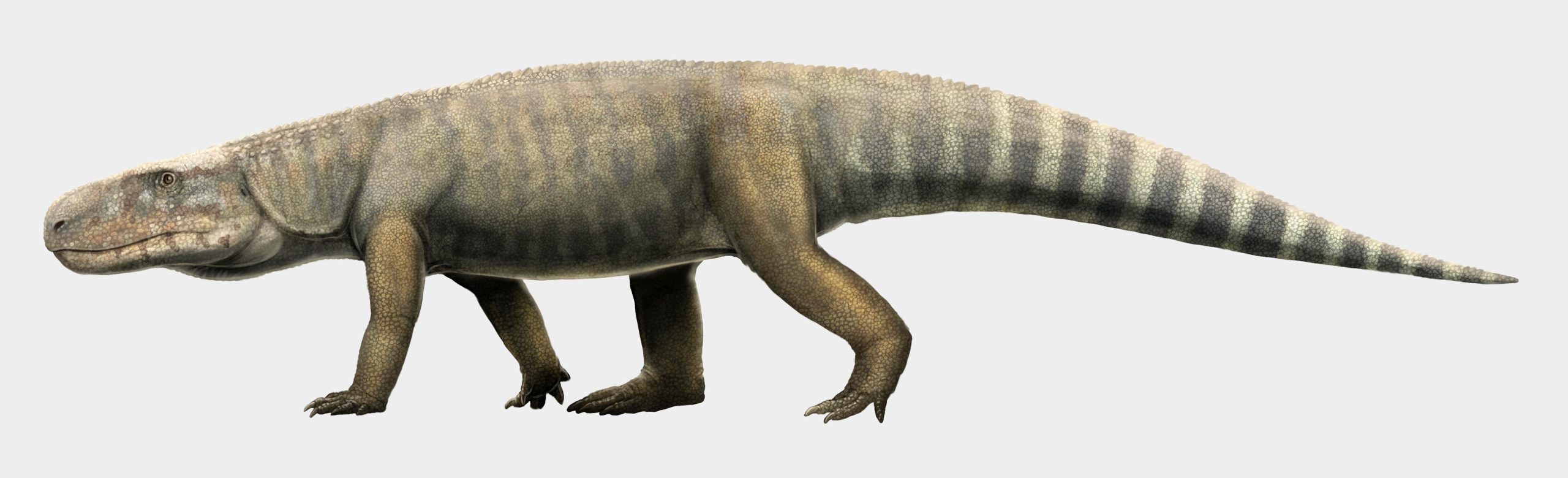
    Mambawakale ruhuhu
    Life reconstruction of Mambawakale ruhuhu by Gabriel Ugueto, who retains the copyright. Only the skull, mandible and a few postcranial elements are known for Mambawakale ruhuhu, so the rest of the body, tail and limbs are reconstructed based on the anatomy of hypothesized close relatives of similar size. Credit: Gabriel Ugueto

    Mambawakale ruhuhu, a newly identified Triassic archosaur from Tanzania, helps illuminate the early evolution of crocodiles.

    A set of Triassic archosaur fossils, excavated in the 1960s in Tanzania, have been formally recognized as a distinct species, representing one of the earliest-known members of the crocodile evolutionary lineage.

    Researchers at the University of Birmingham, the Natural History Museum, and Virginia Tech University have named the animal Mambawakale ruhuhu. It is among the last to be studied of a collection of fossils dug up nearly 60 years ago from the Manda Beds, a geological formation in southern Tanzania.

    Unique Features of Mambawakale ruhuhu

    The remains, which are the only known example of Mambawakale ruhuhu, include a partial skull, lower jaw, several vertebrae, and a hand. From these, the research team were able to identify several distinctive features that set it apart from other archosaurs found in the Manda Beds.

    These included a large skull, more than 75 cm in length, and a particularly large nostril, as well as a notably narrow lower jaw and strong variation in the sizes of the teeth at the front of the upper jaws.

    Richard Butler, Professor of Palaeobiology at the University of Birmingham says: “Mambawakale ruhuhu would have been a large and terrifying predator, which roamed across Tanzania some 240 million years ago. At around 5 meters long, it’s one of the largest predators that we know of from this period.

    “Our analysis identifies Mambawakale as one of the oldest known archosaurs and an early member of the lineage that eventually evolved into modern crocodilians. It’s an exciting discovery, because identifying this animal helps us to understand the rapid early diversification of archosaurs and enables us to add a further link to the evolutionary story of modern-day crocodiles.”

    Legacy of the 1963 Fossil Expedition

    The study, published in Royal Society Open Science, also ties up the final loose end of an ambitious fossil expedition, undertaken by scientists including the paleontologist Alan Charig in 1963. Although most of the finds brought back from that expedition have now been formally described and cataloged, Mambawakale ruhuhu has remained unpublished until now.

    In naming the specimen, the research team sought to recognize the previously little acknowledged contributions of Tanzanians to the success of the 1963 expedition. The name chosen derives from Kiswahili, one of the native languages of Tanzania. Mambawakale means ancient crocodile, and ruhuhu refers to the Ruhuhu Basin, the region within which the fossil was excavated.

    Reference: “A new pseudosuchian archosaur, Mambawakale ruhuhu gen. et sp. nov., from the Middle Triassic Manda Beds of Tanzania” by Richard J. Butler, Vincent Fernandez, Sterling J. Nesbitt, João Vasco Leite and David J. Gower, 9 February 2022, Royal Society Open Science.
    DOI: 10.1098/rsos.211622

    Never miss a breakthrough: Join the SciTechDaily newsletter.
    Follow us on Google and Google News.

    Evolution Fossils New Species Paleontology Popular University of Birmingham
    Share. Facebook Twitter Pinterest LinkedIn Email Reddit

    Related Articles

    Paleontology Plot Twist: New Research Shows Nanotyrannus Is Separate Species, Not “Juvenile T. rex”

    A Century After Its Discovery: Triassic Specimen Found To Be Early Relative of Pterosaurs

    Exquisitely Preserved Dinosaur Embryo Found Inside Fossilized Oviraptorosaur Egg

    Kyhytysuka: 130-Million-Year-Old Hypercarnivore “Fish Lizard” Discovered

    New Species of Tardigrade (Water Bear) Discovered in 16 Million-Year-Old Dominican Amber

    Bizarre New Species of Dinosaur Had Armor Unlike Anything Seen Before

    “Monkeydactyl” – Strange New Jurassic Flying Reptile Reveals the Oldest Opposable Thumbs

    MIT’s New Evidence on Dinosaur Evolution

    Fossil Discovered in the 1960s Finally Reveals Its Secrets: New Plant Species That Lived About 365 Million Years Ago

    Leave A Reply Cancel Reply

    • Facebook
    • Twitter
    • Pinterest
    • YouTube

    Don't Miss a Discovery

    Subscribe for the Latest in Science & Tech!

    Trending News

    Scientists Say This Natural Hormone Reverses Obesity by Targeting the Brain

    35-Million-Year-Old Mystery: Strange Arachnid Discovered Preserved in Amber

    Is AI Really Just a Tool? It Could Be Altering How You See Reality

    JWST Reveals a “Forbidden” Planet With a Baffling Composition

    The Protein “Sabotaging” Aging Muscle Recovery Could Be Key to Surviving Aging

    This Diet–Gut Interaction Could Transform Fat Into a Calorie-Burning Machine

    Scientists Discover Hidden Virus Linked to Colorectal Cancer

    Scientists Discover 132-Million-Year-Old Dinosaur Tracks on South Africa’s Coast

    Follow SciTechDaily
    • Facebook
    • Twitter
    • YouTube
    • Pinterest
    • Newsletter
    • RSS
    SciTech News
    • Biology News
    • Chemistry News
    • Earth News
    • Health News
    • Physics News
    • Science News
    • Space News
    • Technology News
    Recent Posts
    • Beyond “Safe Levels”: Study Challenges What We Know About Pesticides and Cancer
    • Researchers Have Found a Dietary Compound That Increases Longevity
    • 5 Things Experts Say You’re Getting Wrong About Protein
    • Scientists Create “Optical Tornadoes” That Twist Light Into a Swirling Vortex
    • Scientists Uncover Hidden Superconductivity in Material Once Thought Only Magnetic
    Copyright © 1998 - 2026 SciTechDaily. All Rights Reserved.
    • Science News
    • About
    • Contact
    • Editorial Board
    • Privacy Policy
    • Terms of Use

    Type above and press Enter to search. Press Esc to cancel.