
Close Menu
    Facebook X (Twitter) Instagram
    SciTechDaily
    • Biology
    • Chemistry
    • Earth
    • Health
    • Physics
    • Science
    • Space
    • Technology
    Facebook X (Twitter) Pinterest YouTube RSS
    SciTechDaily
    Home»Science»35-Million-Year-Old Mystery: Strange Arachnid Discovered Preserved in Amber
    Science

    35-Million-Year-Old Mystery: Strange Arachnid Discovered Preserved in Amber

    By Staatliche Naturwissenschaftliche Sammlungen BayernsApril 9, 2026No Comments3 Mins Read
    Facebook Twitter Pinterest Telegram LinkedIn WhatsApp Email Reddit
    Share
    Facebook Twitter LinkedIn Pinterest Telegram Email Reddit
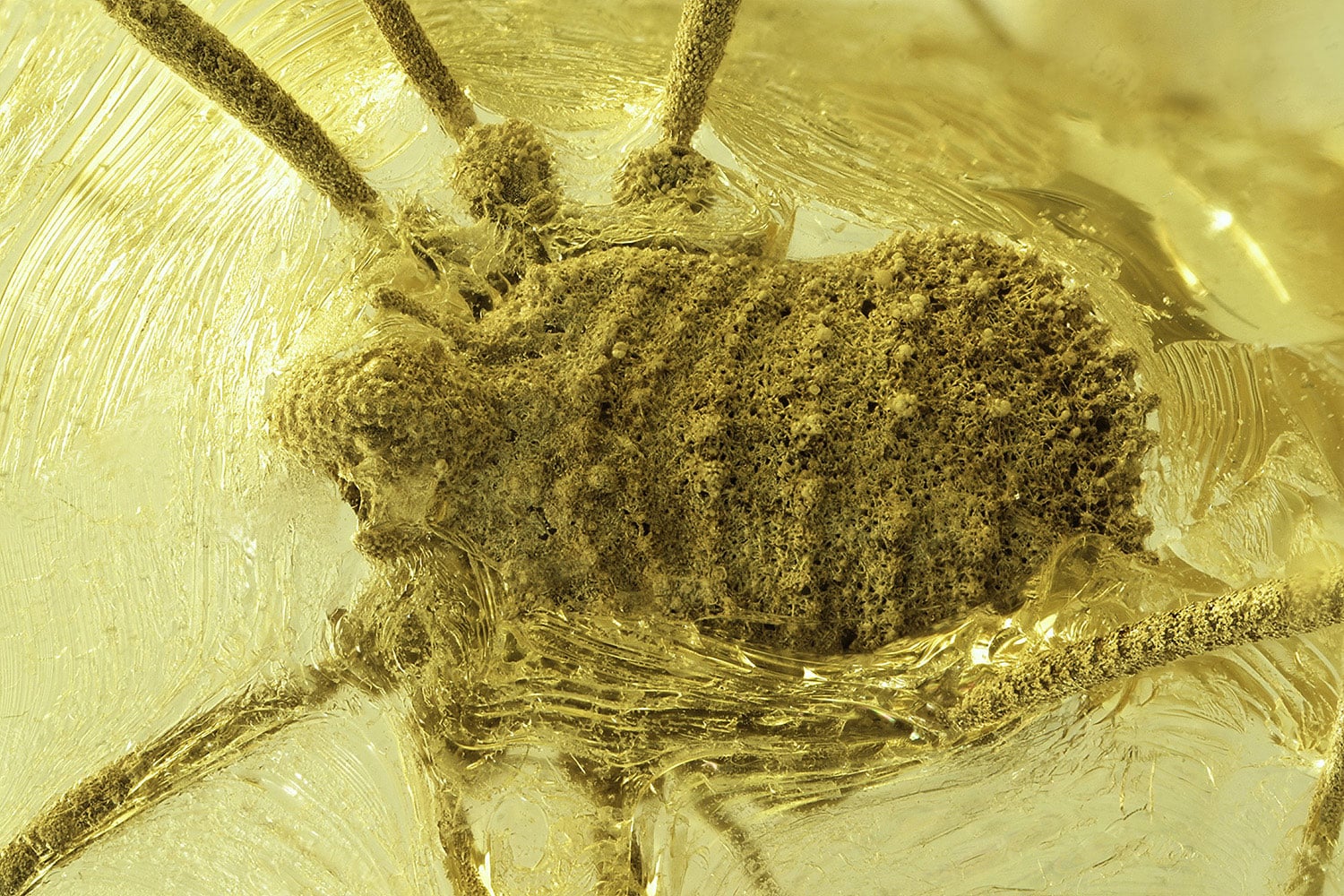
    Amber Fossil Balticolasma Wunderlichi
    Fossil Balticolasma wunderlichi (female) from Ukrainian Rovno amber. Credit: Jonas Damzen

    A fossil harvestman identified using advanced imaging techniques shows that extinct arachnid lineages once lived in Europe. The discovery expands the known diversity of amber-preserved species in the region.

    A team of researchers from Germany and Bulgaria, led by SNSB paleontologist Christian Bartel, has identified a previously unknown species of harvestman preserved in 35-million-year-old amber from Ukraine and the Baltic region.

    This arachnid belongs to a group that no longer exists in Europe today. The findings were reported in the journal Acta Palaeontologica Polonica.

    Amber fossils reveal extinct diversity

    The specimen was exceptionally preserved after becoming trapped in tree resin millions of years ago, a process that allows fine anatomical details to survive over geological time. The fossil comes from Eocene amber deposits found in both Ukraine and the Baltic region.

    Scientists determined that it represents a new species within the Ortholasmatinae subfamily. Members of this group are known for their distinctive appearance, with heavily ornamented bodies and intricate, sometimes lattice-like structures around the head. Until this discovery, no fossil examples of Ortholasmatinae had been documented.
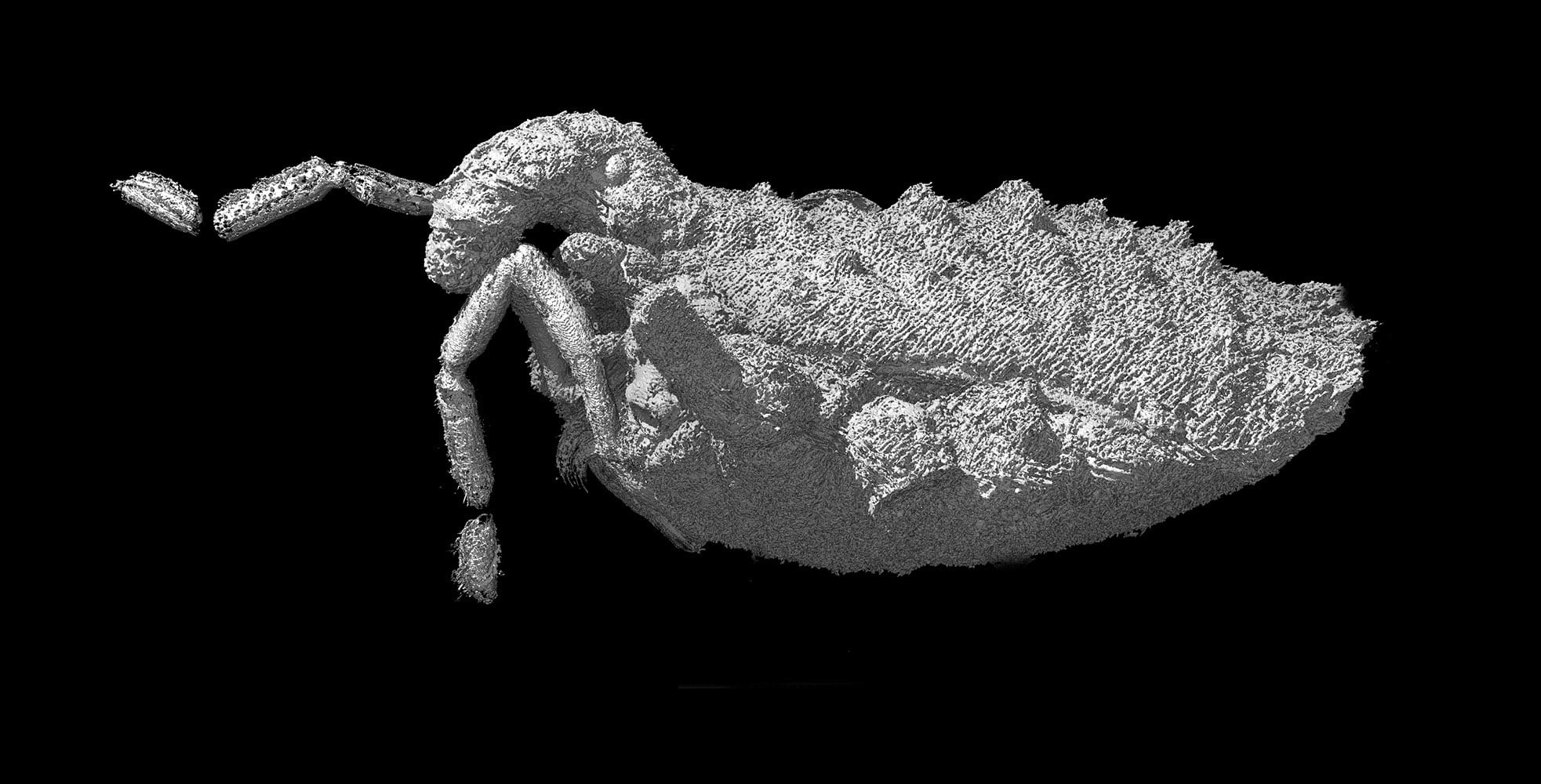
    3D Model of Balticolasma Wunderlichi
    3D model of Balticolasma wunderlichi (male). Credit: Christian Bartel

    Balticolasma wunderlichi is the name given to this newly described species by a research team led by Dr. Christian Bartel of the Bavarian State Collections of Natural History (SNSB) and Prof. Plamen Mitov of Sofia University, Bulgaria.

    The fossil shares key features with living relatives, including a complex surface texture and a prominent eye mound.

    To examine its three-dimensional structure in detail, the team used advanced imaging techniques. X-ray scans conducted with a computed tomography system at the Helmholtz Center Hereon at the Deutsches-Elektronen Synchrotron (DESY) in Hamburg revealed a network of fine ridges across the upper body and intricate mouthparts with multiple appendages.
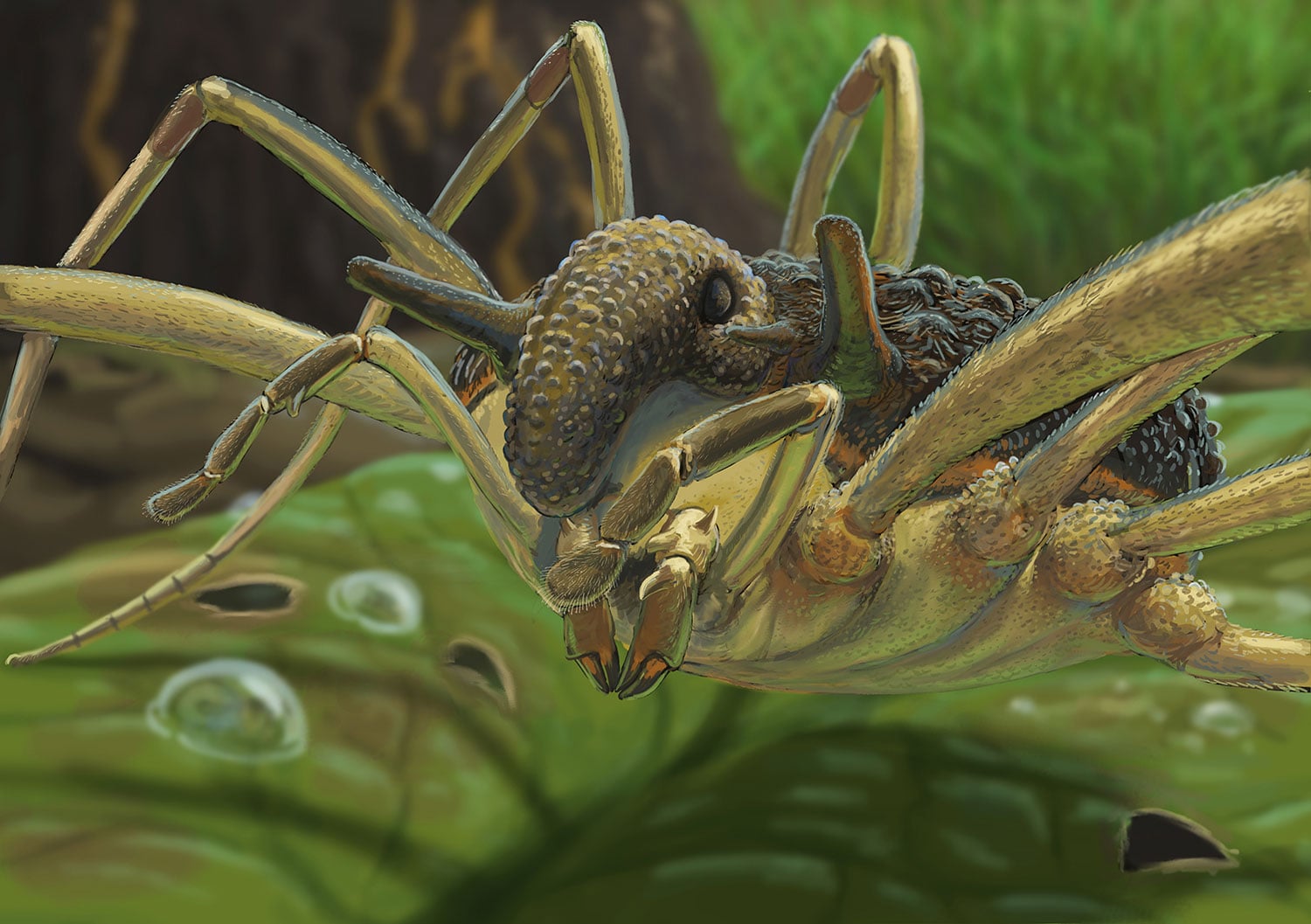
    Reconstruction of Balticolasma Wunderlichi
    Reconstruction of Balticolasma wunderlichi. Credit: Joschua Knüppe, Palaeoartist

    Fossil record reshapes geographic history

    “The discovery of an ortholasmatine harvestman in European amber deposits surprised us. Harvestmen of this group no longer exist in Europe today. Relatives of these animals are currently found only in East Asia as well as in North and Central America. Evidently, 35 million years ago, during the Eocene epoch, these harvestmen were much more widely distributed across the Northern Hemisphere than they are today,” says SNSB paleontologist Dr. Christian Bartel, the study’s lead author.

    Bartel conducts research at the Bamberg Natural History Museum, one of ten museums comprising the Bavarian State Collections of Natural History (SNSB).

    “Baltic amber is known for its great diversity of fossils. It continually reveals species that no longer occur in Europe today. The fact that the new harvestman species was also found in Ukraine shows once again that the harvestman faunas of both regions were likely similar. With this new addition, the number of known harvestman species from Baltic amber rises to 19, and those from the ancient Ukrainian Rovno amber to seven. Six species are found in both regions,” says co-author Dr. Jason Dunlop of the Museum für Naturkunde in Berlin.

    Reference: “3D analyses of the first ortholasmatine harvestmen from European Eocene ambers” by Christian Bartel, Plamen G. Mitov, Jason A. Dunlop, and Jörg U. Hammel, 2026, Acta Palaeontologica Polonica.
    DOI: 10.4202/app.01283.2025

    Never miss a breakthrough: Join the SciTechDaily newsletter.
    Follow us on Google and Google News.

    Amber Arachnids Evolutionary Biology Fossils Paleontology Popular
    Share. Facebook Twitter Pinterest LinkedIn Email Reddit

    Related Articles

    Historic Discovery: Ancient Venomous Reptile Species Discovered in Arizona

    What a Bizarre Taco-Shaped Sea Creature Can Teach Us About Evolution

    “Unlike Any Other Arachnid Known” – Scientists Discover Bizarre 308-Million-Year-Old Creature With Spiny Legs

    Longstanding Paleontology Mystery Solved – Revolutionary Fossil Find in Morocco Unveils Origins of Spiders and Scorpions

    Like Nothing Seen Before – New Type of Wasp Discovered With Mysterious, Cloud-Like Structures at Ends of Antennae

    Three-Eyed “Fossil Monster” – 520 Million-Year-Old Fossil Reveals Amazing Detail of Early Animal Evolution

    500-Million-Year-Old Fossil Reveals Astonishing Secrets of a Strange Group of Marine Invertebrates

    Bizarre: Scientists Discover New Species of Mosasaur With Strange “Screwdriver Teeth”

    Controversial Prehistoric Egg Identified To Be the Last of the “Demon Ducks of Doom”

    Leave A Reply Cancel Reply

    • Facebook
    • Twitter
    • Pinterest
    • YouTube

    Don't Miss a Discovery

    Subscribe for the Latest in Science & Tech!

    Trending News

    Scientists Say This Natural Hormone Reverses Obesity by Targeting the Brain

    35-Million-Year-Old Mystery: Strange Arachnid Discovered Preserved in Amber

    Is AI Really Just a Tool? It Could Be Altering How You See Reality

    JWST Reveals a “Forbidden” Planet With a Baffling Composition

    The Protein “Sabotaging” Aging Muscle Recovery Could Be Key to Surviving Aging

    This Diet–Gut Interaction Could Transform Fat Into a Calorie-Burning Machine

    Scientists Discover Hidden Virus Linked to Colorectal Cancer

    Scientists Discover 132-Million-Year-Old Dinosaur Tracks on South Africa’s Coast

    Follow SciTechDaily
    • Facebook
    • Twitter
    • YouTube
    • Pinterest
    • Newsletter
    • RSS
    SciTech News
    • Biology News
    • Chemistry News
    • Earth News
    • Health News
    • Physics News
    • Science News
    • Space News
    • Technology News
    Recent Posts
    • Surprise RNA Discovery Challenges Long-Held Beliefs About How Genes Work
    • Your IQ at 23 Could Predict Your Wealth at 27, Study Finds
    • 320 Light-Years Away, a Planet Confirms a Fundamental Cosmic Assumption
    • Astronomers Solve Decades-Long Mystery About Saturn’s Spin – “Something Strange Was Happening”
    • Scientists Uncover Strange New State of Matter Inside Uranus and Neptune
    Copyright © 1998 - 2026 SciTechDaily. All Rights Reserved.
    • Science News
    • About
    • Contact
    • Editorial Board
    • Privacy Policy
    • Terms of Use

    Type above and press Enter to search. Press Esc to cancel.