
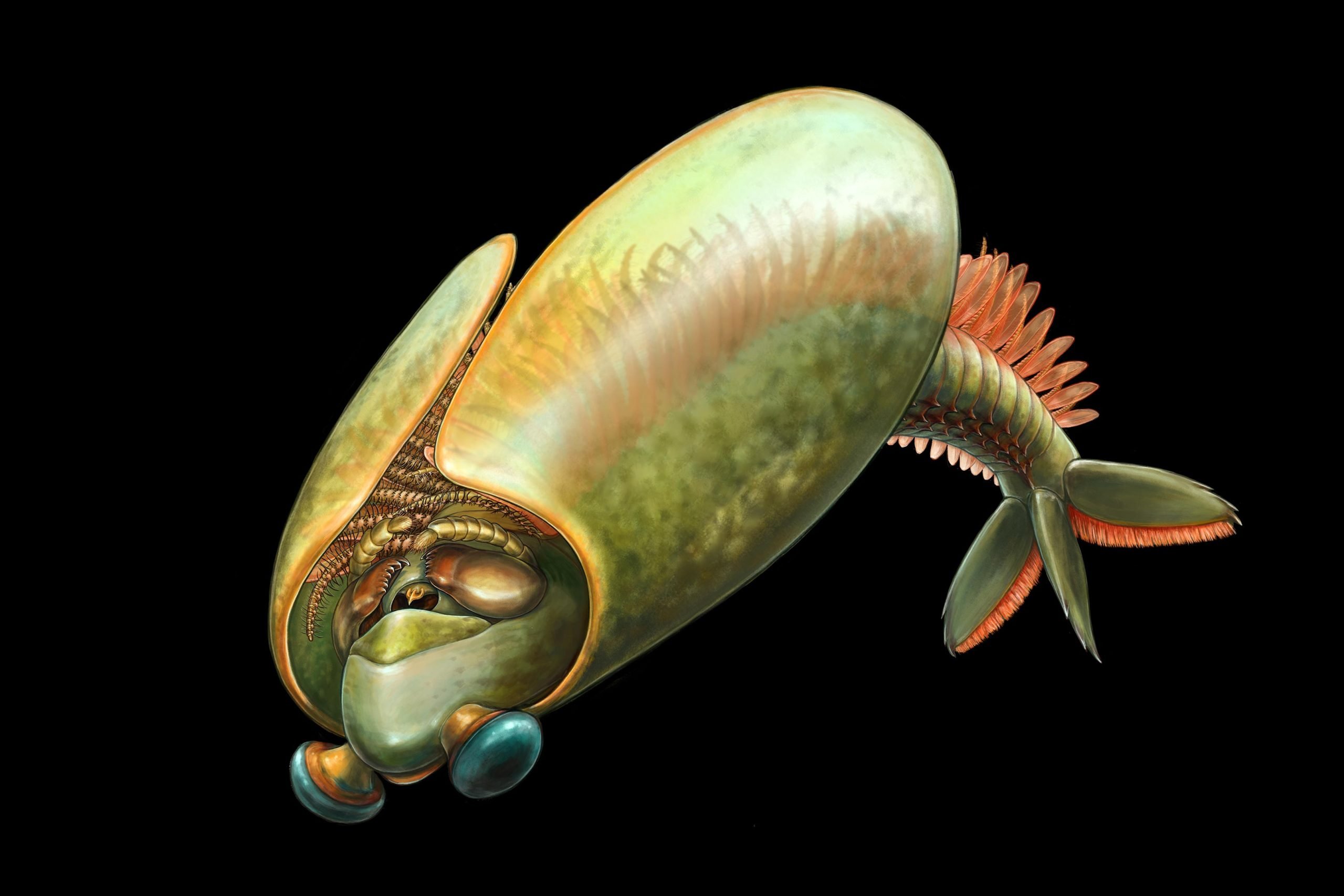
Exceptional fossils show how mandibulates were trapping prey in marine ecosystems 500 million years ago.
Researchers have classified the Cambrian marine animal, Odaraia, as a mandibulate based on new fossil evidence. This discovery aids in understanding the evolutionary paths and ecological adaptations during the Cambrian period, emphasizing the importance of the Burgess Shale for paleontological studies.
Discovery and Classification of Odaraia
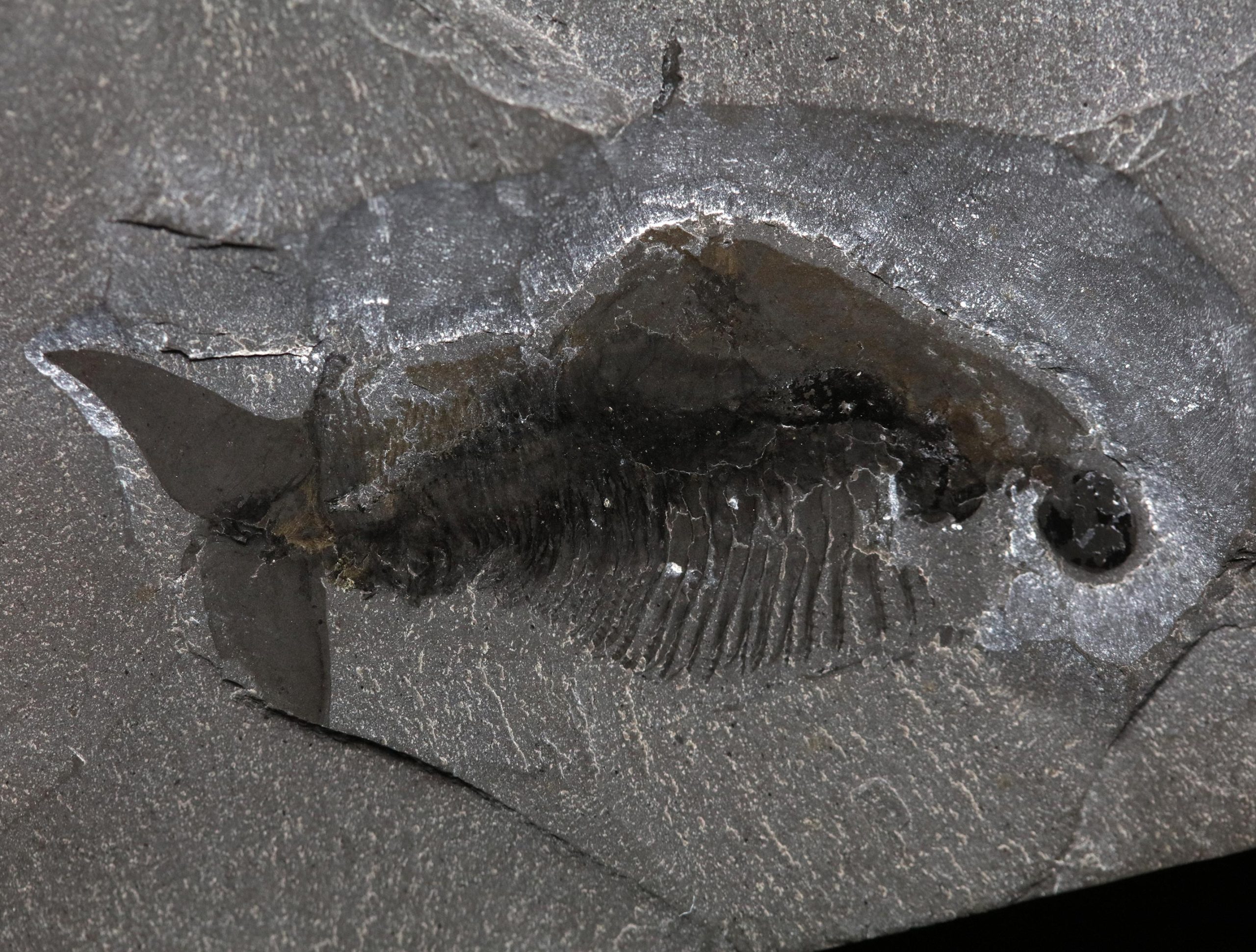
Paleontologists at the Royal Ontario Museum (ROM) led a new study that is helping resolve the evolution and ecology of Odaraia, a taco-shaped marine animal that lived during the Cambrian period. Fossils collected by ROM reveal Odaraia had mandibles. Paleontologists are finally able to place it as belonging to the mandibulates, ending its long enigmatic classification among the arthropods since it was first discovered in the Burgess Shale over 100 years ago and revealing more about early evolution and diversification. The study The Cambrian Odaraia alata and the colonization of nektonic suspension-feeding niches by early mandibulates was published in the journal Proceedings of the Royal Society B Biological Sciences.
The study authors were able to identify a pair of large appendages with grasping jagged edges near its mouth, clearly indicative of mandibles which are one of the key and distinctive features of the mandibulate group of animals. This suggests that Odaraia was one of the earliest known members of this group. The researchers made another stunning discovery, a detailed analysis of its more than 30 pairs of legs, found an intricate system of small and large spines. According to the authors, these spines could intertwine, capturing smaller prey as through a fishing net, suggesting how some of these first mandibulates left the sea floor and explored the water column, setting the seeds for their future ecological success.
Understanding Odaraia’s Feeding Mechanism
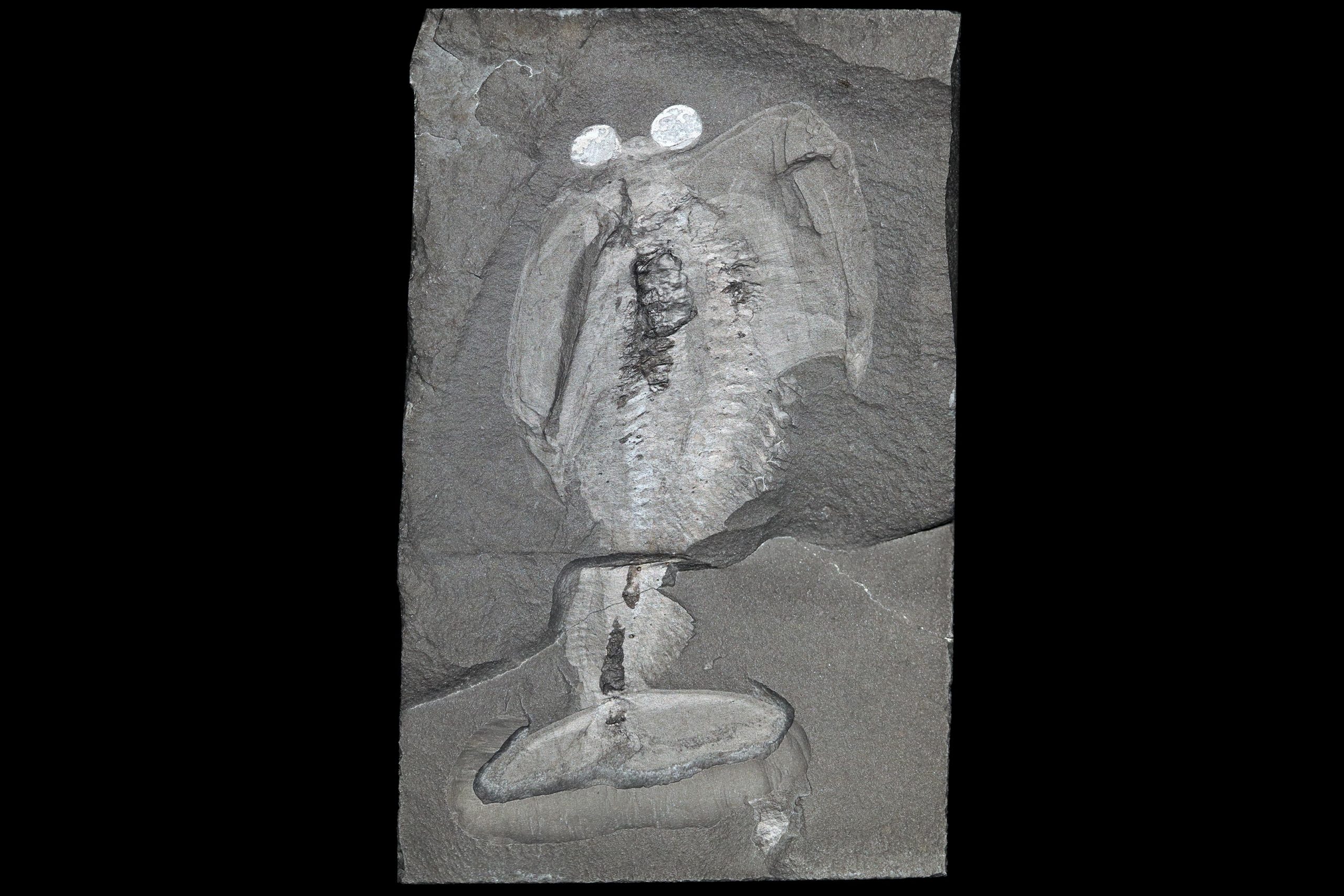
“The head shield of Odaraia envelops practically half of its body including its legs, almost as if it were encased in a tube. Previous researchers had suggested this shape would have allowed Odaraia to gather its prey, but the capturing mechanism had eluded us, until now,” says Alejandro Izquierdo-López, lead author, who was based at ROM during this work as a PhD student at the University of Toronto. “Odaraia had been beautifully described in the 1980s, but given the limited number of fossils at that time and its bizarre shape, two important questions had remained unanswered: is it really a mandibulate? And what was it feeding on?”
At almost 20 cm in size, the authors explain that early mandibulates like Odaraia were part of a community of large animals that could have been able to migrate from the marine bottom-dwelling ecosystems characteristic of the Cambrian period to the upper layers of the water column. These types of communities could have enriched the water column and facilitated a transition towards more complex ecosystems.
Evolutionary Impact of Cambrian Mandibulates
Cambrian fossils record the major divergence of animal groups originating over 500 million years ago. This period saw the evolution of innumerable innovations, such as eyes, legs or shells, and the first diversification of many animal groups, including the mandibulates, one of the major groups of arthropods (animals with jointed limbs).
Mandibulates are an example of evolutionary success, representing over half of all current species on Earth. Today, mandibulates are everywhere: from sea-dwelling crabs to centipedes lurking in the undergrowth or bees flying across meadows, but their beginnings were more humble. During the Cambrian period, the first mandibulates were marine animals, most bearing distinct head shields or carapaces.
Contributions of the Burgess Shale to Paleontology
“The Burgess Shale has been a treasure trove of paleontological information,” says Jean-Bernard Caron, Richard Ivey Curator at the Royal Ontario Museum, and co-author of the study. “Thanks to the work we have been doing at the ROM on amazing fossil animals such as Tokummia and Waptia, we already know a substantial amount about the early evolution of mandibulates. However, some other species had remained quite enigmatic, like Odaraia.”
The Uniqueness of Odaraia and the Burgess Shale
The Royal Ontario Museum holds the largest collections of Cambrian fossils from the world-renowned Burgess Shale of British Columbia. Burgess Shale fossils are exceptional, as they preserve structures, animals and ecosystems that under normal conditions would have decayed and completely disappeared from the fossil record. Mandibulates, though, are generally rare in the fossil record. Most fossils preserve only the hard parts of animals, such as skeletons or the mineralized cuticles of the well-known trilobites, structures that mandibulates lack.
For over forty years Odaraia has been one of the most iconic animals of the Burgess Shale, with its distinctive taco-shaped carapace, its large head and eyes, and a tail that resembles a submarine’s keel. The public can view specimens of Odaraia on display at the Willner Madge Gallery, Dawn of Life at the Royal Ontario Museum.
Reference: “The Cambrian Odaraia alata and the colonization of nektonic suspension-feeding niches by early mandibulates” by Alejandro Izquierdo-López and Jean-Bernard Caron, 1 July 2024, Proceedings B.
DOI: 10.1098/rspb.2024.0622
Never miss a breakthrough: Join the SciTechDaily newsletter.
Follow us on Google and Google News.
1 Comment
Bizarre looking creatures like this fascinate and intrigue scientists and lay persons like me alike! That’s what I love about this report, stunning and weird and unimaginable science written in ways that are fairly easy to understand by intelligent people who understand the scientific method.
What’s confusing is why you get comments from Luddites who claim the Earth and Sun and universe formed 6,000 years ago, and that “evidence” (a term they completely misunderstand but believe they do) confirms unattested, unvideotaped, unphotographed, bizarre and magical claims about the likes of Jesus and his claimed magical powers. Such claims can never be investigated because there is no scientific evidence of them! It’s all hearsay and wishful thinking.
If religion believers would study and understand the scientific method, they would realize those magical claims about magical powers are completely unfounded. Simply no basis for them, and certainly none that could be investigated or studied or analyzed.