

A largely overlooked plant compound found in common fruits and vegetables is drawing new scientific attention for its potential effects on aging and brain health.
A little-known nutrient found in everyday fruits and vegetables may be doing far more in the body than scientists once believed.
Researchers from the University of Seville and the University of Kent report that phytoene, a colorless carotenoid present in foods like tomatoes, carrots, oranges, and peppers, can extend lifespan and protect against key processes linked to Alzheimer’s disease, at least in a widely used laboratory model.
Their experiments in the tiny worm Caenorhabditis elegans showed lifespan increases of 10 to 18.6 percent, along with a 30 to 40 percent reduction in the toxic effects caused by amyloid-β42, the protein associated with brain plaque formation in Alzheimer’s.
Rethinking an Overlooked Compound
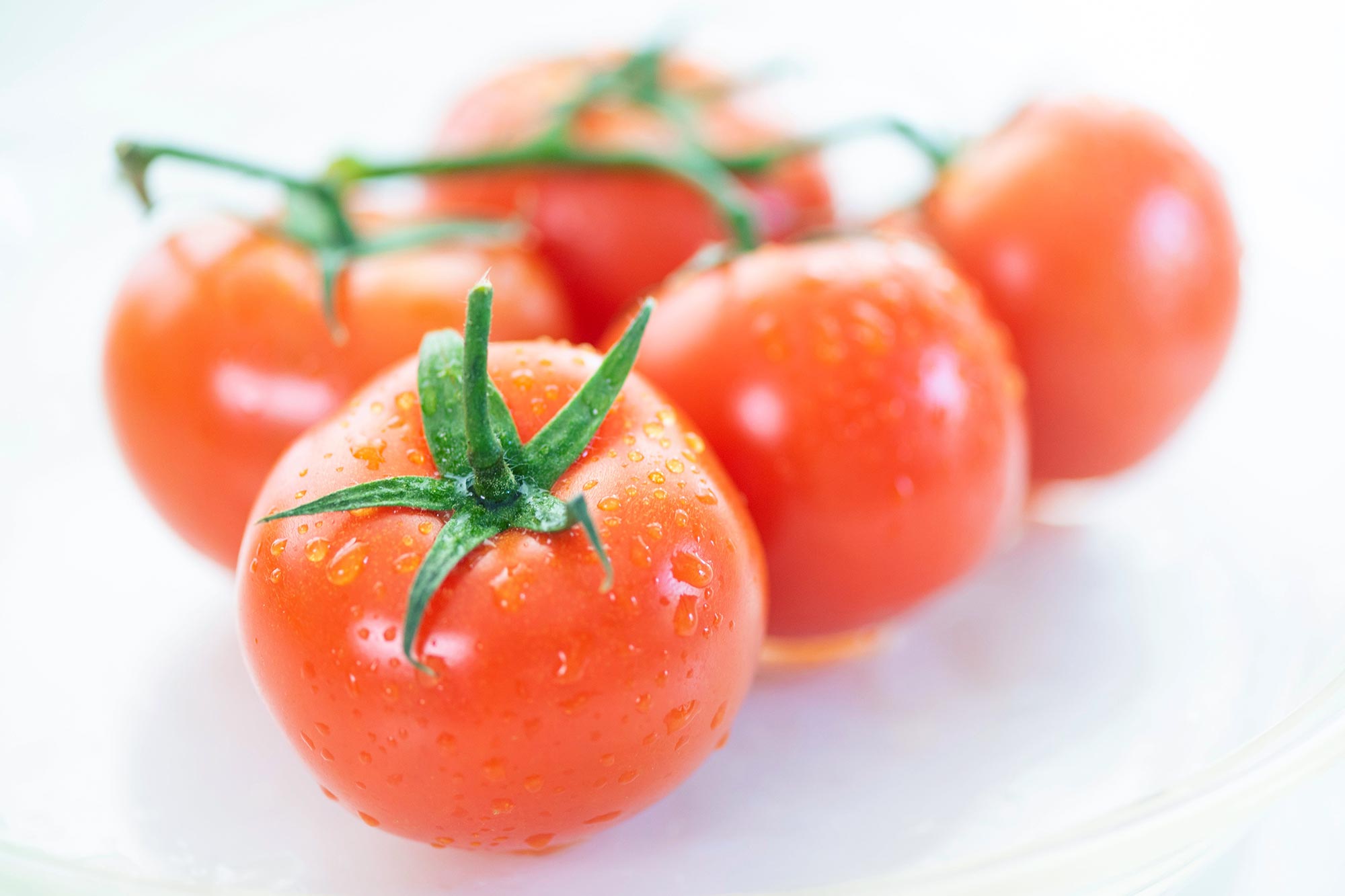
Phytoene has long been overlooked. Unlike better-known carotenoids such as beta-carotene or lycopene, it does not give foods their bright colors and has often been treated as an inactive precursor rather than a functional compound.
The research, part of Ángeles Morón Ortiz’s doctoral work, tested both purified phytoene and extracts derived from microalgae, specifically Chlorella sorokiniana and Dunaliella bardawil. These extracts, which contained high levels of phytoene, performed just as well as the pure compound. Importantly, the treatments did not interfere with the worms’ growth or food supply, suggesting the benefits were not due to reduced calorie intake or stress.
Further experiments revealed how phytoene may be working. The compound improved resistance to oxidative stress, a process driven by unstable molecules that damage cells and contribute to aging and diseases such as cancer and neurodegeneration. At certain doses, survival under oxidative stress increased by as much as 53 percent. This aligns with what scientists already know about carotenoids, which can neutralize harmful molecules or activate the body’s own defense systems.
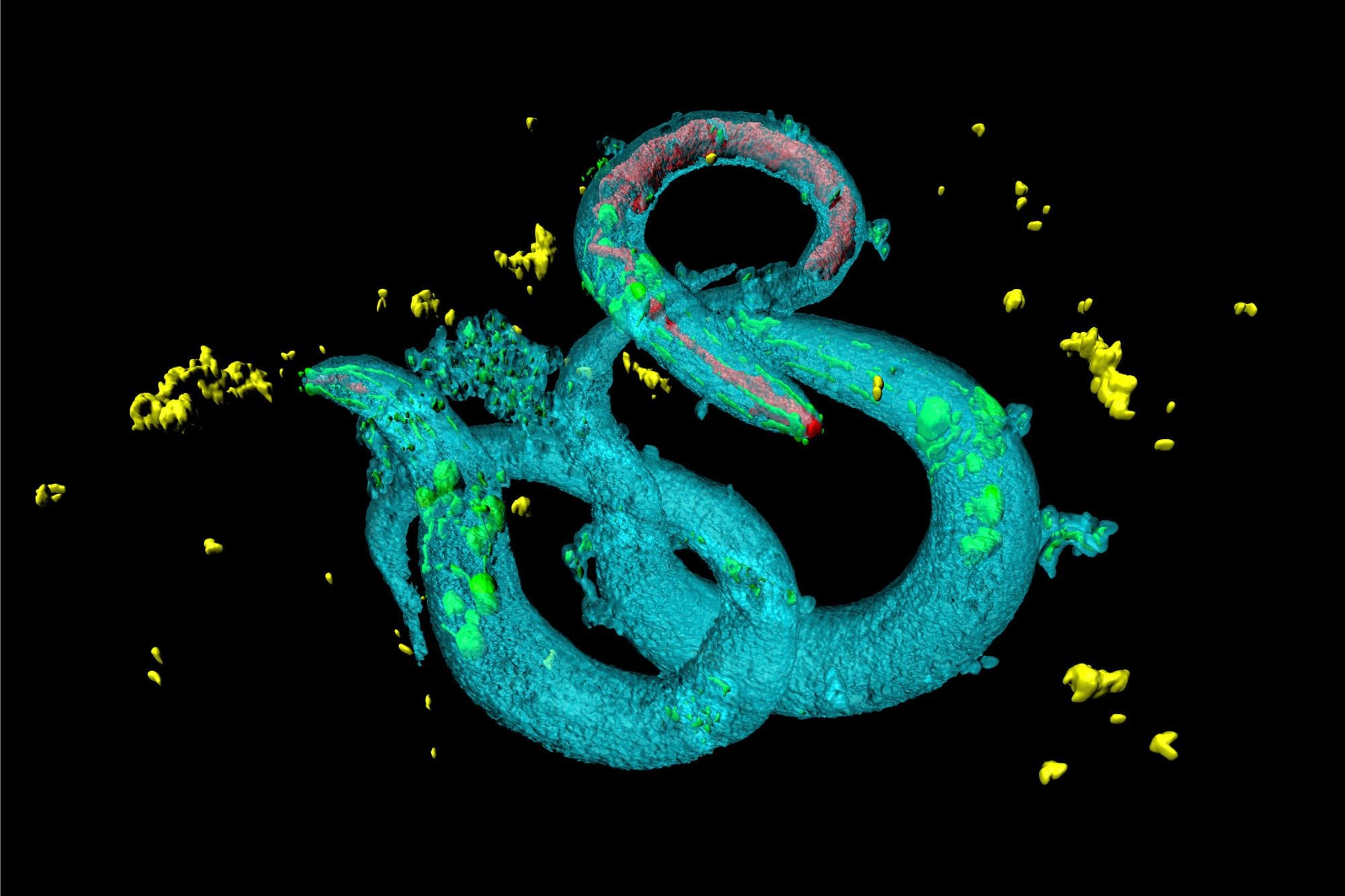
The Alzheimer’s-related findings are also significant. In the worm model, amyloid-β42 buildup leads to progressive paralysis. Animals given phytoene showed a clear delay in this effect, indicating protection against protein aggregation, one of the hallmarks of the disease.
“These are very exciting preliminary results, so we are looking for funding to continue this line of research and to find out by what mechanisms these effects are produced,” said Dr. Paula Mapelli Brahm.
Nutritional and Environmental Implications
Phytoene may also be important from a nutritional perspective. Some studies suggest that people consume more phytoene daily than many other carotenoids, and it accumulates in tissues throughout the body, including the skin. There is also evidence that it may help protect against ultraviolet radiation, adding to its potential health value.
The study highlights microalgae as a promising and sustainable source of this compound. Unlike traditional crops, microalgae grow rapidly, require little land, and can produce high concentrations of beneficial molecules. They are already used in supplements and food ingredients, and their role in future nutrition is expanding as demand rises for both healthier and more environmentally friendly food systems.
From Worms to Human Health
While the results come from a simple organism, C. elegans has been central to major scientific breakthroughs, including discoveries related to aging, gene regulation, and cell death. Findings in this model often guide early-stage research in humans.
The researchers emphasize that more work is needed to confirm whether the same effects occur in people.
Building on these findings, the team has already begun exploring its effects beyond lifespan and neurodegeneration. In a more recent study, they again used C. elegans to examine how phytoene and related carotenoids influence the organism’s skin-like outer layer.
They found that phytoene-rich microalgae extracts improved epidermal integrity and significantly strengthened the worm’s protective barrier, suggesting potential applications in skin health and aging.
The team has also begun exploring phytoene’s potential in other disease areas. In early-stage experiments using human cell models, phytoene-rich extracts showed protective effects against oxidative damage and signs of modest anti-tumor activity in colorectal cancer cells.
References: “Phytoene and Phytoene-Rich Microalgae Extracts Extend Lifespan in C. elegans and Protect against Amyloid-β Toxicity in an Alzheimer’s Disease Model” by Ángeles Morón-Ortiz, Antonis A. Karamalegkos, Paula Mapelli-Brahm, Marina Ezcurra and Antonio J. Meléndez-Martínez, 30 July 2024, Antioxidants.
DOI: 10.3390/antiox13080931
“Effects of lutein, phytoene and carotenoid-rich microalgal extracts on the epidermis of Caenorhabditis elegans” by Ángeles Morón-Ortiz, Mar Ferrando-Marco, Antonio León-Vaz, Rosa León, Paula Mapelli-Brahm, Michalis Barkoulas and Meléndez Martínez, Antonio Jesús, 11 November 2025, Food Chemistry.
DOI: 10.1016/j.foodchem.2025.147022
“Preliminary Assessment of the Protective and Antitumor Effects of Several Phytoene-Containing Bacterial and Microalgal Extracts in Colorectal Cancer” by Gloria Perazzoli, Cristina Luque, Antonio León-Vaz, Patricia Gómez-Villegas, Rocío Rengel, Ana Molina-Márquez, Ángeles Morón-Ortiz, Paula Mapelli-Brahm, José Prados, Consolación Melguizo, Antonio Meléndez-Martínez and Rosa León, 21 October 2024, Molecules.
DOI: 10.3390/molecules29215003
Never miss a breakthrough: Join the SciTechDaily newsletter.
Follow us on Google and Google News.
7 Comments
“Their experiments in the tiny worm Caenorhabditis elegans showed lifespan increases of 10 to 18.6 percent, along with a 30 to 40 percent reduction in the toxic effects caused by amyloid-β42, …”
I would be very surprised to find out that their 10-19% lifespan increases for worms translated to similar increases for humans.
Yes ….As a long time user (15 years) of the most beneficial of the microalge compounds…..Spirulina .
I can attest to the many facts , of skin and much less oxidative stresses on same …and joints and clear thinking As I have achieved an already greater age , than any male ( inside my family ) other than my paternal grandfather. But with a few complications , such as I do take many other herbal and nutritional compounds….
Maybe with Ai coming on now , with better understanding of complex biological testing in simulated labs . We will have even better answers , and hopefully soon…. But I would suggest to many , to pay close attention to this and other findings , about adding very beneficial amino acid compounds , to daily regimes…
Conventional wisdom is that it’s better to get your nutrients through foods, not supplements. Great as far as it goes, but that doesn’t get to the root of it. Back when “vitamins” were being discovered and their effects examined, chemistry and biology were rudimentary compared to today. So only the easiest to isolate were investigated; the very idea of a “vitamin” is pretty arbitrary. Countless undetected nutrients (and synergistic effects) must exist, with unknown effects (some possibly more important than the usual suspects), and here’s your proof.
Absolutely…..Also where did the researchers miss the facts….of big pharma….reinventing beneficial compounds….pushing ever more of their chemical concentration concoctions on society ? Not that some has helped illness of some cell damaged individuals….But we need clarity on all human cell health , with known and unknown compounds….
But it is widely covered , that God has provided most everything our body needs ….on this side and the other of eternity ? Thus , if we had better biological smart labs….more of these helpful facts of intake of tbe most beneficial compounds and foods/additive natural compounds , would provide better very beneficial health and Longevjty ..,
2026 1 summer may
This finding/s ….are among the most important for a healthy life and our longevity , as a human species….Many may brush it aside….but it is among the better health beneficial studies , with direct impact on our health lives..,,As I can attest to the benefits….Seek out further studies of microalge and Spirulina…
Eat your veggies