
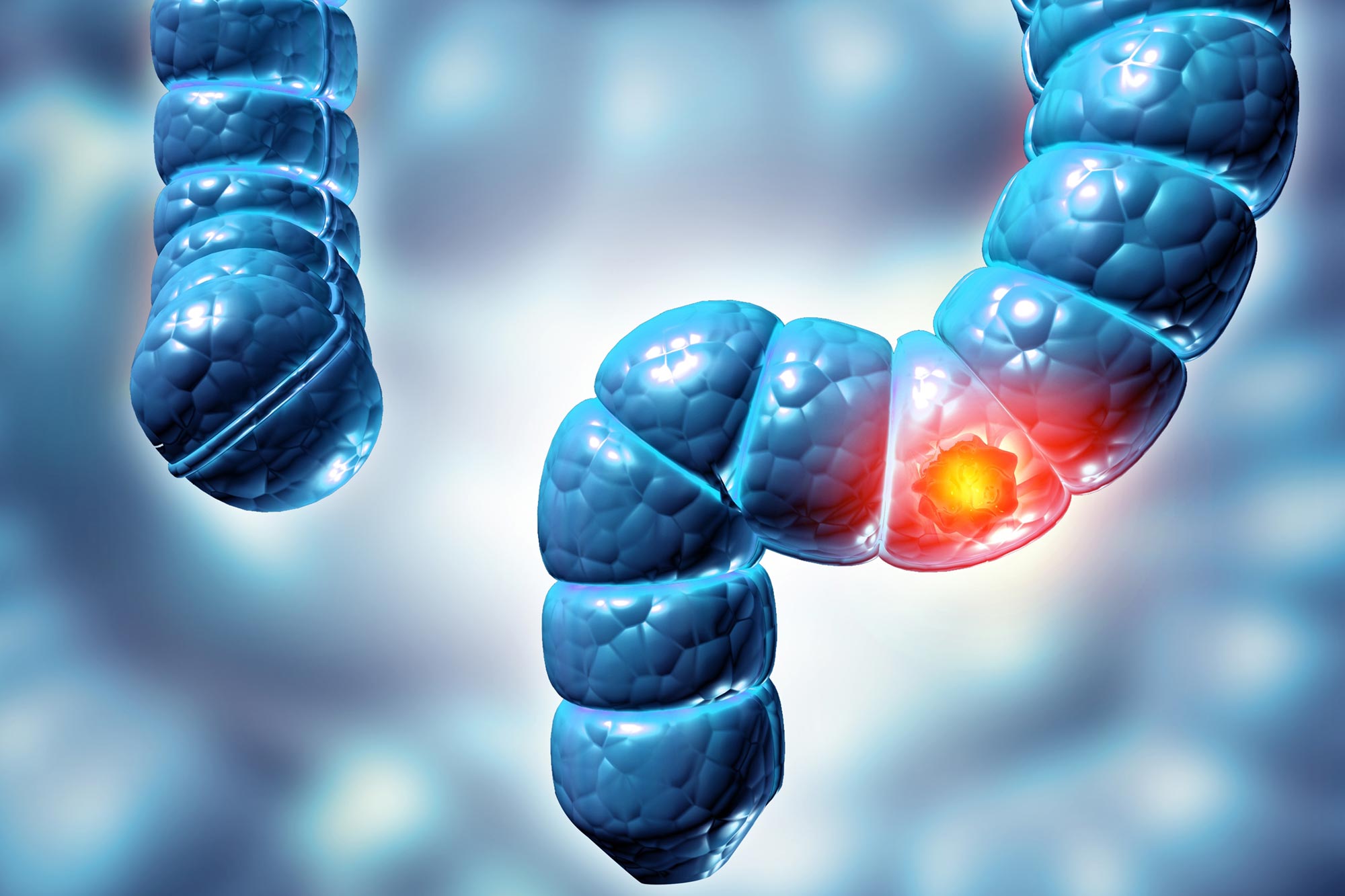
A newly identified virus may be linked to colorectal cancer.
Colorectal cancer ranks among the most common cancers in Western countries and remains a major cause of cancer-related deaths. Known risk factors include age, diet, and lifestyle, yet in many cases, the exact biological triggers behind the disease are still not fully understood.
In recent years, scientific attention has shifted toward the gut ecosystem, a complex community made up of bacteria, viruses, and other microorganisms that play a key role in human health.
Researchers at the University of Southern Denmark and Odense University Hospital have now identified a previously unknown virus within a common gut bacterium. This virus appears more frequently in individuals diagnosed with colorectal cancer.
A familiar bacterium—but an unsolved puzzle
For years, scientists have linked one particular bacterium, Bacteroides fragilis, to colorectal cancer.
The challenge is that this bacterium is also commonly found in healthy individuals, making it difficult to explain its role in disease.
“It has been a paradox that we repeatedly find the same bacterium in connection with colorectal cancer, while at the same time it is a completely normal part of the gut in healthy people,” says Flemming Damgaard, medical doctor and PhD at the Department of Clinical Microbiology at Odense University Hospital and the University of Southern Denmark.
To resolve this contradiction, the researchers investigated whether variations within the bacterium itself might explain the difference.
Their analysis revealed a key distinction.
A virus hidden inside the bacterium
In patients who later developed colorectal cancer, the bacterium was much more likely to contain a specific virus. This type of virus, known as a bacteriophage, lives inside bacterial cells.
“We have discovered a virus that has not previously been described and which appears to be closely linked to the bacteria we find in patients with colorectal cancer,” says Flemming Damgaard.
According to the research team, this virus represents a previously unrecognized group.
“It is not just the bacterium itself that seems interesting. It is the bacterium in interaction with the virus it carries,” he explains.
The findings show a statistical link between the presence of the virus and colorectal cancer. However, they do not establish whether the virus directly contributes to the disease.
“We do not yet know whether the virus is a contributing cause, or whether it is simply a sign that something else in the gut has changed,” says Flemming Damgaard.
The discovery began in Denmark
The investigation began with data from a large Danish population study involving approximately two million individuals.
The researchers focused on patients who had experienced bloodstream infections caused by Bacteroides fragilis. Among these patients, a subset was diagnosed with colorectal cancer shortly afterward.
By examining the genetic material of the bacterium in both cancer and non-cancer patients, the team identified a clear pattern: bacteria associated with cancer cases were more frequently infected with specific viruses.
Although the initial dataset included a relatively small number of bacterial samples, it provided a strong signal that guided further research.
“It was in our Danish material that we first detected a signal. That gave us a concrete hypothesis, which we were then able to investigate in larger datasets,” says Flemming Damgaard.
Tested in nearly 900 people from several countries
To confirm whether the same pattern appeared beyond Denmark, the researchers analyzed stool samples from 877 individuals with and without colorectal cancer from Europe, the United States, and Asia.
The results showed that individuals with colorectal cancer were about twice as likely to carry traces of these viruses in their gut microbiome.
“It was important for us to examine whether the association could be reproduced in completely independent data. And it could,” says Flemming Damgaard.
These consistent findings across multiple populations strengthen the observed association, although they still do not prove a causal relationship.
A new perspective on colorectal cancer
Environmental factors are estimated to account for up to 80 percent of colorectal cancer risk, with the gut microbiome playing a central role.
The gut contains thousands of bacterial species along with even greater genetic diversity, which has made it difficult to pinpoint what distinguishes healthy individuals from those who develop disease.
“The number and diversity of bacteria in the gut is enormous. Previously, it has been like looking for a needle in a haystack. Instead, we have investigated whether something inside the bacteria – namely viruses – might help explain the difference,” says Flemming Damgaard.
If the virus changes how the bacterium behaves, it could alter the surrounding gut environment. This is one of the key questions the researchers are now working to answer.
“We do not yet know why the virus is present, but we are investigating whether it contributes to the development of colorectal cancer,” he says.
A potential tool for future screening
Currently, colorectal cancer screening often relies on stool tests that detect hidden blood.
The researchers suggest that testing for these newly identified viruses in stool samples could one day help identify individuals at higher risk.
“In the short term, we can investigate whether the virus can be used to identify individuals at increased risk,” says Flemming Damgaard.
Early analyzes indicate that certain viral markers were able to detect around 40 percent of cancer cases, while remaining absent in most healthy individuals.
The researchers stress that these findings are still preliminary and require further validation before they can be applied in clinical settings.
Ongoing research projects
Flemming Damgaard and his research colleagues are continuing their work in three separate projects:
“We are cultivating Bacteroides fragilis carrying the virus in an artificial gut model to examine how gut tissue, virus and bacterium interact. The project is funded by the Louis Hansen Foundation.”
“We are about to inoculate colorectal cancer tumours and look for the bacterium and the virus directly within tumour tissue. This project is funded by the Novo Nordisk Foundation.”
“We will test in mice that are genetically predisposed to develop cancer whether they develop the disease more rapidly if they carry the bacterium with the virus in their gut. This project is funded by the Erichsen Family Memorial Foundation.”
Reference: “Distinct prophage infections in colorectal cancer-associated Bacteroides fragilis” by Flemming Damgaard, Magnus G. Jespersen, Jens K. Møller, John E. Coia, Ram B. Dessau, Thomas V. Sydenham, Mikael L. Strube, Jakob Møller-Jensen and Ulrik S. Justesen, 7 February 2026, Communications Medicine.
DOI: 10.1038/s43856-026-01403-1
The study was supported by the Region of Southern Denmark, the Harboe Foundation and the Novo Nordisk Foundation.
Never miss a breakthrough: Join the SciTechDaily newsletter.
Follow us on Google and Google News.
3 Comments
Seriously?
That was hands down the longest article that has nothing of value contained within, while also being at a max redundancy load.
It’s a long “article” thats 95% repetitive blathering on and on, with the sole purpose of a high word count (for maximum ad space revenue)….to say something that could have been said in 5 or 6 sentences, max.
Instead it’s just reiterating the same things over and over again, just worded differently…..none of which was informative beyond a quick mention of the (poorly explained) supposed subject of the article. There was almost more said about the subject -in the title, than was contained within the entire article.
Poorly written slop with virtually nothing to say.
No one is reading all that once they reach the second or third paragraph, quickly picking up on the fact that this is just an ad-revenue “article”.
An entire article of nothingness…
The antagonistic and probably predatory relationship between bacteria and virus species dates to the very beginning of the life-forms which predate and inform our biology. While the article seems to point to implication of the virus in the presence of a beginning of a cancer, it needs further study. What additives in our food sources might initiate attempts on the part of viruses to survive elimination in the bacterial environment? What has our “modern” diet become, and what was it in our past?
RE: NiceTry comment.
15 different items are discussed in this article.
Why would one criticize an article about colon cancer?
Article worth reading.
Good work by the authors.