
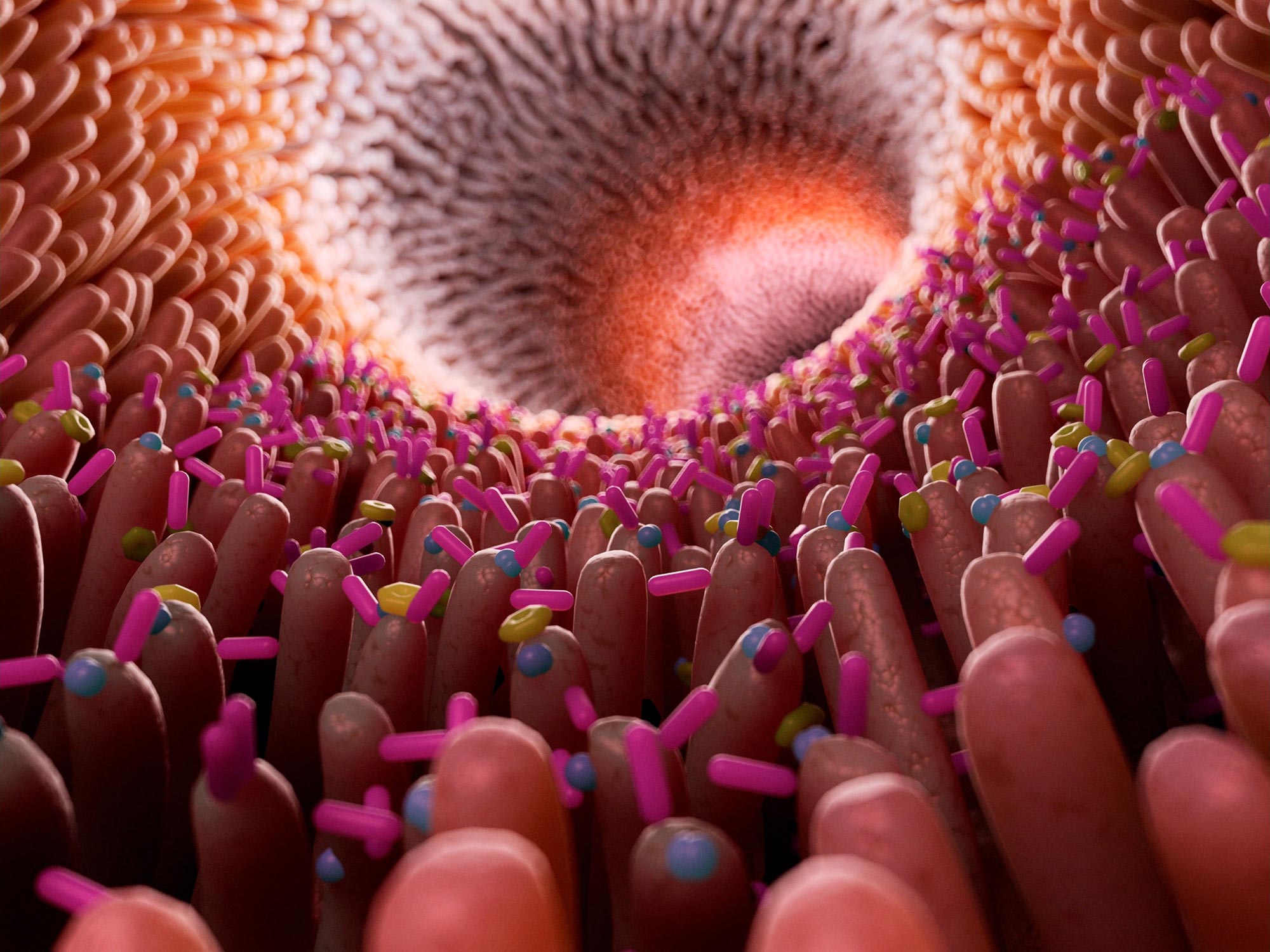
Research on mice indicates that early exposure to persistent organic pollutants disrupts the gut microbiome significantly, influencing the onset of metabolic disorders in adulthood.
New research led by Penn State reveals that early exposure to ‘forever chemicals’ in the environment permanently disrupts the gut microbiome in mice, potentially leading to the development of metabolic diseases later in life. The findings, published in the journal Environmental Health Perspectives, suggest that similar exposure in early childhood could be a factor in the rising incidence of metabolic disorders, such as obesity and type 2 diabetes, among adults.
The researchers focused specifically on 2,3,7,8-tetrachlorodibenzofuran (TCDF), a widespread persistent organic pollutant (POP) that is a byproduct of waste incineration, metal production, and fossil-fuel and wood combustion. TCDF accumulates in the food chain, and humans are primarily exposed through the consumption of high-fat foods, such as meat, dairy products, and some fish. Babies can be exposed through the consumption of breast milk.
“POPs are pervasive in the environment and nearly every living organism has been exposed,” said Andrew Patterson, John T. and Paige S. Smith Professor of Molecular Toxicology and of Biochemistry and Molecular Biology, Penn State. “The negative health effects of these chemicals are well documented and include birth defects and cancer. Our study is the first to suggest that early-life exposure to a certain POP, called TCDF, also disrupts the gut microbiome and is associated with metabolic disorders later in life.”
Methodology and Initial Findings
The team examined the effects of TCDF in two groups of mice — a test group, or those treated with TCDF, and a control group, or those receiving no treatment. The team fed four-week-old mice from pills containing either 0.46 micrograms (µg) of TCDF or a control pill that did not contain any TCDF for five days. While 0.46 µg is higher than what is typically found in the diets of humans, it is not high enough to cause toxic illness.
“In our study, we used a dose that is relatively high compared to typical human exposures; however, we can use this information to identify new toxicity high points, including in the gut microbiome, and begin to extrapolate what might happen at even lower doses. Of course, we also must consider how complex mixtures of these POPs interact with us and our microbial partners because a single exposure does not perfectly mimic real-life scenarios.”
Next, the researchers examined the animals’ gut microbiomes, along with several indicators of the animals’ health, including body weight, glucose tolerance, and the amounts of triglycerides in their livers and mucus in their feces, among other markers of metabolic disease. They collected these data immediately following the five-day course of TCDF, as well as three months after the last dose. In humans, these time points are equivalent to an infant and a young adult.
“We found that early life exposure to TCDF permanently disrupted the gut microbiomes of the wild-type mice,” said Yuan Tian, lead author and associate research professor, Penn State. “We also found that these mice had higher body weight and glucose intolerance at age four months.”
Further Experiments and Conclusions
To further explore the effects of TCDF on the gut microbiome, the scientists gave mice without microbiomes intestinal microbiome transplants from the mice with TCDF-disrupted microbiomes and measured their health outcomes. They found that the mice with the transplants developed metabolic disorders, indicating that the altered microbiome is the cause of the metabolic disease.
“These results suggest that early-life TCDF exposure may be causing the disturbances in gut microbiome function and health outcomes later in life, even well after the TCDF has been eliminated from the body,” Tian said.
She explained that the gut microbiome disturbances were marked by a decrease in certain bacterial species, including Akkermansia muciniphila, a bacterium that is also typically found in the human gut microbiome.
“This is important because Akkermansia is recognized as important for overall gut health, but now we know that it can be adversely affected by TCDF,” Tian said.
To investigate the importance of Akkermansia muciniphila in influencing health outcomes, the team experimented with administering the bacterium as a probiotic to TCDF-treated mice. The probiotic restored the microbiome to its normal state.
“Our findings suggest that these bacteria are influenced by toxic exposure and play an important role in mediating health outcomes,” Patterson said. “It may be possible that with more research we could one day restore a person’s microbiome to its optimal state through supplementation with pre- and probiotics.”
Reference: “Effects of Early Life Exposures to the Aryl Hydrocarbon Receptor Ligand TCDF on Gut Microbiota and Host Metabolic Homeostasis in C57BL/6J Mice” by Yuan Tian, Bipin Rimal, Jordan E. Bisanz, Wei Gui, Trenton M. Wolfe, Imhoi Koo, Iain A. Murray, Shaneice K. Nettleford, Shigetoshi Yokoyama, Fangcong Dong, Sergei Koshkin, K. Sandeep Prabhu, Peter J. Turnbaugh, Seth T. Walk, Gary H. Perdew and Andrew D. Patterson, 14 August 2024, Environmental Health Perspectives.
DOI: 10.1289/EHP13356
Other Penn State authors on the paper include Jordan Bisanz, assistant professor of biochemistry and molecular biology; Imhoi Koo, assistant research professor; Iain Murray, assistant research professor; Shigetoshi Yokoyama, assistant research professor; Sergei Koshkin, assistant research professor; Bipin Rimal, graduate student; Wei Gui, research technologist; Shaneice Nettleford, graduate student; Fangcong Dong, postdoctoral fellow; Sandeep Prabhu, head, Department of Veterinary and Biomedical Sciences; and Gary Perdew, H. Thomas and Dorothy Willits Hallowell Chair in Agricultural Sciences. Other authors include Trenton Wolfe, graduate student, Montana State University; Peter Turnbaugh, professor of microbiology and immunology, University of California, San Francisco; and Seth Walk, professor of microbiology and immunology, Montana State University.
The U.S. National Institutes of Health, U.S. National Institute of Food and Agriculture, and Pennsylvania Department of Health supported this research.
Never miss a breakthrough: Join the SciTechDaily newsletter.
Follow us on Google and Google News.
33 Comments
Another useless, cruel, and wasteful experiment on mice. There are so many erroneous assumptions in this research, but you can see the ridiculousness in the statement, ” They collected these data immediately following the five-day course of TCDF, as well as three months after the last dose. In humans, these time points are equivalent to an infant and a young adult.” No, it is not the same thing. Three months is not the same as 20 years, regardless of species. Cross species comparisons are fraught with these types of problems, and animals tortured in a laboratory do not respond as people over their lifetimes. Of course, there is a purpose of this research that goes beyond science and into marketability of a product, which is what this type of junk science is really about. ““It may be possible that with more research we could one day restore a person’s microbiome to its optimal state through supplementation with pre- and probiotics.” How about just eat some yogurt or sauerkraut and leave the poor mice alone!
Then please disregard the results of this immoral study and eat 2,3,7,8-tetrachlorodibenzofuran (TCDF) at the current maximum allowable level.
You’re right about the study being non-equivalent, however. A 20 year study on a mouse is very difficult as they don’t live a decade, and feeding pollutants to humans gets even more complaints.
I don’t doubt that TCDF is a problem for humans and non-humans. I don’t need to torture mice to know that. And the ends do not justify the means. Cruelty to animals, or humans, cannot be justified for any reason.
And, by the way, these animal studies are rejected when trying to legal extrapolate the results to human responses. The government has trouble legally controlling poisons when the studies are on animals, since the results are known to have no known application to humans. This has kept many carcinogens from being labelled by governments on product packaging, due to lack of human studies. Animal studies are no substitute for human studies in a court of law, or for government oversight of the chemical industry. And note that this study used much more of this pollutant than humans experience in exposure, which will also be used to argue that the results may not apply to humans. In other words, the animal studies are a sham, since those spreading the poison will insist it has not been shown unsafe for humans. Animal studies only serves the makers of these pollutants and poisons, who will fund animal studies in species for which their poison has no effect. Of course, the vivisectors torturing the animals profit financially, too. But you know what they say about ill-gotten gains.
And, again, if you want to live in a moral society, there can be no place for utilitarian medicine and its claims that the ends justify the means, used to justify torturing animals for human medical gains. Wait until you are the means to someone else’s ends, and you will understand this.
I also like your comment, “A 20 year study on a mouse is very difficult as they don’t live a decade, and feeding pollutants to humans gets even more complaints.” You have illustrated the problem. Animal abuse in research is a slippery slope to human abuse in research. The difference is that animals are helpless and can’t sue, although this also applies to some disempowered cultural subgroups who are routinely practiced and experimented on at medical schools. (I know. I was trained at one.)
If it is immoral to include humans in a study, then it is immoral to include any sentient animals, including dogs, cats, monkeys, pigs, mice, rats, and every other creature that shares this planet with us. Medicine is psychopathic, lacking empathy for the weak and powerless, and using them for what the leaders of medicine regard has a higher purpose. This is why medicine is rotten to the core, since animal torture is at the core of medicine.
NIH is a disgrace! The billions in taxpayer waste on inhumane experiments must stop.
I agree that this is senseless cruelty. Liver transplants in four month old mice?! This is beyond disgusting and inhumane. These people have perverted the art of science to a level of cruelty that is unacceptable and in comprehensible.
I’m sorry people are responding to your research this way. It would be interesting for them to answer the question ” how do you want us to do research and get information to help humans be healthier” It turns out it is illegal to do this kind of study on a human…go figure. So then how? It has to be a mammal or the science is much less relevant to humans. I’m sure all these complainers have taken medicine in their life that started as research on mice. No its not great that mice are injured, however most people consider it worse if humans are injured and/or not helped.
I agree.
Love all science and scientists.
Garbage, antihuman, misinformation, fake science, useless article literally suggesting we don’t breast feed, eat the most important foods for making strong humans and just shut up ajd eat the bugs and corn syrup. You will rot in a special place for being so dull as to post this, and the same if you believe it.
Thank you Sydney. Very
intelligent response.
Karen
Totally agree with S. R. Singer animals tortured in a lab with high doses of chemicals have nothing in common with decades of exposure to the deadly fallout of human made poisons
DuPont, 3M, Monsanto, Dow Corning, Johnson & Johnson, etc., have been experimenting on humans for the past 5 decades. They’ve clearly proven that their Forever Chemicals PFOAS, PFOS, PFAS, and others, are extremely effective ENDOCRINE DISRUPTORS that destroy Gender. Why bother experimenting on mice?
🎯
Nothing in common… but not “not relevant”. Are you a scientist? (I am) Then why do we care what you think about the study design or conclusions re the science?
Actually, Whitey, I am a scientist, with graduate training at Duke in biochemistry and anthropology and medical training at UTMB. But that doesn’t really matter. Criticism should be judged on its merits, not on the merits of the critic.
Interesting finding, but why is it reported as a “forever chemical” when there are no carbon-fluorine bonds?
The half-life of TCDF in the environment is sixty days. You’re totally right; TCDF is no forever chemical, and is actually unstable. Penn State has written the press release incorrectly, probably lying to get attention. I could only access the study’s abstract, and it doesn’t mention forever chemicals.
Doing a little background research has brought me the the conclusion these chemicals have all been banned in the US and Europe. Are they still heavily used heavily in other countries? I say this is a fantastic reason to promote American cultivation of our food stuff.
The study is on TCDF, but there are many toxic furans. TCDF is not used; as the article says, it is an industrial byproduct and pollutant from combustion. America regulates it in the Clean Air Act.
Thank you for taking the time to explain this article. I appreciate your insights and you helped to actually comprehend what I was reading.
Alas…… “helped (me)”… you helped me with comprehending, but not with my sentence structuring… obviously, you can’t do it all 😄
This is not true data! The guidelines for this study were not scientific.
This study was created with guide of having a study that proved petroleum use and wood fires would cause harm.
Standards were not used or met.
Seems more like a propaganda article
Seems like you have nothing to go on in saying that
Another good reason to quit experimenting on mice is to understand, deliberately or not the US FDA has been performing similar experiments humans for more than a half a century. By the early 1970s about 95% of US soy was being more cheaply processed with toxic hexane with some residue said to be safe, with the US female breast cancer epidemic presenting by 1979 (ACS and NCI data). In 1972 the FDA approved the use of the cooking oil preservative TBHQ, now known to cause neurological events, vision changes, hearing loss, tinnitus and anal leakage in some (a personal heart attack ‘scare’ with hospital in late 2015). In 1980 they approved the expanded use of added MSG knowing full-well then it would be harmful to some, with the US obesity (minimally) epidemic presenting by 1990 (CDC/NCHS data). In 1981 they approved the artificial sweetener aspartame, believed by many to cause brain tumors. Fructose/HFCS is known to elevate one’s serum uric acid level, unregulated, as opposed to dextrose and glucose which are internally regulated. Put it all together and by 2017 about 90% of the top ten causes of mortality in the US were chronic diseases; a population growth adjusted silent American genocide of about 6,000 Americans dying prematurely daily in 2024. Who needs scientists and mice when we have the FDA to experiment on us?
A perentage of moms abuse their children. With this information, some kids will receive forever in the first days of their lives. Humanity’s only use for science to abuse others with it. Humanity is the mob. Therefore it lacks all. Climate will turn everyone into animals, if not already.
I do sympathize with those who feel that testing on animals is inhumane, but without the use of animal products, the test for AIDS would never have been developed at the time that it was. No smallpox vaccine, no polio vaccines, both which I got as a young child.
Recently I have become a vegetarian because that’s really all I know that I can do personally, limit my own use of animal products.
Before beating up on the author/poster of this article who is trying to address the causes of metabolic disorders, why not go get a degree in biology or chemistry, and see if you can’t contribute something other than criticism. I already have medical degree.
Anybody else notice that they were giving these poor mice upwards of 1,000,000x the amount of TCDF a typical adult human is exposed to per day? Is this data even translatable/useful, if not obvious (shouldnt we be researching ways to reduce/repurpose “forever chemicals” ?).
This has a lot of the earmarks of phony research . Multiple problems. Notice how many co-authors who couldn’t have had any meaningful input. This is so people in academia can claim they were a co-author on a research project. Bad and even dishonest research is a huge problem. If you want to get a real eye opener visit “Retraction Watch “. There are other sources that uncover phony research you can visit. Thirty co-authors? Give me a break.
Just eat whatever you want in moderation, try to eat healthy, give your life to Jesus, and be nice to everyone you meet. Can’t go wrong doing any of that.
Steve, you’re the best.
And the Biggest Polluter using this deadly carcinogen …. The US Military !! An Article by the Guardian published 10 months ago says The Dept of Defence looked at a third of its 700 military bases in the U.S. and found 245 have polluted areas around its bases with plumes of forever chemicals used in foam the use in emergencies / training.
https://www.theguardian.com/environment/2023/oct/13/pfas-pollution-us-military-bases-forever-chemicals