
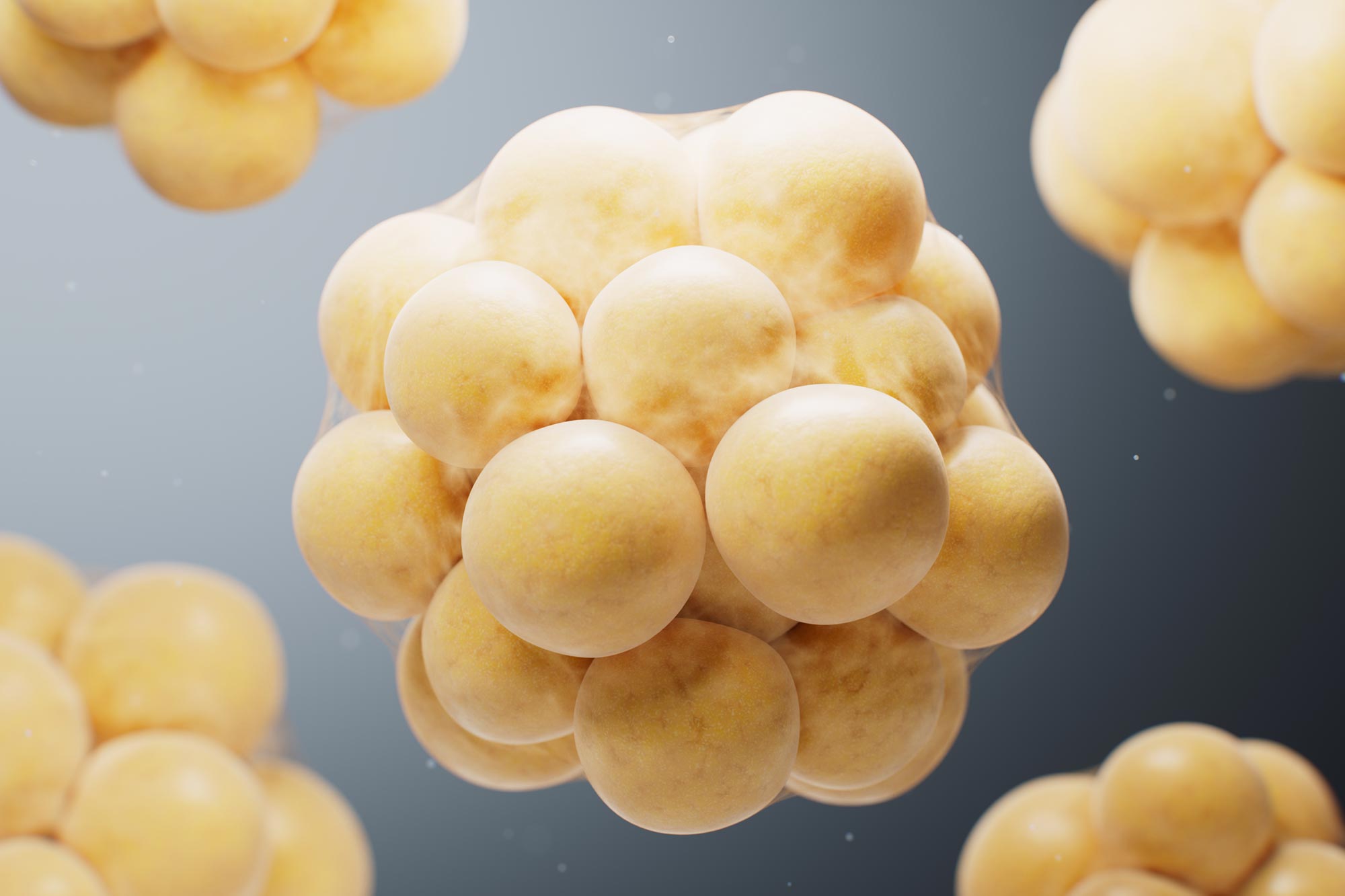
Gut bacteria can convert white fat into energy-burning beige fat through diet-driven signals, offering new therapeutic targets for metabolic diseases.
Researchers at City of Hope, along with collaborators at the Broad Institute and Keio University, have identified how certain gut bacteria interact with diet to trigger a metabolic shift in mice, turning energy-storing white fat into calorie-burning beige fat.
Published in Nature, the study found that a low-protein diet activates a specific group of gut microbes. These microbes release chemical signals that circulate through the body and prompt fat tissue to burn energy instead of storing it. The results reveal a previously unknown biological link between diet, the gut microbiome, and metabolic health—a connection that could guide future treatments for obesity, diabetes, and related conditions.
“Fat tissue is not fixed — it’s surprisingly adaptable,” said Kenya Honda, M.D., Ph.D., co‑senior author of the study and adjunct professor at City of Hope. “We found that certain gut bacteria can sense what the host is eating and translate that information into signals that tell fat cells to burn energy.”

White vs. Beige Fat and Metabolic Health
Most fat in adults is white fat, which stores excess calories. Beige and brown fat, in contrast, burn energy to produce heat and help regulate metabolism. Newborns have higher levels of brown fat, but these stores decrease over time. Scientists have long sought safe ways to convert white fat into beige fat, a process known as “beiging,” as a potential way to improve metabolic health.
In experiments, mice on a low-protein diet developed significant amounts of beige fat only when the right gut bacteria were present. Germ-free mice that lacked a microbiome did not show this fat-burning response when given the same diet.
“This told us the diet alone wasn’t enough,” Honda said. “The gut microbiome was essential.”
Key Gut Bacteria Drive Fat Browning
The team identified four bacterial strains that are necessary to trigger fat browning. When these microbes were introduced into mice along with a low-protein diet, the animals converted white fat into beige fat, gained less weight, improved glucose control, and had lower cholesterol levels.
Instead of acting through a single mechanism, the bacteria worked through a coordinated two-step process. One signal altered bile acids and pushed fat cells toward a calorie-burning state. A second signal prompted the liver to release FGF21, a hormone that boosts metabolism. Disrupting either signal eliminated the fat-burning effect, showing that both are required.
“This work underscores how the gut microbiome is actively interpreting what we eat and translating that information into signals the body responds to,” said co-senior author Ramnik Xavier, M.D., Ph.D., a core member at the Broad Institute and professor of medicine at Harvard Medical School. “This opens up an opportunity to think about the interactions between microbes, metabolites, and metabolic disease, understand the mechanisms, and potentially translate that into interventions for metabolic health.”
Implications for Obesity, Diet, and Future Therapies
The researchers caution that these findings should not be directly applied to humans. The low-protein diet used in the study is below recommended levels for people, and past efforts to improve metabolism using probiotics alone have mostly been unsuccessful.
Instead, the study highlights new potential drug targets, specifically the biological pathways activated by gut microbes, rather than relying on extreme diets or bacterial supplements.

“Our goal is not to tell people to eat extreme diets,” said study first author Takeshi Tanoue of City of Hope and Keio University. “The real opportunity is to understand these pathways well enough to design therapies that safely mimic their benefits.”
Broader Impact on Disease and Metabolism Research
Obesity and metabolic disorders are major risk factors for cancer, diabetes, and cardiovascular disease, areas where City of Hope has extensive expertise. By showing how gut microbes and diet can reshape fat tissue, the study adds to growing evidence linking metabolism, inflammation, and disease risk.
This work is part of the Microbiome Program at City of Hope, which focuses on advancing cancer care through personalized and integrative approaches that combine diet, nutrition, and the immune system to support early detection, tailored treatments, and improved outcomes.
“This work highlights the gut microbiome as an active decision‑maker in the body,” Honda said. “It doesn’t just respond to diet — it interprets it.”
Reference: “Microbiota-mediated induction of beige adipocytes in response to dietary cues” by Takeshi Tanoue, Manabu Nagayama, Ayumi J. A. Roochana, Samuel Zimmerman, Orr Ashenberg, Tanvi Jain, Ryo Igarashi, Satoshi Sasajima, Kozue Takeshita, Nicola Hetherington, Nobuyuki Okahashi, Masahiro Ueda, Morichika Konishi, Yoshiaki Nakayama, Aki Minoda, Ashwin N. Skelly, Yasuhiko Minokoshi, Nicholas Pucci, Daniel R. Mende, Makoto Arita, Hironori Yamamoto, Shunji Watanabe, Kouichi Miura, Scott W. Behie, Wataru Suda, Toshiro Sato, Koji Atarashi, Mami Matsushita, Shingo Kajimura, Damian R. Plichta, Masayuki Saito, Ramnik J. Xavier and Kenya Honda, 4 March 2026, Nature.
DOI: 10.1038/s41586-026-10205-3
This study was supported by the Japan Agency for Medical Research and Development, the Japan Society for the Promotion of Science, Stand Up to Cancer, the Wellcome Trust and Temasek Trust, the Mitsukoshi Health and Welfare Foundation, the Chugai Foundation for Innovative Drug Discovery Science, Keio University, the Infectious Disease and Microbiome Program at the Broad Institute, and the National Institutes of Health.
Never miss a breakthrough: Join the SciTechDaily newsletter.
Follow us on Google and Google News.