

Understanding the formation and function of fat tissue is essential for tackling obesity and related metabolic disorders. However, the behavior of adipose tissue, commonly known as body fat, varies depending on its location within the body.
Take, for example, the omentum: a large, apron-like fatty tissue hanging from the stomach that covers organs within the peritoneum, such as the stomach and intestines. It not only stores fat but also plays roles in immune regulation and tissue regeneration.
Omental adipose tissue is associated with the “apple” body shape, which emerges when this fat depot expands significantly, increasing the risk for metabolic diseases. This expansion is not due to the formation of new fat cells, a process known as adipogenesis, but mostly through the enlargement of existing cells, a process called hypertrophy. This can lead to chronic inflammation and insulin resistance.
Research on Omental Fat
The limited capacity of omental fat to form new fat cells, despite calorie excess, contrasts with subcutaneous fat and remains poorly understood. Now, scientists led by Professor Bart Deplancke at EPFL have identified a population of cells in human omental adipose tissue that hinders adipogenesis. The discovery, published in Cell Metabolism, provides a new angle on the limited ability of omental fat to perform adipogenesis and has significant implications for obesity management.
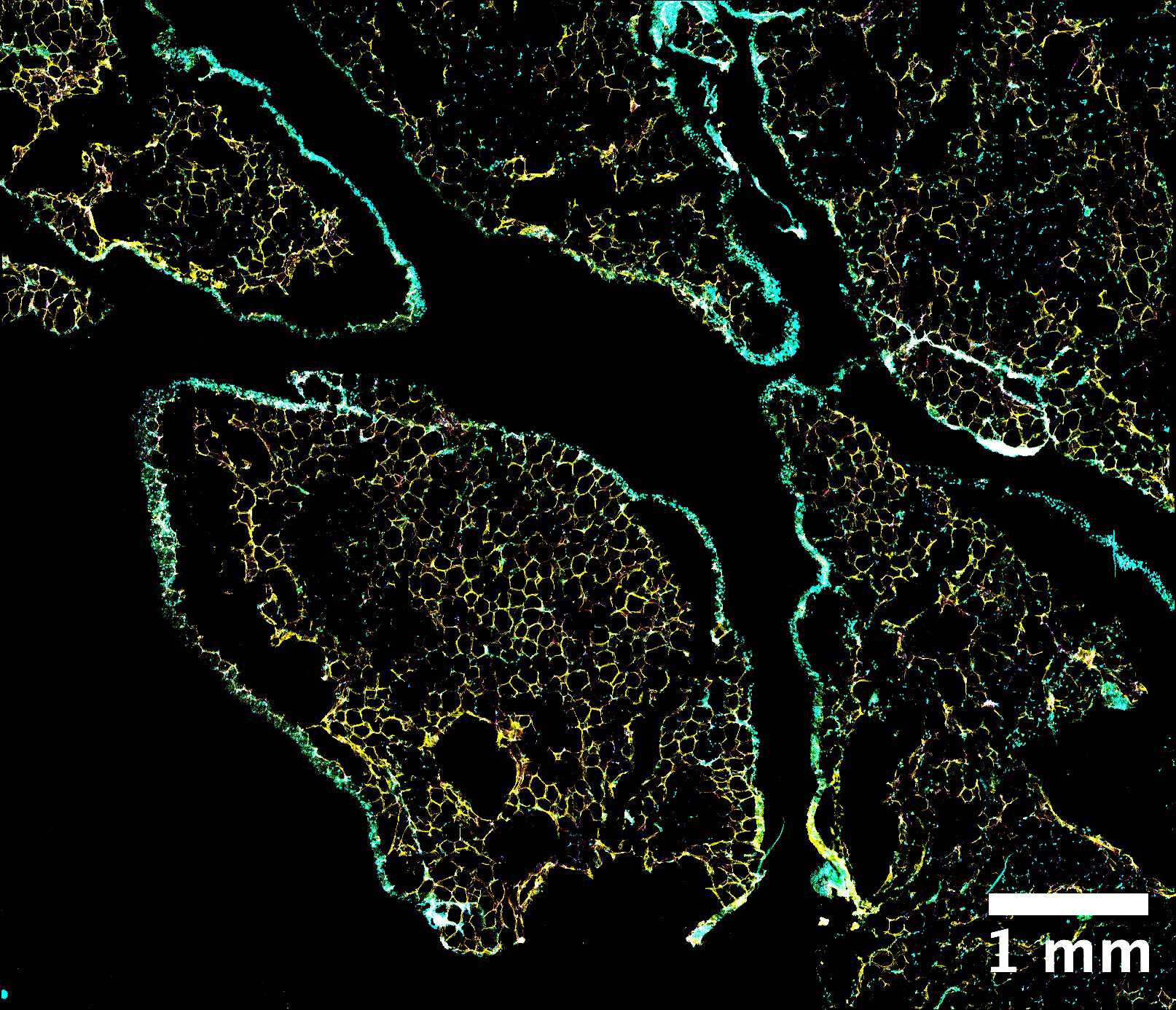
The researchers used advanced single-cell RNA sequencing to analyze cells from various human fat depots, isolating different cellular subpopulations and testing their ability to turn into new fat cells. The study, supported by several medical institutions including the CHUV, involved over thirty human donors to make a detailed comparison across different fat locations.
The approach identified a population of cells present in the omental adipose tissue that may well be the key to explaining its unusual properties. These cells, termed mesothelial cells, generally line certain internal body cavities as a protective layer.
Cellular Transitions and Metabolic Influence
Among these mesothelial cells, some strangely transitioned closer to mesenchymal cells, which can develop into a variety of cell types including adipocytes (fat cells). This dynamic transition between cellular states may be a key mechanism through which these cells exert their influence on the adipogenic potential of the omental adipose tissue.
The study found that the mesenchymal-like properties of these cells are associated with an enhanced ability to modulate their microenvironment, providing a regulatory mechanism for limiting the expansion of adipose tissue. By switching between these two states, the cells may thus be able to influence the overall metabolic behavior of the omental fat depot and its capacity to accumulate fat without triggering metabolic complications.
“Importantly, we also uncovered at least part of the molecular mechanism by which this new omental cell population affects adipogenesis,” says Radiana Ferrero (EPFL), one of the study’s lead authors. “Specifically, the cells express high levels of Insulin-like Growth Factor Binding Protein 2 [IGFBP2], a protein known to inhibit adipogenesis, and secrete this protein in the cells’ microenvironment. This in turn affects specific receptors on nearby adipose stem and progenitor cells, effectively preventing them from developing into mature fat cells.”
“The findings have deep implications for understanding and potentially managing metabolically unhealthy obesity,” explains Pernille Rainer (EPFL), another lead researcher on the study. “Knowing that omental fat has a built-in mechanism to limit fat cell formation could lead to new treatments that modulate this natural process. Furthermore, the research opens up possibilities for targeted therapies that could modulate the behavior of specific fat depots.”
Reference: “A human omentum-specific mesothelial-like stromal population inhibits adipogenesis through IGFBP2 secretion” by Radiana Ferrero, Pernille Yde Rainer, Marie Rumpler, Julie Russeil, Magda Zachara, Joern Pezoldt, Guido van Mierlo, Vincent Gardeux, Wouter Saelens, Daniel Alpern, Lucie Favre, Nathalie Vionnet, Styliani Mantziari, Tobias Zingg, Nelly Pitteloud, Michel Suter, Maurice Matter, Kai-Uwe Schlaudraff, Carles Canto and Bart Deplancke, 9 May 2024, Cell Metabolism.
DOI: 10.1016/j.cmet.2024.04.017
The study was funded by École Polytechnique Fédérale de Lausanne, Fondation Leenaards, Personalized Health and Related Technologies (PHRT), and the Swiss National Science Foundation (SNSF).
Never miss a breakthrough: Join the SciTechDaily newsletter.
Follow us on Google and Google News.