
NASA’s MAVEN Spacecraft Resumes Science & Operations, Exits Safe Mode
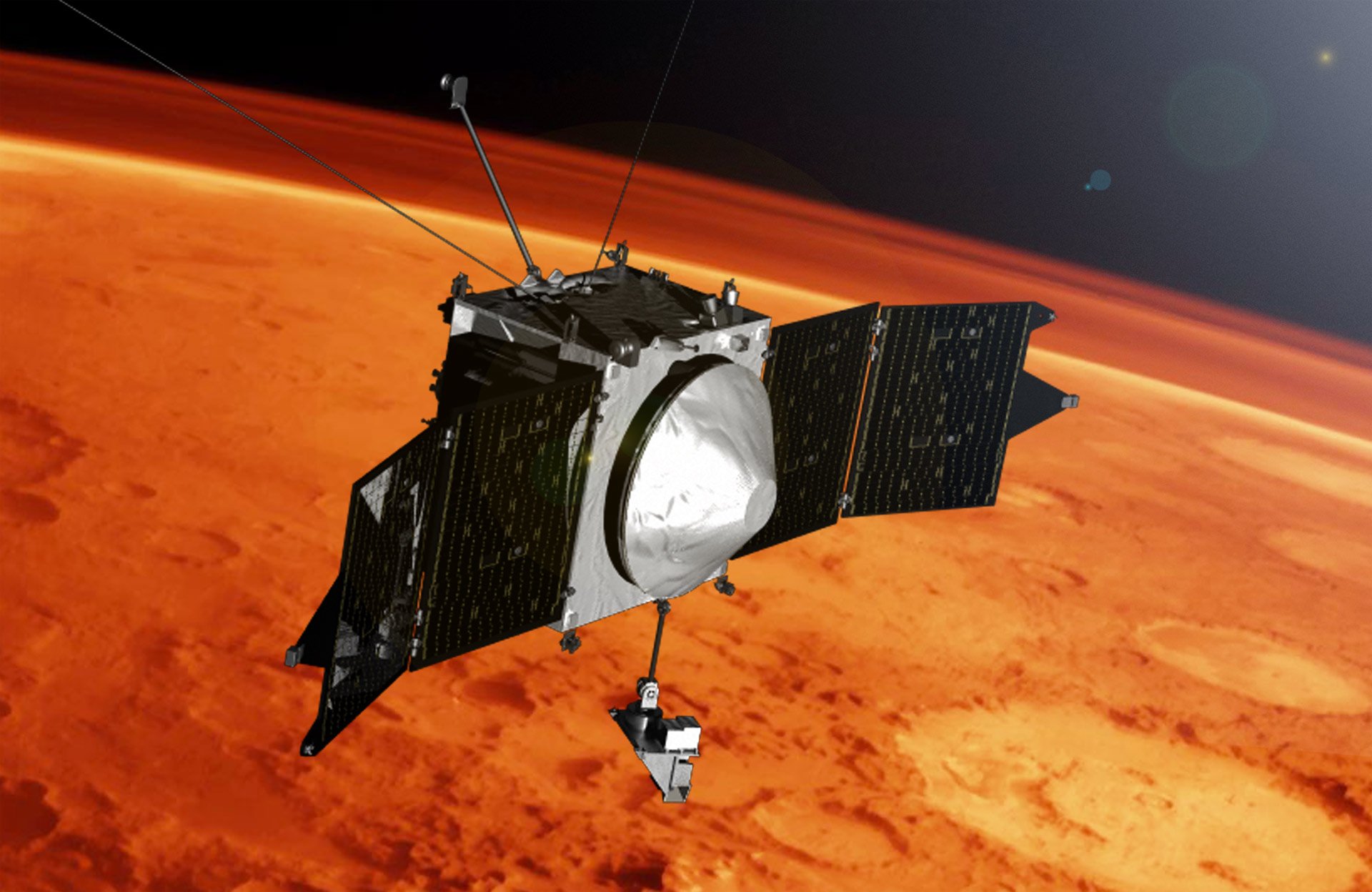
After three months in safe mode, NASA’s MAVEN spacecraft has finally returned to normal science and relay operations.
The problem started back on February 22, 2022, when contact with the spacecraft was lost. After re-establishing contact, its main Inertial Measurement Unit, IMU-1, a system critical for navigation, was not working and the team had to switch the spacecraft over to its backup, IMU-2. Yet that unit was also nearing the end of its lifespan. The spacecraft was put into safe mode, while engineers raced to complete an all-stellar mode whereby the spacecraft could navigate using stars instead of the IMUs.
With an existential threat looming, the team stepped up and completed the new software needed 5 months ahead of schedule.
NASA’s Mars Atmosphere and Volatile EvolutioN, or MAVEN, mission returned to normal science and relay operations on May 28, 2022, after recovering from an extended safe mode event. The spacecraft encountered problems in February with its Inertial Measurement Units (IMUs). The mission team successfully diagnosed the issue with these navigation instruments and developed a system for the spacecraft to navigate by the stars, which should allow for continued MAVEN mission operations through the next decade.
“The team really stepped up to an existential threat.” Rich Burns, MAVEN project manager
“This was a critical challenge facing the mission, but thanks to the work of our spacecraft and operations team, MAVEN will continue producing important science and operating as a relay for the surface assets through the end of the decade,” said Shannon Curry, MAVEN’s principal investigator at the University of California, Berkeley. “I couldn’t be prouder of our team.”
MAVEN launched in November 2013 and entered orbit around Mars in September 2014. The mission’s goal is to explore the planet’s upper atmosphere, ionosphere, and interactions with the Sun and solar wind to explore the loss of the Martian atmosphere to space. Understanding atmospheric loss gives scientists insight into the history of Mars’ atmosphere and climate, liquid water, and planetary habitability. MAVEN’s primary mission was one year in duration. It has since far surpassed that and was recently approved for its fifth extended mission.
Safe Mode Event
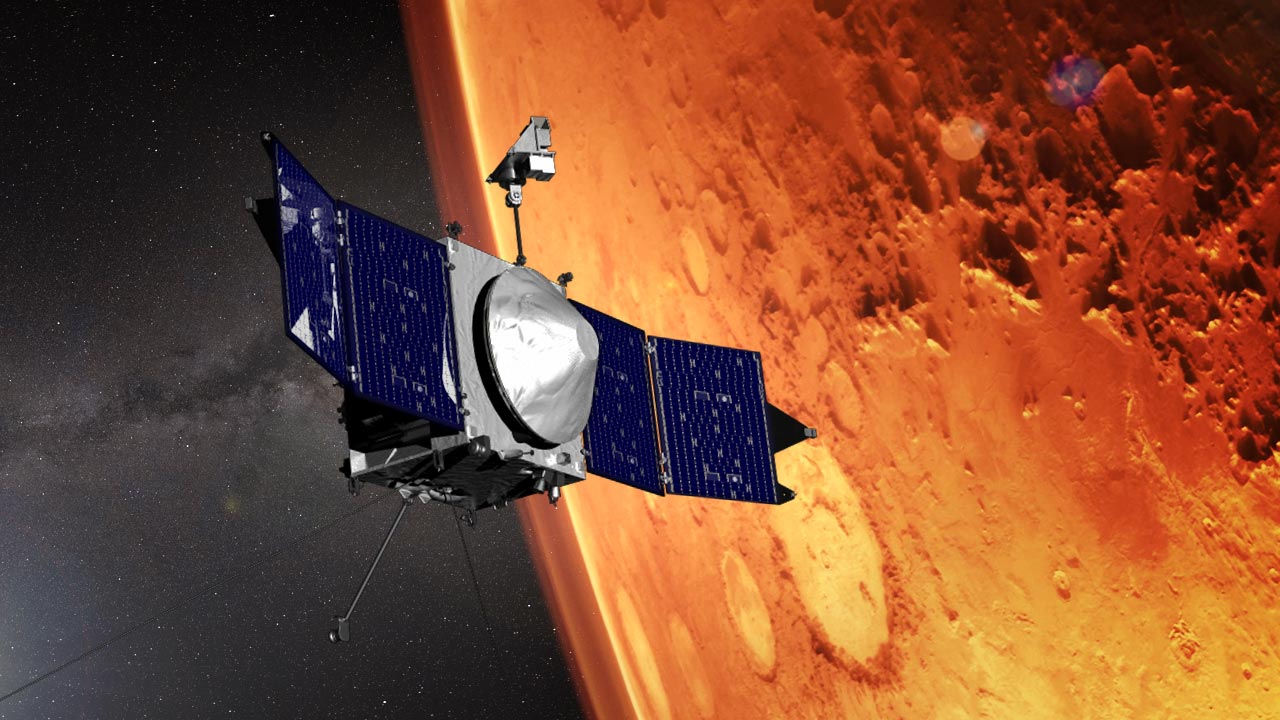
On Tuesday, February 22, 2022, the team lost contact with the spacecraft after it performed a routine scheduled power cycle of IMU-1. IMUs are used to determine the spacecraft’s attitude in space by measuring its rate of rotation. MAVEN has two identical IMUs on board: IMU-1 is the primary unit, and IMU-2 is the backup unit. Once contact with the spacecraft was restored, engineering telemetry showed that the spacecraft was unable to determine its attitude from either IMU. In response, the spacecraft performed a computer reboot but could still not determine its orientation. As a last resort, the spacecraft swapped to the backup computer, which allowed MAVEN to get accurate readings from IMU-2. The spacecraft entered “safe mode,” where it ceased all planned activities, including science and relay operations, and awaited further instructions from the ground.
The team had already been working to develop all-stellar mode – a system to navigate by the stars without IMUs – to be implemented in October 2022 because IMU-1 had previously shown anomalies and IMU-2 was nearing the end of its lifespan. The development and switch to all-stellar mode is a standard practice when IMUs degrade on aging orbiters.
“This was a situation that no one initially anticipated, but the spacecraft performed as designed,” said Micheal Haggard, the Lockheed Martin MAVEN spacecraft team lead in Littleton, Colorado. “By the time we ended up on the backup computer, the spacecraft had been attempting to fix the problem with IMU-1 for about 78 minutes. We ended up on IMU-2, and the pressure was on to get the all-stellar mode ready as quickly as possible.”
A Race Against Time
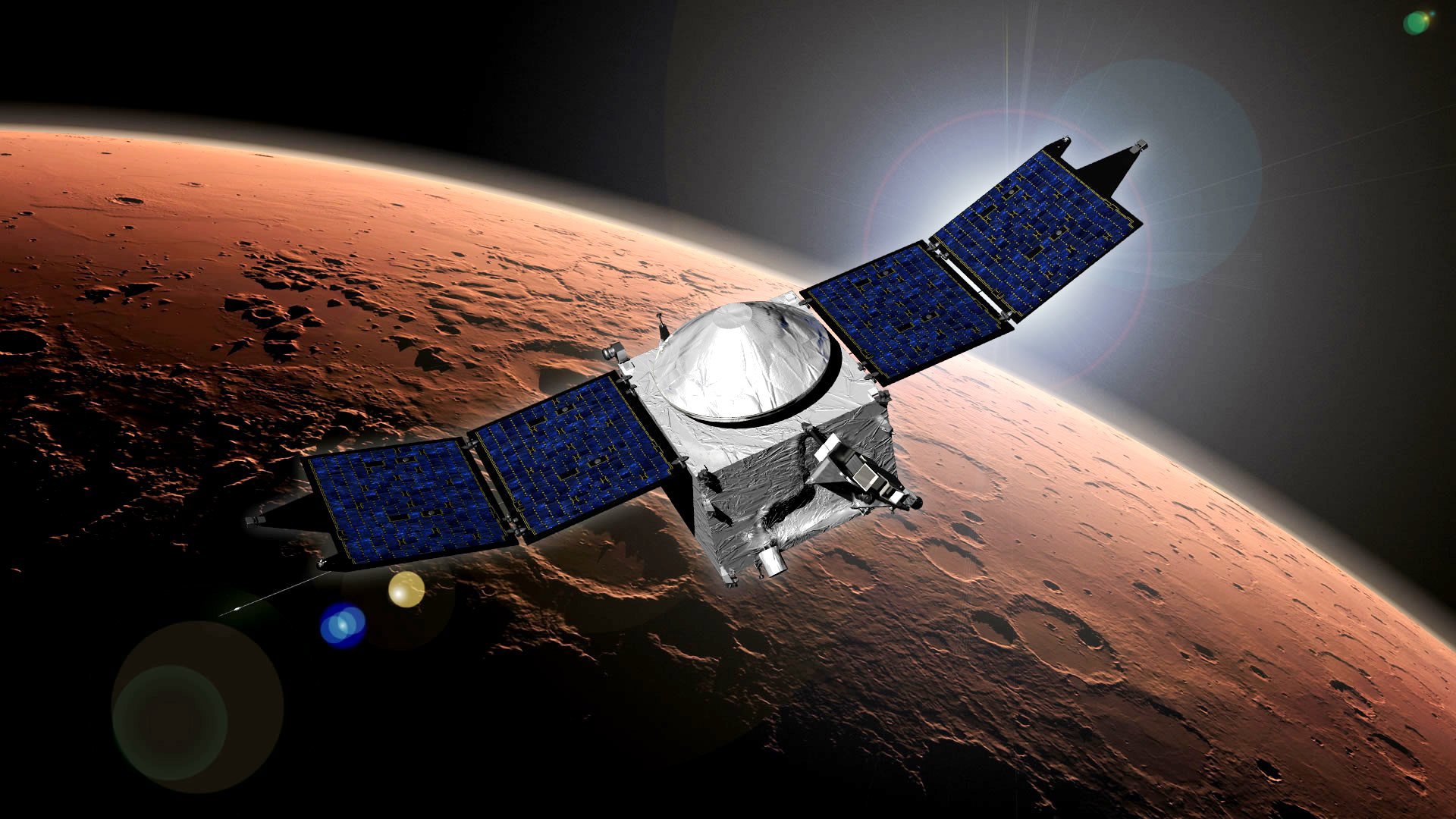
In the following months, the spacecraft team at Lockheed Martin worked to expedite the development of software to enable all-stellar mode, since the predicted lifetime of IMU-2 would not last until October. On April 19, five months ahead of schedule, the spacecraft team completed development and uplinked the software patch to MAVEN. As soon as the code was uplinked, IMU-2 was powered off, preserving its remaining life for future spacecraft needs. Following the uplink, a series of tests were performed to verify the functionality of all-stellar mode, since the code had not previously been tested in flight.
“The team really stepped up to an existential threat,” said Rich Burns, the MAVEN project manager at NASA’s Goddard Space Flight Center in Greenbelt, Maryland. “When we recognized in the fall that IMU-2 was degrading, we knew we were going to have to shorten the schedule for all-stellar mode. The spacecraft team rose to the challenge, working under intense pressure after the anomaly.”
Once all-stellar mode was uplinked, the spacecraft and science teams powered on the instruments and configured them for science operation. All instruments were healthy and successfully resumed observations; however, the spacecraft was constrained to pointing at the Earth until testing of all-stellar mode was completed, so the instruments were not oriented as they normally would be during science operations. Nevertheless, some limited science was still possible, and MAVEN even observed a coronal mass ejection impact on Mars less than two days after the instruments were powered on.
Onwards to Science and Relay
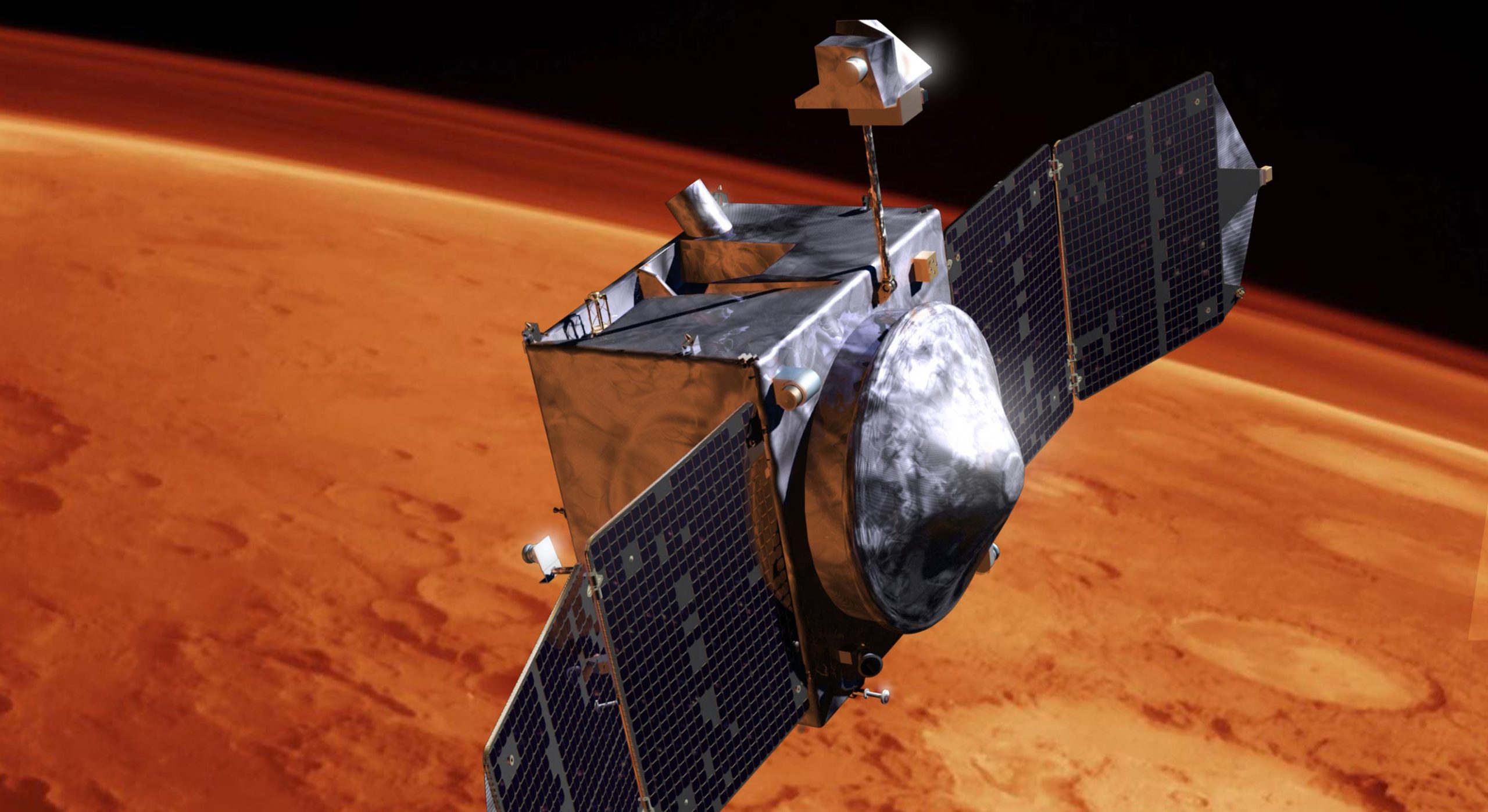
MAVEN returned to nominal science and relay operations on Saturday, May 28, 2022, after successfully transitioning to full all-stellar navigation.
The MAVEN spacecraft continues to operate successfully using all-stellar mode. Typically, there are certain times each year that IMUs must be used, so the team will need to continue finding innovative ways to control the spacecraft’s orientation. This will ensure that MAVEN can keep operating through its extended mission lifetime, which will enable the orbiter to continue to make observations during the most extreme conditions in the Martian atmosphere that the mission has so far encountered.
MAVEN’s principal investigator is based at the University of California, Berkeley, while NASA’s Goddard Space Flight Center in Greenbelt, Maryland, manages the MAVEN mission. Lockheed Martin Space built the spacecraft and is responsible for mission operations. NASA’s Jet Propulsion Laboratory in Pasadena, California, provides navigation and Deep Space Network support. The Laboratory for Atmospheric and Space Physics at the University of Colorado Boulder is responsible for managing science operations and public outreach and communication.
Never miss a breakthrough: Join the SciTechDaily newsletter.
Follow us on Google and Google News.
2 Comments
It looks to me like NASA needs a better quality control in production of it’s IMU’s. The time of operation use is about 1/8 of what it needs to be. Each IMU should last at least 100 years and the unused IMU-2 backup should have had a full life when switched over to power up mode. It’s so hard to find a good designer and engineer now days.
MAVEN’s inertial measurement unit (IMU) system relies on ring laser gryroscopes, that detect the spaceraft’s inertial motion, and four reaction wheels arranged in a four-sided pyramid that can spin independently to position the orbiter in the proper orientation. Is there any information as to what part of the IMU’s are limiting the lifetime? (e.g. dithering system, bearings of the reaction wheels, ring lasers, etc ?)