
Close Menu
    Facebook X (Twitter) Instagram
    SciTechDaily
    • Biology
    • Chemistry
    • Earth
    • Health
    • Physics
    • Science
    • Space
    • Technology
    Facebook X (Twitter) Pinterest YouTube RSS
    SciTechDaily
    Home»Space»NASA’s CAPSTONE Spacecraft: Mission Team Determines Cause of Communications Issue
    Space

    NASA’s CAPSTONE Spacecraft: Mission Team Determines Cause of Communications Issue

    By NASAJuly 8, 2022No Comments2 Mins Read
    Facebook Twitter Pinterest Telegram LinkedIn WhatsApp Email Reddit
    Share
    Facebook Twitter LinkedIn Pinterest Telegram Email Reddit
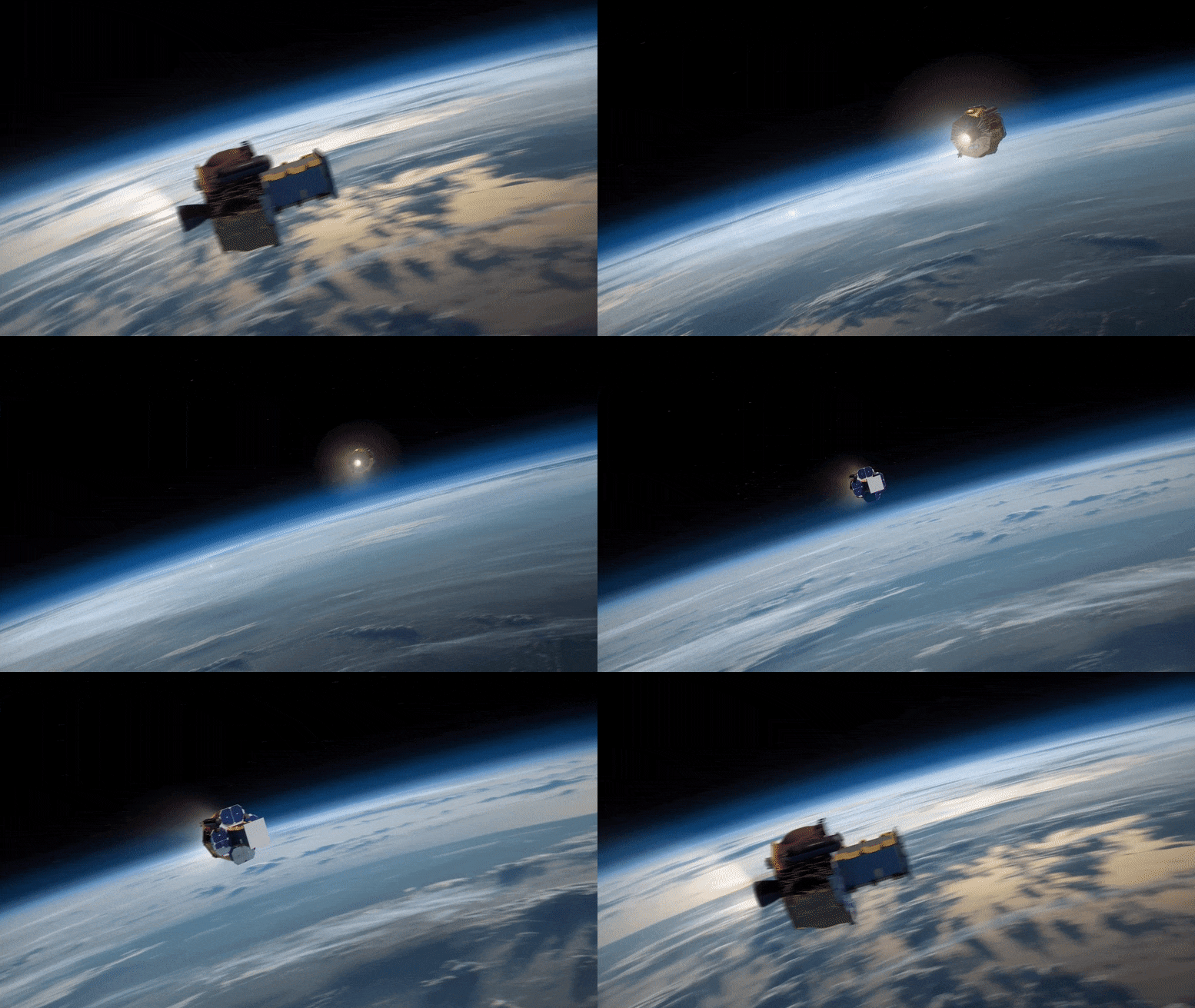
    CAPSTONE Orbiting Earth Animation
    The Cislunar Autonomous Positioning System Technology Operations and Navigation Experiment, or CAPSTONE, is a CubeSat that will fly a unique orbit around the Moon intended for NASA’s future Artemis lunar outpost Gateway. Its six-month mission will help launch a new era of deep space exploration. Credit: NASA Ames Research Center

    Mission Team Determines Cause of NASA’s CAPSTONE Communications Issues

    After its launch on June 28, CAPSTONE orbited Earth attached to Rocket Lab’s Photon upper stage, which maneuvered it into position for its voyage to the Moon. Following successful deployment and start of spacecraft commissioning on July 4, the CAPSTONE spacecraft experienced communications issues while in contact with the Deep Space Network (DSN). The mission team, led by Advanced Space, re-established contact with CAPSTONE at 9:26 a.m. EDT (6:26 a.m. PDT) on July 6.

    Now, after a thorough review, teams have established what led to CAPSTONE’s communications problems that began on July 4.

    During the commissioning of NASA’s CAPSTONE spacecraft, the Deep Space Network team noted inconsistent ranging data. While investigating this issue, the spacecraft operations team attempted to retrieve diagnostic data on the spacecraft’s radio and sent an incorrectly formatted command that made the radio inoperable. The spacecraft fault detection system should have rebooted the radio immediately but did not because of a fault in the spacecraft flight software.

    Eventually, CAPSTONE’s autonomous flight software system cleared the fault and brought the spacecraft back into communication with the ground, allowing the team to implement recovery procedures and begin commanding the spacecraft again.

    While CAPSTONE was out of contact with Earth, the spacecraft autonomously maintained proper orientation to keep its antenna pointed towards Earth and allow the solar panels to keep the battery charged. CAPSTONE also used its thrusters to perform a standard maneuver to dump excess momentum from its reaction wheels, which are internal wheels that help the spacecraft rotate and point itself.

    The mission operations team conducted CAPSTONE’s first trajectory correction maneuver at approximately 11:30 a.m. EDT (8:30 a.m. PDT) on July 7. Teams are currently reviewing the data to ensure the maneuver was successful. This maneuver is intended to more precisely target the spacecraft’s transfer orbit to the Moon.

    Never miss a breakthrough: Join the SciTechDaily newsletter.
    Follow us on Google and Google News.

    NASA NASA CAPSTONE Rocket Lab
    Share. Facebook Twitter Pinterest LinkedIn Email Reddit

    Related Articles

    NASA’s CAPSTONE Executes Trajectory Correction Maneuver – Pinpoints Path to Moon

    NASA Restores Contact With CAPSTONE Spacecraft – Prepares for Trajectory Correction Maneuver

    CAPSTONE Leaves Earth Orbit, Headed to the Moon

    Rocket Lab Launches NASA’s CAPSTONE Mission to the Moon

    NASA CAPSTONE Launches Successfully – Will Test New Lunar Orbit for Artemis Moon Missions

    NASA’s CAPSTONE Launch to Moon Delayed – Spacecraft Will Be First To Fly Unique Lunar Orbit

    NASA’s CAPSTONE Spacecraft Ships to Launch Site

    What is NASA’s CAPSTONE Mission?

    Innovative Propulsion System Gets Ready to Study Moon Orbit for NASA’s Artemis Program

    Leave A Reply Cancel Reply

    • Facebook
    • Twitter
    • Pinterest
    • YouTube

    Don't Miss a Discovery

    Subscribe for the Latest in Science & Tech!

    Trending News

    Scientists Uncover Promising New Strategy To Stop Parkinson’s in Its Tracks

    Experts Reveal the Surprising Cancer Link Behind a Common Vitamin

    This Strange “Golden Orb” Found 2 Miles Deep Stumped Scientists for Years

    Giant “Last Titan” Dinosaur Discovered in Thailand Was Bigger Than 9 Elephants

    This “Longevity Gene” May Protect the Brain From Aging and Dementia

    Common Cleaning Chemical Could Triple Your Risk of a Dangerous Liver Disease

    Scientists Discover Bizarre 100-Million-Year-Old Insect With Giant Claws

    Scientists Discover “Good” Gut Microbes That Could Protect Against Autism and ADHD

    Follow SciTechDaily
    • Facebook
    • Twitter
    • YouTube
    • Pinterest
    • Newsletter
    • RSS
    SciTech News
    • Biology News
    • Chemistry News
    • Earth News
    • Health News
    • Physics News
    • Science News
    • Space News
    • Technology News
    Recent Posts
    • NASA’s Roman Space Telescope Nears Launch for Epic Hunt Across the Universe
    • Ancient Mega-Floods Once Ripped Across Mars and Left This Giant Scar
    • Scientists Just Used Sunlight To Pull Off a Quantum Physics Feat Once Thought Impossible
    • Scientists Discover “Immature” Brain Cells That May Defy Alzheimer’s
    • Children of Centenarians Share One Surprising Habit That May Boost Longevity
    Copyright © 1998 - 2026 SciTechDaily. All Rights Reserved.
    • Science News
    • About
    • Contact
    • Editorial Board
    • Privacy Policy
    • Terms of Use

    Type above and press Enter to search. Press Esc to cancel.