
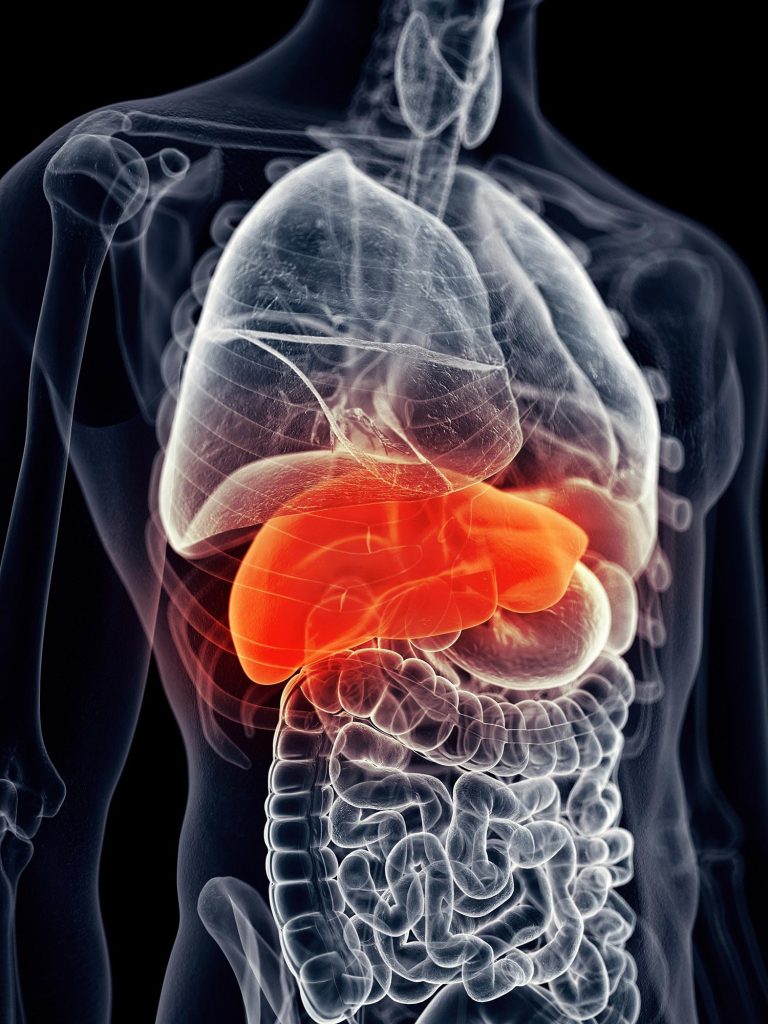
A study finds that people who have non-alcoholic fatty liver disease could have a higher risk of dementia.
According to new research recently published in Neurology, the medical journal of the American Academy of Neurology, those who have non-alcoholic fatty liver disease, an accumulation of fat cells in the liver, may have a greater risk of dementia. Researchers also discovered that dementia risk may be increased in people who have this type of liver illness who also have heart disease or who have had a stroke.
Up to 25% of individuals worldwide are suffering from non-alcoholic fatty liver disease, which is the most common chronic liver disease. Since it often has no symptoms, many individuals are unaware they have it. Fatigue and pain or discomfort in the upper right abdomen are some of the symptoms individuals can experience. While excessive alcohol use may result in fatty liver disease, obesity and associated conditions like high blood pressure or type 2 diabetes can also be the cause of non-alcoholic fatty liver disease. Non-alcoholic fatty liver disease can also cause liver damage or inflammation in a small proportion of patients.
Risk of Dementia in Liver Disease Patients
“Common risk factors for both non-alcoholic fatty liver disease and dementia include metabolic disorders like high blood pressure, diabetes, and obesity,” said study author Ying Shang, Ph.D., of the Karolinska Institute in Stockholm, Sweden. “So our study sought to determine if there was a link between this form of liver disease and a person’s risk of dementia, independent of these risk factors.”
For the study, researchers looked at 30 years of national Swedish patient registry records and identified 2,898 people age 65 and older who were diagnosed with non-alcoholic fatty liver disease. Researchers then identified 28,357 people without the disease who were matched for age, sex, and city of residence at age of diagnosis.
After an average of more than five years of follow-up, 145 people with non-alcoholic fatty liver disease, or 5%, were diagnosed with dementia, compared to 1,291 people without liver disease, or 4.6%.
Researchers adjusted for cardiovascular risk factors like high blood pressure and diabetes and found that when compared to people without liver disease, people with non-alcoholic fatty liver disease had a 38% higher rate of dementia overall. When looking specifically at vascular dementia caused by inadequate blood flow to the brain, researchers found people with non-alcoholic fatty liver disease had a 44% higher rate than people without liver disease. Researchers did not find a higher rate of Alzheimer’s disease.
Cardiovascular Complications and Higher Dementia Risk
People with liver disease who also had heart disease had a 50% greater risk of dementia. Those who had liver disease and stroke had more than a 2.5 times greater risk of dementia.
“Our study shows that non-alcoholic fatty liver disease is associated with the development of dementia, which may be driven mainly by vascular damage in the brain,” said Shang. “These results highlight the possibility that targeted treatment of this form of liver disease and co-occurring cardiovascular disease may reduce the risk of dementia.”
A limitation of the study was that non-alcoholic fatty liver disease is underdiagnosed because people often do not have symptoms. Shang said this could lead to underestimating the association between non-alcoholic fatty liver disease and dementia.
Reference: “Nonalcoholic Fatty Liver Disease and Risk of Dementia” by Ying Shang, Linnea Widman and Hannes Hagström, 13 July 2022, Neurology.
DOI: 10.1212/WNL.0000000000200853
The study was funded by the Swedish Research Council.
Never miss a breakthrough: Join the SciTechDaily newsletter.
Follow us on Google and Google News.