
A long-term Swedish study suggests that the relationship between diet and dementia may be more complex than previously understood.
Older adults with a genetic predisposition to Alzheimer’s disease did not show the expected rise in cognitive decline and dementia risk when they ate relatively high amounts of meat. That is the conclusion of a new study from Karolinska Institutet published in JAMA Network Open. The findings could help support more personalized dietary guidance.
APOE is a gene linked to Alzheimer’s disease risk. In Sweden, about 30 percent of the population carries the APOE 3/4 or APOE 4/4 genotype. Among people with Alzheimer’s disease, nearly 70 percent have one of these genotypes.
Last year, the Swedish Food Agency released a research overview on diet and dementia and called for more studies on whether meat intake may be connected to dementia development.
“This study tested the hypothesis that people with APOE 3/4 and 4/4 would have a reduced risk of cognitive decline and dementia with higher meat intake, based on the fact that APOE4 is the evolutionarily oldest variant of the APOE gene and may have arisen during a period when our evolutionary ancestors ate a more animal-based diet,” says first author Jakob Norgren, a researcher at the Department of Neurobiology, Care Sciences and Society at Karolinska Institutet.

The study tracked more than 2,100 participants in the Swedish National Study on Aging and Care, Kungsholmen (SNAC-K) for up to 15 years. All participants were age 60 or older and had no dementia diagnosis at the start of the study. Researchers analyzed the link between self-reported diet and measures of cognitive health while adjusting for age, sex, education, and lifestyle factors.
Testing a new hypothesis
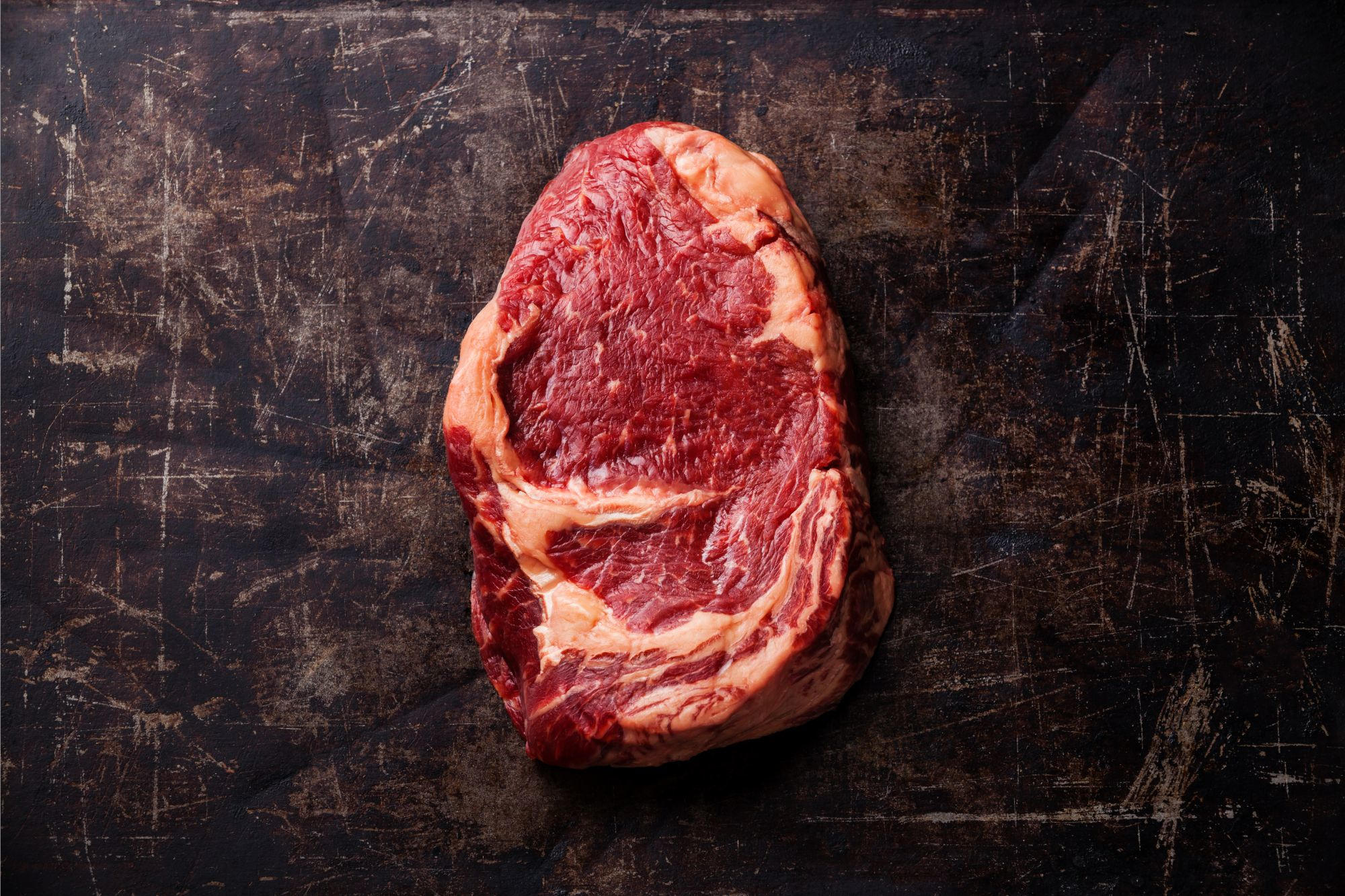
Among people with lower meat intake, those with APOE 3/4 and 4/4 had more than double the risk of dementia compared with people who did not carry those gene variants. But that elevated risk of cognitive decline and dementia was not seen in the one-fifth of participants who consumed the most meat. Their median intake was estimated at about 870 grams of meat per week (about 30.7 ounces, or 1.9 pounds), standardized to a daily energy intake of 2,000 calories.
“Those who ate more meat overall had significantly slower cognitive decline and a lower risk of dementia, but only if they had the APOE 3/4 or 4/4 gene variants,” says Jakob Norgren. He continues:
“There is a lack of dietary research into brain health, and our findings suggest that conventional dietary advice may be unfavourable to a genetically defined subgroup of the population. For those who are aware that they belong to this genetic risk group, the findings offer hope; the risk may be modifiable through lifestyle changes. ”
The study also found that the kind of meat may matter.
“A lower proportion of processed meat in total meat consumption was associated with a lower risk of dementia regardless of APOE genotype,” says Sara Garcia-Ptacek, assistant professor at the same department, who together with senior lecturer Erika J Laukka is the study’s last author.
The results may also have implications beyond brain health. In a follow-up analysis, the researchers found a significant reduction in all-cause mortality in carriers of APOE 3/4 and 4/4 who consumed more unprocessed meat.
More research is needed
However, the study was observational, so it cannot prove cause and effect. Intervention studies are needed to better determine whether the relationship is causal.
“Clinical trials are now needed to develop dietary recommendations tailored to APOE genotype,” says Jakob Norgren. He continues:
“Since the prevalence of APOE4 is about twice as high in the Nordic countries as in the Mediterranean countries, we are particularly well suited to conduct research on tailored dietary recommendations for this risk group.”
Reference: “Meat Consumption and Cognitive Health by APOE Genotype” by Jakob Norgren, Adrián Carballo-Casla, Giulia Grande, Anne Börjesson-Hanson, Hong Xu, Maria Eriksdotter, Erika J. Laukka and Sara Garcia-Ptacek, 19 March 2026, JAMA Network Open.
DOI: 10.1001/jamanetworkopen.2026.6489
The research was funded by, among others, the Swedish Alzheimer’s Foundation, the Swedish Dementia Foundation, the Emil and Wera Cornell Foundation, the Leif Lundblad family and other philanthropists, the Swedish Research Council and FORTE. The researchers state that they have no related conflicts of interest.
Never miss a breakthrough: Join the SciTechDaily newsletter.
Follow us on Google and Google News.
6 Comments
“during a period when our evolutionary ancestors ate a more animal-based diet,” when, exactly, was that?
around ~1mil years ago. it wasn’t very long
Do they mention lower dementia in higher Colo-rectal cancer stats?
There has not been a single study proving (or even showing strong evidence of) any sort of cancer from meat consumption in the absence of processed junk food, drugs, alcohol, etc.
These correlations come from a misunderstanding. Many people (wrongly) believe that red meat causes colon cancer, bowel cancer, rectal cancer, etc; and they also believe that meat is -generally- unhealthy.
People who ignore health guidelines are more likely to eat meat, but they are also more likely to eat processed food, drink soda, eat fried foods, smoke, use drugs, drink alcohol, and less likely to exercise and drink sufficient water.
When you examine people who consume unprocessed meat, vegetables, fruit, minimally processed or unprocessed dairy (yogurt, milk, aged cheeses), with little to no fried foods, processed food, sodas, etc. you are far less likely to find cancer risk.
Also, part of the cancer risk that people misattribute to meat consumption actually comes from the chemical reactions in charred meat. Those same carcinogens can be found in oven roasted, pan fried, or deep fried vegetables.
Interestingly enough, you can mitigate the potential damage of those carcinogens by adding fresh rosemary to grilled, oven roasted or fried foods (be they plant or animal)
As I understand, in this study, “meat” refers to the flesh of land animals, specifically beef, pork, lamb, chicken, and turkey. Fish was excluded from the “meat” category.
I would love to know how fish would factor into things.
I have 3/4… I’m told saturated fat, animal protein increases risk? Saturated fat is theb enemy. Is this new?