
Close Menu
    Facebook X (Twitter) Instagram
    SciTechDaily
    • Biology
    • Chemistry
    • Earth
    • Health
    • Physics
    • Science
    • Space
    • Technology
    Facebook X (Twitter) Pinterest YouTube RSS
    SciTechDaily
    Home»Science»“Green” Biodegradable Medical Gowns Actually Produce Harmful Greenhouse Gases
    Science

    “Green” Biodegradable Medical Gowns Actually Produce Harmful Greenhouse Gases

    By Cornell UniversityJanuary 28, 20231 Comment3 Mins Read
    Facebook Twitter Pinterest Telegram LinkedIn WhatsApp Email Reddit
    Share
    Facebook Twitter LinkedIn Pinterest Telegram Email Reddit
    Medical Gowns
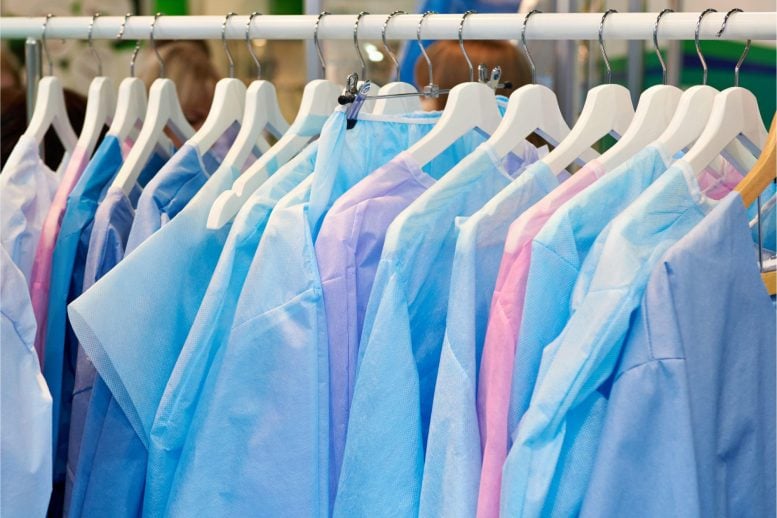
    Medical gowns are garments worn by healthcare workers, patients, and visitors in medical facilities to prevent the spread of infection. These gowns are typically made of disposable materials such as paper or polypropylene, and are designed to protect the wearer’s clothes and skin from exposure to bodily fluids, chemicals, and other contaminants.

    Biodegradable medical gowns decompose faster but emit more greenhouse gases like methane and CO2 than conventional gowns. While landfill gas capture could mitigate emissions, conventional gowns currently remain less toxic and more sustainable.

    According to new research published in the Journal of Cleaner Production, biodegradable medical gowns, which were intended to be a more environmentally friendly alternative to traditional medical gowns, have been found to produce harmful greenhouse gases during their decomposition process.

    The use of disposable plasticized medical gowns – both conventional and biodegradable – has surged since the onset of the COVID-19 pandemic. Landfills now brim with them.

    Because the biodegradable version decomposes faster than conventional gowns, popular wisdom held that it offers a greener option by less space use and chronic emissions in landfills.

    That wisdom may be wrong.

    Unintended Environmental Impacts

    “There’s no magic bullet to this problem,” said Fengqi You, professor in energy systems engineering at Cornell University.

    “Plasticized conventional medical gowns take many years to break down and the biodegradable gowns degrade much faster, but they produce gas emissions faster like added methane and carbon dioxide than regular ones in a landfill,” said You, who is a senior faculty fellow in the Cornell Atkinson Center for Sustainability. “Maybe the conventional gowns are not so bad.”

    According to this research led by Cornell doctoral student Xiang Zhao, biodegradable gown production poses an additional 11% higher eco-toxicity rate than conventional alternatives.

    Potential Solutions for Mitigating Emissions

    Adopting landfill gas capture and utilization processes in biodegradable gown sanitary landfills can reduce 9.79% of greenhouse emissions, life-cycle landfill use by nearly 49%, and save at least 10% of fossil resources by employing onsite power co-generation, the researchers found.

    Conventional gowns are environmentally and socially sustainable because they can pose 14% less toxicity to humans, cause 10% fewer greenhouse gas emissions, and are nearly 10% less toxic to freshwater when compared to biodegradable gowns in landfills with extra gas emissions.

    Improving the gas capture efficiency above 85% can make biodegradable gowns more environmentally sustainable than conventional gowns.

    “It’s nice to break down the plastic into smaller things,” Zhao said. “But those small things eventually decompose into gas and if we don’t capture them, they become greenhouse gases that go into the air.”

    Reference: “How sustainable are the biodegradable medical gowns via environmental and social life cycle assessment?” by Xiang Zhao, Jiří Jaromír Klemeš, Michael Saxon, and Fengqi You, 14 November 2022, Journal of Cleaner Production.
    DOI: 10.1016/j.jclepro.2022.135153

    The study was funded by the Cornell Center for Materials Research (CCMR) with funding from the NSF and New York State Empire State Development’s Division of Science, Technology, and Innovation.

    Never miss a breakthrough: Join the SciTechDaily newsletter.
    Follow us on Google and Google News.

    Cornell University Environment Greenhouse Gas
    Share. Facebook Twitter Pinterest LinkedIn Email Reddit

    Related Articles

    Methane-Eating Bacteria Convert Potent Greenhouse Gas Into Usable Fuel

    Poisoning From Lead Ammunition Is Stunting Bald Eagle Rebound

    Global Assessment: Large Economic Impacts of Climate Change Can Be Avoided

    Cryptogamic Covers Take Up Huge Amounts of Atmospheric Carbon Dioxide

    Natural Gas Mining Could Leak Enough Methane, No Longer Considered as Clean

    Researchers Use Sanitation Techniques to Boost Sap Production

    MATLAB Crunches Hepatitis C Virus Data

    Time Cloak Creates Hole in Time, Makes Events Disappear

    Da Vinci’s Last Supper Threatened By Air Pollution

    1 Comment

    1. Clyde Spencer on January 28, 2023 9:48 am

      It shouldn’t be surprising that in all things that humans do there tends to be corollaries to Newton’s Third Law of Motion: “For every action there is an equal and opposite reaction.” It is also known as unintended consequences. However, a little forethought should have suggested this outcome.

      Reply
    Leave A Reply Cancel Reply

    • Facebook
    • Twitter
    • Pinterest
    • YouTube

    Don't Miss a Discovery

    Subscribe for the Latest in Science & Tech!

    Trending News

    Scientists Discover How Coffee Impacts Memory, Mood, and Gut Health

    Why Did the Neanderthals Disappear? Scientists Reveal Humans Had a Hidden Advantage

    Physicists Propose Strange Experiment Where Time Goes Quantum

    Magnesium Magic: New Drug Melts Fat Even on a High-Fat, High-Sugar Diet

    Weight-Loss Drugs Like Ozempic May Come With an Unexpected Cost

    Mezcal “Worm” in a Bottle Mystery: DNA Testing Reveals a Surprise

    New Research Reveals That Your Morning Coffee Activates an Ancient Longevity Switch

    This Is What Makes You Irresistible to Mosquitoes

    Follow SciTechDaily
    • Facebook
    • Twitter
    • YouTube
    • Pinterest
    • Newsletter
    • RSS
    SciTech News
    • Biology News
    • Chemistry News
    • Earth News
    • Health News
    • Physics News
    • Science News
    • Space News
    • Technology News
    Recent Posts
    • Quantum Breakthrough Turns Simple Forces Into Powerful New Interactions
    • Blue Origin’s New Moon Lander Passes a Crucial Test for NASA Missions
    • NASA Fires Up Record-Breaking Plasma Thruster for Future Mars Missions
    • This Popular Supplement May Boost Your Brain, Not Just Your Muscles
    • What Happened in Childhood Could Be Causing Your Gut Issues Today
    Copyright © 1998 - 2026 SciTechDaily. All Rights Reserved.
    • Science News
    • About
    • Contact
    • Editorial Board
    • Privacy Policy
    • Terms of Use

    Type above and press Enter to search. Press Esc to cancel.