
Close Menu
    Facebook X (Twitter) Instagram
    SciTechDaily
    • Biology
    • Chemistry
    • Earth
    • Health
    • Physics
    • Science
    • Space
    • Technology
    Facebook X (Twitter) Pinterest YouTube RSS
    SciTechDaily
    Home»Biology»Genetic Evolution and the Ice Age: What Crocodile DNA Reveals
    Biology

    Genetic Evolution and the Ice Age: What Crocodile DNA Reveals

    By McGill UniversityFebruary 10, 2023No Comments3 Mins Read
    Facebook Twitter Pinterest Telegram LinkedIn WhatsApp Email Reddit
    Share
    Facebook Twitter LinkedIn Pinterest Telegram Email Reddit
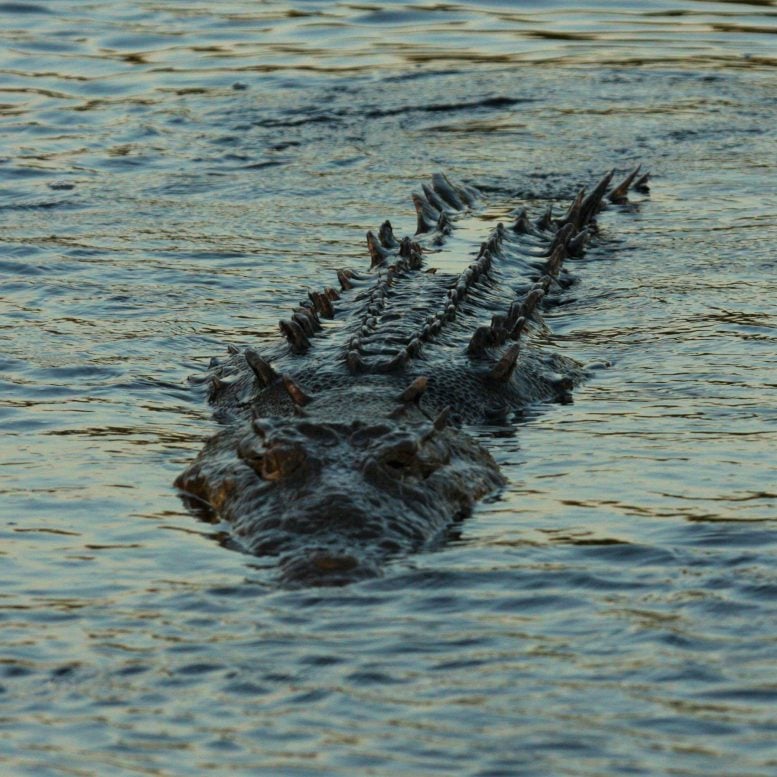
    American Crocodile (Crocodylus acutus)
    American Crocodile (Crocodylus acutus). This species of crocodile is native to the Americas, ranging from the southeastern United States to northern South America. It is an apex predator and is typically found in coastal saltwater habitats, such as mangrove swamps and lagoons. American crocodiles are known for their long, slender snout and powerful jaws, and can grow up to 5 meters in length. Credit: Hans Larsson

    Environmental drivers such as sea level affect genetic evolution and point to where conservation efforts may be focused.

    What drives crocodile evolution? Is climate a major factor or changes in sea levels? Determined to find answers to these questions, researchers from McGill University discovered that while changing temperatures and rainfall had little impact on the crocodiles’ gene flow over the past three million years, changes to sea levels during the Ice Age had a different effect.

    “The American crocodile tolerates huge variations in temperature and rainfall. But about 20,000 years ago – when much of the world’s water was frozen, forming the vast ice sheets of the last glacial maximum – sea levels dropped by more than 100 meters (330 feet). This created a geographical barrier that separated the gene flow of crocodiles in Panama,” says postdoctoral fellow José Avila-Cervantes, working under the supervision of McGill professor Hans Larsson.
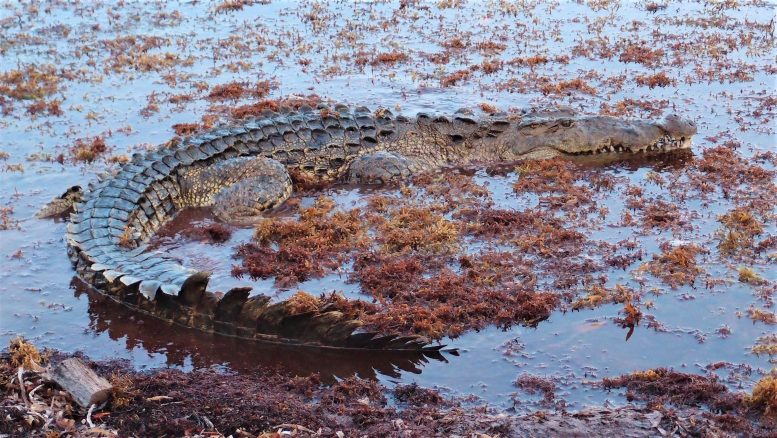
    American Crocodile on Pacific coast of Panama
    American Crocodile (Crocodylus acutus) on the Pacific coast of Panama. They are considered to be a threatened species, and conservation efforts are underway to help protect and conserve populations. Credit: José Avila-Cervantes

    The researchers point out that the crocodiles are good swimmers, but they can’t travel long distances on land. As a result, the Caribbean and Pacific crocodile populations were isolated from each other, and consequently have undergone different genetic mutations.

    The team compared the climate tolerance of living populations of American crocodiles (Crocodylus acutus) to the paleoclimate estimates for the region over the past 3 million years – the time span of extreme climate variation during the Ice Age.
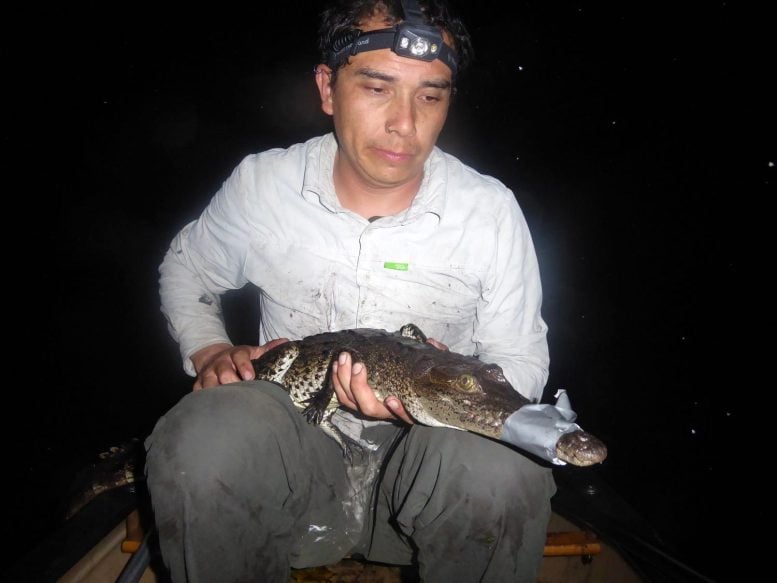
    José Avila Cervantes With American Crocodile
    McGill University postdoctoral fellow José Avila-Cervantes with an American Crocodile (Crocodylus acutus). Credit: Hans Larsson

    “This is one of the first times Ice Age effects have been found in a tropical species. It’s exciting to discover effects of the last Ice Age glaciation still resonate in the genomes of Pacific and Caribbean American crocodiles today,” says Larsson, Professor of Biology at the Redpath Museum of McGill University.

    “Discovering that these animals would have easily tolerated the climate swings of the Ice Age speaks to their resilience over geological time. Only humans in recent decades of hunting and land development seem to really affect crocodiles,” he says. The findings offer new insight into how environmental drivers affect genetic evolution and where conservation efforts of particular crocodile populations in Panama should be focused.

    Reference: “Ice Age effects on genetic divergence of the American crocodile (Crocodylus acutus) in Panama: reconstructing limits of gene flow and environmental ranges: A reply to O’Dea et al.” by Jose Avila-Cervantes and Hans Larsson, Evolution.
    DOI: 10.1093/evolut/qpac006

    Never miss a breakthrough: Join the SciTechDaily newsletter.
    Follow us on Google and Google News.

    Crocodiles DNA Evolution Genetics Ice Age McGill University
    Share. Facebook Twitter Pinterest LinkedIn Email Reddit

    Related Articles

    Genetic Analysis Shows Crocodile Evolution Was Rebooted by Ice Age Glaciations

    Scientists Extract Complete Human Genome From 5,700-Year-Old “Chewing Gum” – Here’s What They Found

    DNA Sequencing Reveals Carolina Parakeet Extinction Was Driven by Humans

    Rapid Evolution of Deadly Pathogen: Cholera Bacterium Can Steal Up to 150 Genes in One Go

    DNA Study Reveals Clues about Primate Evolution

    Prolific Changes in the Human Genome in the Past 5,000 Years

    DNA Could Predate Existence of Life As We Know It

    Improved Estimates of DNA’s Mutation Rate Paint Clearer Picture of Human Prehistory

    Human Y-Chromosome Has Enough Genes to Stay for Millions of Years

    Leave A Reply Cancel Reply

    • Facebook
    • Twitter
    • Pinterest
    • YouTube

    Don't Miss a Discovery

    Subscribe for the Latest in Science & Tech!

    Trending News

    Wasp Colonies Explode Into Violence After Losing Their Queen

    Scientists Create “Living Plastic” That Self-Destructs in Just Six Days

    Your Blood May Carry a 700-Million-Year-Old Secret

    Scientists Discover Some “Zombie Cells” May Actually Help You Live Longer

    Earth May Be Seeding Venus With Life, According to New Research

    What Scientists Found Inside a 117-Year-Old Woman Reveals New Clues to Long Life

    Scientists Discover Mysterious Creature Living in the Great Salt Lake – and It Exists Nowhere Else on Earth

    It’s Alive? Surprising Discovery Changes What We Know About Fog

    Follow SciTechDaily
    • Facebook
    • Twitter
    • YouTube
    • Pinterest
    • Newsletter
    • RSS
    SciTech News
    • Biology News
    • Chemistry News
    • Earth News
    • Health News
    • Physics News
    • Science News
    • Space News
    • Technology News
    Recent Posts
    • Scientists Crack Major Ammonia Problem With a Platinum Catalyst Breakthrough
    • MIT Engineers Solve a Major Lidar Problem That Has Stumped Researchers for Years
    • NASA’s X-59 Sonic Boom Killer Is Ready for Its Biggest Test Yet
    • Why Some Cancers Turn Deadly: Researchers Uncover a Hidden Trigger
    • The Best Exercise Combination for Longevity, According to a 30-Year Study
    Copyright © 1998 - 2026 SciTechDaily. All Rights Reserved.
    • Science News
    • About
    • Contact
    • Editorial Board
    • Privacy Policy
    • Terms of Use

    Type above and press Enter to search. Press Esc to cancel.