
Close Menu
    Facebook X (Twitter) Instagram
    SciTechDaily
    • Biology
    • Chemistry
    • Earth
    • Health
    • Physics
    • Science
    • Space
    • Technology
    Facebook X (Twitter) Pinterest YouTube RSS
    SciTechDaily
    Home»Health»Clock Out of Losing Sleep: A Simple and Effective Solution To Manage Insomnia
    Health

    Clock Out of Losing Sleep: A Simple and Effective Solution To Manage Insomnia

    By Indiana UniversityMay 17, 2023No Comments4 Mins Read
    Facebook Twitter Pinterest Telegram LinkedIn WhatsApp Email Reddit
    Share
    Facebook Twitter LinkedIn Pinterest Telegram Email Reddit
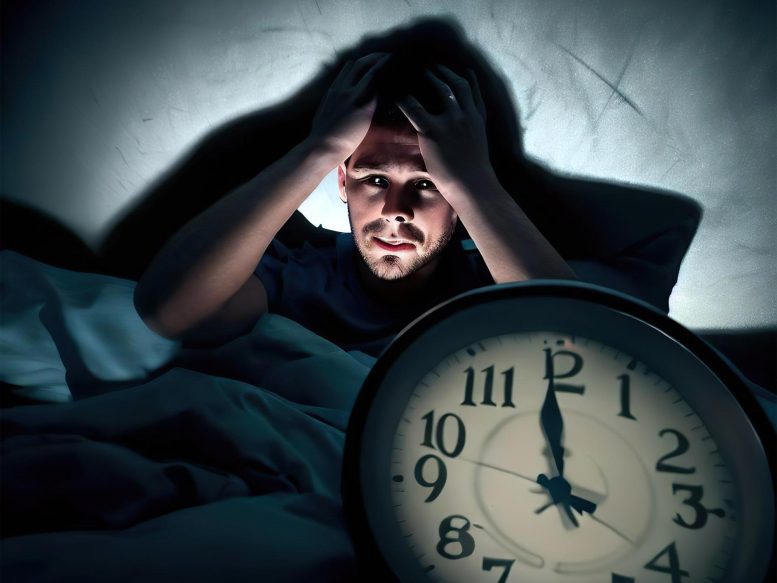
    Insomnia Watching Clock Nightmare
    Research suggests that the behavior of clock-watching while trying to fall asleep intensifies insomnia symptoms and increases the use of sleep aids. The study, which examined approximately 5,000 patients at a sleep clinic, revealed that time-monitoring behavior triggers a cycle of worry about not getting sufficient sleep, leading to increased stress and difficulty falling asleep. As a result, individuals are more likely to resort to sleep medication in an attempt to regain control over their sleep. A simple behavioral intervention, avoiding checking the time, could help manage insomnia more effectively.

    Indiana University research led by Spencer Dawson finds that clock-watching while trying to sleep worsens insomnia and boosts sleep aid usage. The study suggests that avoiding checking the time could be a simple and effective solution to manage insomnia.

    Watching the clock while trying to fall asleep exacerbates insomnia and the use of sleep aids, according to research from an Indiana University professor — and a small change could help people sleep better.

    The research, led by Spencer Dawson, clinical assistant professor and associate director of clinical training in the College of Arts and Sciences’ Department of Psychological and Brain Sciences, focuses on a sample of nearly 5,000 patients presenting for care at a sleep clinic.

    Insomnia affects between 4 and 22% of adults and is associated with long-term health problems including cardiovascular disease, diabetes and depression.

    Participants completed questionnaires about the severity of their insomnia, their use of sleep medication and the time they spent monitoring their own behavior while trying to fall asleep. They were also asked to report any psychiatric diagnoses. Researchers conducted mediation analyses to determine how the factors influenced each other.

    The Vicious Cycle: Stress, Insomnia, and Sleep Aids

    Spencer Dawson
    Spencer Dawson. Credit: Indiana University

    “We found time monitoring behavior mainly has an effect on sleep medication use because it exacerbates insomnia symptoms,” Dawson said. “People are concerned that they’re not getting enough sleep, then they start estimating how long it will take them to fall back asleep and when they have to be up. That is not the sort of activity that’s helpful in facilitating the ability to fall asleep — the more stressed out you are, the harder time you’re going to have falling asleep.”

    As the frustration over sleeplessness grows, people are more likely to use sleep aids in an attempt to gain control over their sleep.

    The results are published in The Primary Care Companion for CNS Disorders. Additional co-authors are Dr. Barry Krakow, professor of psychiatry and behavioral health in the Mercer University School of Medicine; Patricia Haynes, associate professor in the Mel and Enid Zuckerman School of Public Health at the University of Arizona and Darlynn Rojo-Wissar, a postdoctoral fellow at Alpert Medical School of Brown University.

    Dawson said the research indicates a simple behavioral intervention could provide help for those struggling with insomnia. He gives the same advice to every new patient the first time they meet.

    “One thing that people could do would be to turn around or cover up their clock, ditch the smart watch, get the phone away so they’re simply not checking the time,” Dawson said. “There’s not any place where watching the clock is particularly helpful.”

    Reference: “Use of Sleep Aids in Insomnia: The Role of Time Monitoring Behavior” by Spencer C. Dawson, PhD; Barry Krakow, MD; Patricia L. Haynes, PhD; Darlynn M. Rojo-Wissar, PhD, MPH; Natalia D. McIver, PhD and Victor A. Ulibarri, BS, 16 May 2023, The Primary Care Companion for CNS Disorders.
    DOI: 10.4088/PCC.22m03344

    With 15 years of of research and clinical experience in the sleep field, Dawson is interested in comparing individuals’ sleeping experiences with what is concurrently happening in their brains. He trains and supervises doctoral students in the Department of Psychological and Brain Science’s Clinical Science Program.

    Never miss a breakthrough: Join the SciTechDaily newsletter.
    Follow us on Google and Google News.

    Indiana University Popular Psychiatry Sleep Science
    Share. Facebook Twitter Pinterest LinkedIn Email Reddit

    Related Articles

    It’s Biology, Not Laziness: Sleep-Wake Therapy Gives New Hope for Teens With Depression

    A Mysterious Connection: Scientists Discover That Suicide Significantly Increases During the Full Moon

    Melatonin Sleep Aid May Reduce Self-Harm in Young People With Anxiety and Depression

    Scientists Find It Is Better to Drink Coffee After Breakfast, Not Before – Here’s Why

    20 Years of Ice-Cold Research: 7 Extremophile Tips for Healthy Living

    Improve Sleep Apnea by Losing Fat in an Unexpected Body Part — The Tongue

    Mayo Clinic: CBD Products & Hemp Oil May Be Helpful but More Research Is Needed

    New Drug Combo Shows Promise for Treatment of Depression and Addiction

    Yale Study Links Increased Impulsivity and Hostility with Recreational Marijuana Use

    Leave A Reply Cancel Reply

    • Facebook
    • Twitter
    • Pinterest
    • YouTube

    Don't Miss a Discovery

    Subscribe for the Latest in Science & Tech!

    Trending News

    One of the Universe’s Largest Stars May Be Getting Ready To Explode

    Scientists Discover Enzyme That Could Supercharge Ozempic-Like Weight Loss Drugs

    Popular Sweetener Linked to DNA Damage – “It’s Something You Should Not Be Eating”

    Ancient “Rock” Microbes May Reveal How Complex Life Began

    Researchers Capture Quantum Interference in One of Nature’s Rarest Atoms

    “A Plague Is Upon Us”: The Mass Death That Changed an Ancient City Forever

    Scientists Discover Game-Changing New Way To Treat High Cholesterol

    This Small Change to Your Exercise Routine Could Be the Secret to Living Longer

    Follow SciTechDaily
    • Facebook
    • Twitter
    • YouTube
    • Pinterest
    • Newsletter
    • RSS
    SciTech News
    • Biology News
    • Chemistry News
    • Earth News
    • Health News
    • Physics News
    • Science News
    • Space News
    • Technology News
    Recent Posts
    • Scientists Rethink Extreme Warming After Surprising Ocean Discovery
    • The Surprising Role of Asteroids in the Origin of Life
    • Scientists Raise Concerns Over Newly Recognized Pollutant Found Everywhere in the Air
    • New Study Challenges 40-Year Puzzle About Childhood Body Fat
    • 20-Year Study Finds Daily Multivitamins Don’t Extend Lifespan
    Copyright © 1998 - 2026 SciTechDaily. All Rights Reserved.
    • Science News
    • About
    • Contact
    • Editorial Board
    • Privacy Policy
    • Terms of Use

    Type above and press Enter to search. Press Esc to cancel.