
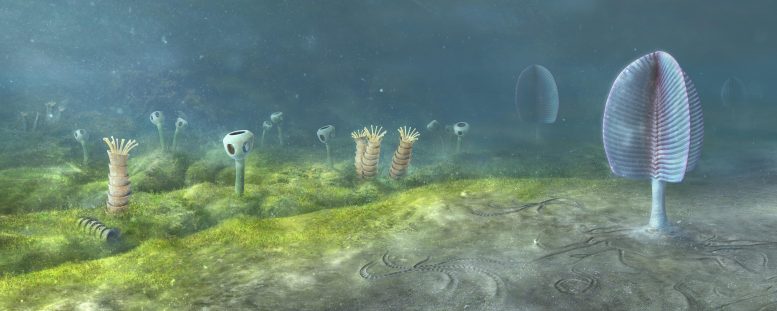
Oxford researchers examined ancient rocks to determine if early animals failed to fossilize, but findings suggest they had not yet evolved by the early Neoproterozoic, refining estimates of when animals first appeared.
A study led by the University of Oxford has edged us closer to unraveling an age-old question that has intrigued naturalists since the time of Charles Darwin: when did the first animals emerge in Earth’s history? The findings were recently published in the journal Trends in Ecology & Evolution.
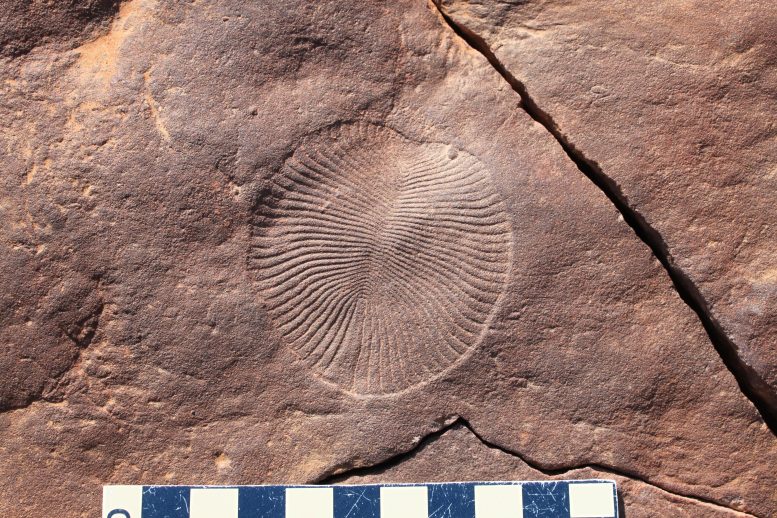
Animals first occur in the fossil record around 574 million years ago. Their arrival appears as a sudden ‘explosion’ in rocks from the Cambrian period (539 million years ago to 485 million years ago) and seems to counter the typically gradual pace of evolutionary change. Many scientists (including Darwin himself) believe that the first animals actually evolved long before the Cambrian period, but they cannot explain why they are missing from the fossil record.

Molecular Clock vs. Fossil Record: A Scientific Dilemma
The ‘molecular clock’ method, for instance, suggests that animals first evolved 800 million years ago, during the early part of the Neoproterozoic era (1,000 million years ago to 539 million years ago). This approach uses the rates at which genes accumulate mutations to determine the point in time when two or more living species last shared a common ancestor. But although rocks from the early Neoproterozoic contain fossil microorganisms, such as bacteria and protists, no animal fossils have been found.
This posed a dilemma for paleontologists: does the molecular clock method overestimate the point at which animals first evolved? Or were animals present during the early Neoproterozoic, but too soft and fragile to be preserved?
To investigate this, a team of researchers led by Dr. Ross Anderson from the University of Oxford’s Department of Earth Sciences has carried out the most thorough assessment to date of the preservation conditions that would be expected to capture the earliest animal fossils.
Lead author Dr. Ross Anderson said: ‘The first animals presumably lacked mineral-based shells or skeletons, and would have required exceptional conditions to be fossilized. But certain Cambrian mudstone deposits demonstrate exceptional preservation, even of soft and fragile animal tissues. We reasoned that if these conditions, known as Burgess Shale-Type (BST) preservation, also occurred in Neoproterozoic rocks, then a lack of fossils would suggest a real absence of animals at that time.’
To investigate this, the research team used a range of analytical techniques on samples of Cambrian mudstone deposits from almost 20 sites, to compare those hosting BST fossils with those preserving only mineral-based remains (such as trilobites). These methods included energy dispersive X-ray spectroscopy and X-ray diffraction carried out at the University of Oxford’s Departments of Earth Sciences and Materials, besides infrared spectroscopy carried out at Diamond Light Source, the UK’s national synchrotron.

The analysis found that fossils with exceptional BST-type preservation were particularly enriched in an antibacterial clay called berthierine. Samples with a composition of at least 20% berthierine yielded BST fossils in around 90% of cases.
Microscale mineral mapping of BST fossils revealed that another antibacterial clay, called kaolinite, appeared to directly bind to decaying tissues at an early stage, forming a protective halo during fossilization.
‘The presence of these clays was the main predictor of whether rocks would harbor BST fossils’ added Dr. Anderson. ‘This suggests that the clay particles act as an antibacterial barrier that prevents bacteria and other microorganisms from breaking down organic materials.’
The researchers then applied these techniques to analyze samples from numerous fossil-rich Neoproterozoic mudstone deposits. The analysis revealed that most did not have the compositions necessary for BST preservation. However, three deposits in Nunavut (Canada), Siberia (Russia), and Svalbard (Norway) had almost identical compositions to BST-rocks from the Cambrian period. Nevertheless, none of the samples from these three deposits contained animal fossils, even though conditions were likely favorable for their preservation.
New Evidence Suggests Animals Had Not Yet Evolved
Dr. Anderson added: ‘Similarities in the distribution of clays with fossils in these rare early Neoproterozoic samples and with exceptional Cambrian deposits suggest that, in both cases, clays were attached to decaying tissues, and that conditions conducive to BST preservation were available in both time periods. This provides the first “evidence for absence” and supports the view that animals had not evolved by the early Neoproterozoic era, contrary to some molecular clock estimates.’
According to the researchers, the study suggests a possible maximum age to the origin of animals of around 789 million years: the youngest estimated age of the Svalbard formation. The group now intends to search for progressively younger Neoproterozoic deposits with conditions for BST preservation. This will confirm the age of rocks in which animals are missing from the fossil record because they really were absent, rather than because conditions did not enable them to be fossilized. They also intend to perform laboratory experiments to investigate the mechanisms that underpin clay-organic interactions in BST preservation.
Dr. Anderson added: ‘Mapping the compositions of these rocks at the microscale is allowing us to understand the nature of the exceptional fossil record in a way that we have never been able to do before. Ultimately, this could help determine how the fossil record may be biased towards preserving certain species and tissues, altering our perception of biodiversity across different geological eras.’
Reference: “Fossilisation processes and our reading of animal antiquity” by Ross P. Anderson, Christina R. Woltz, Nicholas J. Tosca, Susannah M. Porter and Derek E.G. Briggs, 27 June 2023, Trends in Ecology & Evolution.
DOI: 10.1016/j.tree.2023.05.014
Never miss a breakthrough: Join the SciTechDaily newsletter.
Follow us on Google and Google News.