
Close Menu
    Facebook X (Twitter) Instagram
    SciTechDaily
    • Biology
    • Chemistry
    • Earth
    • Health
    • Physics
    • Science
    • Space
    • Technology
    Facebook X (Twitter) Pinterest YouTube RSS
    SciTechDaily
    Home»Space»Rocket Weather Roulette: 40% Favorable Skies for NASA’s Psyche Launch
    Space

    Rocket Weather Roulette: 40% Favorable Skies for NASA’s Psyche Launch

    By NASAOctober 13, 2023No Comments4 Mins Read
    Facebook Twitter Pinterest Telegram LinkedIn WhatsApp Email Reddit
    Share
    Facebook Twitter LinkedIn Pinterest Telegram Email Reddit
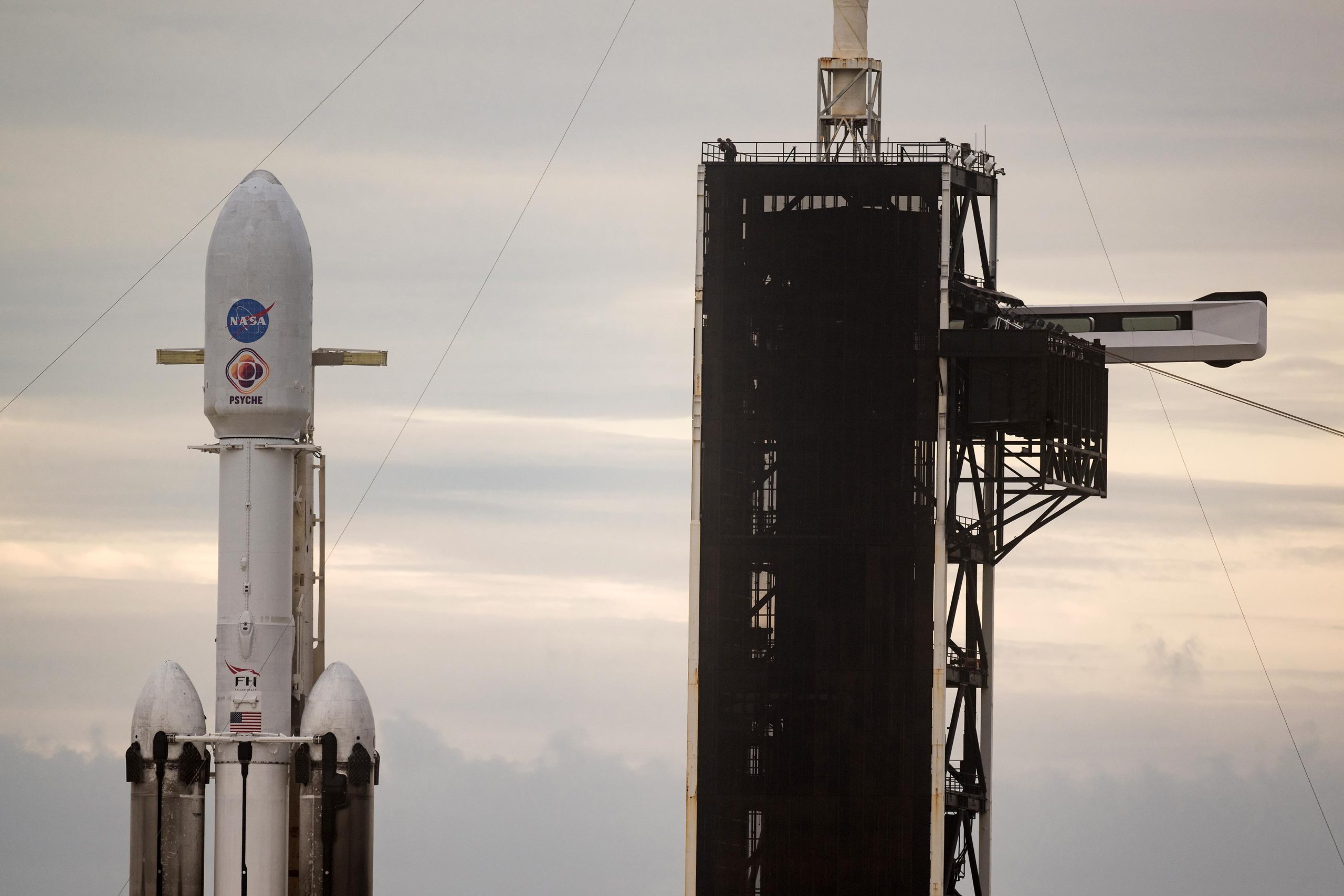
    Psyche on the Launch Pad
    A SpaceX Falcon Heavy rocket with the Psyche spacecraft onboard is seen at Launch Complex 39A as preparations continue for the Psyche mission, Wednesday, October 11, 2023, at NASA’s Kennedy Space Center in Florida. NASA’s Psyche spacecraft will travel to a metal-rich asteroid by the same name orbiting the Sun between Mars and Jupiter to study its composition. The spacecraft also carries the agency’s Deep Space Optical Communications technology demonstration, which will test laser communications beyond the Moon. Credit: NASA/Aubrey Gemignani

    Weather officials with Cape Canaveral Space Force Station’s 45th Weather Squadron predict a 40% chance of favorable weather conditions for the launch of NASA’s Psyche mission at 10:19 a.m. EDT Friday, October 13, on a SpaceX Falcon Heavy rocket from Launch Complex 39A at Kennedy Space Center in Florida.

    Showers and storms are expected at the spaceport late Thursday, lasting through the Friday launch window. Primary weather concerns at launch are the anvil cloud, thick cloud layers, and cumulus cloud rules.

    The next available launch window occurs at 10:24 a.m. EDT Saturday, October 14. Weather officials forecast a 70% of favorable conditions for this launch opportunity, with the cumulus cloud rule as the primary weather concern.
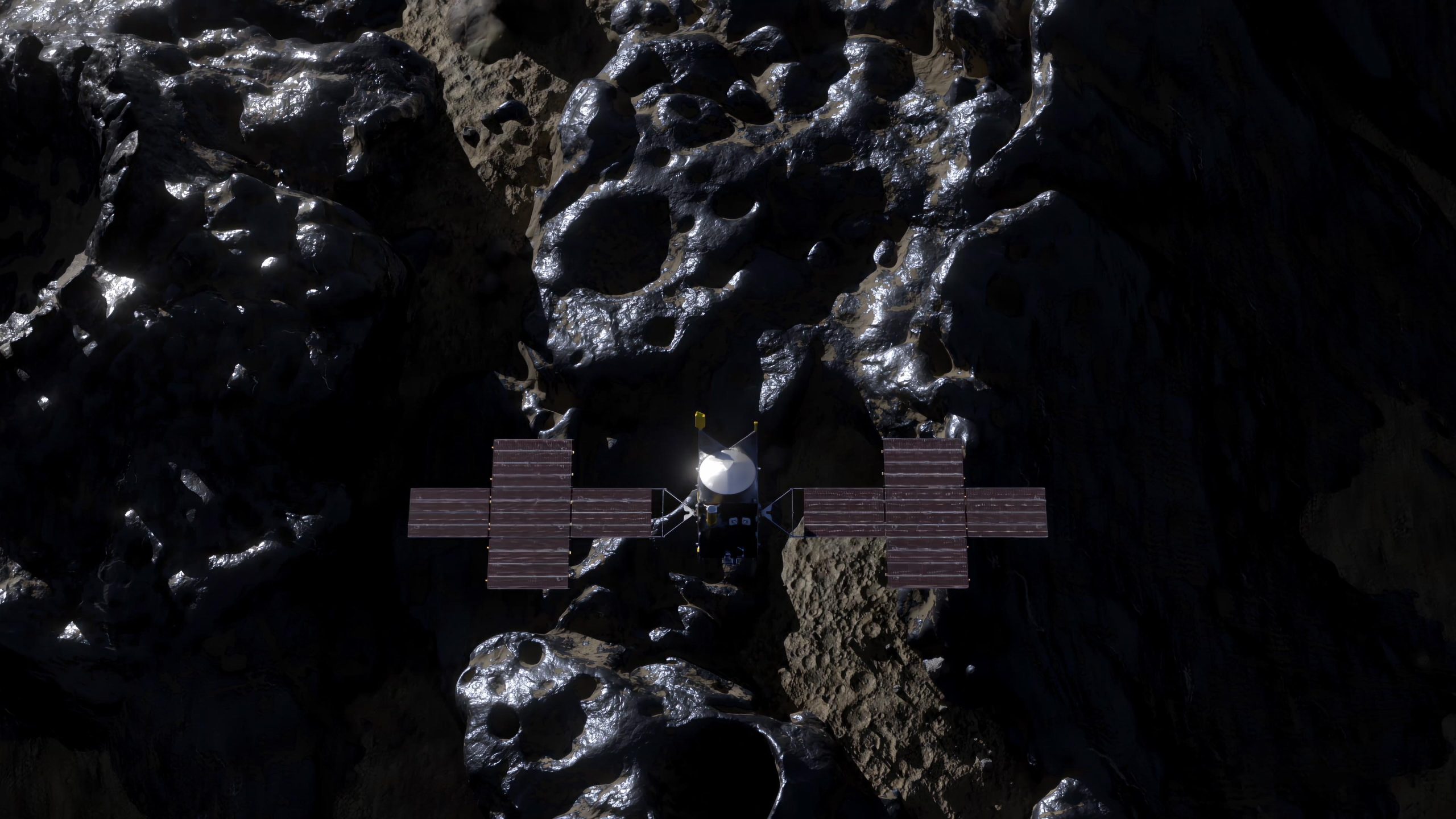
    NASA Psyche Over Asteroid Surface
    NASA’s Psyche mission aims to explore the metal-rich asteroid named Psyche, believed to be the exposed core of an early planet from our solar system’s formative years. This endeavor seeks insights into the early processes of planet formation and the mysteries of Earth’s own core. Credit: NASA

    NASA’s Psyche Mission

    NASA’s Psyche mission is a pioneering endeavor aiming to journey to a unique metal-rich asteroid, named Psyche, which orbits the Sun between Mars and Jupiter. This asteroid stands out because, unlike most asteroids that are rocky or icy, Psyche is primarily made of metal and is thought to be the exposed core of an early planet, a relic from the early solar system.

    The mission’s primary objective is to delve deeper into understanding the building blocks of planet formation by studying Psyche’s metallic asteroid. By examining this celestial object, scientists hope to garner insights into the turbulent beginnings of planets and also learn more about Earth’s own core.

    The spacecraft will be equipped with a suite of state-of-the-art scientific instruments, designed to map and study the asteroid’s surface and its composition. The mission not only offers a window into the violent history of collisions and accretion that created terrestrial planets, but also holds potential clues about the Earth’s core, which is otherwise inaccessible for direct observation.
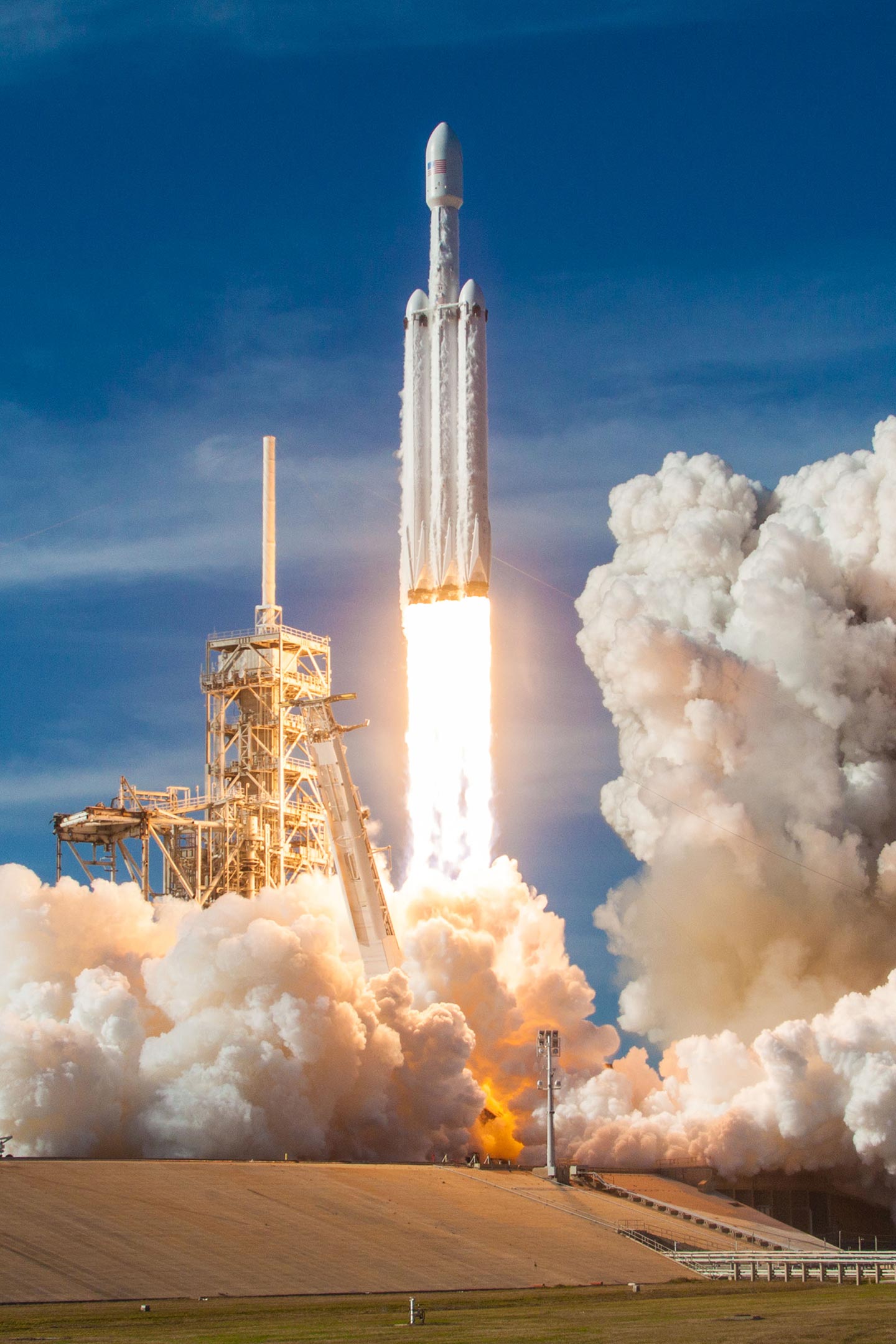
    Falcon Heavy Demo Mission
    As one of the most powerful operational rockets, SpaceX’s Falcon Heavy stands out with its ability to carry large payloads and its innovative reusable design. Its maiden flight famously sent Elon Musk’s Tesla Roadster into space, demonstrating its unique capabilities. Credit: SpaceX

    SpaceX’s Falcon Heavy

    SpaceX’s Falcon Heavy is one of the most powerful operational rockets in the world, designed and manufactured by SpaceX, the space company founded by Elon Musk. It is essentially a larger variant of the Falcon 9 launch vehicle and consists of three Falcon 9 first-stage cores joined together, with each core containing nine engines. This gives the Falcon Heavy a total of 27 Merlin engines, allowing it to lift more than twice the payload of the next closest operational vehicle, the Delta IV Heavy, at one-third the cost.

    Built with reusability in mind, the Falcon Heavy’s side boosters can return to landing sites rather than falling into the ocean like traditional rocket boosters. This innovative approach drastically reduces the cost of space missions.

    Initially conceived to facilitate potential crewed missions to the Moon or Mars, the Falcon Heavy’s vast payload capacity opens up a broad spectrum of possibilities, from launching large satellites to deep space missions. Its maiden flight in 2018 was particularly notable for sending Elon Musk’s personal Tesla Roadster into space, showcasing both its capabilities and SpaceX’s penchant for dramatic flair.

    Never miss a breakthrough: Join the SciTechDaily newsletter.
    Follow us on Google and Google News.

    NASA NASA Psyche SpaceX
    Share. Facebook Twitter Pinterest LinkedIn Email Reddit

    Related Articles

    SpaceX Falcon Heavy Blast Off: NASA’s Psyche Spacecraft on Its Way To Metal-Rich Asteroid

    Metal Meets Milestone: The Countdown to Psyche’s Historic Launch

    “Go” for Launch: Weather Now 85% Favorable for NASA’s Psyche Liftoff Today

    Journey to a Metal-Rich World: NASA’s Psyche Is Ready To Launch on SpaceX Falcon Heavy Rocket

    A Slim 20%: Weather Concerns for NASA’s Psyche Rocket Launch

    SpaceX Falcon Heavy Liftoff Imminent: NASA’s Psyche spacecraft Sets Sights on Earth-Like Asteroid

    SpaceX Dragon Heads to Space Station With Upgraded Science Hardware – Here’s What It’s For

    “Robot Hotel” Launching to the International Space Station on SpaceX Falcon 9 Rocket

    SpaceX Falcon 9 Launches, Dragon Capsule Headed Towards Space Station

    Leave A Reply Cancel Reply

    • Facebook
    • Twitter
    • Pinterest
    • YouTube

    Don't Miss a Discovery

    Subscribe for the Latest in Science & Tech!

    Trending News

    Two Drinks a Day May Be Riskier Than Many Americans Think

    A Lost Human Lineage May Have Left a Genetic Legacy in People Today

    Study Reveals a Surprising Link Between Birth Control Pills and Binge Eating

    NASA’s HiRISE Captures Perseverance Rover Completing a Marathon on Mars

    Ancient DNA Reveals the Hidden Origins of China’s Mysterious Shimao Civilization

    Scientists Discover a Surprising Link Between Sleep, Genes, and Alzheimer’s

    Popular Childhood Drinks Linked to Higher Blood Pressure Later in Life

    Scientists Just Challenged a 70-Year-Old Myth About the Human Brain

    Follow SciTechDaily
    • Facebook
    • Twitter
    • YouTube
    • Pinterest
    • Newsletter
    • RSS
    SciTech News
    • Biology News
    • Chemistry News
    • Earth News
    • Health News
    • Physics News
    • Science News
    • Space News
    • Technology News
    Recent Posts
    • New Fossil Study Challenges the Classic Story of Human Evolution
    • The Surprising Chocolate Trick That Could Boost Your Gym Performance
    • 6 Simple Scent Games That Can Make Your Dog Happier
    • Common Mouth Bacteria May Trigger Dangerous Calcium Buildup in the Heart
    • New CRISPR Tool Gives Scientists Control Over Cellular Protein Production
    Copyright © 1998 - 2026 SciTechDaily. All Rights Reserved.
    • Science News
    • About
    • Contact
    • Editorial Board
    • Privacy Policy
    • Terms of Use

    Type above and press Enter to search. Press Esc to cancel.