
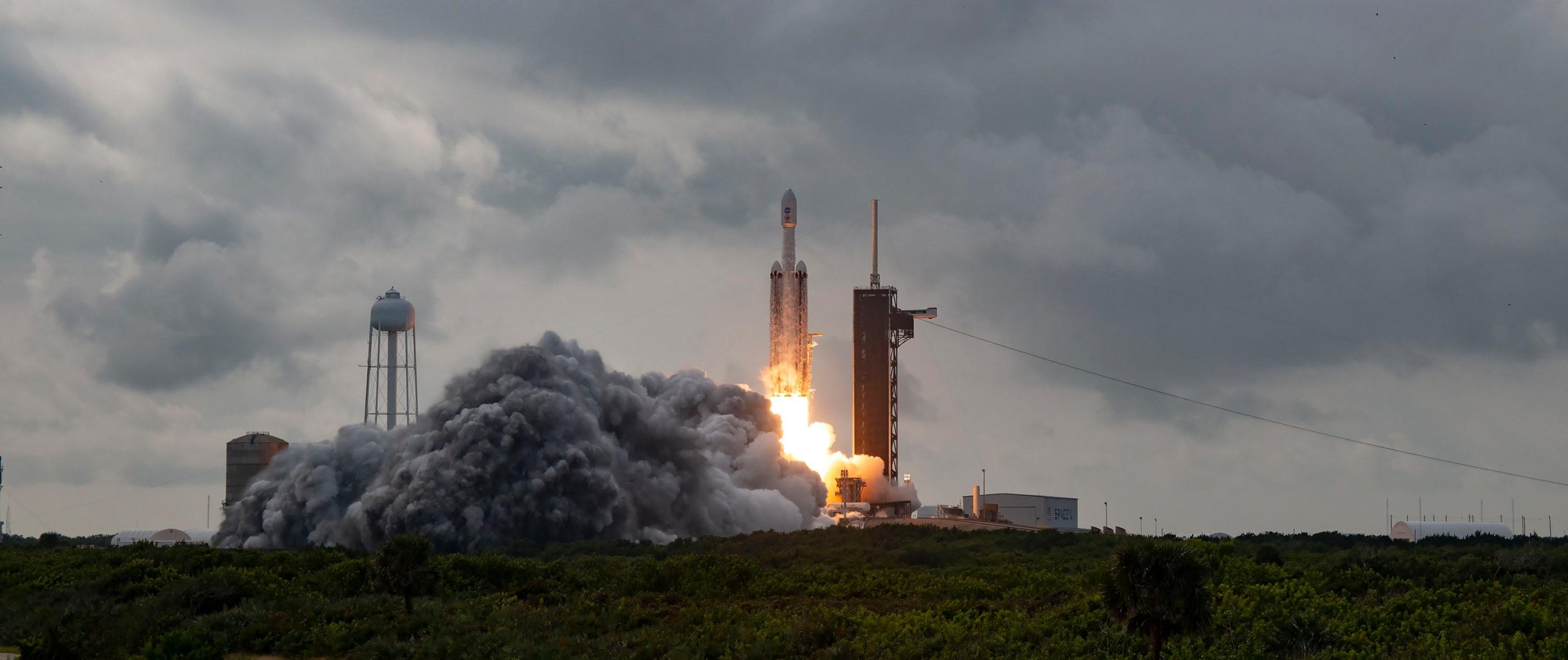
The mission will explore a metal-rich asteroid that may shed light on our own planet’s formation.
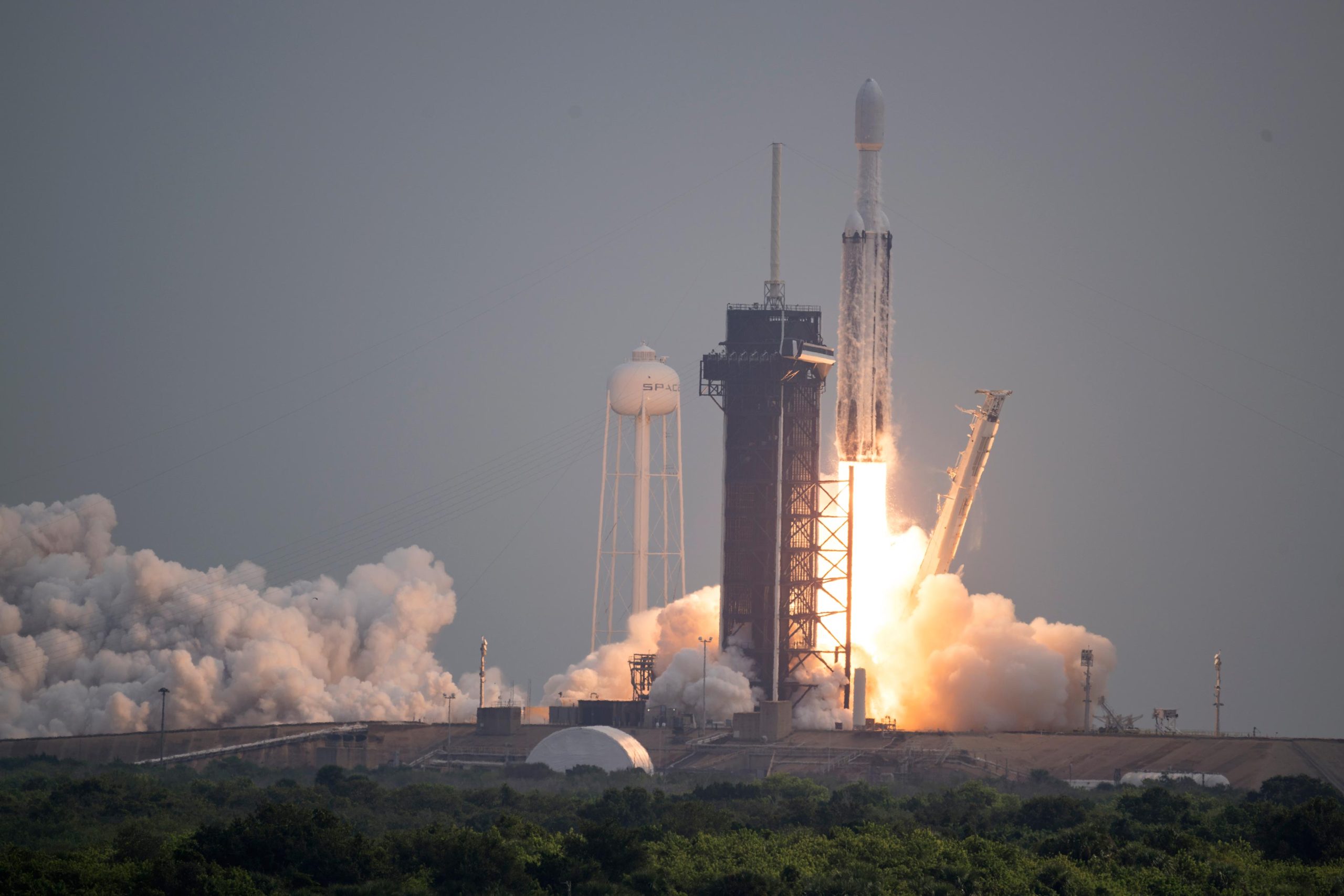
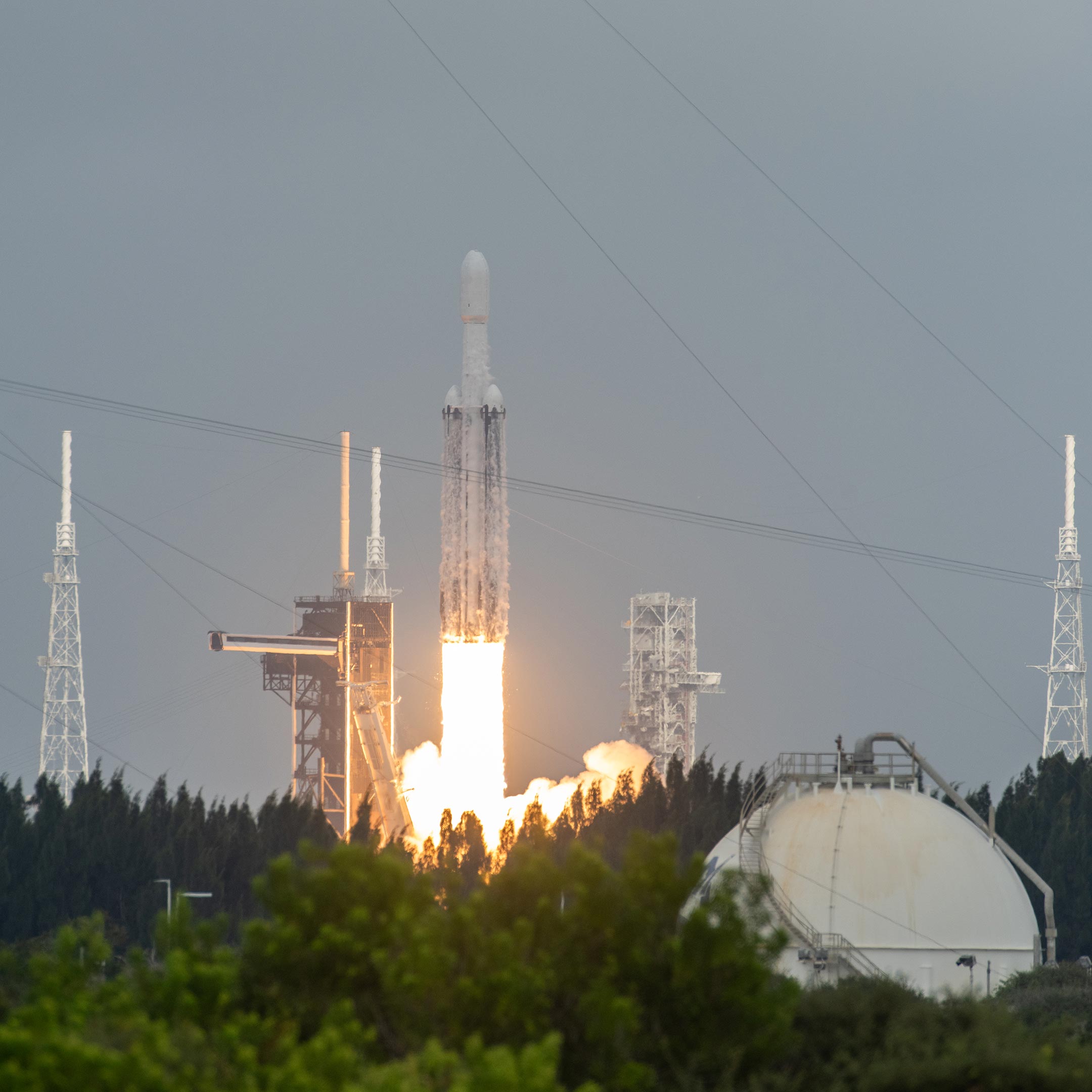
NASA’s Psyche spacecraft is on its voyage to an asteroid of the same name, a metal-rich world that could tell us more about the formation of rocky planets. Psyche successfully launched at 10:19 a.m. EDT on Friday, October 13, aboard a SpaceX Falcon Heavy rocket from Launch Pad 39A at NASA’s Kennedy Space Center in Florida.
Integrated onto the spacecraft is NASA’s Deep Space Optical Communications technology demonstration, a test of deep space laser communications that could support future exploration missions by providing more bandwidth to transmit data than traditional radio frequency communications.
“Congratulations to the Psyche team on a successful launch, the first journey to a metal-rich asteroid,” said NASA Administrator Bill Nelson. “The Psyche mission could provide humanity with new information about planet formation while testing technology that can be used on future NASA missions. As Asteroid Autumn continues, so does NASA’s commitment to exploring the unknown and inspiring the world through discovery.”
Highlights from the October 13, 2023, launch of NASA’s Psyche spacecraft, which will travel 2.2 billion miles to a metal-rich asteroid in the main asteroid belt between Mars and Jupiter. Psyche lifted off from NASA’s Kennedy Space Center in Florida at 7:19 a.m PDT (10:19 a.m. EDT). Credit: NASA/JPL-Caltech
Launch Details
Less than five minutes after liftoff, once the rocket’s second stage climbed to a high-enough altitude, the fairings separated from the rocket and returned to Earth. About an hour after launch, the spacecraft separated from the rocket, and ground controllers waited to acquire a signal from the spacecraft.
Shortly after, the Psyche spacecraft commanded itself into a planned safe mode, in which it completes only minimal engineering activities while awaiting further commands from mission controllers on Earth. Psyche established two-way communication at 11:50 a.m. EDT with NASA’s Deep Space Network complex in Canberra, Australia. Initial telemetry reports show the spacecraft is in good health.
“I am excited to see the treasure trove of science Psyche will unlock as NASA’s first mission to a metal world,” said Nicola Fox, associate administrator for the Science Mission Directorate at NASA Headquarters in Washington. “By studying asteroid Psyche, we hope to better understand our universe and our place in it, especially regarding the mysterious and impossible-to-reach metal core of our own home planet, Earth.”
Mission Objectives
By August 2029, the spacecraft will begin to orbit the 173-mile-wide (279-kilometer-wide) asteroid – the only metal-class asteroid ever to be explored. Because of Psyche’s high iron-nickel metal content, scientists think it may be the partial core of a planetesimal, a building block of an early planet. The goal is a 26-month science investigation.
“We said ‘goodbye’ to our spacecraft, the center of so many work lives for so many years – thousands of people and a decade,” said Lindy Elkins-Tanton, Psyche principal investigator at Arizona State University in Tempe. “But it’s really not a finish line; it’s a starting line for the next marathon. Our spacecraft is off to meet our asteroid, and we’ll fill another gap in our knowledge – and color in another kind of world in our solar system.”
Propulsion and Communication
For its six-year, 2.2-billion-mile (3.6-billion-kilometer) trip to the main asteroid belt between Mars and Jupiter, Psyche relies on solar electric propulsion. The efficient propulsion system works by expelling charged atoms, or ions, of the neutral gas xenon to create a thrust that gently propels the spacecraft. Along the way, the spacecraft will use Mars’ gravity as a slingshot to speed it along on its journey.
“I’m so proud of the Psyche team, who overcame many challenges on their way to this exciting day,” said Laurie Leshin, the director of NASA’s Jet Propulsion Laboratory (JPL) in Southern California. “Now the real fun begins as we race toward asteroid Psyche to unlock the secrets of how planets form and evolve.”

Mission Timeline
The first 100 days of the mission are a commissioning phase, called the initial checkout period, to make sure all flight systems are healthy. Key to the checkout is ensuring that the electric thrusters are ready to begin continuously firing over long stretches of the trajectory.
Active checkout of the science instruments – the magnetometer, the gamma-ray and neutron spectrometer, and the multispectral imager – starts about six weeks from now. During this period, the imager will take its first images for calibration purposes, targeting standard stars and a star cluster at a variety of exposures, with several different filters. Then the Psyche team will activate an automatic feed of publicly viewable raw images online for the duration of the mission.
The first opportunity to power on the optical communications technology demonstration is expected in about three weeks, when Psyche would be roughly 4.7 million miles (7.5 million kilometers) from Earth. This will be the agency’s first test beyond the Moon of high-data-rate optical, or laser, communications. While the transceiver is hosted by Psyche, the tech demo will not relay Psyche mission data.
“Launching with Psyche is an ideal platform to demonstrate NASA’s optical communications goal to get high-bandwidth data into deep space,” said Dr. Prasun Desai, acting associate administrator, Space Technology Mission Directorate (STMD) at NASA Headquarters. “It’s exciting to know that, in a few short weeks, Deep Space Optical Communications will begin sending data back to Earth to test this critical capability for the future of space exploration. The insights we learn will help us advance these innovative new technologies and, ultimately, pursue bolder goals in space.”

Additional Mission Information
Arizona State University leads the Psyche mission. A division of Caltech in Pasadena, JPL is responsible for the mission’s overall management, system engineering, integration and test, and mission operations. Maxar Space in Palo Alto, California, provided the high-power solar electric propulsion spacecraft chassis.
JPL manages the Deep Space Optical Communications project for the Technology Demonstration Missions program within STMD and the Space Communications and Navigation Program within the Space Operations Mission Directorate.
NASA’s Launch Services Program, based at Kennedy Space Center, is responsible for the insight and approval of the launch vehicle and manages the launch service for the Psyche mission. NASA certified the SpaceX Falcon Heavy rocket for use with the agency’s most complex and highest priority missions in early 2023 at the conclusion of a 2.5-year effort.
Psyche is the 14th mission selected as part of NASA’s Discovery Program, managed by the agency’s Marshall Space Flight Center in Huntsville, Alabama.
Never miss a breakthrough: Join the SciTechDaily newsletter.
Follow us on Google and Google News.