
Close Menu
    Facebook X (Twitter) Instagram
    SciTechDaily
    • Biology
    • Chemistry
    • Earth
    • Health
    • Physics
    • Science
    • Space
    • Technology
    Facebook X (Twitter) Pinterest YouTube RSS
    SciTechDaily
    Home»Earth»NASA’s Atmospheric Infrared Sounder Monitors Tropical Storm Fay as It Deluges the East Coast
    Earth

    NASA’s Atmospheric Infrared Sounder Monitors Tropical Storm Fay as It Deluges the East Coast

    By Jet Propulsion LaboratoryJuly 11, 2020No Comments2 Mins Read
    Facebook Twitter Pinterest Telegram LinkedIn WhatsApp Email Reddit
    Share
    Facebook Twitter LinkedIn Pinterest Telegram Email Reddit
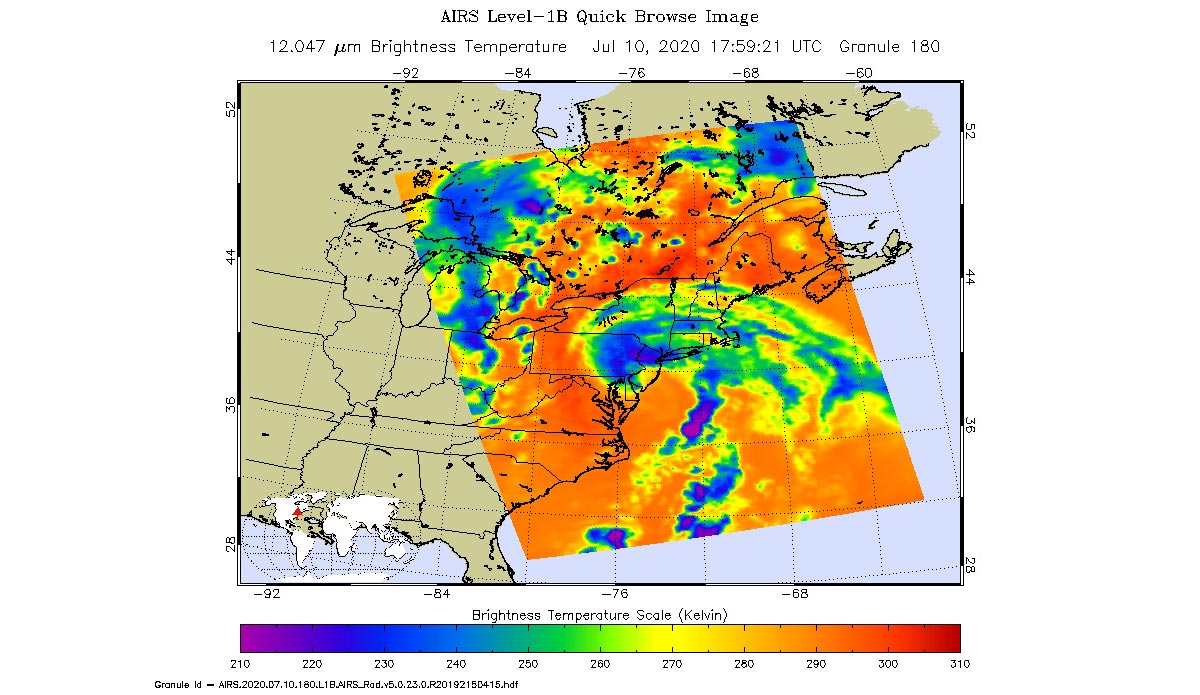
    AIRS Tropical Storm Fay
    NASA’s AIRS instrument captured this image of Tropical Storm Fay around 2 p.m. local time on July 10, 2020, as the storm swept through New England. Credit: NASA/JPL-Caltech

    From its vantage point aboard the Aqua satellite, the instrument maps how much moisture the storm’s clouds contain.

    Tropical Storm Fay is sweeping across New England, with the center of the storm making landfall about 10 miles (15 kilometers) north-northeast of Atlantic City, New Jersey, at around 5 p.m. local time. At that time, Fay had maximum sustained winds of around 50 mph (85 kph). Forecasters predicted the storm will dump up to 7 inches (18 centimeters) of rain along its path from Delaware into New Jersey.

    NASA’s Atmospheric Infrared Sounder (AIRS) collected this image at around 2 p.m. local time on Friday, July 10. The purple regions indicate very cold clouds lofted high into the atmosphere by the storm and generally linked to heavy rainfall. Warmer clouds closer to the ground show up as green and blue, while the orange areas denote mostly cloud-free parts of the sky.
    NASA Aqua Satellite
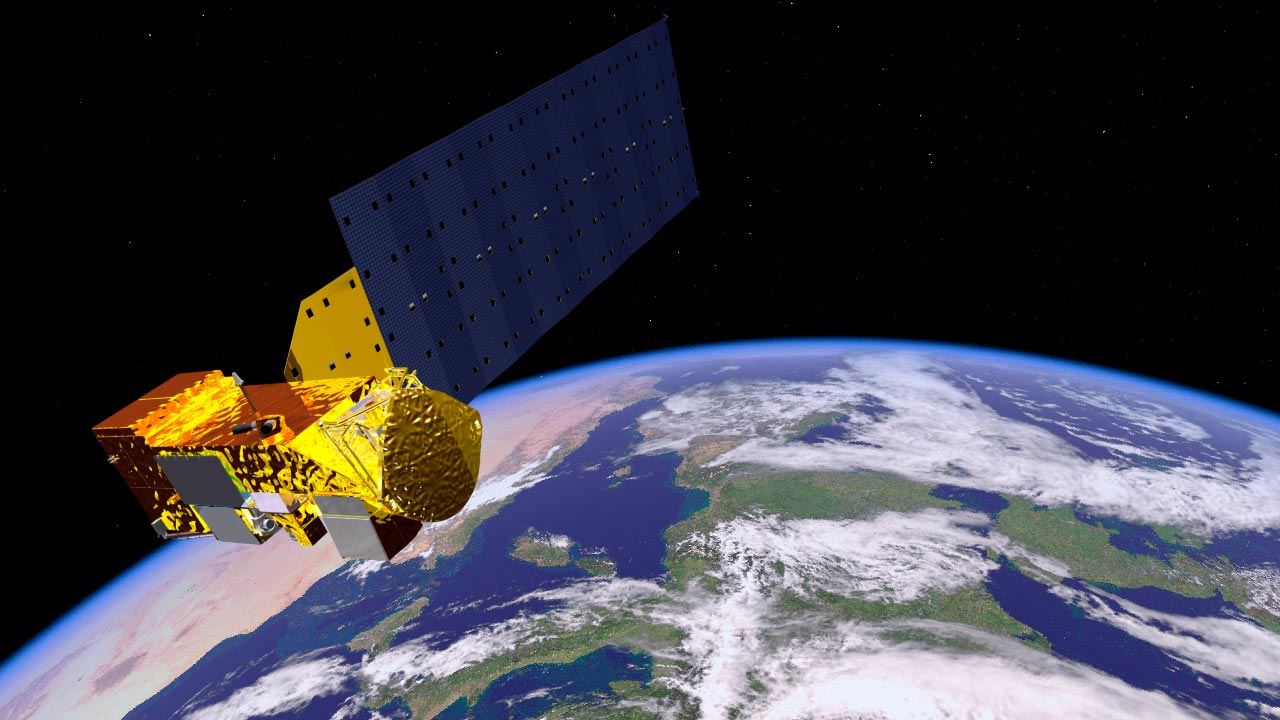
    Artist rendering of the Aqua satellite, part of NASA’s Earth Observing System. Credit: NASA/JPL AIRS Project

    AIRS, together with the Advanced Microwave Sounding Unit (AMSU), measures the infrared and microwave radiation emitted from Earth to study the planet’s weather and climate. Both instruments observe Earth from NASA’s Aqua satellite, which launched in 2002.

    AIRS and AMSU work in tandem to make simultaneous observations down to Earth’s surface, even in the presence of heavy clouds. With more than 2,000 channels sensing different regions of the atmosphere, the system creates a global, three-dimensional map of atmospheric temperature and humidity, cloud amounts and heights, greenhouse gas concentrations, and many other atmospheric phenomena. The AIRS and AMSU instruments are managed by NASA’s Jet Propulsion Laboratory in Southern California under contract with NASA. JPL is a division of Caltech.

    Never miss a breakthrough: Join the SciTechDaily newsletter.
    Follow us on Google and Google News.

    JPL NASA Weather
    Share. Facebook Twitter Pinterest LinkedIn Email Reddit

    Related Articles

    NASA’s Delta-X Mission Helps With Disaster Response in Wake of Hurricane Ida

    NASA Tracks Scorching Heat Wave Over US Southwest

    NASA’s Atmospheric Infrared Sounder Tracks Record-Breaking Heat Wave in Pacific Northwest

    Prior Weather Linked to Rapid Intensification of Hurricanes Near Landfall

    NASA Using Machine-Learning AI to Predict Hurricane Intensity

    California’s Intense Record-Breaking Heat Wave Monitored From NASA’s ECOSTRESS

    NASA’s Atmospheric Infrared Sounder Tracks Hurricane Douglas, Tropical Storm Hanna From Space

    NASA Satellites View Super Typhoon Haiyan

    NASA Satellite Image Shows La Niña Peaking in Intensity

    Leave A Reply Cancel Reply

    • Facebook
    • Twitter
    • Pinterest
    • YouTube

    Don't Miss a Discovery

    Subscribe for the Latest in Science & Tech!

    Trending News

    Scientists Call for a Complete Rethink of Alzheimer’s Treatment

    Scientists Identify Molecular Switch That Lets Exercise Reverse Muscle Aging

    Why Your Most Vivid Dreams Might Be the Key to Deep, Restful Sleep

    A Bright Star Hid a Massive Secret for 50 Years: Mystery of Gamma Cassiopeiae Finally Solved

    Scientists Identify Protein That Slows Key Effects of Aging

    Revolutionary Submarine Mysteriously Disappears Without a Trace – Scientists Are Now Preparing for a Bold Return

    Why Drinking More Water Isn’t Enough To Stop Kidney Stones

    New Study Reveals Surprising Effect of Drinking Coffee at Night

    Follow SciTechDaily
    • Facebook
    • Twitter
    • YouTube
    • Pinterest
    • Newsletter
    • RSS
    SciTech News
    • Biology News
    • Chemistry News
    • Earth News
    • Health News
    • Physics News
    • Science News
    • Space News
    • Technology News
    Recent Posts
    • 3.5-Billion-Year-Old Rocks Rewrite the Story of Plate Tectonics
    • “These Wrinkles Shouldn’t Exist” – A Geologist’s Hike Uncovers a 180-Million-Year-Old Mystery
    • Why Aging Lungs Turn Mild Infections Into Life-Threatening Illness
    • Lost Bronze Age Mines Unearthed in Spain Transform Bronze Age History
    • First New Dinosaur Species Found in Korea in 15 Years Surprises Scientists
    Copyright © 1998 - 2026 SciTechDaily. All Rights Reserved.
    • Science News
    • About
    • Contact
    • Editorial Board
    • Privacy Policy
    • Terms of Use

    Type above and press Enter to search. Press Esc to cancel.