
Close Menu
    Facebook X (Twitter) Instagram
    SciTechDaily
    • Biology
    • Chemistry
    • Earth
    • Health
    • Physics
    • Science
    • Space
    • Technology
    Facebook X (Twitter) Pinterest YouTube RSS
    SciTechDaily
    Home»Earth»NASA’s Atmospheric Infrared Sounder Captures Movement of Polar Vortex
    Earth

    NASA’s Atmospheric Infrared Sounder Captures Movement of Polar Vortex

    By Esprit Smith, Jet Propulsion LaboratoryFebruary 2, 2019No Comments2 Mins Read
    Facebook Twitter Pinterest Telegram LinkedIn WhatsApp Email Reddit
    Share
    Facebook Twitter LinkedIn Pinterest Telegram Email Reddit
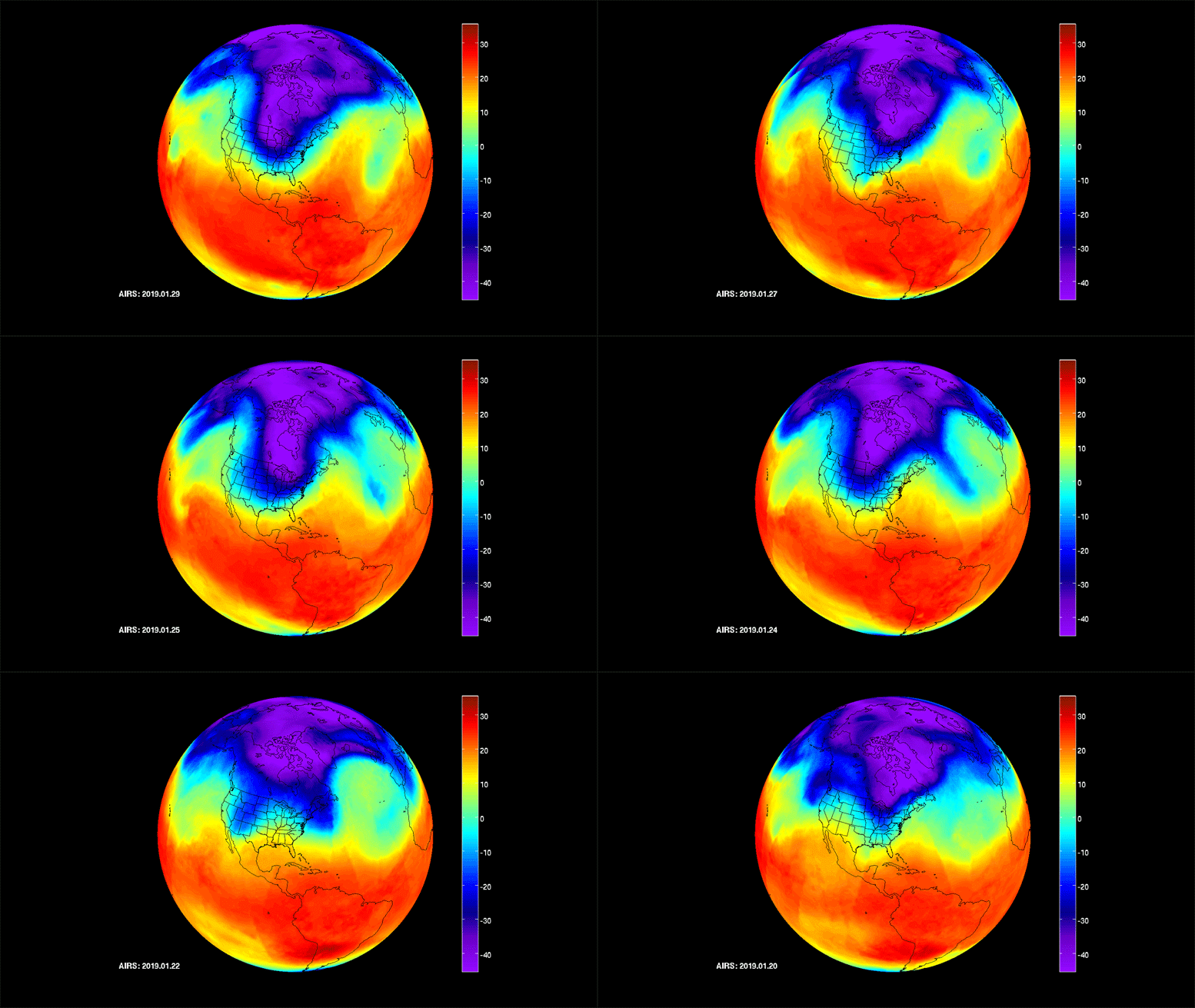
    Watch the Polar Vortex Moving in Over US
    NASA’s Atmospheric Infrared Sounder (AIRS) instrument captures a polar vortex moving from Central Canada into the U.S. Midwest from January 20 through January 29. Credit: NASA/JPL-Caltech AIRS Project

    The U.S. Midwest has been gripped by the lowest temperatures it has seen in years. An unusually cold Arctic air mass, called a polar vortex, is responsible for the severe temperatures, which in many areas have plunged well below 0 degrees Fahrenheit (-18 degrees Celsius).

    NASA’s Atmospheric Infrared Sounder (AIRS) instrument aboard the Aqua satellite captured the polar vortex as it moved southward from central Canada into the U.S. Midwest from Jan. 20 through Jan. 29. The lowest temperatures are shown in purple and blue and range from -40 degrees Fahrenheit (also -40 degrees Celsius) to -10 degrees Fahrenheit (-23 degrees Celsius). As the data series progresses, you can see how the coldest purple areas of the air mass scoop down into the U.S.

    The polar vortex is responsible for a number of deaths, disruptions to services, and energy outages in the affected areas.

    AIRS, in conjunction with the Advanced Microwave Sounding Unit (AMSU), senses emitted infrared and microwave radiation from Earth to provide a three-dimensional look at Earth’s weather and climate. Working in tandem, the two instruments make simultaneous observations down to Earth’s surface. With more than 2,000 channels sensing different regions of the atmosphere, the system creates a global, three-dimensional map of atmospheric temperature and humidity, cloud amounts and heights, greenhouse gas concentrations and many other atmospheric phenomena.

    Launched into Earth orbit in 2002, the AIRS and AMSU instruments are managed by NASA’s Jet Propulsion Laboratory in Pasadena, California, under contract to NASA. JPL is a division of the Caltech in Pasadena.

    Never miss a breakthrough: Join the SciTechDaily newsletter.
    Follow us on Google and Google News.

    Atmospheric Science Climate Science Earth Science Weather
    Share. Facebook Twitter Pinterest LinkedIn Email Reddit

    Related Articles

    Evidence That The Southern Amazon Rainforest Triggers Its Own Rainy Season

    NASA Shows Current Sierra Snowpack Bigger Than Last Four Years Combined

    New Research Examines the Intersection of Weather and Climate

    MIT Study Predicts Frequency of Heavy Precipitation with Global Warming

    AIM Spacecraft Observes Early Noctilucent Ice Clouds Over Antarctica

    2015 Antarctic Ozone Hole Larger Than Recent Years

    2015 El Niño Appears Likely to Equal the Event of 1997-98

    “Grey Swan” Cyclones Will Become More Frequent and Intense

    How Rain Droplets Attract Aerosols Out of the Atmosphere

    Leave A Reply Cancel Reply

    • Facebook
    • Twitter
    • Pinterest
    • YouTube

    Don't Miss a Discovery

    Subscribe for the Latest in Science & Tech!

    Trending News

    Millions Take These IBS Drugs, But a New Study Finds Serious Risks

    Scientists Unlock Hidden Secrets of 2,300-Year-Old Mummies Using Cutting-Edge CT Scanner

    Bread Might Be Making You Gain Weight Even Without Eating More Calories

    Scientists Discover Massive Magma Reservoir Beneath Tuscany

    Europe’s Most Active Volcano Just Got Stranger – Here’s Why Scientists Are Rethinking It

    Alzheimer’s Symptoms May Start Outside the Brain, Study Finds

    Millions Take This Popular Supplement – Scientists Discover a Concerning Link to Heart Failure

    The Universe Is Expanding Too Fast and Scientists Can’t Explain Why

    Follow SciTechDaily
    • Facebook
    • Twitter
    • YouTube
    • Pinterest
    • Newsletter
    • RSS
    SciTech News
    • Biology News
    • Chemistry News
    • Earth News
    • Health News
    • Physics News
    • Science News
    • Space News
    • Technology News
    Recent Posts
    • Simple Blood Test May Predict Alzheimer’s Years Before Brain Scans Show Signs
    • Scientists Say Adding This Unusual Seafood to Your Diet Could Reverse Signs of Aging
    • U.S. Waste Holds $5.7 Billion Worth of Crop Nutrients
    • Scientists Say a Hidden Structure May Exist Inside Earth’s Core
    • Doctors Surprised by the Power of a Simple Drug Against Colon Cancer
    Copyright © 1998 - 2026 SciTechDaily. All Rights Reserved.
    • Science News
    • About
    • Contact
    • Editorial Board
    • Privacy Policy
    • Terms of Use

    Type above and press Enter to search. Press Esc to cancel.