
Close Menu
    Facebook X (Twitter) Instagram
    SciTechDaily
    • Biology
    • Chemistry
    • Earth
    • Health
    • Physics
    • Science
    • Space
    • Technology
    Facebook X (Twitter) Pinterest YouTube RSS
    SciTechDaily
    Home»Space»Lunar Highways: How Lasers Can Transform Moon Dust Into Roads
    Space

    Lunar Highways: How Lasers Can Transform Moon Dust Into Roads

    By European Space Agency (ESA)October 22, 2023No Comments7 Mins Read
    Facebook Twitter Pinterest Telegram LinkedIn WhatsApp Email Reddit
    Share
    Facebook Twitter LinkedIn Pinterest Telegram Email Reddit
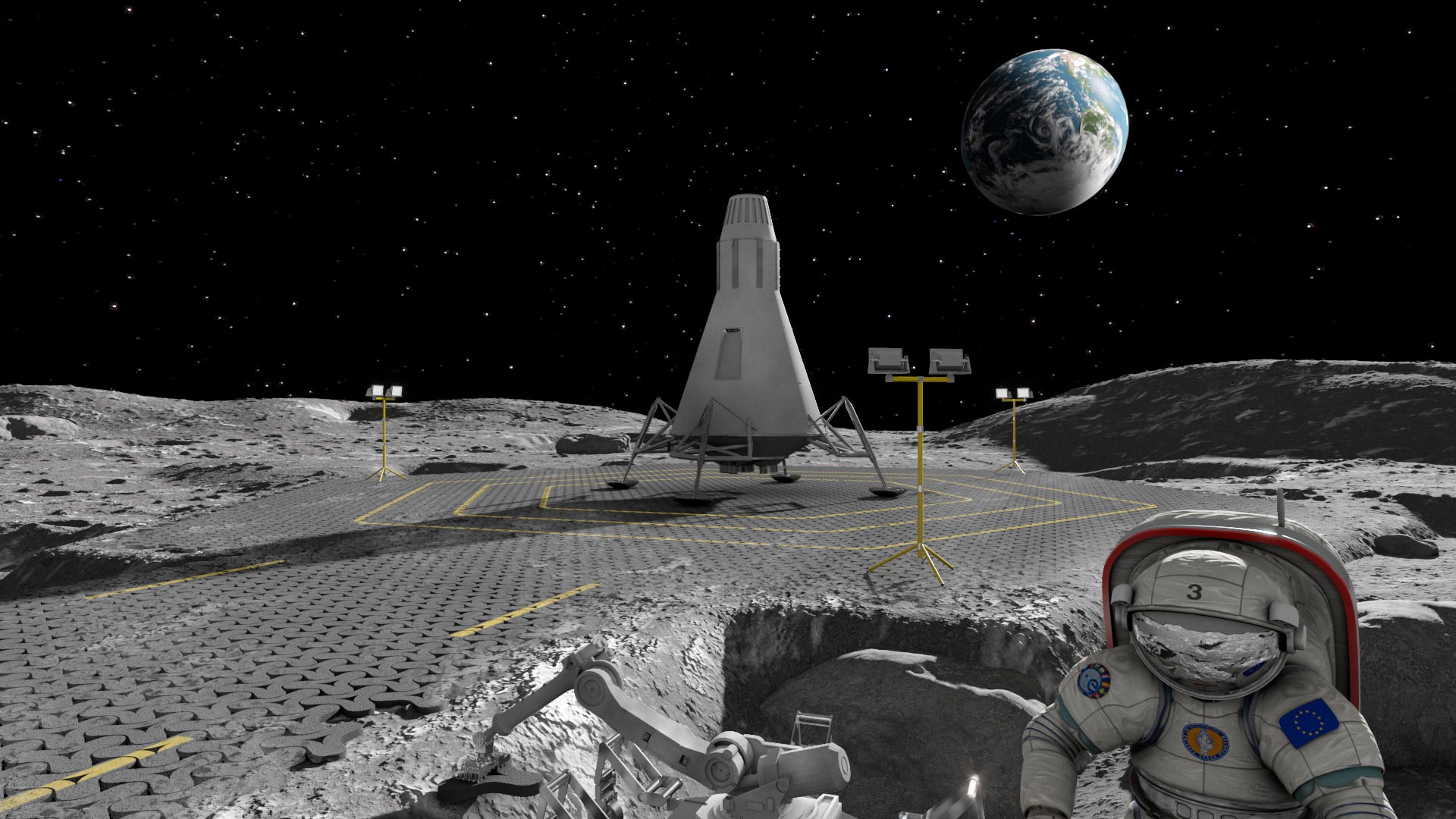
    Paved Surfaces Around Moon Base
    ESA’s PAVER project investigated the creation of paved surfaces on the Moon, such as roads and landing pads, through melting of lunar regolith. A carbon dioxide laser was used for terrestrial testing, but on the Moon a Fresnel lens would be employed to focus sunlight. Credit: PAVER consortium/LIQUIFER Systems Group

    The European Space Agency (ESA) has successfully used a laser to melt simulated moondust, paving the way for potential road construction on the Moon, a crucial step to manage lunar dust challenges in future missions.

    When astronauts return to the lunar surface they are probably going to be doing more driving than walking – but to keep billowing moondust at bay they are going to need roads. An ESA project reported on October 12 in the journal Scientific Reports tested the creation of roadworthy surfaces by melting simulated moondust with a powerful laser.
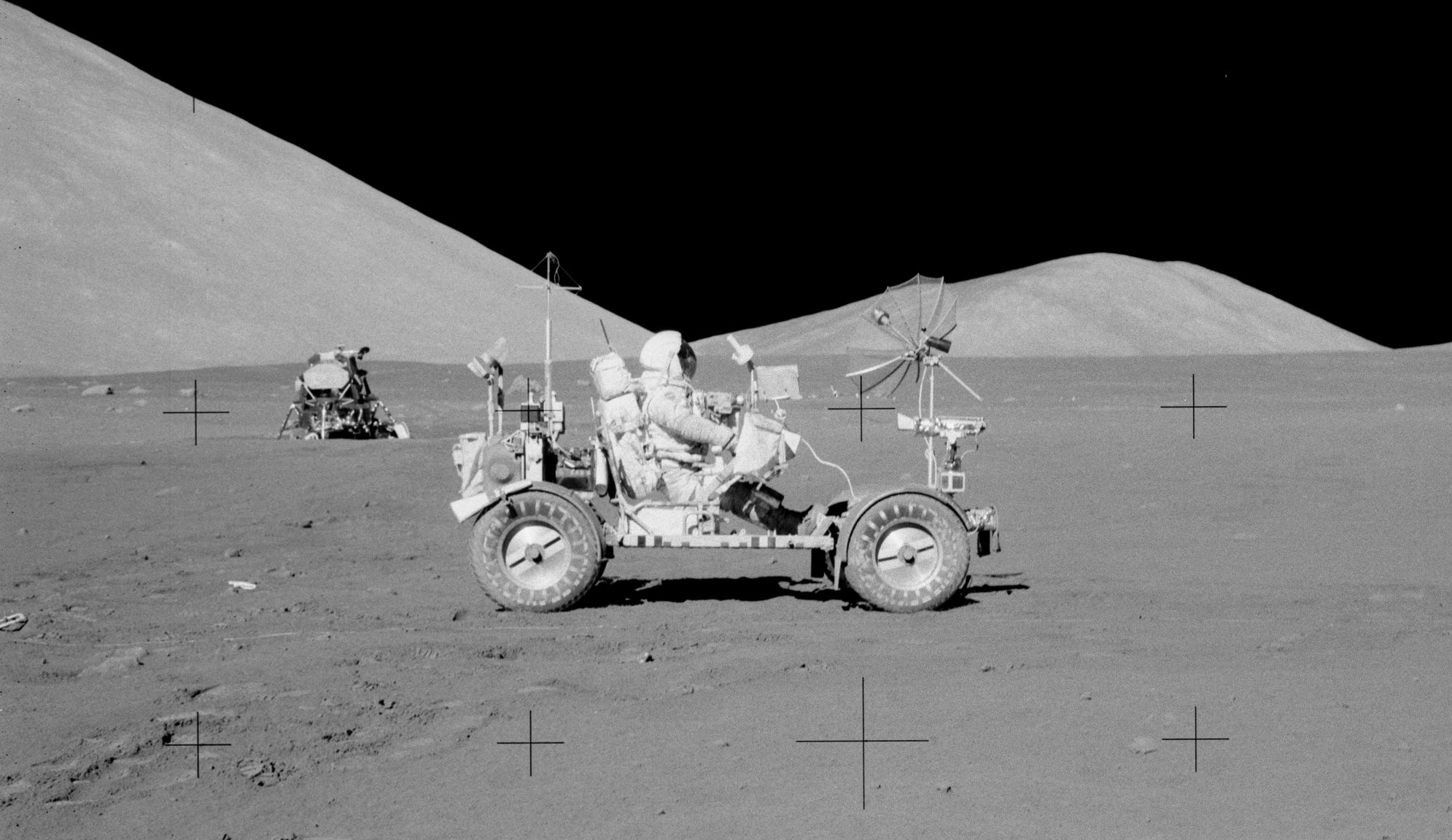
    Apollo 17 Lunar Rover
    Astronaut Gene Cernan driving the lunar rover, with the Apollo 17 Lunar Module in the background. Credit: NASA

    The Necessity of Lunar Roads

    With civilization comes roads, and that is going to be especially true on the Moon, just to keep the dust away. Lunar dust is ultra-fine, abrasive, and clingy. In the Apollo era dust clogged equipment and eroded spacesuits.
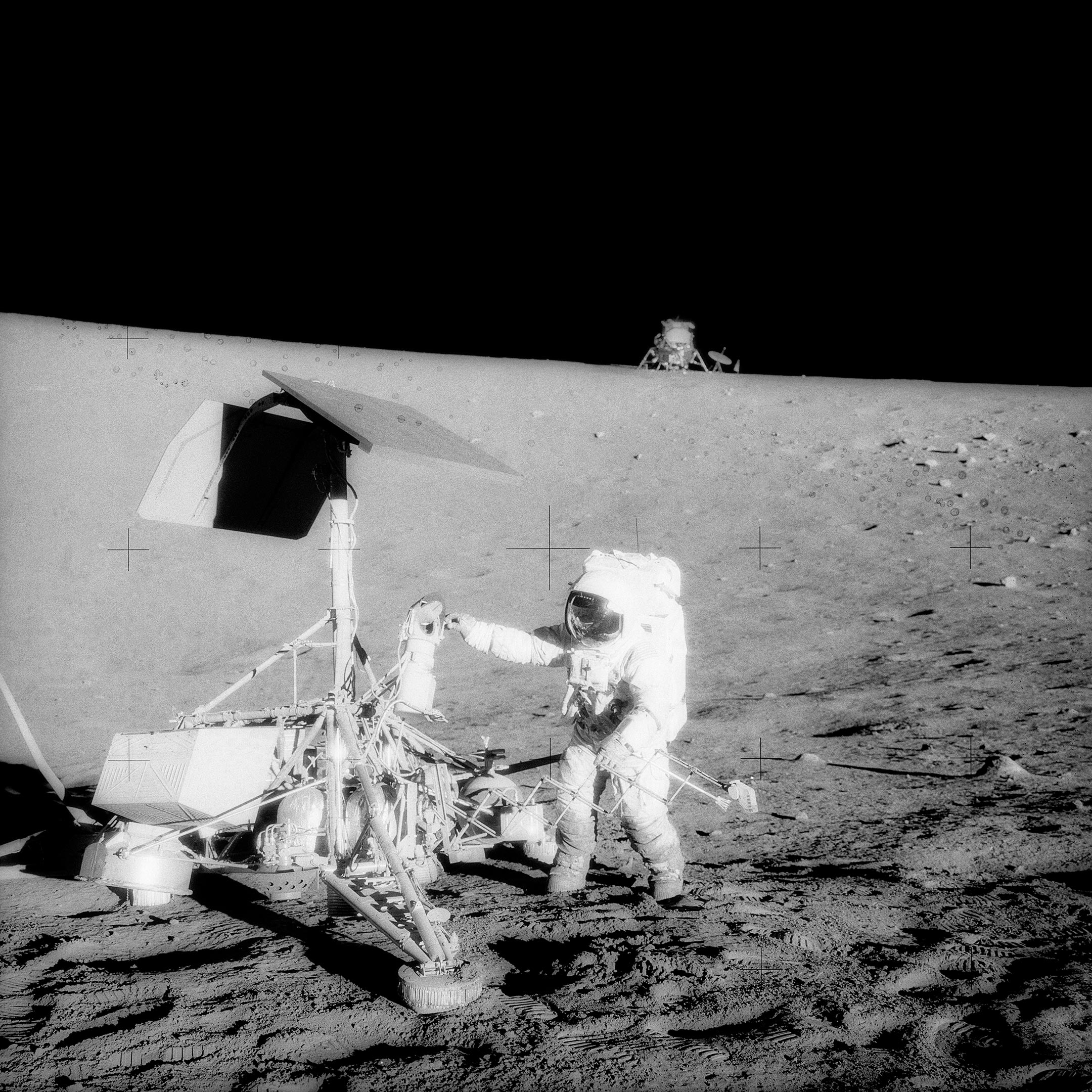
    Apollo 12 Astronaut on the Moon
    The Surveyor 3 spacecraft got a visit from Apollo 12 astronauts Charles Conrad Jr. and Alan L. Bean, who snapped this photo on November 20, 1969. Credit: NASA

    Notably, when the Apollo 17 lunar rover lost its rear fender, the vehicle became so coated in driven-up dust that it threatened to overheat, until astronauts improvised a fix using recycled lunar maps. The Soviet Union’s Lunokod 2 rover did indeed perish through overheating when its radiator got covered in dust.

    The Surveyor 3 lander was sandblasted with dust when the Apollo 12 Lunar Module landed around 180 m away. Current NASA modeling suggests that as lunar landers touch down, their thruster plumes could dislodge tonnes of dust, potentially adhering to lander surfaces as well as covering the entire vicinity of the landing.

    Paving the Lunar Surface

    The most practical response is to keep dust at bay by paving over areas of activity on the Moon, including roads and landing pads. The idea of melting sand to make roadways was first proposed for Earth, back in 1933.

    ESA’s PAVER — Paving the road for large area sintering of regolith – project investigated the feasibility of this same approach for lunar roadmaking, led by Germany’s BAM Institute of Materials Research and Testing with Aalen University in Germany, LIQUIFER Systems Group in Austria and Germany’s Clausthal University of Technology, with support from the Institute of Materials Physics in Space of the German Aerospace Center, DLR.
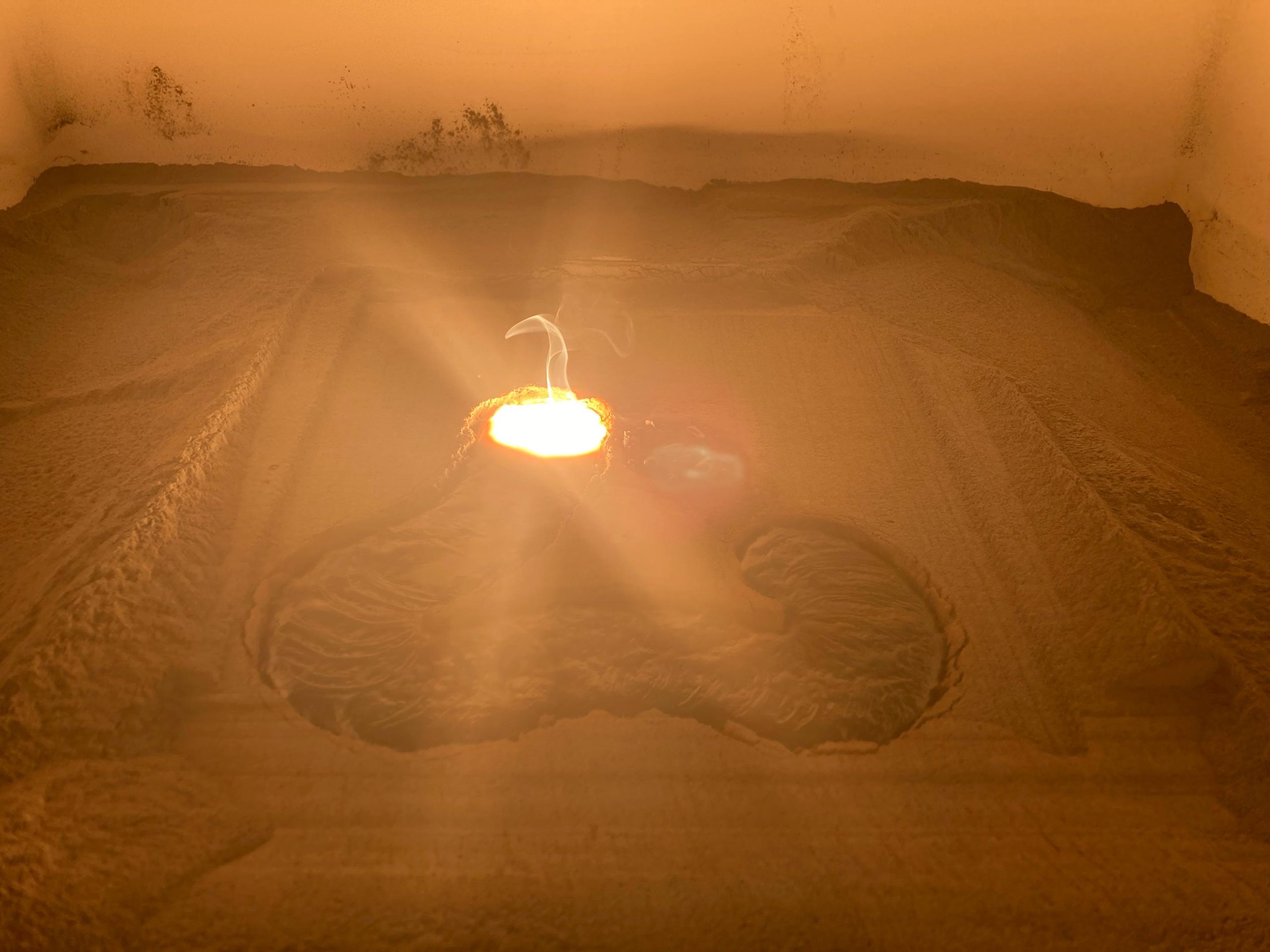
    Laser Melts Moondust
    The PAVER consortium made use of a 12-kilowatt carbon dioxide laser to melt simulated moondust into a glassy solid surface, as a way of constructing paved surfaces on the face of the Moon. At facilities installed at Clausthal University of Technology, the consortium achieved a spot size of 5-10 cm. Proceeding through trial and error, they devised a strategy using a 4.5 cm diameter laser beam to produce triangular, hollow-centred geometric shapes approximately 20 cm across. These could be interlocked to create solid surfaces across large areas of lunar soil which could serve as roads or landing pads. Credit: PAVER Consortium

    The PAVER consortium made use of a 12-kilowatt carbon dioxide laser to melt simulated moondust into a glassy solid surface, as a way of constructing paved surfaces on the face of the Moon.

    As ESA materials engineer Advenit Makaya explains, the project is in fact returning to the original 1933 concept: “In practice, we would not bring a carbon dioxide laser on the Moon. Instead, this current laser is serving as a light source for our experiments, to take the place of lunar sunlight which could be concentrated using a Fresnel lens a couple of meters across to produce equivalent melting on the surface of the Moon.
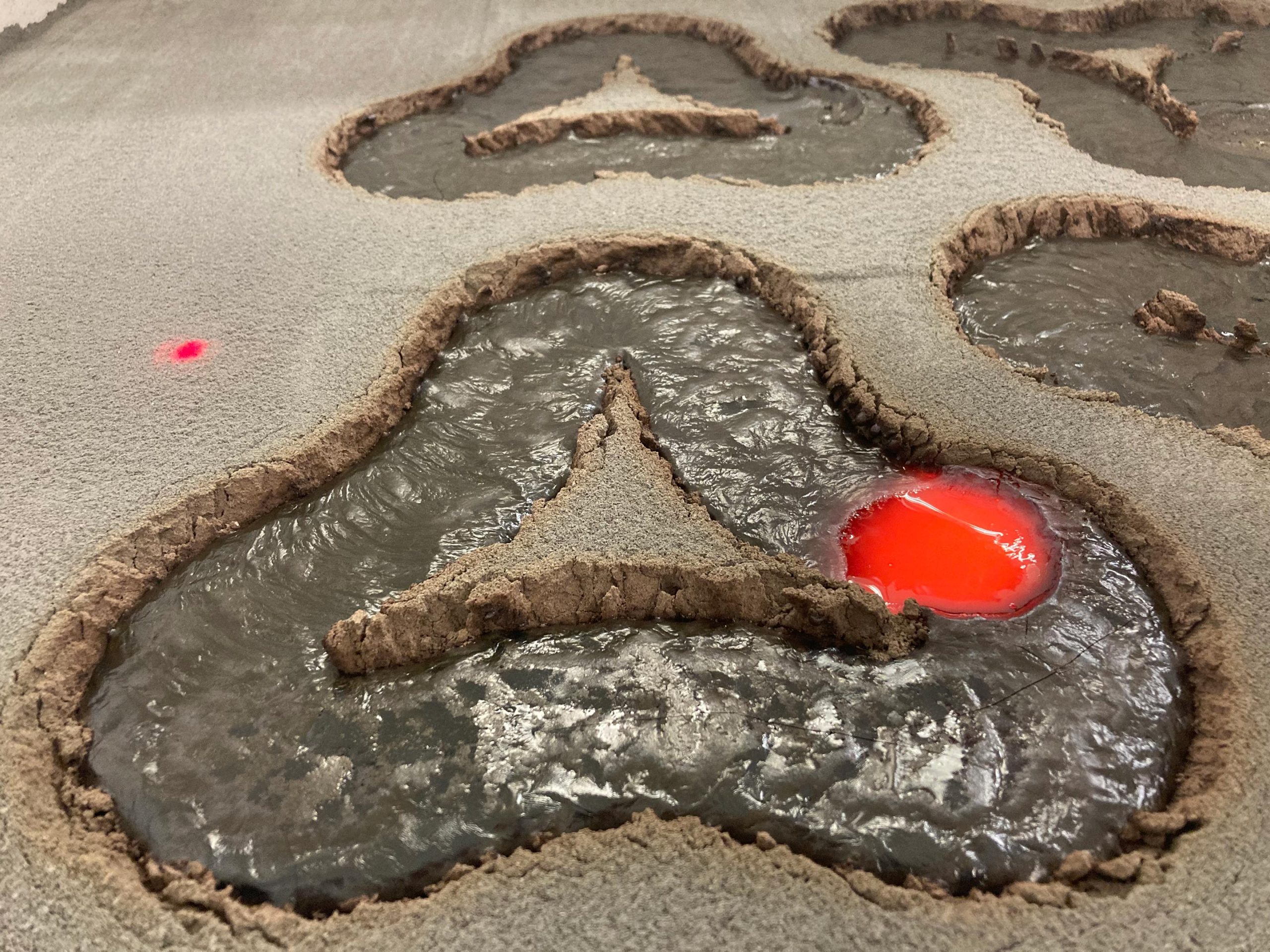
    Melting a Triangular Pattern in Regolith
    At facilities installed at Clausthal University of Technology, the PAVER Consortium achieved a melt spot size of 5-10 cm. Proceeding through trial and error, they devised a strategy using a 4.5 cm diameter laser beam to produce triangular, hollow-centred geometric shapes approximately 20 cm across. These could be interlocked to create solid surfaces across large areas of lunar soil which could serve as roads or landing pads. Credit: PAVER Consortium

    Methodology and Outcomes

    “During past in-situ resource utilization projects — including brick building using mirror-concentrated solar heat – we’ve been looking at surface melting limited to relatively small melt spots, from a few millimeters to a couple of centimeters in diameter. For building roads or landing pads a much wider focal point is required, to be able to scan a very wide area in a practical timescale.”

    At facilities installed at Clausthal University of Technology, the consortium achieved a spot size of 5-10 cm.
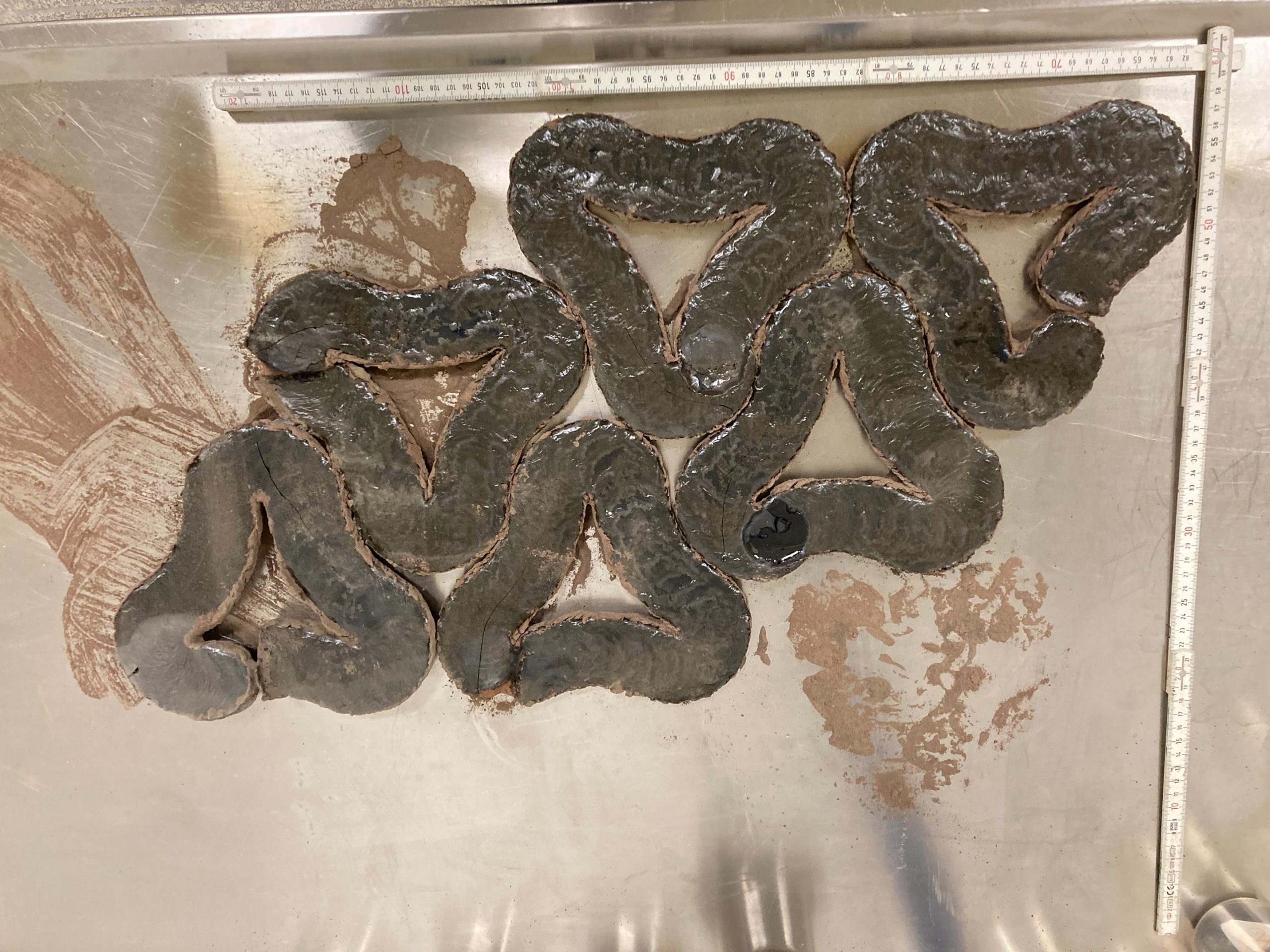
    Interlocking Shapes To Make Paved Surfaces
    At facilities installed at Clausthal University of Technology, the PAVER Consortium achieved a spot size of 5-10 cm for melting simulated moondust. Proceeding through trial and error, they devised a strategy using a 4.5 cm diameter laser beam to produce triangular, hollow-centred geometric shapes approximately 20 cm across. These could be interlocked to create solid surfaces across large areas of lunar soil which could serve as roads or landing pads. Credit: PAVER Consortium

    Proceeding through trial and error, they devised a strategy using a 4.5 cm diameter laser beam to produce triangular, hollow-centred geometric shapes approximately 20 cm across. These could be interlocked to create solid surfaces across large areas of lunar soil which could serve as roads or landing pads.

    Advenit adds: “It actually turned out to be easier to work with regolith with a larger spot size, because at millimeter scale heating produces molten balls that surface tension makes hard to aggregate together. The larger beam produces a stable layer of molten regolith that is easier to control.
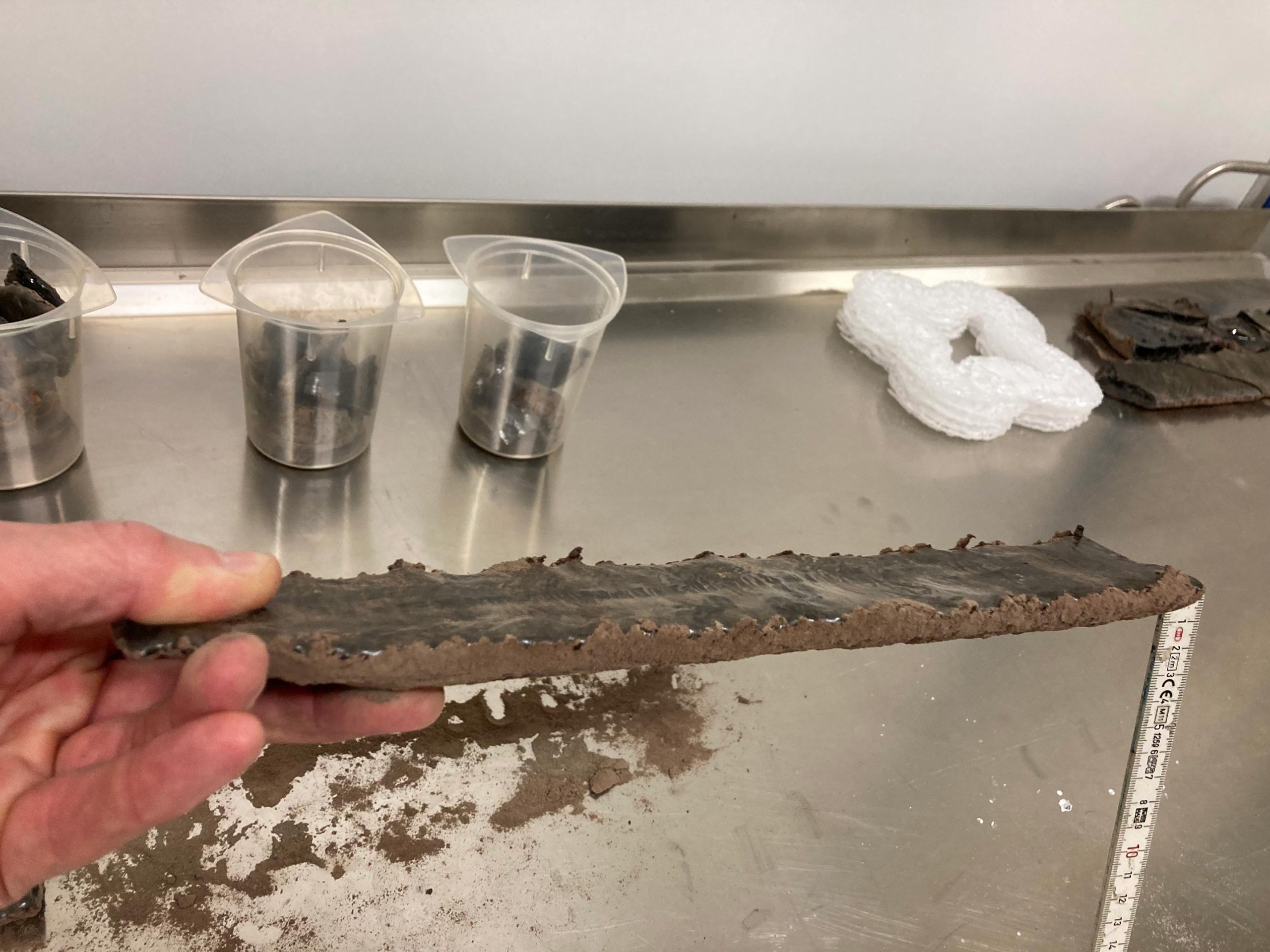
    PAVER Melt Layer
    A single melt layer is about 1.8 cm deep. Credit: PAVER Consortium

    “The resulting material is glasslike and brittle, but will mainly be subject to downward compression forces. Even if it breaks we can still go on using it, repairing it as necessary.”

    The team found that reheating a cooled track can cause it to crack, so they moved to geometries involving minimal crossovers. A single melt layer is about 1.8 cm deep; built structures and roads might be composed of several layers, depending on the load forces required.

    Jens Günster, heading the Multimaterial Manufacturing Processes Division at BAM, explains: “Such high depth of melting to produce massive structures can only be reached by large laser spots.”

    The team estimates a 100 sq. m landing pad with a thickness of 2 cm of dense material might be constructed in 115 days.
    ESA PAVER
    ESA’s PAVER — Paving the road for large area sintering of regolith – project investigated the feasibility of melting regolith for lunar roadmaking, led by Germany’s BAM Institute of Materials Research and Testing with Aalen University in Germany, LIQUIFER Systems Group in Austria and Germany’s Clausthal University of Technology, with support from the Institute of Materials Physics in Space of the German Aerospace Center, DLR. Credit: PAVER Consortium

    Origin and Future Prospects

    This project originated from a call for ideas run by the Discovery element of ESA’s Basic Activities through the Open Space Innovation Platform (OSIP).

    This sought out research ideas related to off-Earth manufacturing and construction.

    The call was answered no less than 69 times. Of those, a total of 23 ideas have been implemented – based on an evaluation by a panel of ESA experts, who scored the ideas on their novelty.

    “This initial call has been an effective investment from our point of view,” notes Advenit, “It has opened up multiple promising tracks for follow-up investigation.”

    Reference: “Laser melting manufacturing of large elements of lunar regolith simulant for paving on the Moon” by Juan-Carlos Ginés-Palomares, Miranda Fateri, Eckehard Kalhöfer, Tim Schubert, Lena Meyer, Nico Kolsch, Monika Brandić Lipińska, Robert Davenport, Barbara Imhof, René Waclavicek, Matthias Sperl, Advenit Makaya and Jens Günster, 12 October 2023, Scientific Reports.
    DOI: 10.1038/s41598-023-42008-1

    Never miss a breakthrough: Join the SciTechDaily newsletter.
    Follow us on Google and Google News.

    Astronaut European Space Agency Moon
    Share. Facebook Twitter Pinterest LinkedIn Email Reddit

    Related Articles

    Revolutionizing Agriculture: The Next Frontier of Farming on the Moon

    A Vision of the Future: Inflatable Moon Base

    Peek-a-Boo Moon: Astronaut on Space Station Captures Spectacular Photos of the Lunar Eclipse

    Life Beyond Earth: A Detailed Concept for a Moon Habitat

    Get Your Ticket to the Moon: Europe’s First Ever Lunar Lander

    Can Lunar Dust Jeopardise Human Health?

    Moon Village – How to Build a Permanent Base Station on the Moon

    New Mosiac of the Moon’s South Pole

    Weather Satellite Captures Image of “Blue” Moon

    Leave A Reply Cancel Reply

    • Facebook
    • Twitter
    • Pinterest
    • YouTube

    Don't Miss a Discovery

    Subscribe for the Latest in Science & Tech!

    Trending News

    First-of-Its-Kind Discovery: Homer’s Iliad Found Embedded in a 1,600-Year-Old Egyptian Mummy

    Beyond Inflammation: Scientists Uncover New Cause of Persistent Rheumatoid Arthritis

    A Simple Molecule Could Unlock Safer, Easier Weight Loss

    Scientists Just Built a Quantum Battery That Charges Almost Instantly

    Researchers Unveil Groundbreaking Sustainable Solution to Vitamin B12 Deficiency

    Millions of People Have Osteopenia Without Realizing It – Here’s What You Need To Know

    Researchers Discover Boosting a Single Protein Helps the Brain Fight Alzheimer’s

    World-First Study Reveals Human Hearts Can Regenerate After a Heart Attack

    Follow SciTechDaily
    • Facebook
    • Twitter
    • YouTube
    • Pinterest
    • Newsletter
    • RSS
    SciTech News
    • Biology News
    • Chemistry News
    • Earth News
    • Health News
    • Physics News
    • Science News
    • Space News
    • Technology News
    Recent Posts
    • Scientists Discover How Coffee Impacts Memory, Mood, and Gut Health
    • How Cells Copy DNA Might Matter More Than We Ever Realized
    • Scientists Just Solved the Mystery of the Twelve Apostles
    • Stone Age Mystery: DNA Reveals Ancient Population Wipeout in France
    • Why Did the Neanderthals Disappear? Scientists Reveal Humans Had a Hidden Advantage
    Copyright © 1998 - 2026 SciTechDaily. All Rights Reserved.
    • Science News
    • About
    • Contact
    • Editorial Board
    • Privacy Policy
    • Terms of Use

    Type above and press Enter to search. Press Esc to cancel.