
Close Menu
    Facebook X (Twitter) Instagram
    SciTechDaily
    • Biology
    • Chemistry
    • Earth
    • Health
    • Physics
    • Science
    • Space
    • Technology
    Facebook X (Twitter) Pinterest YouTube RSS
    SciTechDaily
    Home»Chemistry»New Synthetic Molecules (SyAMs) Mimic Antibodies
    Chemistry

    New Synthetic Molecules (SyAMs) Mimic Antibodies

    By Jim Shelton, Yale UniversityDecember 17, 2014No Comments2 Mins Read
    Facebook Twitter Pinterest Telegram LinkedIn WhatsApp Email Reddit
    Share
    Facebook Twitter LinkedIn Pinterest Telegram Email Reddit
    Synthetic Molecules Mimic Antibodies
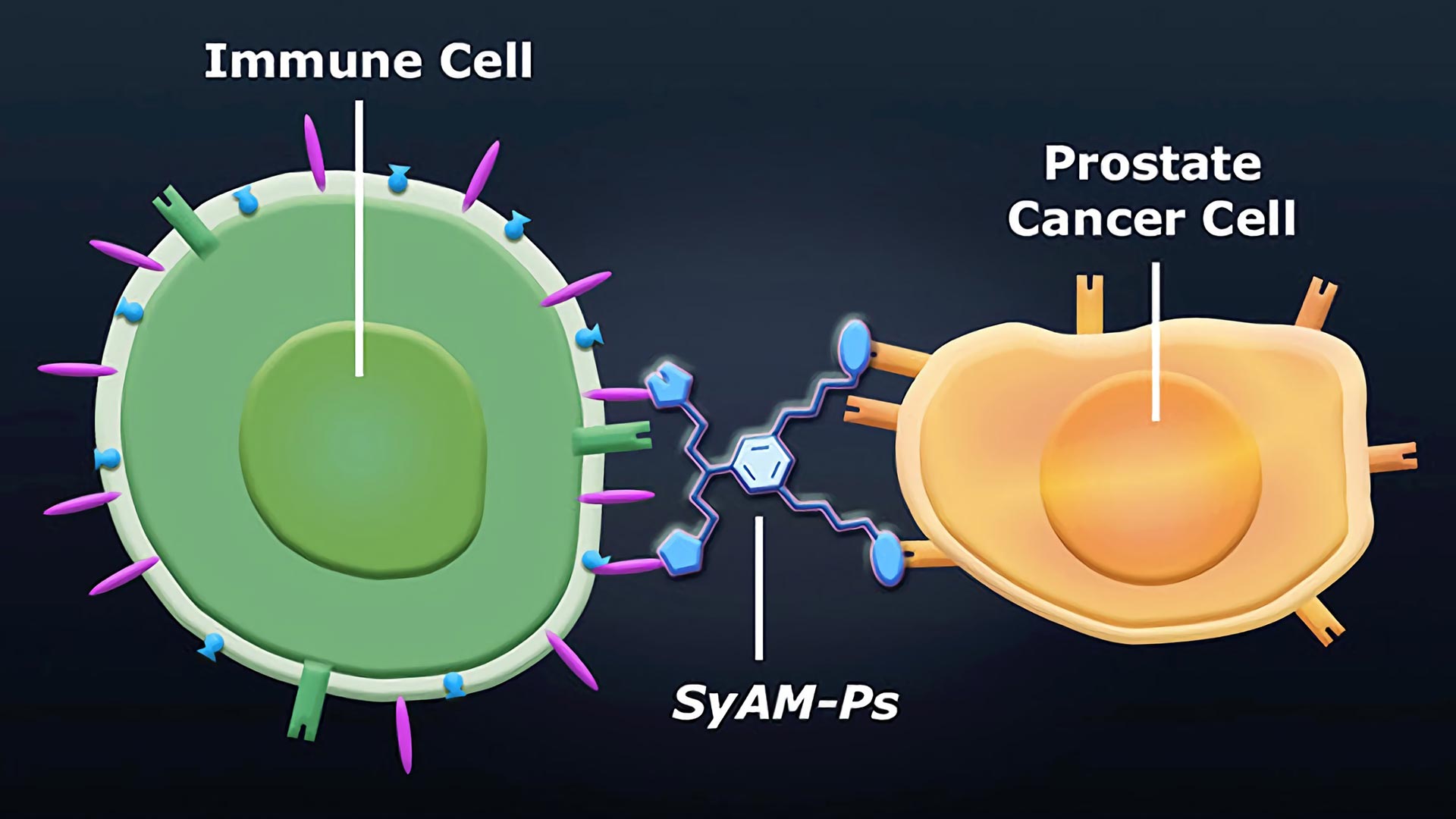
    Yale University researchers developed synthetic antibody mimics (SyAMs), the first molecules with both targeting and response functions of antibodies. These molecules attach to disease cells and immune cells, leading to a precise immune response akin to natural human antibodies. Credit: Yale University

    Researchers from Yale University have created the first synthetic molecules that have both the targeting and response functions of antibodies.

    The new molecules — synthetic antibody mimics (SyAMs) — attach themselves simultaneously to disease cells and disease-fighting cells. The result is a highly targeted immune response, similar to the action of natural human antibodies.

    “Unlike antibodies, however, our molecules are synthetic organic compounds that are approximately one-twentieth the size of antibodies,” said David A. Spiegel, a professor of chemistry at Yale whose lab developed the molecules. “They are unlikely to cause unwanted immune reactions due to their structure, are thermally stable, and have the potential to be administered orally, just like traditional, small-molecule drugs.”

    Spiegel and his team describe the research in a paper published online on December 16 by the Journal of the American Chemical Society.
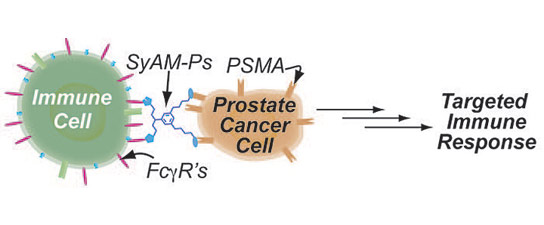
    New Class of Synthetic Molecules Mimics Antibodies
    Credit: Yale University

    The paper looks specifically at SyAM molecules used to attack prostate cancer. Called SyAM-Ps, they work first by recognizing cancer cells and binding with a specific protein on their surface. Next, they also bind with a receptor on an immune cell. This induces a targeted response that leads to the destruction of the cancer cell.

    Spiegel said the process of synthesizing and optimizing the structure of the molecules required considerable time and effort. “We now know that synthetic molecules of intermediate size possess perhaps the most important functional properties of antibodies — targeting and stimulation of immune cells,” he said.

    “It’s also noteworthy that molecules of such a small size can bring together two objects as enormous as cells, and trigger a specific functional response, entirely as a result of specific receptor interactions,” Spiegel added.

    Beyond their potential for treating prostate cancer, SyAMs may have applications for treating other forms of cancer, HIV, and various bacterial diseases.

    Reference: “Chemically Synthesized Molecules with the Targeting and Effector Functions of Antibodies” by Patrick J. McEnaney, Kelly J. Fitzgerald, Andrew X. Zhang, Eugene F. Douglass, Jr., Weifang Shan, Aaron Balog, Mariya D. Kolesnikova and David A. Spiegel, 16 December 2014, Journal of the American Chemical Society.
    DOI: 10.1021/ja509513c

    Never miss a breakthrough: Join the SciTechDaily newsletter.
    Follow us on Google and Google News.

    Antibodies Biotechnology Yale University
    Share. Facebook Twitter Pinterest LinkedIn Email Reddit

    Related Articles

    Modern Treasure Hunt: Baker’s Yeast Used To Extract Rare Earth Elements From Hot Springs and Seawater

    Cheating Death: Yale Scientists Restore Cell, Organ Function in Pigs After Death

    Surprising Bacterial Nanowire Discovery May Lead to Living and Self-Repairing Electrical Circuits

    World-First Antibody-Drug Delivery System Developed Using Supercharged Man-Made Crystals

    New Generation of Synthetic Solar Fuel Catalysts: A Superstar Enzyme Is Ready for Its Close-Up

    MIT’s New Carbon Nanotube-Based Sensor Can Detect COVID-19 or Other Emerging Pathogens

    New DNA Technology Based on CRISPR Could Revolutionize Medical Diagnostics

    Microbes in Cow Stomachs Can Break Down Plastic – Sustainable Way to Reduce Plastic Litter

    Biochemists Discover A New Target For Patients With Diabetes

    Leave A Reply Cancel Reply

    • Facebook
    • Twitter
    • Pinterest
    • YouTube

    Don't Miss a Discovery

    Subscribe for the Latest in Science & Tech!

    Trending News

    JWST Finds a “Star” 100 Billion Times Brighter Than Any Star Should Be

    Scientists Find a Hidden Biological Link Across Different Forms of Autism

    Astronomers Discover a Ghostly River of Stars That Could Reveal Dark Matter

    Why Is Colorectal Cancer Rising in People Under 50? New Clues Point to the Environment

    Quantum Fluctuations Break a Crystal’s Symmetry Rules

    Why Does an Irregular Heartbeat Strike 40 Years Early in Some People?

    Scientists Reveal How ADHD Could Fuel Creative Thinking

    Scientists Find Just 3 Minutes of Sprinting Can Transform Blood Chemistry

    Follow SciTechDaily
    • Facebook
    • Twitter
    • YouTube
    • Pinterest
    • Newsletter
    • RSS
    SciTech News
    • Biology News
    • Chemistry News
    • Earth News
    • Health News
    • Physics News
    • Science News
    • Space News
    • Technology News
    Recent Posts
    • Common Vape Flavor May Disrupt Early Human Development
    • Ultra-Processed Foods Linked to 30% Higher Prostate Cancer Risk
    • More Screen Time, Better Thinking? An 8-Year Study Finds a Surprising Link
    • A Vast Clean Energy Source May Be Hiding Beneath Australia’s Red Soil
    • Scientists Uncover Signs of an Ancient Climate “Tipping Point”
    Copyright © 1998 - 2026 SciTechDaily. All Rights Reserved.
    • Science News
    • About
    • Contact
    • Editorial Board
    • Privacy Policy
    • Terms of Use

    Type above and press Enter to search. Press Esc to cancel.