
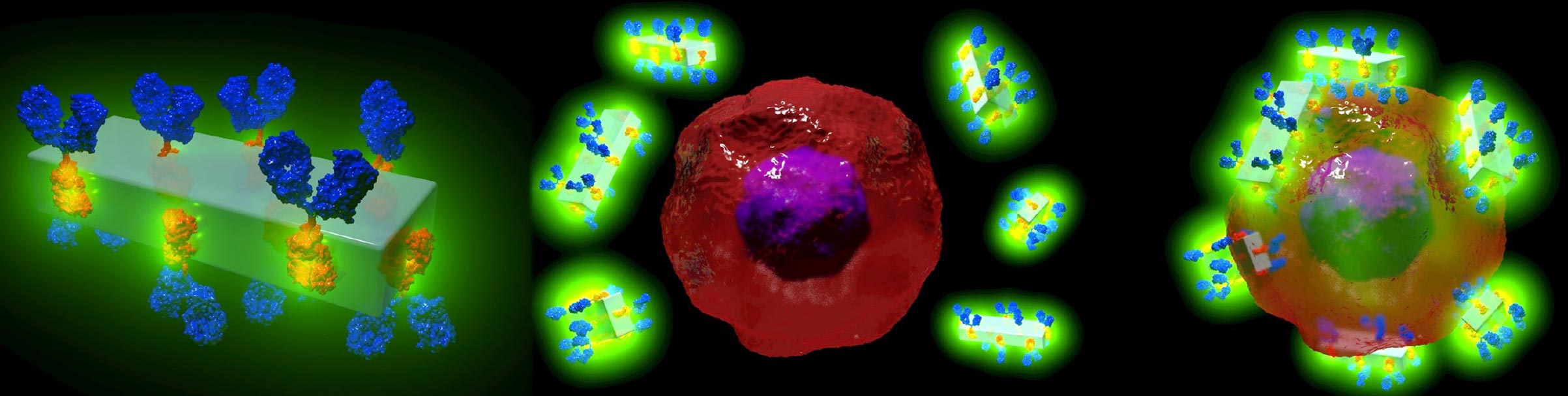
Researchers from the Australian Centre for Blood Diseases and TU Graz have developed a novel metal-organic framework (MOFs) antibody-drug delivery system that could revolutionize treatments for cancer, cardiovascular, and autoimmune diseases.
The MOF antibody crystals deliver drugs directly to target cancer cells, minimizing side effects and enhancing precision. This method, still requiring further funding for clinical application, promises to make treatments more effective and personalized.
Breakthrough in Drug Delivery Technology
It sounds like the stuff of science fiction: a man-made crystal that can be attached to antibodies and then supercharge them with potent drugs or imaging agents that can seek out diseased cells with the highest precision, resulting in fewer adverse effects for the patient.
However, that is precisely what researchers from the Australian Centre for Blood Diseases at Monash University in collaboration with the TU Graz (Austria) have developed: the world’s first metal-organic framework (MOFs) antibody-drug delivery system that has the potential to fast-track potent new therapies for cancer, cardiovascular and autoimmune diseases.
The in vitro study showed that when MOF antibody crystals bind to their target cancer cells and if exposed to the low pH in the cells, they break down, delivering the drugs directly and solely to the desired area.
The metal-organic framework, a mixture of metal (zinc) and carbonate ions, and a small organic molecule (an imidazole, a colorless solid compound that is soluble in water) not only keeps the payload attached to the antibody but can also acts as a reservoir of personalized therapeutics. This is a benefit with the potential to become a new medical tool to target specific diseases with customized drugs and optimized doses.
The findings are now published in the world-leading journal Advanced Materials.
Co-senior author Professor Christoph Hagemeyer, Head of the NanoBiotechnology Laboratory at the Australian Centre for Blood Diseases, Monash University, says while more funding is needed to take the research into the next phase and to patients, the new method is cheaper, faster, and more versatile than anything available currently.
Advancing Cancer Treatment with Precision
“The method offers the opportunity to personalize treatment and given the precision possible, may eventually change the current dosage needed for patients, resulting in fewer side effects and making treatments cheaper,” said Professor Hagemeyer.
Co-first author Dr. Karen Alt, Head of the Nano Theranostics Laboratory at the Australian Centre for Blood Diseases, Monash University, says: “With just 0.01 percent of chemotherapy currently reaching the cancer tissue, this revolutionary new method can boost the potency of the drugs reaching their target.”
“With over 80 different monoclonal antibodies approved for clinical use, this approach has enormous potential to improve these antibodies for the targeted delivery of diagnostic agents and therapeutic drugs. The goal is that ultimately the clinical translation of this technology will improve the quality of life for patients suffering from serious diseases,” said Dr. Alt.
Reference: “Self-Assembly of Oriented Antibody-Decorated Metal–Organic Framework Nanocrystals for Active-Targeting Applications” by Karen Alt, Francesco Carraro, Edwina Jap, Mercedes Linares-Moreau, Raffaele Riccò, Marcello Righetto, Marco Bogar, Heinz Amenitsch, Rania A. Hashad, Christian Doonan, Christoph E. Hagemeyer and Paolo Falcaro, 6 December 2021, Advanced Materials.
DOI: 10.1002/adma.202106607
Never miss a breakthrough: Join the SciTechDaily newsletter.
Follow us on Google and Google News.
3 Comments
… could those viruses have some resonant frequency, then one doesn’t need any drugs or crystals… ah, yeah the people who get money from pharma would not be happy about it, wouldn’t they …
The potential,for this technology, is unlimited.
A huge challenge, to regulation, for the future.
I wish these scientists would get on finding a cure for multiple sclerosis as it affects MILLIONS around the world as patients and millions MORE people who care about those patients !! It would be AWESOME to see this technology at least come up w/the answer WHY people get MS, how to treat it and how to CURE it. I’ve had Ms for 22 years now it’s hell !!😢 PLEASE🙏 scientist HELP cure this disease ASAP !!