
Close Menu
    Facebook X (Twitter) Instagram
    SciTechDaily
    • Biology
    • Chemistry
    • Earth
    • Health
    • Physics
    • Science
    • Space
    • Technology
    Facebook X (Twitter) Pinterest YouTube RSS
    SciTechDaily
    Home»Biology»Scientists Capture Extremely Rare Half-Female, Half-Male Bird on Film
    Biology

    Scientists Capture Extremely Rare Half-Female, Half-Male Bird on Film

    By University of OtagoJanuary 12, 2024No Comments2 Mins Read
    Facebook Twitter Pinterest Telegram LinkedIn WhatsApp Email Reddit
    Share
    Facebook Twitter LinkedIn Pinterest Telegram Email Reddit
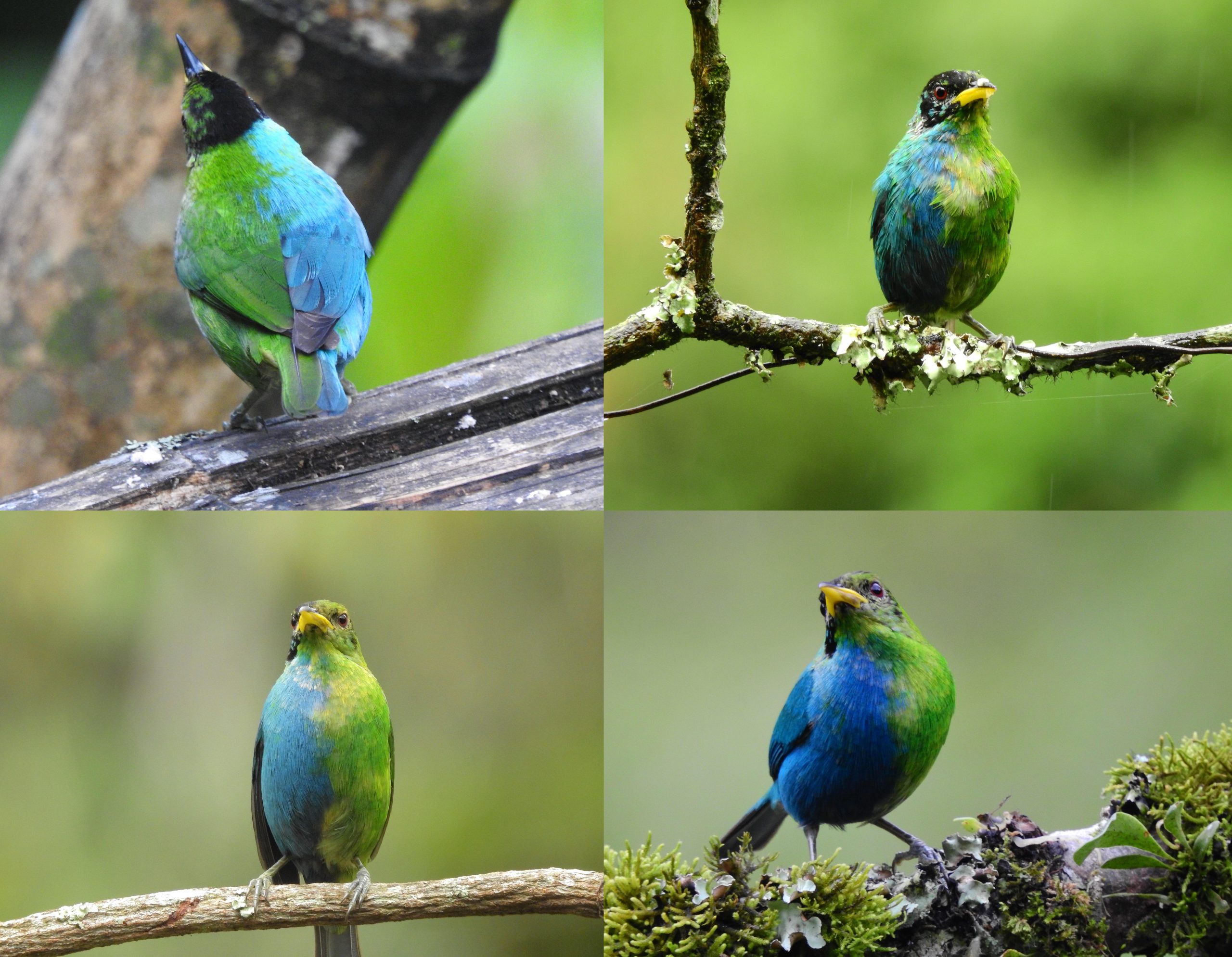
    Bilaterally Gynandromorphic Green Honeycreeper
    Scientists observed a rare half-male, half-female Green Honeycreeper in Colombia, offering significant insights into avian biology and sex differentiation. Photos of a bilaterally gynandromorphic Green Honeycreeper near Manizales, Colombia, 20 May 2022. Credit: John Murillo

    A striking and extremely rare half-female, half-male bird has been spotted by a University of Otago zoologist.

    Sesquicentennial Distinguished Professor Hamish Spencer was holidaying in Colombia when an amateur ornithologist John Murillo pointed out a wild Green Honeycreeper with distinct half-green, or female, and half-blue, male, plumage.

    A Once-in-a-Lifetime Sighting

    “Many birdwatchers could go their whole lives and not see a bilateral gynandromorph in any species of bird. The phenomenon is extremely rare in birds, I know of no examples from New Zealand ever.

    “It is very striking, I was very privileged to see it,” Professor Spencer says.

    Photographs of the bird make the discovery even more significant as they are “arguably the best of a wild bilateral gynandromorphic bird of any species ever.”

    Gynandromorphism: A Window into Avian Biology

    A report on the find, only the second recorded example of gynandromorphism in the species in more than 100 years, has just been published in the Journal of Field Ornithology.

    Professor Spencer says gynandromorphs – animals with both male and female characteristics in a species that usually have separate sexes – are important for our understanding of sex determination and sexual behavior in birds.

    The main groups in which the phenomenon has been recorded include animal species which feature strong sexual dimorphism; most often insects, especially butterflies, crustaceans, spiders, even lizards, and rodents.

    “This particular example of bilateral gynandromorphy – male one side and female the other – shows that, as in several other species, either side of the bird can be male or female.

    “The phenomenon arises from an error during female cell division to produce an egg, followed by double-fertilization by two sperm,” he explains.

    He hopes the novel discovery will inspire people to “treasure exceptions” as they always reveal something interesting.

    “Be always on the lookout for oddities – who will find the first New Zealand example of a bilateral gynandromorph in a bird?”

    Reference: “Report of bilateral gynandromorphy in a Green Honeycreeper (Chlorophanes spiza) from Colombia” by John Murillo, Edwin Campbell-Thompson, Thomas F. Bishop, Caroline W. Beck and Hamish G. Spencer, 2023, Journal of Field Ornithology.
    DOI: 10.5751/JFO-00392-940412

    Never miss a breakthrough: Join the SciTechDaily newsletter.
    Follow us on Google and Google News.

    Birds University of Otago Wildlife Zoology
    Share. Facebook Twitter Pinterest LinkedIn Email Reddit

    Related Articles

    Princeton Study Finds That New Species Can Develop in as Little as 2 Generations

    Elephants Are More Likely to Die at the Hands of Humans Than From Natural Causes

    Birdsongs Elicit “Emotional” Response From Birds

    Flying Squirrels Can Adjust Speed and Flight Dynamically

    Barbed Porcupine Quills Could Help Enhance Various Biomedical Devices

    Humans Are a Greater Disturbance to Elk Than Natural Predators

    Kitti’s Hog-Nosed Bat Is World’s Smallest Mammal

    Blood-Thinning Rodenticide is Killing Birds

    Transgendered Bellbird Discovered in New Zealand

    Leave A Reply Cancel Reply

    • Facebook
    • Twitter
    • Pinterest
    • YouTube

    Don't Miss a Discovery

    Subscribe for the Latest in Science & Tech!

    Trending News

    Nanoscale “Defects” Unlock a Major Heat Transfer Breakthrough

    Adults Taking More Vitamin D Scored 13% Higher on a Cognitive Test

    A 35,000-Year-Old Neanderthal Pelvis May Explain Why Men and Women Walk Differently

    Dual Stem Cell Treatment Restores Vision in First Human Trial

    Your Waist Size May Reveal More About Your Health Than You Think

    Scientists Turn Red Strawberries White With a Single Gene Edit

    A SpaceX Falcon 9 Rocket Hit the Moon and Blasted Open a 60-Foot Crater

    Study Reveals Your Organs May Be Aging at Very Different Speeds

    Follow SciTechDaily
    • Facebook
    • Twitter
    • YouTube
    • Pinterest
    • Newsletter
    • RSS
    SciTech News
    • Biology News
    • Chemistry News
    • Earth News
    • Health News
    • Physics News
    • Science News
    • Space News
    • Technology News
    Recent Posts
    • Scientists Discover a Mysterious New Snake Species Hiding in New Guinea
    • Bats Have a Secret Immune System Scientists Have Never Seen in Any Other Mammal
    • A Star’s Spin Could Solve a Longstanding Black Hole Mystery
    • NASA Is Building “Air Traffic Control” for the Moon
    • NASA Finds Earth Microbes Could Hide in the Moon’s Deep Shadows
    Copyright © 1998 - 2026 SciTechDaily. All Rights Reserved.
    • Science News
    • About
    • Contact
    • Editorial Board
    • Privacy Policy
    • Terms of Use

    Type above and press Enter to search. Press Esc to cancel.