

Administering an HDAC inhibitor orally stopped sperm production and fertility in mice without impacting their libido.
Surveys show most men in the United States are interested in using male contraceptives. However, their choices are currently restricted to the less reliable condoms or the more intrusive vasectomies. Efforts to create medications that inhibit sperm production, development, or the ability to fertilize have so far achieved modest success, often resulting in partial efficacy or significant adverse effects. The complexity of sperm development poses a significant challenge for scientists attempting to innovate in the field of male contraception, as finding aspects of the process that can be altered safely and effectively remains difficult.
Now, scientists at the Salk Institute have found a new method of interrupting sperm production, which is both non-hormonal and reversible. The study, published in Proceedings of the National Academy of Sciences (PNAS) on February 20, 2024, implicates a new protein complex in regulating gene expression during sperm production. The researchers demonstrate that treating male mice with an existing class of drugs, called HDAC (histone deacetylase) inhibitors, can interrupt the function of this protein complex and block fertility without affecting libido.
A Novel Approach
“Most experimental male birth control drugs use a hammer approach to blocking sperm production, but ours is much more subtle,” says senior author Ronald Evans, professor, director of the Gene Expression Laboratory, and March of Dimes Chair in Molecular and Developmental Biology at Salk. “This makes it a promising therapeutic approach, which we hope to see in development for human clinical trials soon.”
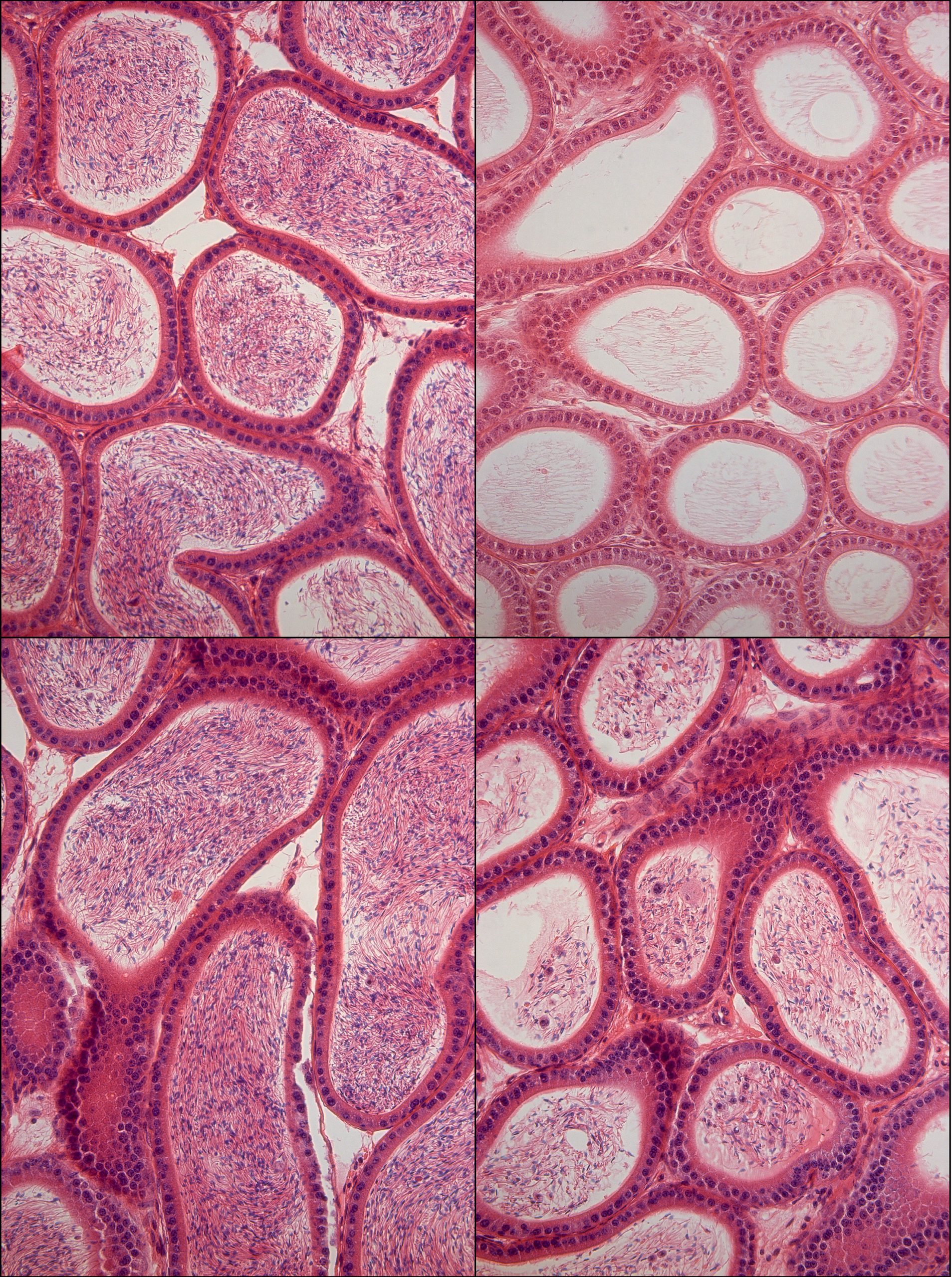
The human body produces several million new sperm per day. To do this, sperm stem cells in the testes continuously make more of themselves, until a signal tells them it’s time to turn into sperm—a process called spermatogenesis. This signal comes in the form of retinoic acid, a product of vitamin A. Pulses of retinoic acid bind to retinoic acid receptors in the cells, and when the system is aligned just right, this initiates a complex genetic program that turns the stem cells into mature sperm.
Salk scientists found that for this to work, retinoic acid receptors must bind with a protein called SMRT (silencing mediator of retinoid and thyroid hormone receptors). SMRT then recruits HDACs, and this complex of proteins goes on to synchronize the expression of genes that produce sperm.
Targeted Intervention without Side Effects
Previous groups have tried to stop sperm production by directly blocking retinoic acid or its receptor. But retinoic acid is important to multiple organ systems, so interrupting it throughout the body can lead to various side effects—a reason many previous studies and trials have failed to produce a viable drug. Evans and his colleagues instead asked whether they could modulate one of the molecules downstream of retinoic acid to produce a more targeted effect.
The researchers first looked at a line of genetically engineered mice that had previously been developed in the lab, in which the SMRT protein was mutated and could no longer bind to retinoic acid receptors. Without this SMRT-retinoic acid receptor interaction, the mice were not able to produce mature sperm. However, they displayed normal testosterone levels and mounting behavior, indicating that their desire to mate was not affected.
To see whether they could replicate these genetic results with pharmacological intervention, the researchers treated normal mice with MS-275, an oral HDAC inhibitor with FDA breakthrough status. By blocking the activity of the SMRT-retinoic acid receptor-HDAC complex, the drug successfully stopped sperm production without producing obvious side effects.
Another remarkable thing also happened once the treatment was stopped: Within 60 days of going off the pill, the animals’ fertility was completely restored, and all subsequent offspring were developmentally healthy.
Reversible Effects and Future Implications
The authors say their strategy of inhibiting molecules downstream of retinoic acid is key to achieving this reversibility.
Think of retinoic acid and the sperm-producing genes as two dancers in a waltz. Their rhythm and steps need to be coordinated with each other for the dance to work. But if you throw something in that makes the genes miss a step, the two are suddenly out of sync and the dance falls apart. In this case, the HDAC inhibitor causes the genes’ misstep, halting the dance of sperm production.
However, if the dancer can find its footing and get back in step with its partner, the waltz can resume. In the same way, the authors say that removing the HDAC inhibitor allows the sperm-producing genes to get back in sync with the pulses of retinoic acid, turning sperm production back on as desired.
“It’s all about timing,” says co-author Michael Downes, a senior staff scientist in Evans’ lab. “When we add the drug, the stem cells fall out of sync with the pulses of retinoic acid, and sperm production is halted, but as soon as we take the drug away, the stem cells can reestablish their coordination with retinoic acid and sperm production will start up again.”
The authors say the drug doesn’t damage the sperm stem cells or their genomic integrity. While the drug was present, the sperm stem cells simply continued regenerating as stem cells, and when the drug was later removed, the cells could regain their ability to differentiate into mature sperm.
“We weren’t necessarily looking to develop male contraceptives when we discovered SMRT and generated this mouse line, but when we saw that their fertility was interrupted, we were able to follow the science and discover a potential therapeutic,” says first author Suk-Hyun Hong, a staff researcher in Evans’ lab. “It’s a great example of how Salk’s foundational biological research can lead to major translational impact.”
Reference: “Targeting nuclear receptor corepressors for reversible male contraception” by Suk-Hyun Hong, Glenda Castro, Dan Wang, Russell Nofsinger, Maureen Kane, Alexandra Folias, Annette R. Atkins, Ruth T. Yu, Joseph L. Napoli, Paolo Sassone-Corsi, Dirk G. de Rooij, Christopher Liddle, Michael Downes and Ronald M. Evans, 20 February 2024, Proceedings of the National Academy of Sciences.
DOI: 10.1073/pnas.2320129121
Other authors include Glenda Castro, Dan Wang, Russell Nofsinger, Annette R. Atkins, and Ruth T. Yu of Salk, Maureen Kane, Alexandra Folias, and Joseph L. Napoli of UC Berkeley, Paolo Sassone-Corsi of UC Irvine, Dirk G. de Rooij of Utrecht University, and Christopher Liddle of the University of Sydney.
The work was supported by the National Institutes of Health (grants CA265762 and CA220468) and the Next Generation Sequencing and Flow Cytometry Cores at Salk, funded by the Salk Cancer Center (NCI grant NIH-NCI CCSG: P30 014195).
Never miss a breakthrough: Join the SciTechDaily newsletter.
Follow us on Google and Google News.
1 Comment
thanks for sharing this informative article…!!