
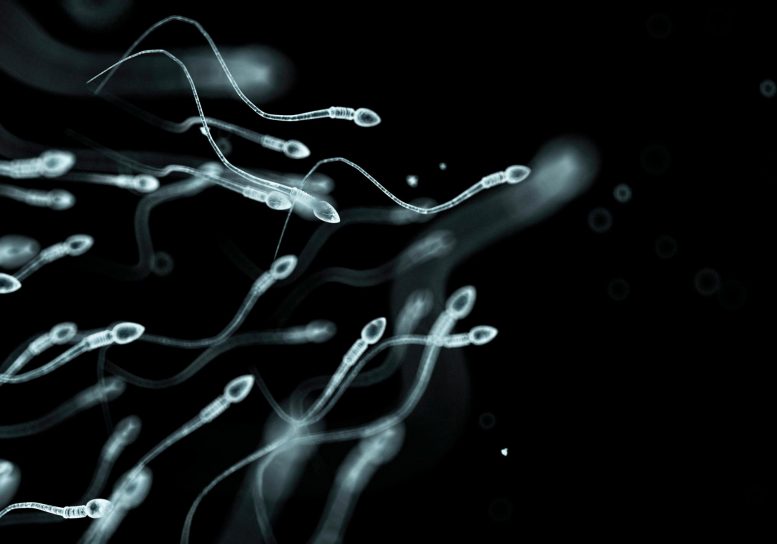
A new test quickly and easily identifies when sperm are carrying chromosomal mutations, and could be applied for men hoping to have children.
Chemotherapy and radiation treatments are known to cause harsh side effects that patients can see or feel throughout their bodies. Yet there are additional, unseen and often undiscussed consequences of these important therapies: the impacts on their future pregnancies and hopes for healthy children.
Extensive evidence shows that chemotherapy and radiation treatments are genotoxic, meaning they can mutate the DNA and damage chromosomes in patients’ cancerous and noncancerous cells alike. When this occurs in a germline cell – which are egg cells in women and sperm in men – it can lead to serious fetal and birth defects in a resulting pregnancy. For the few chemotherapies that have been studied, the risk of mutated sperm diminishes over time, as the treatment agents leave the body and men produce new sperm that were never exposed to the genotoxic agents. But for most chemotherapeutic drugs, there is still no information on their impact on DNA mutations and chromosomal damage to human sperm.
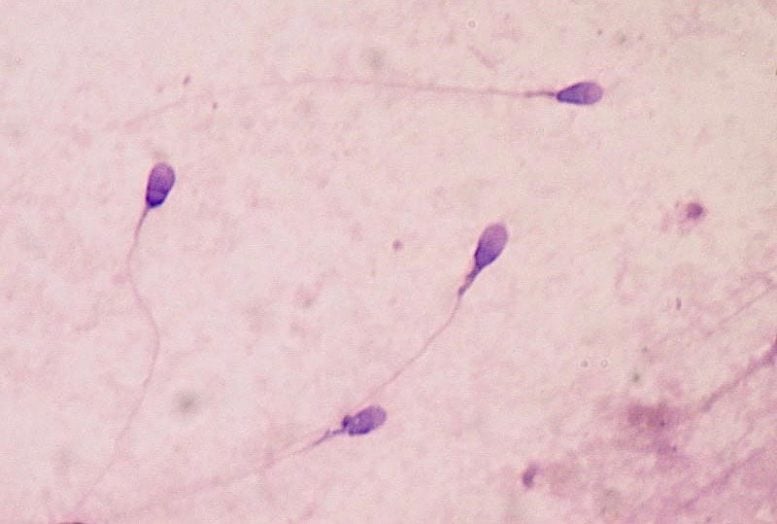
Exacerbating the problem, there are currently no efficient and affordable tests that can be used to track men’s germ cell health by identifying when the sperm are carrying treatment-related chromosomal mutations such as aneuploidy (abnormal number of chromosomes) or chromosome breaks, rearrangements, or deletions. But evidence from a new study led by Andrew Wyrobek at the Lawrence Livermore National Laboratory, and now at the Lawrence Berkeley National Laboratory (Berkeley Lab), suggests that this may soon change.
AM8 Sperm FISH Protocol
In a paper published in the journal PLOS One, the international team reported success adapting an established cellular DNA analysis technique called fluorescence in situ hybridization (FISH) to probe sperm DNA for a wide variety of chromosomal defects simultaneously. This version of the FISH technique, known as the AM8 sperm FISH protocol, is the result of decades of work done by the research team of lead author Andrew Wyrobek. A medical biophysicist at Berkeley Lab, Wyrobek studies the effects of ionizing radiation and human-made chemicals on breast cancer, brain function, and male reproductive health.
“This work is the first demonstration that our sperm assay can simultaneously measure aneuploidy and other chromosomal aberrations in sperm from men who have undergone genotoxic treatments,” said Wyrobek. “When sperm with these chromosomal abnormalities fertilize an egg, the resulting fetus and live-born child may have severe health issues. For example, fetuses with trisomy 18 – an extra copy of chromosome 18 or a fetus with an unbalanced chromosomal rearrangement – typically die in utero or within a year of birth.”
And, most importantly, according to Wyrobek, the assay can detect balanced chromosomal abnormalities, which are rearrangement with no loss or gain of genetic material. Balanced rearrangements are compatible with live birth and heritable to future pregnancies, and affected children are likely to experience reduced fertility when they want to have children of their own.
The team – which included scientists from Lawrence Livermore National Laboratory, Stanford University, MD Anderson Cancer Center, and the National Autonomous University of Mexico – evaluated the AM8 FISH approach on sperm from nine Hodgkin lymphoma patients, who provided samples before, during, and after a multi-drug treatment regimen and radiation therapy.
Encouraging Signs of Sperm Recovery Post-Treatment
Results from the FISH protocol tests indicated that sperm produced during the Hodgkin lymphoma treatment had 10 times more chromosomal defects compared with sperm produced prior to treatment. But by month six post-treatment, the patients’ sperm had returned to pre-treatment quality.
“We are excited by these results because they are a first step toward applying this method to any human situation – such as aging, illness, drugs, or exposure to environmental toxicants – to determine genetic risks to male germ cells and to examine the persistence of chromosomally damaged sperm,” said Wyrobek. “We believe this approach has a wide range of applications in healthcare and family planning, as it can be used to identify environmental exposures that increase the risk for producing chromosomally abnormal sperm that can affect the health of future pregnancies and children for generations to come.”
However, according to Wryobek, the sperm FISH method is still in an early research phase and it will require additional validation and commercial development before it becomes available in doctor’s offices.
Reference: “Meiotic susceptibility for induction of sperm with chromosomal aberrations in patients receiving combination chemotherapy for Hodgkin lymphoma” by Sara Frias, Paul Van Hummelen, Marvin L. Meistrich and Andrew J. Wyrobek, 28 December 2020, PLOS ONE.
DOI: 10.1371/journal.pone.0242218
This work was supported by the National Institute of Environmental Health Science and the authors’ respective institutions.
Never miss a breakthrough: Join the SciTechDaily newsletter.
Follow us on Google and Google News.
1 Comment
I wish to have a baby with my wife at the age of 43 and I’m 67. We are struggling. Can u advise?