
Close Menu
    Facebook X (Twitter) Instagram
    SciTechDaily
    • Biology
    • Chemistry
    • Earth
    • Health
    • Physics
    • Science
    • Space
    • Technology
    Facebook X (Twitter) Pinterest YouTube RSS
    SciTechDaily
    Home»Biology»The Hidden Trigger of Aging: New Discovery Could Change Longevity Research
    Biology

    The Hidden Trigger of Aging: New Discovery Could Change Longevity Research

    By Okinawa Institute of Science and Technology (OIST) Graduate UniversityFebruary 25, 2024No Comments4 Mins Read
    Facebook Twitter Pinterest Telegram LinkedIn WhatsApp Email Reddit
    Share
    Facebook Twitter LinkedIn Pinterest Telegram Email Reddit
    Cells Time Clock
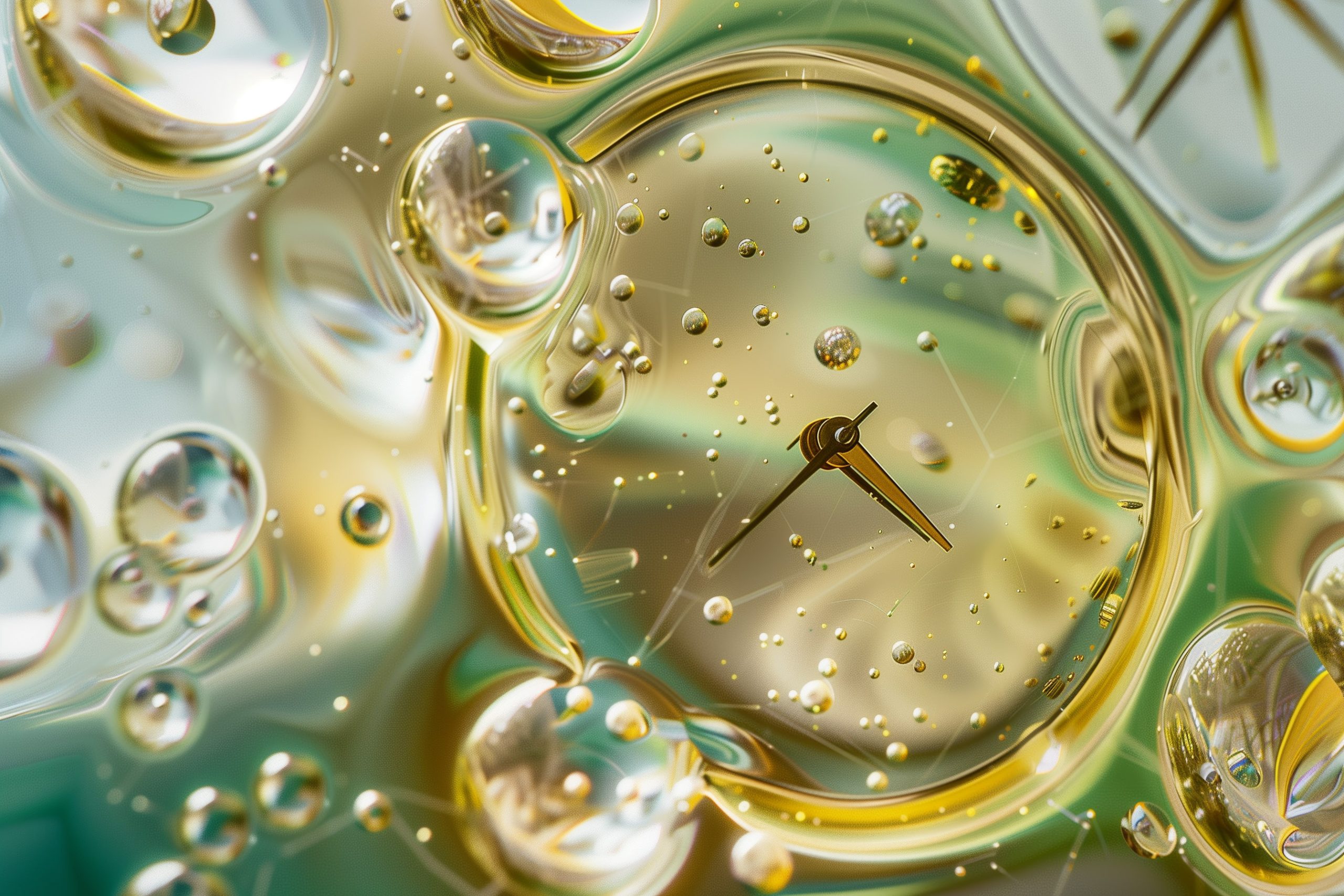
    A groundbreaking study has discovered that cell membrane damage can lead to cellular senescence, a state associated with aging and disease. This adds a third possible outcome to the previously understood consequences of cell damage—recovery or death. The research highlights the impact of moderate membrane damage on cell fate and opens new paths for promoting healthy aging by understanding and manipulating the underlying mechanisms of cellular senescence. Credit: SciTechDaily.com

    Recent research has discovered that physical harm to the cell’s outer layer can trigger aging at the cellular level in human cells.

    The delicate membrane encasing our cells measures just 5 nanometers in thickness—merely 1/20th the width of a soap bubble. This membrane is susceptible to damage from everyday physiological activities, such as muscle movements and injuries to tissues. In response to this vulnerability, cells possess repair systems capable of mending membrane damage to some extent.

    Mechanical damage to the cell membrane was previously believed to trigger two simple cellular outcomes: recovery or death. In this study, however, the researchers uncovered a third outcome – cellular senescence.

    “When I started this project, I simply aimed to understand the repair mechanisms of the damaged cell membrane,” recalls Professor Keiko Kono, head of the Membranology unit and senior author of this study, which involved multiple members from the unit, including Kojiro Suda, Yohsuke Moriyama, Nurhanani Razali, and colleagues. “Unexpectedly, we ended up discovering that cell membrane damage, in a sense, switches cell fate.”

    Mechanisms of Cellular Fate Determination

    The key to determining cell fate is the extent of damage and subsequent calcium ion influx. The thin cell membrane damage can be easily repaired, allowing the cells to continue cell division without any trouble. The highest level of cell membrane damage induces cell death. However, a middle level of cell membrane damage turns the cells into senescent cells several days later, even though membrane resealing seems successful.
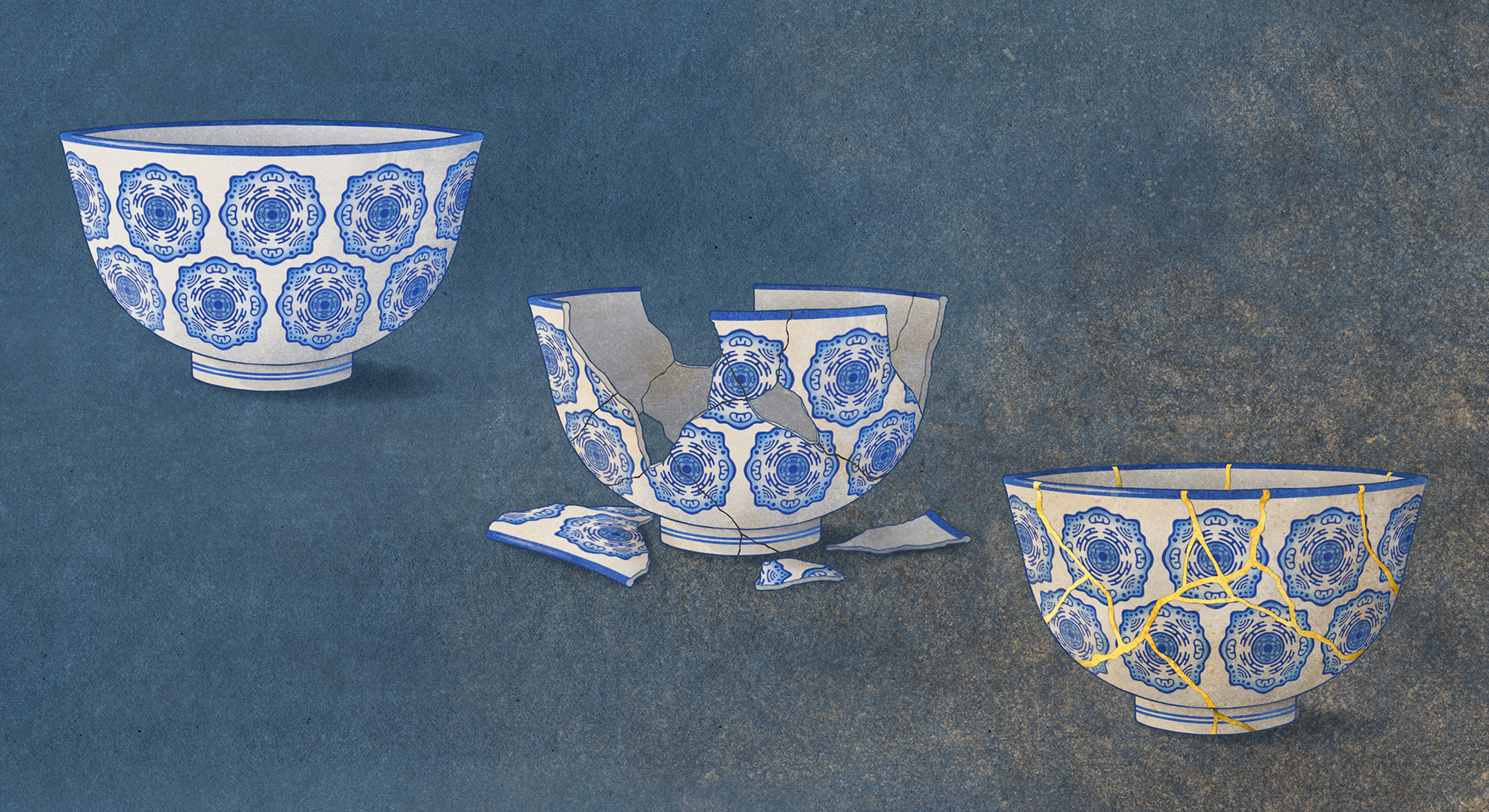
    Illustration of Kintsugi Ceramic as a Metaphor for Plasma Damage Induced Cell Senescence
    Kintsugi, the traditional Japanese art of repairing broken pottery by mending cracks with lacquer and gold. Kintsugi visibly incorporates the history of an object into its new form. In this analogy, cell membrane damaged is repaired, however, rather than restoring the cell to its original form, the new cellular nature is irreversibly changed and the cells behave differently in our body. Credit: Amy Cao, Salk Institute

    Cancer cells divide unlimitedly. In contrast, non-cancerous normal cells have a limited capacity for cell division – around 50 times before division is irreversibly stopped, and the cells enter a state known as cellular senescence. Senescent cells are still metabolically active, but unlike young and healthy cells, they produce various secretory proteins that upregulate immune responses in both nearby tissues and distant organs. This mechanism can induce both beneficial and detrimental changes in our body, including acceleration of wound healing, cancer promotion, and aging. During the last decade, numerous studies have reported that senescent cells exist in animal bodies, including humans, and that the removal of senescent cells can rejuvenate body functions in experimental animals.

    New Insights into Cellular Senescence

    However, the cause of cell senescence in the human body remains a controversial topic. “The gene expression profile and bioinformatics suggested that cell membrane damage explains the origin of senescent cells in our bodies, specifically the ones near damaged tissues,” explains Professor Kono.

    The best-established inducer of cellular senescence is repeated cell division. Many other stresses also induce cellular senescence in a laboratory setting, such as DNA damage, oncogene activation, and epigenetic changes. The long-standing dogma in the research field was that various stresses induce cellular senescence ultimately via the activation of DNA damage response. However, the authors uncovered that cell membrane damage induces cellular senescence via a different mechanism that involves calcium ions and the tumor suppressor gene p53. These findings may contribute to develop a strategy to achieve healthy longevity in the future.

    Reference: “Plasma membrane damage limits replicative lifespan in yeast and induces premature senescence in human fibroblasts” by Kojiro Suda, Yohsuke Moriyama, Nurhanani Razali, Yatzu Chiu, Yumiko Masukagami, Koutarou Nishimura, Hunter Barbee, Hiroshi Takase, Shinju Sugiyama, Yuta Yamazaki, Yoshikatsu Sato, Tetsuya Higashiyama, Yoshikazu Johmura, Makoto Nakanishi and Keiko Kono, 22 February 2024, Nature Aging.
    DOI: 10.1038/s43587-024-00575-6

    Funding: Japan Advanced Plant Science Network, MEXT Japan, Japan Society for the Promotion of Science, Japan Agency for Medical Research and Development, Ono Medical Research Foundation, Princess Takamatsu Cancer Research Fund, Relay For Japan Cancer Society, Naito Foundation.

    Never miss a breakthrough: Join the SciTechDaily newsletter.
    Follow us on Google and Google News.

    Aging Cell Biology Cells Okinawa Institute of Science and Technology Graduate University Popular
    Share. Facebook Twitter Pinterest LinkedIn Email Reddit

    Related Articles

    Cell’s Savior: The Critical Role of Antioxidants From Mitochondria

    Hypermetabolism: An Unexpected Driver of Biological Aging

    Age Accelerating “Zombie Cells” – A New Study Sheds Light on These Unique Cells

    Why a Widely Used Drug Causes Birth Defects and Autism

    Anti-aging Protein in Red Blood Cells Helps Prevent Mental Decline, Poor Memory and Hearing Deficits

    New Discovery Helps Explain How COVID-19 Overpowers the Immune System

    New Research Shows How to Boost Muscle Regeneration and Rebuild Tissue

    Researchers Solve Anti-aging Mystery – Identify Gene Responsible for Cellular Aging

    Chemical Model Shows How First Life Forms Might Have Packaged RNA

    Leave A Reply Cancel Reply

    • Facebook
    • Twitter
    • Pinterest
    • YouTube

    Don't Miss a Discovery

    Subscribe for the Latest in Science & Tech!

    Trending News

    Millions Take This Joint Supplement but Scientists Found a Concerning Alzheimer’s Link

    Why Evolution Stalled for Millions of Years Before Suddenly Exploding

    New Feathered Dinosaur May Have Solved a 120-Million-Year-Old Fossil Mystery

    Ozempic and Similar Drugs Linked to Dramatic Drop in Addiction Rates

    Ancient Meteorite Reveals a Forgotten Planet That Existed 4.5 Billion Years Ago

    Scientists Reveal What Happened When 12 People Were Trapped Together in Antarctica for 10 Months

    The “Impossible” Earthquake Beneath Utah Was Real After All

    A Major Update Just Hit Cholesterol Guidelines – Here’s What Every Adult Needs To Know

    Follow SciTechDaily
    • Facebook
    • Twitter
    • YouTube
    • Pinterest
    • Newsletter
    • RSS
    SciTech News
    • Biology News
    • Chemistry News
    • Earth News
    • Health News
    • Physics News
    • Science News
    • Space News
    • Technology News
    Recent Posts
    • This AI Learned the Laws of Physics and Could Accelerate Quantum Computing Breakthroughs
    • How Flocking Birds “Defy” One of Physics’ Most Fundamental Laws
    • Your GPS Lies in Cities. Scientists Finally Fixed It
    • Physicists Create a New Kind of Schrödinger’s Cat State From Exotic Quantum Building Blocks
    • One Simple Food Swap Could Cut Carbon Emissions As Much as a Flight Across Europe
    Copyright © 1998 - 2026 SciTechDaily. All Rights Reserved.
    • Science News
    • About
    • Contact
    • Editorial Board
    • Privacy Policy
    • Terms of Use

    Type above and press Enter to search. Press Esc to cancel.