
Close Menu
    Facebook X (Twitter) Instagram
    SciTechDaily
    • Biology
    • Chemistry
    • Earth
    • Health
    • Physics
    • Science
    • Space
    • Technology
    Facebook X (Twitter) Pinterest YouTube RSS
    SciTechDaily
    Home»Physics»Inspired by Cheerios: Scientists Develop New More Efficient Way To Capture Fresh Water From the Air
    Physics

    Inspired by Cheerios: Scientists Develop New More Efficient Way To Capture Fresh Water From the Air

    By King Abdullah University of Science & Technology (KAUST)May 5, 20244 Comments3 Mins Read
    Facebook Twitter Pinterest Telegram LinkedIn WhatsApp Email Reddit
    Share
    Facebook Twitter LinkedIn Pinterest Telegram Email Reddit
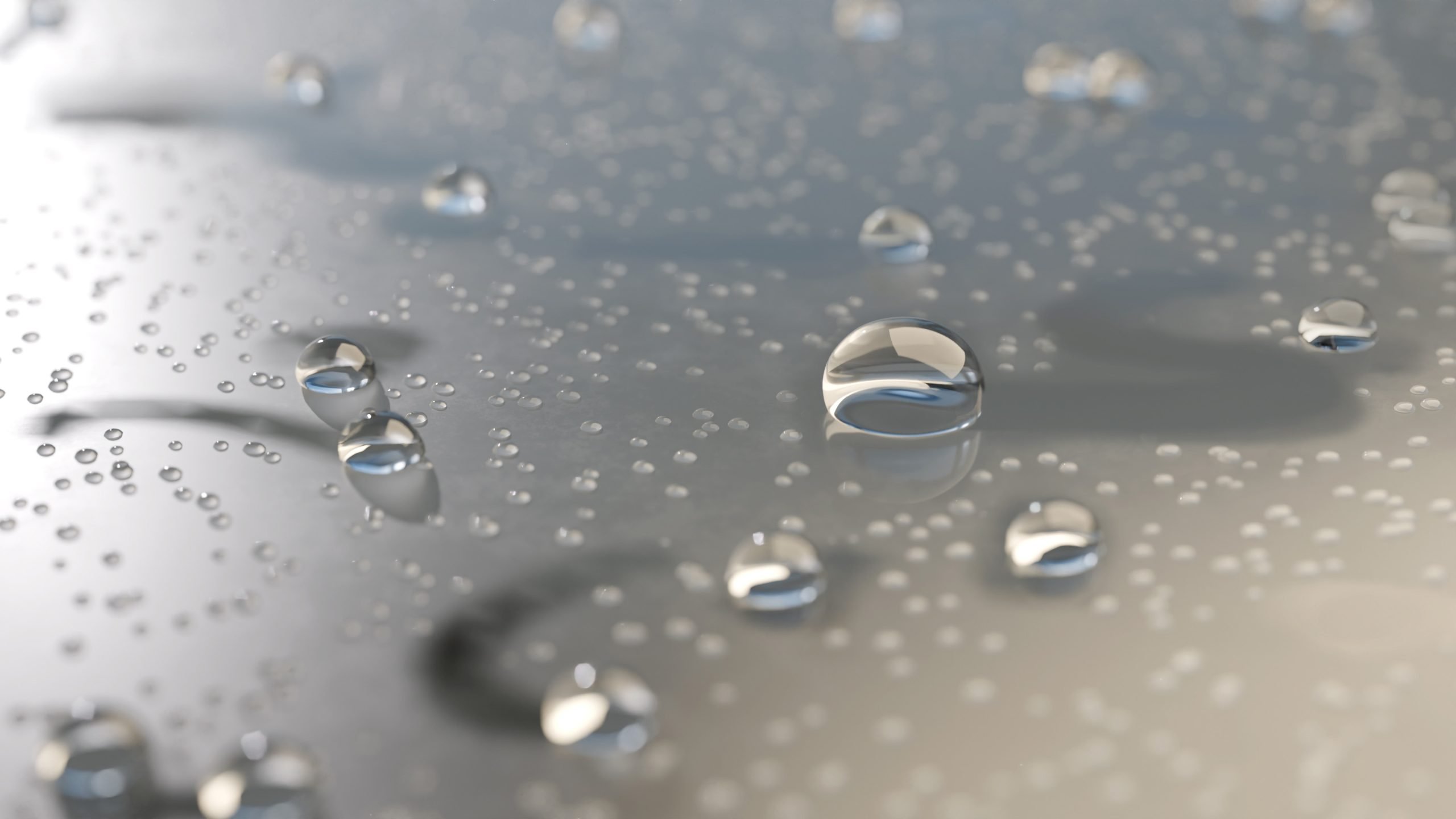
    Cheerios Effect Dancing Droplets
    The Cheerios effect is a process where small floating objects cluster together on the surface of a liquid. Researchers optimized this process to increase condensation rates for efficient water-harvesting systems. Credit: 2024 KAUST; Ivan Gromicho

    A more efficient way to capture fresh water from the air could be inspired by a phenomenon of motion first glimpsed in bowls of breakfast cereal.

    KAUST researchers have observed that, when water droplets condense from the air onto a cold surface coated with oil, the droplets commence a complex dance. This motion — akin to a process known as the Cheerios effect whereby the floating cereal tends to cluster due to surface tension — could help to speed up the harvesting of water from the atmosphere in arid regions such as Saudi Arabia.

    “We are interested in designing surfaces that can promote condensation of water, which has important heat-transfer and water-harvesting applications,” says Marcus Lin, a research fellow in the lab of Dan Daniel, who led the research. On a typical solid surface, condensed droplets stick to the surface with minimal motion. “Think of water condensing on a cold soda can,” says Lin. “The droplets only move once they grow big enough for gravity to pull them down.”

    Surprising Movements of Droplets

    Daniel, Lin, and their collaborators had the idea that adding a thin film of oil would lubricate the surface, resulting in highly mobile droplets that would free up space for further droplet condensation, boosting condensation rates. The idea worked — but the complex ways in which the droplets moved was a complete surprise, Daniel says.

    Once the droplets grew to a critical size, they began to move across the oil in a distinct pattern akin to an elaborate dance. “They initially moved in a serpentine manner, before transitioning into circular motions, and then back again,” says Lin. “These motions occurred across scales ranging from micrometers to several centimeters, and they lasted for hours.”
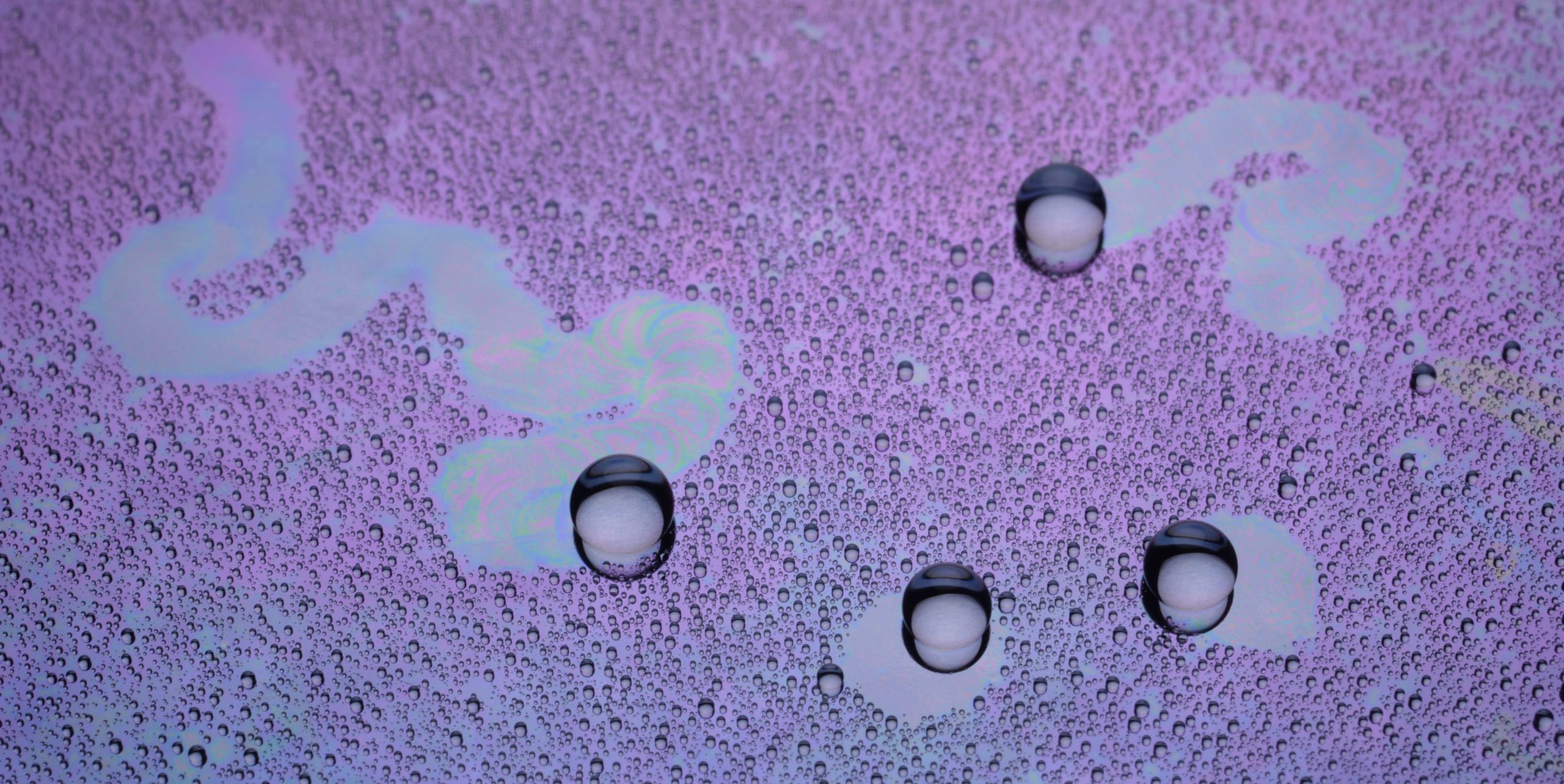
    Water Droplets Exhibiting Complex Collective Motion
    Researchers captured water droplets exhibiting complex collective motion, oscillating between serpentine and circular motions, as they condense on a thin oily film. Credit: 2024 KAUST; Fauzia Wardani

    The driving force for the process is that — like Cheerios in milk — water droplets floating on the oil are drawn toward their neighbors. The larger droplets’ motion is driven by energy released as they swallow up smaller droplets in their path.

    The moving droplets redistribute the oil film and switch from a serpentine to a circular motion when the film becomes locally depleted. Once the local oil rebuilds, the snake-like dance resumes.

    Such devices that can efficiently capture water from the air by simple condensation, with no energy input, are widely sought as pressure grows on freshwater sources, Daniel says. “By optimizing the collective motion of condensing droplets, we can greatly increase condensation rates and hence design more efficient water-harvesting systems,” he says.

    The team plans to further explore the mechanisms driving droplet motion, particularly investigating the transition from serpentine to circular movement. “Another key aspect is to explore potential applications, particularly in heat-transfer enhancement and water harvesting,” Lin adds.

    Reference: “Emergent Collective Motion of Self-Propelled Condensate Droplets” by Marcus Lin, Philseok Kim, Sankara Arunachalam, Rifan Hardian, Solomon Adera, Joanna Aizenberg, Xi Yao and Dan Daniel, 1 February 2024, Physical Review Letters.
    DOI: 10.1103/PhysRevLett.132.058203

    Never miss a breakthrough: Join the SciTechDaily newsletter.
    Follow us on Google and Google News.

    Fluid Dynamics KAUST Water
    Share. Facebook Twitter Pinterest LinkedIn Email Reddit

    Related Articles

    New Research Challenges Conventional Wisdom on Wet Surface Adhesion

    Ice 0: Scientists Discover Unusual New Form of Ice

    The Science Behind Skipping Stones: Gateway to Marine Engineering Advances

    Scientists Reveal That Water Can “Talk” to Electrons in Graphene

    Mesmerizing: Watch Water Droplets Merge on the International Space Station

    “Quantum Friction” Explains Fluid Dynamics Mystery That Has Baffled Scientists for 15 Years

    Using Ice To Boil Water: Heat Transfer Discovery Expands on 18th Century Physics Principle

    Laser Doppler Velocimetry Delivers New Insights Into Mysterious Fluid Motions

    Quantum Destabilization of a Water Sandwich – Laws of Classical Physics Break Down

    4 Comments

    1. Barron W. Wheeler on May 6, 2024 7:06 am

      So what happens to the normal rainfall when you harvest all the moisture from the air ?
      Wouldn’t this process just acerbate drought conditions in the areas affected by this water harvesting ?

      Reply
    2. Ern on May 7, 2024 1:06 pm

      My thoughts exactly, I’m just a blue-collar worker with a vocational education, but it doesn’t take a PHD to figure that one out. It may also make the problem worse by speeding up the coming of the “water wars” because now there will literally be no rainfall. It has the potential to even be weapon sized.

      Reply
    3. El Vasco. on May 9, 2024 12:25 pm

      No kidding. Water will become the new international currency. Quality not guaranteed.

      Reply
    4. Rand on May 10, 2024 9:21 pm

      There is an ocean of fresh water deep in the earth larger than all the oceans put together

      Reply
    Leave A Reply Cancel Reply

    • Facebook
    • Twitter
    • Pinterest
    • YouTube

    Don't Miss a Discovery

    Subscribe for the Latest in Science & Tech!

    Trending News

    Scientists May Have Discovered How To Heal Damaged Kidneys

    Interstellar Visitor 3I/ATLAS Is Bursting With an Unexpected Chemical

    Scientists Just Found All 5 Genetic “Letters” of DNA and RNA on an Asteroid

    The 4,000-Year-Old City That Defied History’s Rules on Wealth and Power

    The World’s Biggest Population Fear Has Flipped – and It Could Change Everything

    This “Fake” Pill Improved Memory and Physical Performance in Just 3 Weeks

    Scientists Say Frequent Ejaculation May Improve Sperm Quality and Fertility

    Scientists Have Found “The Heaven Sword” After Years of Looking

    Follow SciTechDaily
    • Facebook
    • Twitter
    • YouTube
    • Pinterest
    • Newsletter
    • RSS
    SciTech News
    • Biology News
    • Chemistry News
    • Earth News
    • Health News
    • Physics News
    • Science News
    • Space News
    • Technology News
    Recent Posts
    • A Giant Scorpion the Size of a Coffee Table Is Forcing Scientists To Rethink Evolution
    • Science Debunks a Common Belief About Pets and Stress
    • The Surprising Reason Sugary Gum Helped Lower Blood Pressure
    • Hidden Virus May Have Infected 9.4 Million People – Scientists Say We’ve Missed Most Cases
    • NASA’s Lucy Uncovers Ancient Water Clues on a Weirdly Wobbling Asteroid
    Copyright © 1998 - 2026 SciTechDaily. All Rights Reserved.
    • Science News
    • About
    • Contact
    • Editorial Board
    • Privacy Policy
    • Terms of Use

    Type above and press Enter to search. Press Esc to cancel.