
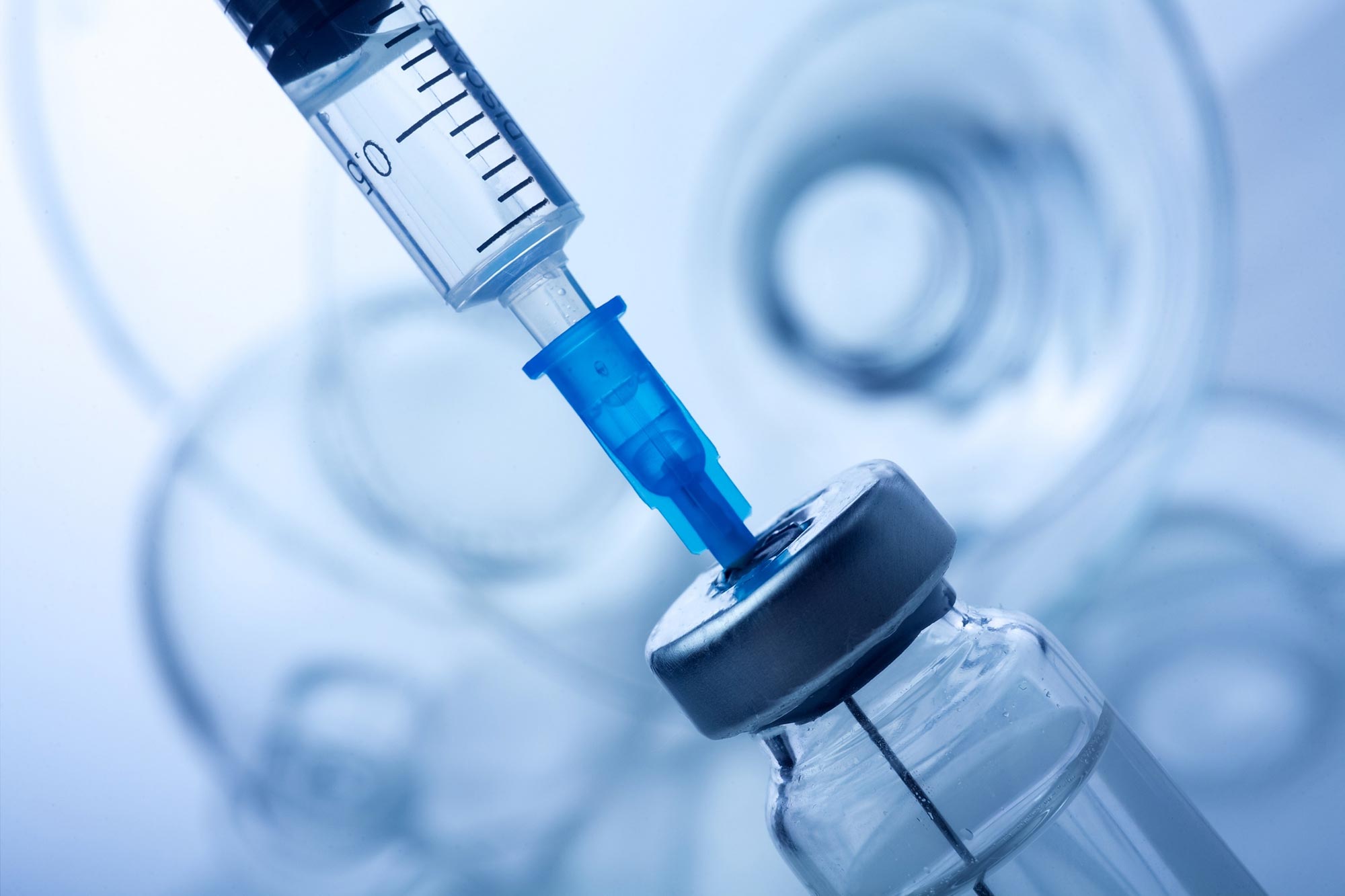
Chemical biologists at Scripps Research have developed a preliminary “proof-of-concept” vaccine, potentially paving the way for the first effective treatment for xylazine overdose in humans.
Xylazine, a sedative and pain reliever approved by the FDA for animals, causes severe side effects in humans. Recently, it has been illicitly mixed with opioids such as fentanyl and heroin, as well as cocaine. This has led to a significant increase in overdose fatalities.
Now, Scripps Research chemical biologists have developed a vaccine to block the effects of xylazine’s toxicity. The vaccine works by training the immune system to attack the drug, which is described in a recent paper published in the journal Chemical Communications.
“We demonstrated that a vaccine can reverse the symptoms of a xylazine overdose in rodents,” says study senior author Kim D. Janda, PhD, the Ely R. Callaway, Jr. Professor of Chemistry at Scripps Research. “There is currently no remedy for xylazine poisoning other than supportive care, thus, we believe our research efforts and the data we have provided will pave the way for an effective treatment in humans.”
Rise of Xylazine as a Public Health Threat
The rapid increase in lethal drug overdoses attributed to xylazine combined with fentanyl prompted the White House Office of National Drug Control Policy to declare this combination an emerging threat to the United States. Xylazine intoxication presents similarly to opioid overdose, causing respiratory and central nervous system depression, and it can heighten the effects of opioids. However, naloxone—typically administered to reverse the effects of opioids—does not tackle the impact of xylazine, highlighting the need for effective measures to treat acute toxicity caused by xylazine.
Researchers suspect xylazine works by reducing blood flow to the brain, among other areas of the body. The drug also causes non-healing skin lesions and wounds, often located on the forearms and lower legs, that can require amputation in some cases—giving it the nickname “zombie drug.”
Although no treatment currently exists, targeted vaccines may offer a solution. Vaccines nudge the immune system to create antibodies to fend off invaders. Antibodies can target viruses, bacteria, and toxins. However, sometimes molecules are too small to initiate an immune response, as is the case with xylazine. So, to circumvent this problem, the researchers created a vaccine using a design principle that Janda pioneered, which relies on pairing the drug molecule (called a hapten) with a larger carrier molecule (a protein) and an adjuvant.
In this study, the scientists combined a xylazine hapten with multiple different protein types, to see which combination would create a robust immune response against xylazine. The team tested three vaccine formulations (termed TT, KLH, and CRM197, based on the protein involved) to see which vaccine cocktail could help rodents after being challenged with xylazine. One of the three vaccines (TT) significantly increased movement in mice given xylazine after 10 minutes, while two of the three vaccines (TT and KLH) led to an improvement in breathing.
The research team also examined how these vaccines would limit xylazine blood-brain barrier, (BBB) permeation, a filtering mechanism that scrutinizes drug penetration. When xylazine was injected, it immediately crossed into the brain to bind with receptors. Antibodies typically cannot navigate the BBB; however, two of the three vaccines (TT and KLH) showed a strong ability to stop xylazine from reaching its receptors in the brain, limiting its detrimental effects.
A provisional patent has been filed for the research. In the future, his team will build off this work to create a bifunctional antibody that will reverse both fentanyl and xylazine’s toxicity simultaneously, something that naloxone cannot do.
“A monoclonal antibody treatment could be given in tandem with the vaccine to provide both immediate and long-term protection from both opioid substance use disorders as well as opioid-xylazine overdoses,” says Janda. “This strategy could make a significant impact on the opioid epidemic.”
Reference: “Evaluation of a hapten conjugate vaccine against the “zombie drug” xylazine” by Mingliang Lin, Lisa M. Eubanks, Bin Zhou and Kim D. Janda, 1 April 2024, Chemical Communications.
DOI: 10.1039/D4CC00883A
Funding for the study was provided by the Shadek family and Pearson Foundation.
Never miss a breakthrough: Join the SciTechDaily newsletter.
Follow us on Google and Google News.