

Yale’s study identified structural and functional brain alterations in opioid use disorder patients, offering insights for tailored treatments.
Scientists at the Yale School of Medicine have identified structural and functional brain changes in individuals with opioid use disorder (OUD). Using MRI and fMRI data, they observed alterations in key brain regions, including differences in connectivity and volume. These findings, recently published in Radiology, a journal of the Radiological Society of North America (RSNA), could guide the development of new treatments and shed light on the long-term impacts of opioid use.
The Scope of the Opioid Epidemic
Opioids are a class of drugs that include synthetic opioids such as fentanyl, prescription pain relievers like oxycodone, and illegal narcotics, including heroin. These drugs have a high potential for abuse, and opioid use is a major contributor to drug overdoses in the U.S.
According to the National Institute on Drug Abuse, in 2021, approximately 2.5 million adults in the U.S. had opioid use disorder. Provisional data from the Centers for Disease Control and Prevention’s National Center for Health Statistics indicate there were an estimated 81,083 overdose deaths involving opioids in the U.S. during 2023.
“We are in the midst of an opioid epidemic, with millions affected worldwide and more than 80,000 deaths related to opioid overdoses in the U.S. last year alone,” said Saloni Mehta, M.B.B.S., postdoctoral associate in the Department of Radiology and Biomedical Imaging at the Yale School of Medicine. “We need to get a better understanding of the system-level neural alterations associated with opioid use disorder.”
Study Design and Methodology
In the study, Dr. Mehta and colleagues conducted a secondary analysis of data from the National Institutes of Health-funded Collaboration Linking Opioid Use Disorder and Sleep Study (CLOUDS), comparing participants with opioid use disorder on methadone treatment and healthy controls. The data included structural MRI and functional MRI (fMRI) exams performed between February 2021 and May 2023.
Resting-state fMRI allows researchers to measure brain activity by detecting changes in blood flow. With resting state fMRI, the connectivity between neural regions—known as resting state networks—can be observed while the brain is at rest.
Researchers analyzed CLOUDS structural MRI data for 103 individuals with opioid use disorder and 105 individuals from the control group. They also analyzed the resting state fMRI data on 74 participants with opioid use disorder and 100 controls. The individuals with opioid use disorder were all recently stabilized with medication for the disorder (less than 24 weeks). The median age in the group with opioid use disorder was 37 years, and 40% were women. In the control group, the median age was 27 years, and 55% were women.
“Previous studies have been performed on small sample sizes, many of which included no women,” Dr. Mehta said. “Ours is a moderate sample size, approximately half of which is female.”
Key Findings on Brain Connectivity
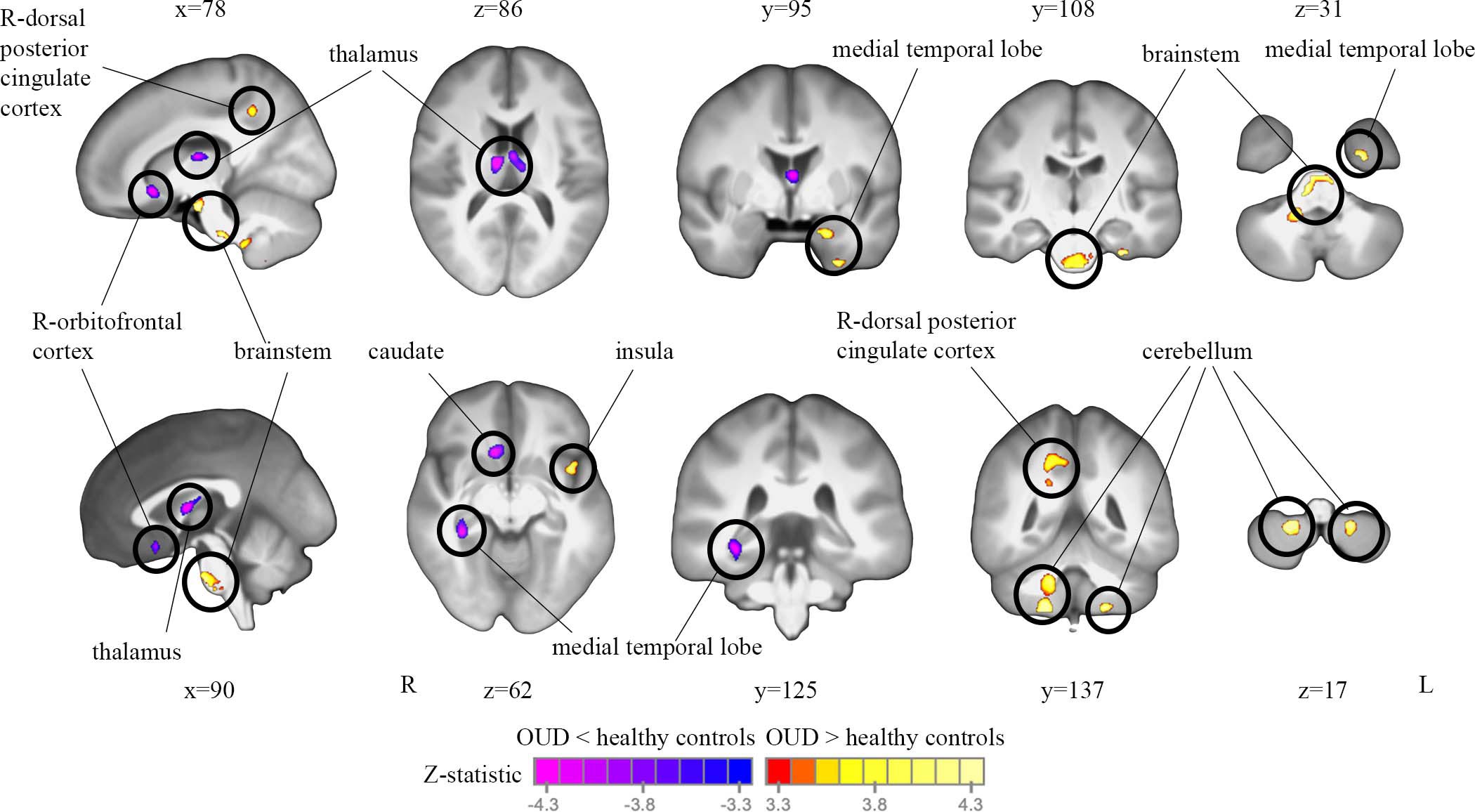
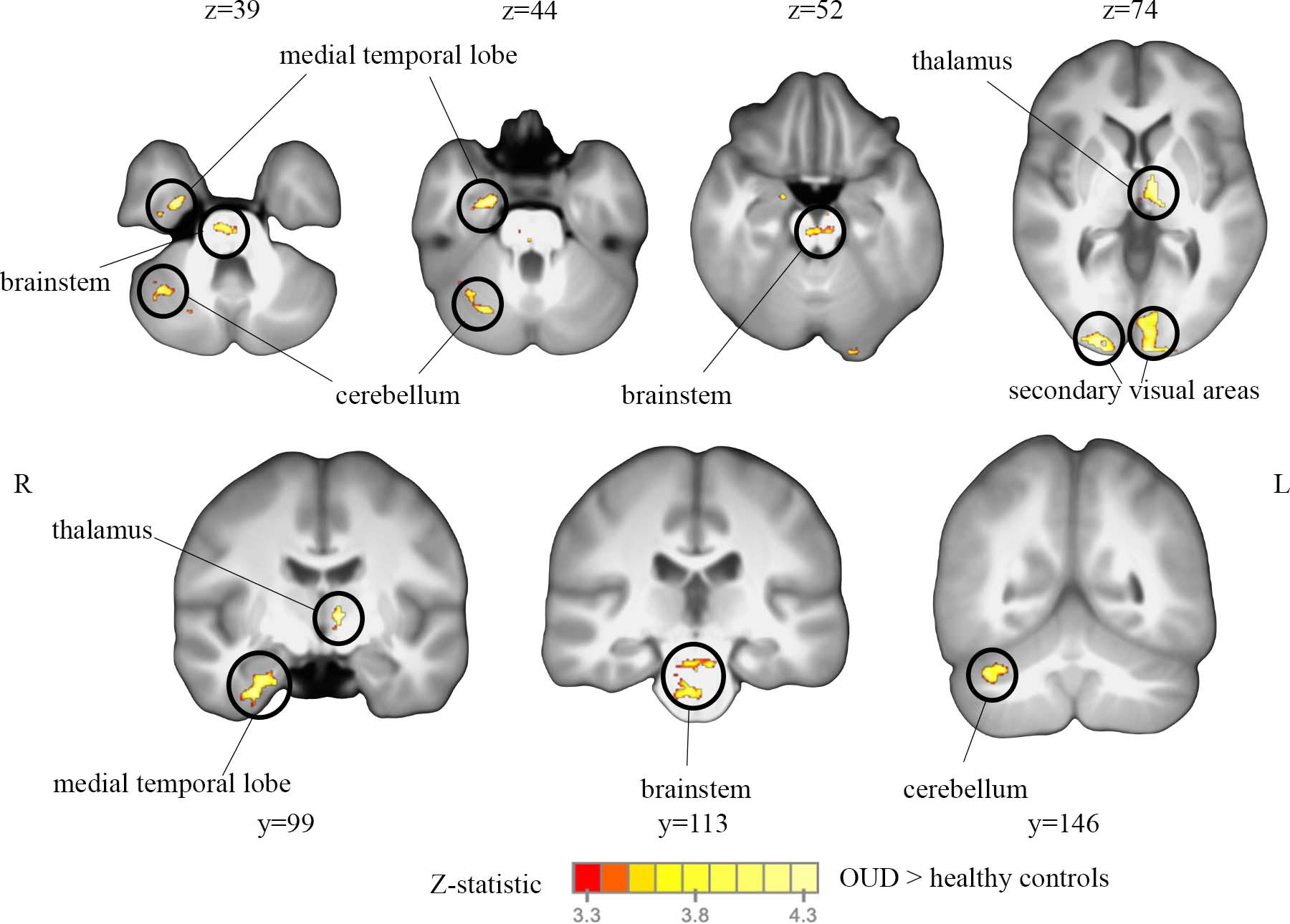
Whole-brain analysis revealed structural and functional alterations in opioid receptor-dense regions in the opioid use disorder group compared to healthy controls. In individuals with opioid use disorder, the thalamus and right medial temporal lobe of the brain were smaller in volume, while the cerebellum and brainstem were larger in volume than in controls. In the individuals with opioid use disorder, all these brain regions also had increased functional connectivity compared to controls.
“We observed widespread increases in global connectivity in individuals with opioid use disorder,” Dr. Mehta said. “Our goal is to understand better what could have caused these alterations to inform new treatment targets.”
Gender Differences in Brain Alterations
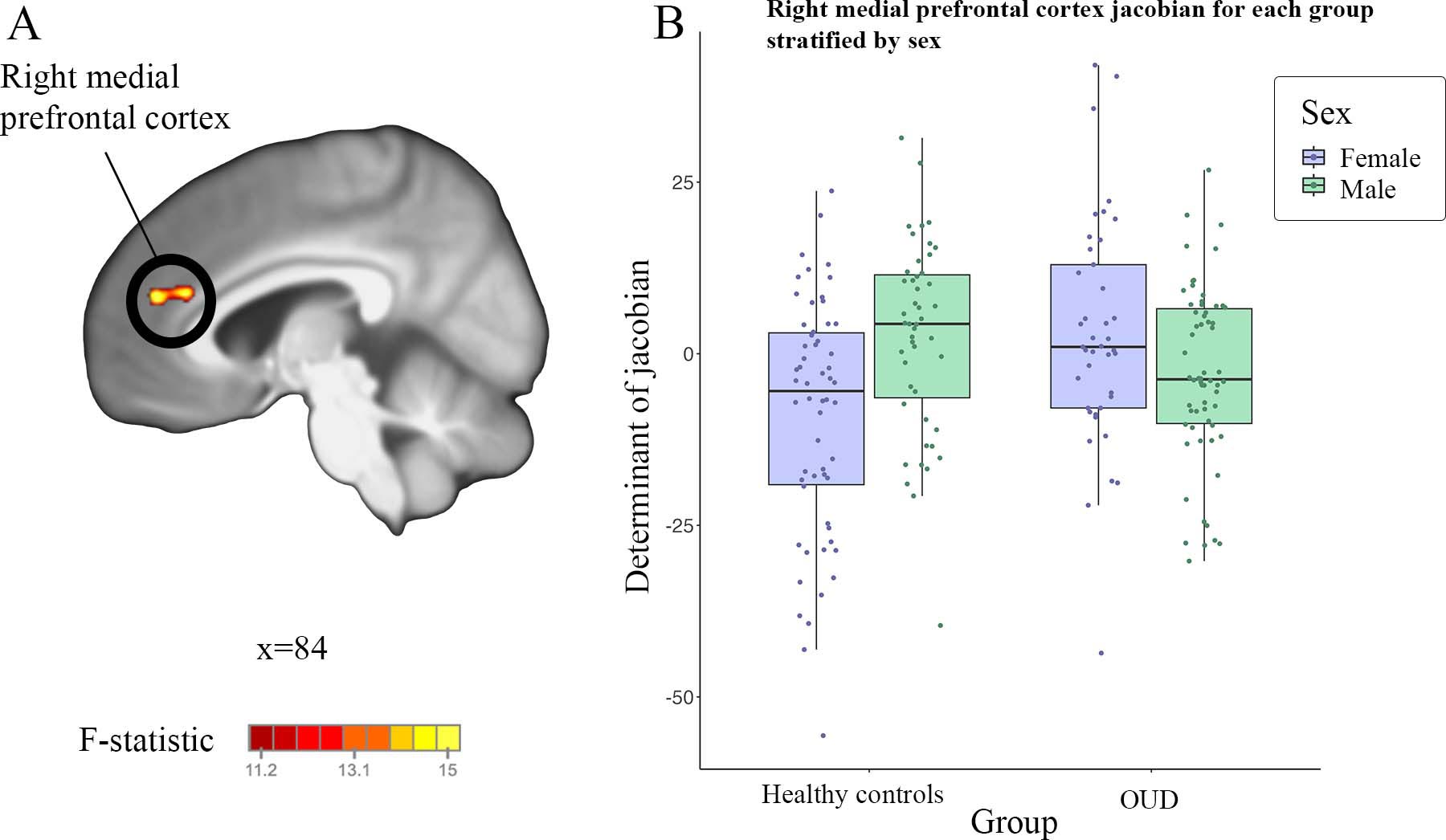
The results also revealed that women in the group with opioid use disorder had smaller medial prefrontal cortex volume, compared to males in the same group.
“We found that alteration patterns in the medial prefrontal cortex—a core region involved in many mental health conditions—were different between men and women in the group with opioid use disorder,” Dr. Mehta said. “This highlights the importance of assessing sex differences in opioid use disorder neuroimaging studies.”
Future Directions in Research
Dr. Mehta said the study builds a foundation for future research to investigate potential behavioral implications of these brain differences and whether they are permanent.
“Our eventual goal is to examine how brain alterations in individuals with opioid use disorder may be linked to outcome measures,” she said.
Reference: “Alterations in Volume and Intrinsic Resting-State Functional Connectivity Detected at Brain MRI in Individuals with Opioid Use Disorder” by Saloni Mehta, Hannah Peterson, Jean Ye, Ahmad Ibrahim, Gul Saeed, Sarah Linsky, Iouri Kreinin, Sui Tsang, Uzoji Nwanaji-Enwerem, Anthony Raso, Jagriti Arora, Fuyuze Tokoglu, Sarah W. Yip, C. Alice Hahn, Cheryl Lacadie, Abigail S. Greene, Sangchoon Jeon, R. Todd Constable, Declan T. Barry, Nancy S. Redeker, Henry Yaggi and Dustin Scheinost, 10 December 2024, Radiology.
DOI: 10.1148/radiol.240514
Never miss a breakthrough: Join the SciTechDaily newsletter.
Follow us on Google and Google News.
9 Comments
Unless you are a Chronic Pain patient and have had a productive life until restrictions from the government and intimidating doctors, pharmacy has destroyed our (my) life. I have 60 yrs of pain med. Never did street drugs, and don’t drink, worked my entire life ,raised 2 kids, and took care of my mom. Now Iam bed ridden most time in irrevocable pain ,lead a unproductive, solitaire life as not to burden others with my pain which they can’t help. All this talk about what mri shows doesn’t give us back our life and pain relief . Do a report on the suicide rate of pain patients who can’t get help. Pet care & Insurance are treated better.
Amen! I have a very similar situation! This situation has shoved so many to street drugs, alcohol or suicide.
I have read articles from CDC stating this clearly!
I am just speechless!!!$
Here, here. They did not even propose the question of whether different individuals and females may have been more prone to a “change” in actual brain STRUCTURE, not function. They had no idea what they were starting out with bf the “devil pain meds,” they have turned the sick to “criminal.” Brain scans are not an effective indicator either as per studies on psycho paths. and or adhd.
Stop putting oxeye ccodone down some people really need it and because you people keep putting it down we can’t get it anymore keep the government out of the Drs chair and the Democrats to
I have had 4 back surgeries and a spinal cord implant, people that has never experienced daily excruciating life altering pain have no idea how if can & will affect the rest of your life. There isn’t a day that I don’t live without pain levels that at times makee think why am I still here, I been on one opiod pain medicine for well over 10 years & counting & without this medication my life would be horrible if not over, I have had numerous people so called family & friends see my struggle at times cause of the pain and they reply is always the same ” just take a pill” sometimes the medicine doesn’t work because of the number of issues I have with my spine & the amount of scar tissue from the previous surgeries but they won’t hesitate to ask me for a pill if they have a simple headache or step on a nail, these are the same people that will take street pills & play Russian roulette with their lives but it also make people that definitely need opiates for legitimate use seem like them trying to get high and by the way the pain medicine i take never has ever gotten me “high” cause I don’t look for a high I look for the pain relief they were designed to help me with so I can function. So stop bashing us for using opiates for legitimate pain relief
I can’t get opioid meds anymore but the damn pain management drs are practicing witch doctors and voodoo drs with needles ranging from trigger points injections to epidural or ablation which is a epidural with nerve burning they gave me the pamphlet and I made a paper airplane for them and threw it in the trash if you are a massechist and want to be in more pain than you are already they’re chomping at the bit to get you stuck for the 6000$ that they charge for the procedure so they can make their Mercedes or bmw payment
I believe God gave us the poppy plant for that very reason, to help with pain. I think it’s awful and wrong that junkies cause the Government to overreact by strict regulations. If the idiots want to un-a-live themselves, then so be it. But don’t take away something that truly helps the people it was rightfully intended for. I hope everyone with severe pain are doing ok, have a great Christmas and be safe.
As a chronic pain patient, opiods have given me the ability to tamper down pain long enough to be active and get simple things accomplished. Neurotin, Lyrica and the nerve pain meds do nothing but mess with my brain and cause more side effects. I deserve, all painpossible. Desrrve and are entitled to be as pain free as possible.