
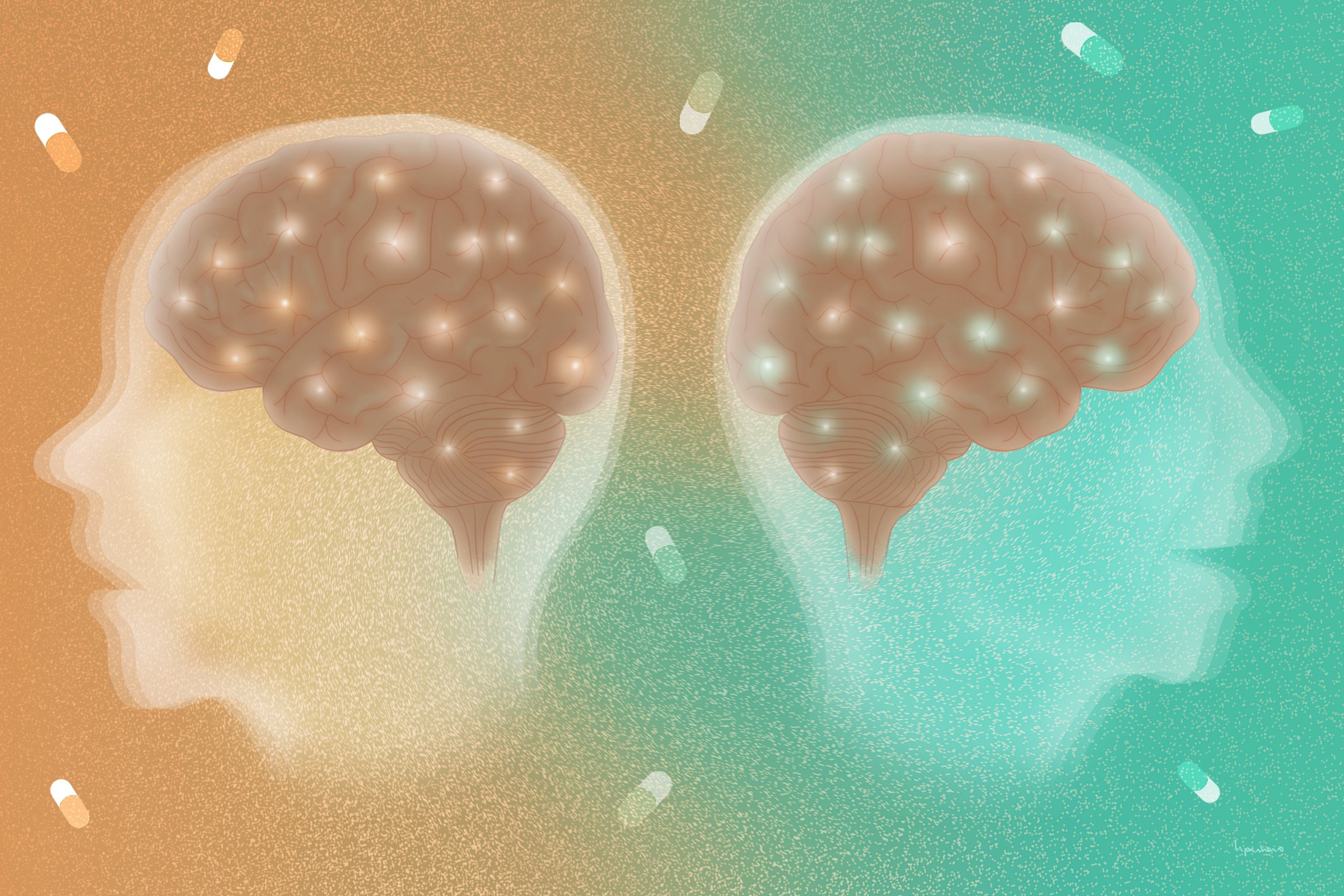
Scientists have developed new biosensors that enable real-time tracking of opioid signaling in the brain, offering profound insights into the effects of opioids and enhancing the development of targeted therapeutics.
New findings from a researcher at the Max Planck Florida Institute for Neuroscience could revolutionize our understanding of how opioids impact the brain. Despite the extensive discussion surrounding the ongoing opioid crisis, our current knowledge of how opioids operate in the brain remains quite limited.
This is primarily due to challenges in observing and measuring opioid effects in the brain in real time. However, a recent technological breakthrough, led by Dr. Lin Tian and her research team and collaborators, recently published in Nature Neuroscience, has overcome these limitations and is set to transform how scientists study opioid signaling in the brain.
What do we know about opioid signaling?
Pharmaceutical opioids, such as morphine and oxycodone, and illicit opioid drugs like heroin, affect the brain and body by binding to opioid receptors on the surface of cells in the nervous system. These receptors normally respond to naturally produced chemicals that are released in your brain, called endogenous opioids, including endorphins, enkephalins, and dynorphins.
Released in response to pleasurable activities such as laughter, sex, and exercise and aversive activities like injury and trauma, these chemicals bind opioid receptors and reduce the ability of neurons to receive and transmit signals. These cellular effects ultimately lead to the cognitive and behavioral effects associated with opioids, including positive feelings, pain relief, and addiction.
Challenges in understanding opioid signaling
Numerous questions remain about how these behavioral effects are caused by opioids and whether it is possible to harness specific opioid properties such as pain relief without undesirable effects, such as addiction. The opioid scientific literature is extensive and has confirmed that targeting the opioid system is of clinical interest – not only for pain management but also, more recently, for the treatment of mental health disorders such as anxiety and depression. Development of therapeutics that can target these health challenges while preventing the tragedy of the current opioid epidemic requires further understanding of the diverse effects of opioids in the brain.
The diversity of opioid effects on the brain is driven by more than 20 different opioid chemicals produced in the brain and more than 500 different synthetic opioids. Most of these different opioids interact with all three types of opioid receptors with different strengths. Their varied effects depend on the concentration of opioids, the specific receptors present and the brain circuits involved.
“Efforts are underway to harness various therapeutic properties of opioids by targeting specific receptor actions and brain circuits to develop more effective and safer therapeutics. However, these efforts have been hampered by our inability to measure diverse opioid signaling in real-time in the brain effectively,” said Dr. Tian.
New technology opens the door to understanding opioids in brain
Through a massive effort developing and testing over 1,000 variants, Dr. Tian’s team has optimized highly sensitive biosensors based on the three opioid receptors. These biosensors, originally developed while Tian was at the University of California, Davis, emit fluorescence upon opioid binding to the sensor and turn off when the opioid is no longer there. The biosensors, therefore, serve as a proxy for opioid binding to specific opioid receptors. Introducing these sensors into the brain of an animal provides a way to visualize opioid signaling across the brain in real time.
“The power of this new technology is that we now have the tools to understand the natural opioid system in the brain, including how to distinguish between different opioid effects. We can track endogenous opioid release in real-time, triggered by both reward and aversion, and see the differences in opioid signaling in different brain circuits.”
Dr. Tian’s team has already been sharing these new tools widely to accelerate the impact this new technology will have on the understanding of opioids.
Reference: “Unlocking opioid neuropeptide dynamics with genetically encoded biosensors” by Chunyang Dong, Raajaram Gowrishankar, Yihan Jin, Xinyi Jenny He, Achla Gupta, Huikun Wang, Nilüfer Sayar-Atasoy, Rodolfo J. Flores, Karan Mahe, Nikki Tjahjono, Ruqiang Liang, Aaron Marley, Grace Or Mizuno, Darren K. Lo, Qingtao Sun, Jennifer L. Whistler, Bo Li, Ivone Gomes, Mark Von Zastrow, Hugo A. Tejeda, Deniz Atasoy, Lakshmi A. Devi, Michael R. Bruchas, Matthew R. Banghart and Lin Tian, 15 July 2024, Nature Neuroscience.
DOI: 10.1038/s41593-024-01697-1
This research was supported by National Institutes of Health including the NIH BRAIN Initiative (U01NS103522, U01NS120820, and U01NS113295), National Institute of Drug Addiction (R37DA033396, R61DA051489, K99058709) and the National Institute of Mental Health (ZIA-MH002970-04) and the National Institutes of Health grants (DA008863, DA058300, and DK126740).
Never miss a breakthrough: Join the SciTechDaily newsletter.
Follow us on Google and Google News.