
Close Menu
    Facebook X (Twitter) Instagram
    SciTechDaily
    • Biology
    • Chemistry
    • Earth
    • Health
    • Physics
    • Science
    • Space
    • Technology
    Facebook X (Twitter) Pinterest YouTube RSS
    SciTechDaily
    Home»Biology»After 20 Years, Russian Drill Nears 14-Million-Year-Old Lake Vostok
    Biology

    After 20 Years, Russian Drill Nears 14-Million-Year-Old Lake Vostok

    By SciTechDailyFebruary 2, 20122 Comments2 Mins Read
    Facebook Twitter Pinterest Telegram LinkedIn WhatsApp Email Reddit
    Share
    Facebook Twitter LinkedIn Pinterest Telegram Email Reddit
    grand-prismatic-thermophile
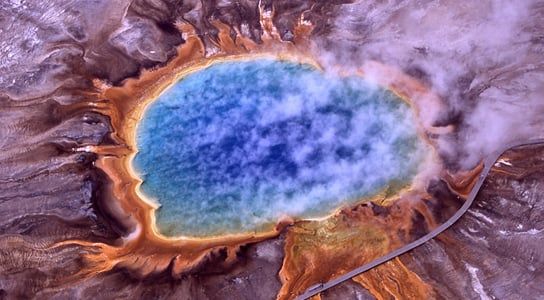
    The Grand Prismatic Spring in Yellowstone.

    A team of Russian researchers is close to breaching Lake Vostok, a prehistoric lake that’s been trapped deep beneath the Antarctic surface for the last 14 million years. Vostok is the largest sub-glacial web of more than 200 lakes, which are hidden 2.5 miles (4 km) beneath the surface.

    Some of these lakes were formed when Antarctica was much warmer and still connected to Australia. The lakes are supposed to be rich in oxygen, making them oligotrophic, including some elements in much higher quantities than in typical freshwater lakes. The high gas concentration might be due to the enormous weight and pressure of the continental ice cap.

    nasa-lake-vostok-location-antarctica

    If there is still life in Vostok, it will be some kind of extremophile, which are life forms that have adapted to survive in extreme environments. Adaptations would include the ability to withstand high pressure, constant cold, low nutrient input, high oxygen concentration, and the absence of sunlight.

    It is thought that the conditions in Vostok are similar to the ones found on Jupiter’s moon Europa and Saturn’s Enceladus. Finding life in such conditions would strengthen the hope of extrasolar life, and life in extremely harsh conditions.

    Antarctica’s summer is going to end soon and the researchers are running out of time. Temperatures will drop as low as -112°F (-80°C), grounding planes and trapping the team if they don’t act quickly. The team already missed their chance last year. If they miss it again this year, they’ll have to try again next year. Russian engineers are planning to venture into the lake itself, assisted by robots.

    Never miss a breakthrough: Join the SciTechDaily newsletter.
    Follow us on Google and Google News.

    Antarctica Environment Extreme Cold Extremophile Lakes Life Oligotroph Pressure Russia
    Share. Facebook Twitter Pinterest LinkedIn Email Reddit

    Related Articles

    Researchers Shocked to Find Antarctic Penguins Much Happier With Less Sea Ice

    Alien Species Invasions in Antarctica Predicted

    Emperor Penguins Marching Towards Extinction Unless Warming Is Slowed

    Ecologists Document Changes in Fragile Land-Sea Ecological Chain

    “Map of Life” to Illustrate All Living Things Geographically

    Adult White Killer Whale Spotted in the Wild for the First Time

    Antarctic Ecosystems Threatened by Invasive Alien Species and Climate Change

    Russians Celebrate Drilling into Lake Vostok, Biggest Antarctic Subglacial Lake

    Evolutionary Biologists Make Multicellular Life Evolve in the Lab

    2 Comments

    1. Madanagopal.V.C. on December 16, 2012 6:29 am

      Twenty years of bore drilling for 4km depth could find only the old sedimentation. If life exists still there by adaptation it would be interesting and why not we consider life coming from comets in cosmos in their icy rocks devoid of oxygen? Thank You.

      Reply
    2. UMMMM on November 8, 2014 5:01 pm

      Why the frick-frack is there a picture of the Grand Prismatic from Yellowstone National Park in this article. It doesn’t even pertain to the subject at hand. So, yeah. Just thought I would point that out.

      Reply
    Leave A Reply Cancel Reply

    • Facebook
    • Twitter
    • Pinterest
    • YouTube

    Don't Miss a Discovery

    Subscribe for the Latest in Science & Tech!

    Trending News

    This Copper Drug Clears Alzheimer’s Brain Toxins and Boosts Memory

    Adults Over 65 Lost Massive Amounts of Weight With Ozempic

    How Flocking Birds “Defy” One of Physics’ Most Fundamental Laws

    Physicists Create a New Kind of Schrödinger’s Cat State From Exotic Quantum Building Blocks

    Your Diet Could Be Missing the Key Ingredient for Heart Protection

    Researchers Warn Widely Prescribed Blood Pressure Drugs Could Be Harming Diabetic Kidneys

    James Webb Spots Something Strange Between Day and Night on an Alien Planet

    How Ancient People Moved a 6-Ton Stone 700 Kilometers to Stonehenge

    Follow SciTechDaily
    • Facebook
    • Twitter
    • YouTube
    • Pinterest
    • Newsletter
    • RSS
    SciTech News
    • Biology News
    • Chemistry News
    • Earth News
    • Health News
    • Physics News
    • Science News
    • Space News
    • Technology News
    Recent Posts
    • A Surprising Discovery Challenges What Scientists Thought DNA Methylation Was For
    • This New DNA Test Solves Rare Disease Mysteries That Standard Genetics Misses
    • Scientists Just Discovered the Eye Defies a Long-Held Rule of Vision
    • Ancient Black Holes May Have Survived a Cosmic Era Before the Big Bang
    • What if Time Isn’t Fundamental? Physicists Just Tested the Idea in the Lab
    Copyright © 1998 - 2026 SciTechDaily. All Rights Reserved.
    • Science News
    • About
    • Contact
    • Editorial Board
    • Privacy Policy
    • Terms of Use

    Type above and press Enter to search. Press Esc to cancel.