
Close Menu
    Facebook X (Twitter) Instagram
    SciTechDaily
    • Biology
    • Chemistry
    • Earth
    • Health
    • Physics
    • Science
    • Space
    • Technology
    Facebook X (Twitter) Pinterest YouTube RSS
    SciTechDaily
    Home»Science»Russians Celebrate Drilling into Lake Vostok, Biggest Antarctic Subglacial Lake
    Science

    Russians Celebrate Drilling into Lake Vostok, Biggest Antarctic Subglacial Lake

    By SciTechDailyFebruary 14, 20121 Comment2 Mins Read
    Facebook Twitter Pinterest Telegram LinkedIn WhatsApp Email Reddit
    Share
    Facebook Twitter LinkedIn Pinterest Telegram Email Reddit
    russians-celebrate-lake-vostok
    Russians celebrate drilling into Lake Vostok

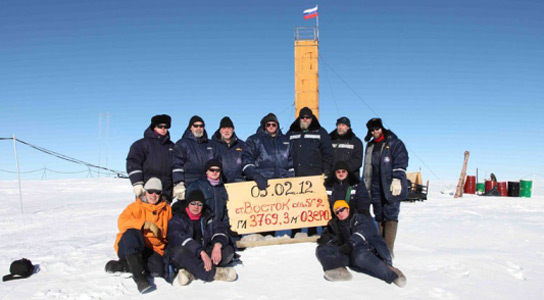
    It took two chilling decades, but the Russian team has finally broken into Lake Vostok, the largest of the lakes hidden under Antarctica’s ice, and the most deeply buried. Lake Vostok has been isolated for millions of years and it might contain specifically adapted microorganisms, that haven’t been seen on the surface of the planet for a long time.
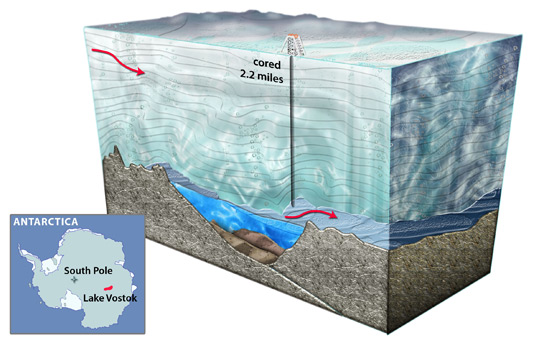
    lake-vostok-depth-3D

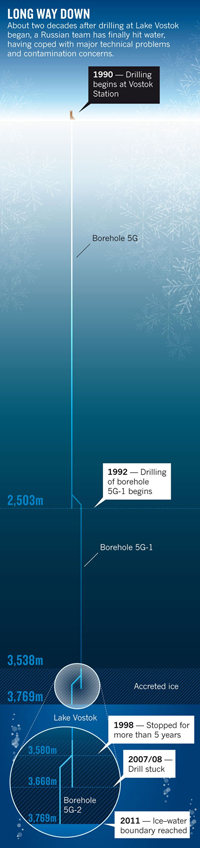
    illustration-depth-lake-vostok-thinThe Russian drill hit the lake water, 3,769.3 meters (12,366.5 feet) down, at 10:25PM on February 5th, 2012. Temperatures had been plummeting as the Antarctic summer ended, and scientists were getting ready to leave before it became too cold, for safety concerns.

    Although the Russian scientists did take samples before leaving, they will most likely have to wait until December to extract any frozen lake samples, and until 2013-14 to retrieve unfrozen lake water. Initially, the Vostok drilling project began as an effort to sample ice-cores to examine ancient climatic conditions. By the mid-1990s, scientists had confirmed the presence of a giant lake buried beneath the ice and speculated that sampling it might yield signs of ancient life.

    Drilling was shut down to prevent contamination from kerosene and Freon that was being used as drilling fluids. Drilling started up again in 2005 with a plan to replace the drill bit with a thermal probe once they got near the lake.

    The Russian team plans to explore the lake in 2013-14 using different probes, cameras, robots, and samplers. All of the probes will be carried down the borehole in hermetically sealed containers.

    The US and UK plan on sampling water and sediments from different Antarctic subglacial lakes in 2012-2013 using heated glacier meltwater to bore holes, which should stay open for at least 24 hours. The UK hopes to get to Lake Ellsworth situated at 3.1 kilometers (1.9 miles) while the US plans to get to Lake Whillans.

    Never miss a breakthrough: Join the SciTechDaily newsletter.
    Follow us on Google and Google News.

    Antarctica Environment Extreme Cold Extremophile Lakes Life Oligotroph Pressure Russia Subglacial Lakes
    Share. Facebook Twitter Pinterest LinkedIn Email Reddit

    Related Articles

    Computer Simulations Reveal Melting in East Antarctica Yields Unstoppable Sea-Level Rise

    British Team Fails to Reach Lake Ellsworth

    Coal-Tar-Based Sealants Emitting PAHs at Rates Possibly Greater Than Auto Emissions

    After 20 Years, Russian Drill Nears 14-Million-Year-Old Lake Vostok

    Scientists Discover Dead Hydrothermal Vents Contain Life

    Relative Refutation of the Claim of Arsenic-Based Life

    Octopuses Beat the Frigid Waters of the Antarctic by Rewriting Their RNA

    First Plant-Eating Dinosaur Discovered in Antarctica

    Da Vinci’s Last Supper Threatened By Air Pollution

    1 Comment

    1. Madanagopal.V.C. on December 16, 2012 6:25 am

      An achievement comparable to Mars landing indeed. Hats off to great scientists going to bosom of earth. But even after digging 2.2 miles after a hard labor of twenty years, we could trace only the ancient sediments only by few million years. There is no scope to drill the crust to reach plate’s bottom which are several miles to go further. Thank You.

      Reply
    Leave A Reply Cancel Reply

    • Facebook
    • Twitter
    • Pinterest
    • YouTube

    Don't Miss a Discovery

    Subscribe for the Latest in Science & Tech!

    Trending News

    Scientists Discover 132-Million-Year-Old Dinosaur Tracks on South Africa’s Coast

    Scientists Uncover the Secret Ingredient Behind the Spark That May Have Started Life on Earth

    Physicists Observe Matter in Two Places at Once in Mind-Bending Quantum Experiment

    Stanford Scientists Discover Hidden Brain Circuit That Fuels Chronic Pain

    New Study Reveals Why Ozempic Works Better for Some People Than Others

    Climate Change Is Altering a Key Greenhouse Gas in a Way Scientists Didn’t Expect

    New Study Suggests Gravitational Waves May Have Created Dark Matter

    Scientists Discover Why the Brain Gets Stuck in Schizophrenia

    Follow SciTechDaily
    • Facebook
    • Twitter
    • YouTube
    • Pinterest
    • Newsletter
    • RSS
    SciTech News
    • Biology News
    • Chemistry News
    • Earth News
    • Health News
    • Physics News
    • Science News
    • Space News
    • Technology News
    Recent Posts
    • The Surprising Non-Medical Factor That Determines Cancer Survival
    • Python Blood Could Hold the Secret to Weight Loss Without Side Effects
    • Naturally Occurring Bacteria Completely Eradicate Tumors in Mice With a Single Dose
    • The Ideal Temperature for Storing Mangoes Isn’t What You Think
    • Groundbreaking Enzyme Atlas Rewrites Decades of Biology Research
    Copyright © 1998 - 2026 SciTechDaily. All Rights Reserved.
    • Science News
    • About
    • Contact
    • Editorial Board
    • Privacy Policy
    • Terms of Use

    Type above and press Enter to search. Press Esc to cancel.